 Lynden Exterior
 Windows Built for Deming's Foothill Climate
Deming sits in the Nooksack River valley at the edge of the Mount Baker foothills, which means it sees a different mix of weather than homes closer to the water. You get more tree cover, more shade, more standing humidity after a storm, and temperature swings that run colder in winter than in town. Add in the driving rain and long moss season that define Whatcom County weather generally, and window installation here has to account for moisture that doesn't dry out quickly — not just moisture that shows up during a storm.
A window that's a great fit for an open, sun-exposed lot can perform poorly on a shaded, tree-lined Deming property if the installation doesn't plan for slower drying times and higher ambient humidity around the opening. That's the detail that separates a window that lasts twenty-plus years from one that starts showing rot, fogging, or seal failure in five.
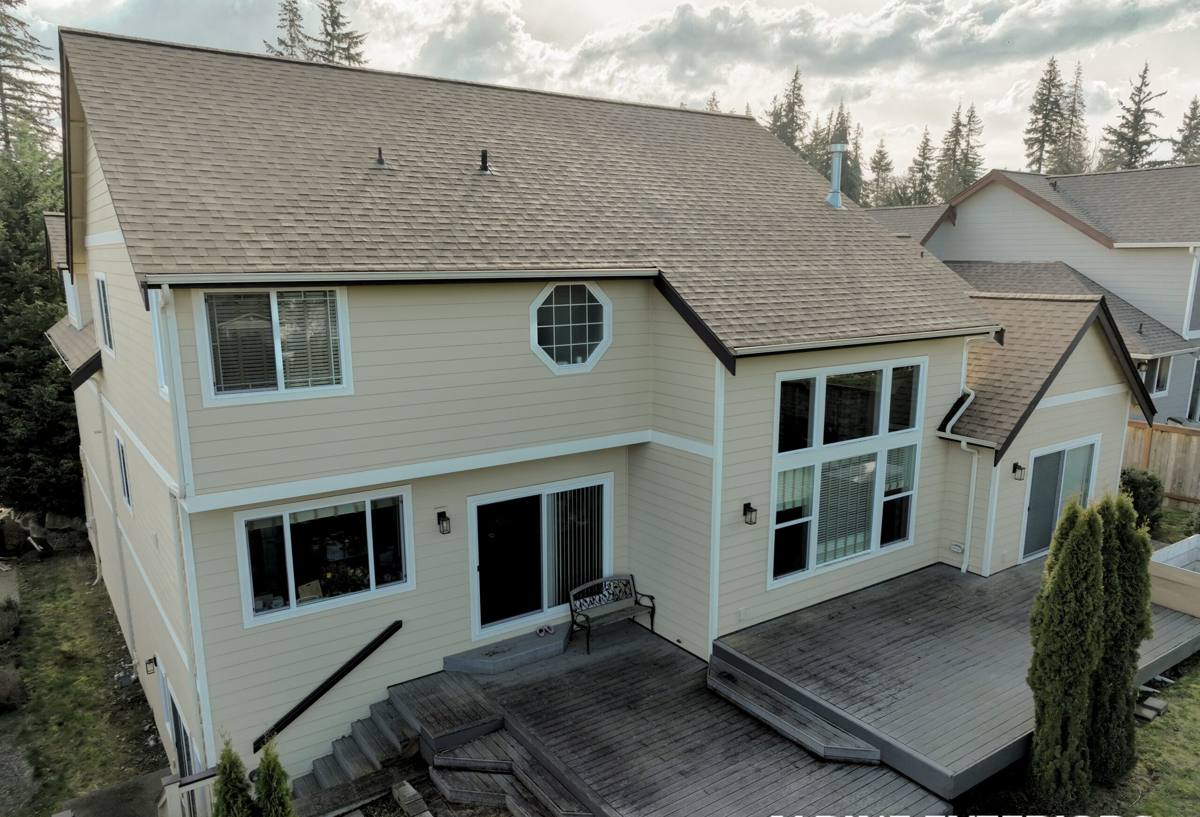
What Deming Homes Are Up Against
Moisture That Lingers
Heavily wooded lots and river-valley humidity mean wall surfaces around windows can stay damp longer after rain than they would on an open, wind-exposed site. If a window opening isn't properly flashed and sealed, that lingering moisture works its way into the framing, and by the time it's visible on the interior, the sheathing underneath has often already started to deteriorate.
Moss and Organic Growth
Shaded, moist conditions are exactly what moss and mildew need to establish themselves on sills, trim, and siding around window openings. Once organic growth gets a foothold on wood trim, it holds moisture against the surface and accelerates rot — which is why material choice and detailing at the window perimeter matter as much as the window unit itself.
Wider Temperature Swings
Being farther from the moderating effect of the Sound, Deming runs a bit colder in winter and can see more freeze-thaw cycling than lowland Lynden. That stresses seals, caulking, and any gaps left by a rushed installation. Windows and their surrounding seals need to flex with those swings without opening a path for water.
Older Homes and Cabins
A lot of housing stock in and around Deming includes older ranch homes, cabins, and homes built in stages over the years. Original window openings in these homes were often built to different (and looser) standards than current code requires, so a replacement project frequently uncovers framing or flashing issues that need to be corrected as part of the job, not painted over.
What a Correct Window Installation Actually Involves
Installing a window is more than setting a unit into a hole and running a bead of caulk around the outside. Done right, it's a sequence, and skipping steps is how leaks happen two or three years down the road — often after the original installer is long gone.
- Remove the old window and inspect the full opening — sill, jack studs, header, and sheathing — for hidden rot or water staining before anything new goes in
- Repair or rebuild any compromised framing rather than installing over it
- Install a sloped sill pan so any water that gets past the window has a path back out, not into the wall cavity
- Apply flashing tape and house wrap integration in the correct shingle-lap order so water is always directed outward and downward
- Set the window level, plumb, and square, and shim correctly so the frame isn't stressed once fasteners go in
- Insulate the gap between the window frame and rough opening with a low-expansion foam or backer rod — not packed rigid insulation that can bow the frame
- Seal the exterior with a compatible, paintable sealant rated for our climate, and finish interior trim so no gaps are left for air or moisture
- Test operation (open, close, lock) and check for daylight or drafts around the full perimeter before calling the job done
Any one of these steps done wrong can undo the benefit of an otherwise good window. This is also why we don't treat window replacement as a same-day, drive-by service — a proper installation takes the time it takes.
Choosing Materials for a Shaded, Moist Site
There's no single "best" window brand or material for every home, but for Deming's conditions, we weigh a few things heavier than we might on a drier, more exposed lot.
| Factor | Why it matters in Deming |
|---|---|
| Frame material | Vinyl and fiberglass resist moisture absorption and don't need repainting like wood trim exposed to shade and humidity |
| Weep hole design | Clear, well-placed weep paths keep condensation and wind-driven rain from pooling in the frame track |
| Glass package | A solid low-E, dual-pane unit helps manage interior condensation caused by cooler glass surfaces in shaded, humid rooms |
| Cladding/finish | Factory-finished exterior cladding holds up better against moss and mildew than field-painted wood over time |
| Warranty structure | Look for coverage that includes seal failure and glass fogging, not just frame defects — that's what shows up first in humid conditions |
We'll walk you through the trade-offs for your specific home rather than push one brand across the board. What's right for a sun-exposed newer build in Lynden proper isn't automatically right for a shaded Deming property, and we'd rather set that expectation up front.
Why Existing Wood Trim Often Needs Attention
On a lot of the older homes we see out this way, the original wood trim and sills around windows have taken decades of exposure to moss, shade, and moisture without much maintenance. When we replace a window, we check that trim rather than reinstalling around it as-is. Wood that's soft, discolored, or holding moisture gets replaced or repaired before the new window goes in — otherwise you end up with a new window sealed against old, compromised material, which just relocates the problem instead of solving it.
This is also where we'll give you an honest read on whether it makes sense to clad or cap exposed wood trim with a low-maintenance material, versus keeping painted wood and committing to regular upkeep. Both are legitimate choices — it depends on how much maintenance you want to take on given the shade and moisture your particular property deals with.
Our Process for Deming Window Projects
- On-site assessment — We look at each window opening, not just the units themselves, and flag any framing, flashing, or trim issues we find before quoting.
- Honest scope and estimate — You get a clear breakdown of what's window replacement and what's repair work the opening needs, so there are no surprises mid-project.
- Material selection — We help you pick frame material, glass package, and finish based on your home's exposure, not a one-size-fits-all package.
- Installation — Full removal, opening inspection and repair as needed, sill pan and flashing, precise setting, insulation, and sealing — done in the sequence that actually keeps water out.
- Final check — We test every window for smooth operation and check the perimeter for drafts or gaps before we consider the job finished.
Why Local Experience with Deming Homes Matters
A crew that only works in dense, open subdivisions closer to town can miss what's different about a shaded, tree-covered Deming lot — where moisture doesn't leave as fast, moss establishes faster, and older homes often have framing quirks that need a trained eye. We work across Whatcom County, including Deming and the surrounding foothill communities, so we know to check for the slower-drying conditions, the moss buildup on sills and trim, and the framing issues common to homes built in stages over the years.
That local familiarity shows up in small decisions during the job — how much time we give sealants to cure before trim goes back on, whether a sill needs extra slope given the site's drainage, whether existing trim needs to be replaced rather than reused. Those are the calls that determine whether a window installation holds up through fifteen Whatcom County winters or starts leaking after three.
Signs Your Deming Home's Windows Need Attention
- Fogging or condensation between the panes, which means the seal has failed and the insulating gas has escaped
- Soft or discolored wood trim, sills, or the wall surface directly below a window
- Visible moss or persistent green growth on sills or exterior trim
- Drafts you can feel near the frame even when the window is fully closed and locked
- Difficulty opening, closing, or locking a window that used to operate smoothly
- Peeling paint or bubbling finish on interior trim near the window, which often points to trapped moisture
Catching these early usually means a straightforward window replacement. Waiting means the surrounding framing has a better chance of needing repair too, which adds cost and time to the job.
If you're seeing any of these signs, or you're just ready to stop dealing with drafty, moss-stained, or foggy windows, we're happy to come take a look. We'll give you a free, no-pressure estimate based on what your home actually needs — no upsell, no guesswork. Use the form below to get started.