 Lynden Exterior
 Deck Replacement in Ferndale: Built for the Climate You Actually Live In
Ferndale sits close enough to Bellingham Bay and the Strait of Georgia that salt-laden air is a real factor in how decks age here, not a theoretical one. Add Whatcom County's driving winter rain and a moss season that can stretch from October into May, and you have a climate that is genuinely hard on outdoor structures. A deck built or repaired without that in mind will show it within a few seasons — soft spots near the house, corroding hardware, and a surface that stays slick with algae long after the rain stops.
We work throughout the Lynden and Ferndale area and see the same failure patterns repeat on decks that were built to a generic spec rather than a coastal Whatcom County one. This page covers what a deck replacement should actually involve here, what to look for when a deck is past saving, and how we approach the job.
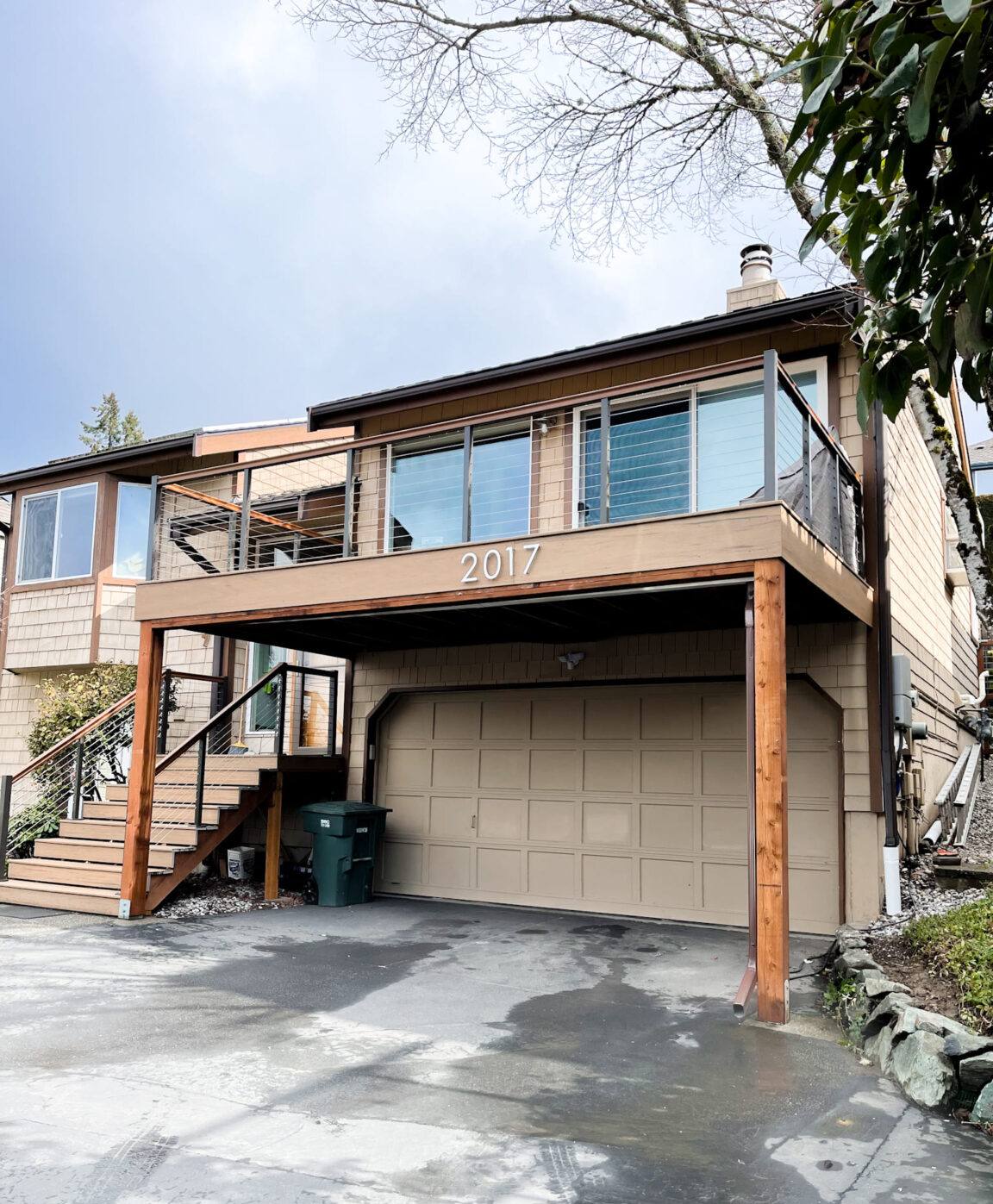
Signs a Ferndale Deck Needs Replacement, Not Just Repair
Not every tired-looking deck needs to come out. But there's a point where patching boards or re-staining is just delaying a bigger problem, especially once the framing underneath is compromised. Here's what usually tips a deck from "repairable" to "replace it":
- Soft, spongy decking anywhere near the ledger board (the board bolted to the house) — often the first sign of trapped moisture
- Rust streaking from joist hangers, bolts, or screws, especially on decks that face open water or prevailing wind
- Persistent green or black growth on the walking surface that returns within weeks of cleaning
- Visible gaps or movement where the ledger meets the house, or flashing that's cracked, missing, or was never installed correctly
- Joists or posts that feel soft when probed with a screwdriver, particularly at ground contact points and cut ends
- A deck more than 20-25 years old built before current flashing and fastener standards were common practice
If you're seeing two or more of these, a full replacement is usually the more honest recommendation — and often more cost-effective than repeated repair calls over a few years.
What a Correct Deck Replacement Actually Involves
The decking boards on top are the part everyone notices, but they're also the least important part of a deck's durability. Everything underneath is what determines whether the deck lasts 10 years or 30 in this climate.
Ledger Board and Flashing
Where the deck attaches to the house is the single most common failure point we see on older Ferndale decks. Driving rain pushes water sideways and up under poorly flashed ledgers, and once moisture gets behind the siding or into the rim joist, rot spreads quietly for years before it's visible. A correct install uses proper flashing (not just caulk), a water-resistant barrier behind the ledger, and a small gap or drainage plane so water sheds away from the house rather than pooling against it.
Framing and Structure
Joists, beams, and posts should be pressure-treated lumber rated for ground contact where applicable, sized correctly for the span and load, and spaced to code — not just matched to what was there before. We also look at whether joist tops need protective tape to keep water from wicking into the end grain, which is a cheap step that adds years of life in a wet climate.
Fasteners and Hardware
Salt air accelerates corrosion on standard hardware faster than most homeowners expect. We use stainless steel or hot-dip galvanized fasteners and connectors rated for treated lumber and coastal exposure, not the cheaper coated screws that streak and weaken within a few years. This matters most on decks with any line of sight to open water or exposed to prevailing wind off the Strait.
Footings
Footings need to be sized and set to the depth Whatcom County requires for frost and load, on stable, well-drained soil. A deck can look fine above ground for years while sitting on footings that were never adequate — that's a problem that only shows up as sag, bounce, or a permit issue down the road.
Choosing Decking Material for a Coastal Whatcom County Climate
There's no single "best" decking material — there's a best material for your budget, maintenance appetite, and how exposed your specific deck is to salt air and standing moisture. Here's how the common options actually compare in this climate:
| Material | Moisture & Salt Air Performance | Maintenance Needed | Typical Lifespan Here |
|---|---|---|---|
| Pressure-treated wood | Good if sealed and maintained; end grain and fasteners are the weak points | Annual cleaning, re-sealing every 2-3 years | 15-20 years |
| Cedar | Naturally rot-resistant but softer; can gray and check faster in salt air | Regular cleaning, periodic oil/sealer | 15-20 years |
| Composite decking | Very good — doesn't absorb moisture or rot, resists mold better than wood | Periodic washing to prevent surface algae film | 25-30+ years |
| PVC/capped composite | Excellent — fully sealed surface, best resistance to moisture and staining | Occasional washing | 25-30+ years |
We're straightforward with clients about trade-offs rather than pushing one product: composite and capped-PVC decking cost more upfront but largely eliminate the sanding, staining, and rot repair cycle that wood requires — a real advantage given how much moss and algae Ferndale's damp shoulder seasons produce on a wood surface. Wood remains a solid, honest choice for homeowners who want that look and are willing to keep up with sealing on schedule. What we won't do is install any decking product without the flashing, fastener, and framing standards above underneath it — the surface material only performs as well as what it's built on.
What Drives the Cost of a Deck Replacement
Every deck is priced on its own specifics, but the main variables that move the number are consistent:
| Factor | Why It Matters |
|---|---|
| Deck size and shape | More square footage and multiple levels or angles increase material and labor |
| Height off the ground | Elevated decks need stronger framing, more footings, and often railing and stairs |
| Decking material chosen | Composite and PVC cost more per board than pressure-treated wood or cedar |
| Demolition and haul-away | Old decking, hardware, and sometimes footings need removal and disposal |
| Ledger and flashing condition | Discovering rot behind the ledger during demo can add scope once it's exposed |
| Railing and stair complexity | Cable rail, glass panels, or multiple stair runs add cost over standard railing |
We give an honest estimate range up front and flag anything that could change once we open up the old structure — the ledger area is the most common place surprises turn up.
Our Deck Replacement Process
- On-site assessment. We inspect the existing deck, ledger connection, framing, and footings to confirm whether replacement is the right call and identify any hidden rot.
- Design and material selection. We walk through decking material, railing style, and layout options based on your budget and how the space gets used.
- Permitting. We handle the Whatcom County permit application and inspections that apply to your project's size and height.
- Demolition and disposal. The old deck comes out, including hardware and any compromised framing, with the site protected and debris hauled away.
- Framing and flashing. New ledger flashing, joists, beams, and footings go in to current code, sized for the deck's actual load and span.
- Decking, railing, and stairs installed. Fasteners and hardware are matched to the material and to Whatcom County's coastal exposure.
- Final walkthrough. We review the finished deck with you, cover maintenance basics for the material you chose, and close out any required inspection.
Permits and Whatcom County Requirements
Most deck replacements in unincorporated Whatcom County and in the Ferndale area require a building permit, particularly for elevated decks or any structural changes to framing and footings. Requirements around guardrail height, stair geometry, and footing depth are non-negotiable for a reason — they're based on real failure modes, not paperwork for its own sake. We pull the permit, coordinate inspections, and make sure the finished deck is something that won't cause problems at resale or insurance time. Skipping this step to save time is one of the more common regrets we hear about from homeowners who inherited an unpermitted deck when they bought their house.
Living With Moss and Algae After Your Deck Is Replaced
No decking material in this climate stays maintenance-free forever, but a few habits go a long way toward keeping a new deck looking and performing the way it should:
- Sweep debris and standing leaves off the deck regularly through fall and winter — trapped organic matter feeds moss and algae growth
- Rinse the surface periodically during the wet months, especially in shaded areas that don't get direct sun to dry out
- Keep gutters and downspouts near the deck clear so runoff isn't dumping extra water onto the surface or framing below
- For wood decks, stick to the resealing schedule rather than waiting until the finish has already failed
- For composite or PVC decking, an occasional wash with a soft brush and mild cleaner prevents the thin surface film that can form in shaded, damp spots
- Check railing posts and stair stringers once a year for movement or soft spots, since these get more direct rain exposure than the deck field
Why Hire a Crew That Already Works Ferndale
A deck built to a generic national spec will often survive a drier inland climate just fine and still fail early here. Crews who work Ferndale and the surrounding Whatcom County area regularly know which properties sit exposed to prevailing wind and salt air, which lots hold moisture longer due to soil and shade, and where flashing and fastener corrosion tends to show up first. That local pattern recognition is what separates a deck that needs attention again in five years from one that doesn't need real work for two decades. It also means we're a known, reachable contractor if a warranty question ever comes up — not a crew that worked one job in the area and moved on.
If you're weighing repair versus replacement, or just want a straight answer on what your existing deck actually needs, we're happy to take a look. Reach out for a free, no-pressure estimate using the form below.