 Lynden Exterior
 Why Abbotsford Homes Need a Siding System, Not Just a Siding Product
Abbotsford sits in the Fraser Valley, close enough to the Strait of Georgia that salt-laden air rides inland on the weather systems that move through the region, and close enough to the Cascade foothills that rain doesn't just fall here — it drives sideways against exposed walls for days at a time. Add a long, damp shoulder season every fall and spring where surfaces rarely get a full day to dry out, and you get a climate that's genuinely hard on exterior cladding. Moss doesn't wait for winter in the Fraser Valley; it takes hold anywhere moisture sits against a wall and stays there.
That combination — salt exposure, wind-driven rain, and a moss season that can run half the year — is exactly the profile that separates siding products that look fine in a showroom from siding products that hold up on a real house. We work homes on both sides of the border out of Lynden, and the wall assemblies we see in Abbotsford aren't meaningfully different from what we see in Whatcom County: similar framing practices, similar weather exposure, similar failure points when the wrong product or a rushed install gets used.
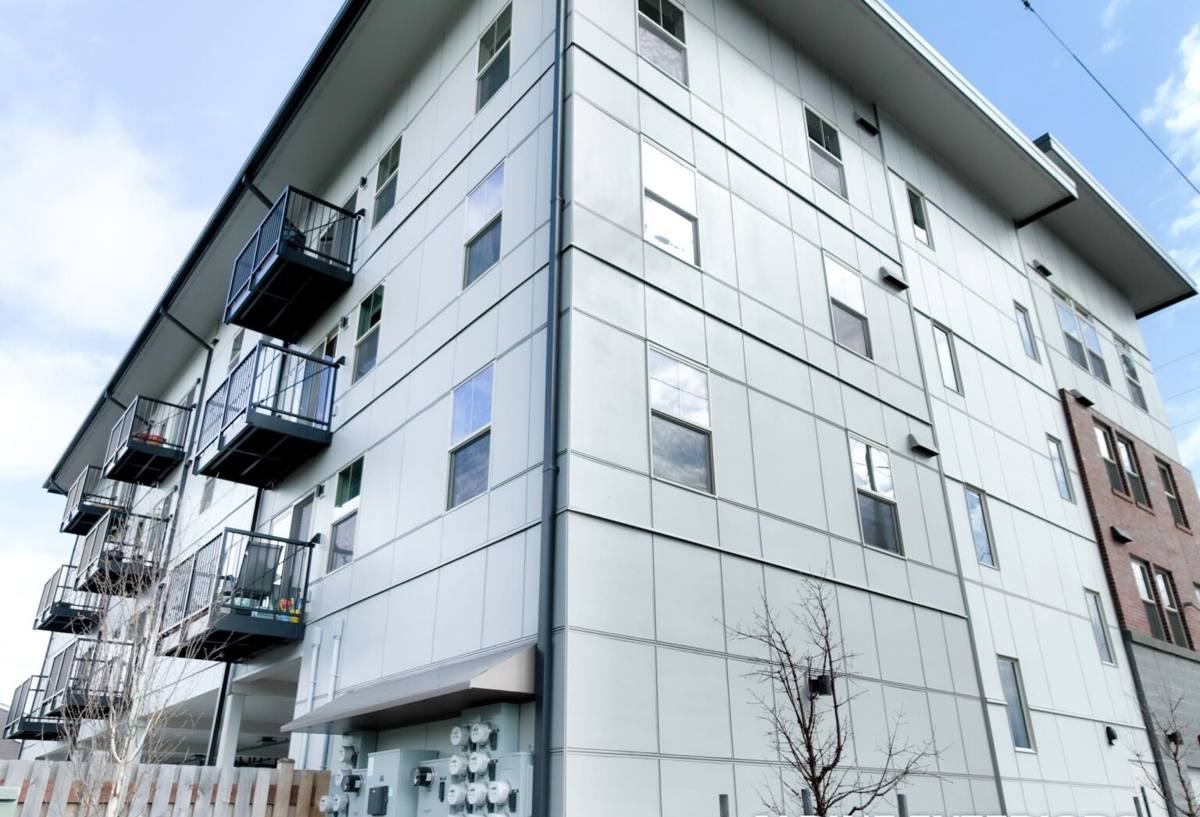
Why We Install Only James Hardie Fiber Cement
We don't carry LP SmartSide, vinyl, Cemplank, Allura, or bare wood siding, and that's a deliberate call, not an oversight. Fiber cement as a category — cement, sand, and cellulose fiber, cured into a rigid board — resists moisture absorption and won't rot the way engineered wood products can when a seam or fastener fails. But not every fiber cement brand is built or backed the same way, and James Hardie is the one we're willing to put our name behind.
Three things drove that decision:
- Climate-engineered product lines. Hardie makes region-specific formulations (its HZ5 line is engineered for wetter, freeze-thaw climates like the Pacific Northwest), rather than one generic board sold everywhere.
- Factory-applied ColorPlus finish. The color and topcoat are baked on in a controlled factory process, which holds up more consistently against UV and moisture than field-applied paint on cut edges and job-site touch-ups.
- A warranty structure that's actually transferable. Hardie's warranty terms are well documented and travel with the home to a new owner, which matters if the house sells before the siding's service life is up.
None of that means other products are unusable — it means we'd rather specialize in one system we can install to spec every time than stock five products and get mediocre results on all of them.
What Correct Installation Actually Involves
Fiber cement's reputation is only as good as the install underneath it. Most of the siding failures we get called to look at trace back to installation shortcuts, not the board itself. On a wall exposed to Fraser Valley wind-driven rain, these details aren't optional extras — they're the difference between siding that lasts decades and siding that traps water behind it.
The Moisture Management Layer
Before a single board goes up, the wall needs a weather-resistive barrier installed correctly — lapped shingle-style so water sheds down and out, not into seams. Rain screen gapping (a ventilated air space between the barrier and the siding) matters even more in a climate where walls rarely get a long dry stretch, because it lets any moisture that does get behind the cladding actually escape instead of sitting against the sheathing.
Fastening and Clearances
Hardie specifies fastener type, spacing, and penetration depth for a reason — blow-through nailing or the wrong nail gauge is one of the most common causes of premature cracking at fastener points. Ground clearance, deck and roofline clearances, and proper flashing at every window, door, and penetration all need to be held to spec, because that's where wind-driven rain finds its way in first.
Caulking and Sealant Discipline
Butt joints, trim intersections, and penetrations need the right sealant, applied correctly — not painted-over gaps meant to look sealed. In a climate with this much sustained moisture exposure, a failed caulk joint isn't cosmetic; it's a water path directly into the wall assembly.
Matching the Product Line to the Home
James Hardie isn't one product — it's a system of options, and picking the right one matters for both performance and budget.
| Product | Best Use | Why It Fits Fraser Valley Conditions |
|---|---|---|
| HardiePlank Lap Siding | Most common wall application | Traditional lap profile sheds driving rain effectively; widest color and texture selection |
| HardiePanel Vertical Siding | Accent walls, gables, modern facades | Clean vertical lines drain quickly; pairs well with board-and-batten detailing |
| HardieTrim | Corners, fascia, window and door trim | Resists the swelling and rot that wood trim develops under sustained moisture |
| HardieShingle | Accent gables, Craftsman-style detailing | Shingle look without the moisture absorption of cedar shakes |
For most Abbotsford homes we'd spec HZ5 in the appropriate ColorPlus finish, with trim and accent pieces chosen to match the home's existing rooflines and architectural style rather than defaulting to a single look across every project.
Fiber Cement vs. the Alternatives, Honestly
Homeowners comparing options deserve a straight answer, not a sales pitch.
| Factor | James Hardie Fiber Cement | Vinyl | Engineered Wood (LP-type) |
|---|---|---|---|
| Moisture resistance | Strong — non-organic composition | Doesn't rot, but seams gap and warp over time | Vulnerable if seams or coating fail |
| Combustibility | Non-combustible | Combustible, can melt/deform in heat | Combustible |
| Color longevity | Factory-baked finish, long fade resistance | Fades and can become brittle with age | Depends on field-applied or factory coating |
| Install sensitivity | Moderate — spec-dependent | Low — more forgiving of minor errors | High — moisture entry points are less forgiving |
| Upfront cost | Higher | Lowest | Mid-range |
Vinyl is cheaper up front and low-maintenance, but it's not what we install — we'd rather explain the trade-off than sell a product we don't think performs as well long-term in this climate. That's a decision homeowners are free to make differently; we just won't be the crew that installs it.
What Working Across the Border Actually Looks Like
Lynden sits close enough to the border crossing that working Abbotsford homes is a routine part of how we operate, not a special trip. In practice that means:
- Material planning and crew scheduling account for crossing logistics up front, so a delay at the border doesn't turn into a delay on your project.
- We coordinate with homeowners on whatever local permitting or inspection process applies to their specific job — that's a City of Abbotsford and BC-specific process we confirm case by case rather than assume.
- We size up the home in person before quoting, because Fraser Valley homes vary in age, wall assembly, and existing siding condition just as much as homes on our side of the line do.
The climate and the building practices are similar enough across the border that the same install standards apply — we don't loosen our process because a job is a few extra minutes from the shop.
Signs an Existing Wall Needs Attention
Before recommending a full re-side, we look for these signs during an on-site assessment:
- Persistent moss or algae growth on siding that returns quickly after cleaning
- Soft spots, bubbling, or visible warping, especially near ground level or under windows
- Cracked or missing caulk at trim joints and penetrations
- Paint that's peeling in patches rather than fading evenly, which often points to moisture trapped underneath
- Visible fastener staining or popped nail heads
Some of these are cosmetic and fixable without a full replacement. Others point to a wall assembly problem underneath the cladding that no amount of surface repair will solve — we'll tell you honestly which situation you're in.
Maintenance Once Hardie Siding Is Installed
Fiber cement is low-maintenance compared to wood, but "low" doesn't mean "none" in a climate this wet.
- Rinse siding annually to clear pollen, dust, and early moss growth before it gets established
- Inspect caulk joints at trim and penetrations every year or two, and recaulk as needed
- Keep gutters clear so overflow doesn't run directly down wall sections
- Trim back vegetation and maintain clearance so foliage isn't holding moisture against the siding
- Address any impact damage or cracking promptly rather than letting water find its way in
If you're weighing siding options for a home in Abbotsford and want a straight assessment of what your walls actually need, we're happy to take a look and put together a free, no-pressure estimate — no obligation, just an honest read on the job.