 Lynden Exterior
 Why Blaine's Climate Is Especially Hard on Siding
Blaine sits right up against the water in the northwest corner of Whatcom County, and that location shapes everything about how siding ages there. Homes close to Drayton Harbor and Semiahmoo Bay deal with a version of Pacific Northwest weather that's more aggressive than what you'll find a few miles inland around Lynden. Salt-laden air, near-constant onshore wind, and a moss season that can run eight or nine months out of the year all work on exterior materials at the same time, not one at a time.
Salt Air and Corrosion
Marine air carries fine salt particles that settle on every exterior surface, including siding, fasteners, and trim. Over years, that salt exposure accelerates corrosion on unprotected metal fasteners and can degrade paint films faster than the same product would wear inland. It doesn't ruin every siding material equally — but it does mean fastener choice and finish quality matter more in Blaine than they do in a drier, inland part of the county.
Wind-Driven Rain
Storms coming off the water tend to push rain sideways rather than straight down, which drives moisture into joints, laps, and penetrations that would stay dry in a calmer setting. Siding systems that rely on face-sealing alone — caulk and paint doing all the work of keeping water out — tend to struggle in this kind of exposure. Water finds the smallest gap, and once it's behind the cladding, the framing and sheathing pay the price.
A Long Moss and Algae Season
Cool, damp, and shaded conditions are exactly what moss, mold, and algae need to establish themselves, and Blaine gets a long stretch of that weather every year. North-facing walls, areas under mature trees, and low-sun corners of a home are the first places you'll see green or black staining creep in. That staining isn't just cosmetic — sustained moisture retention at the siding surface shortens the life of paint and, on the wrong substrate, can invite rot underneath.
What Blaine Homes Actually Need From Their Siding
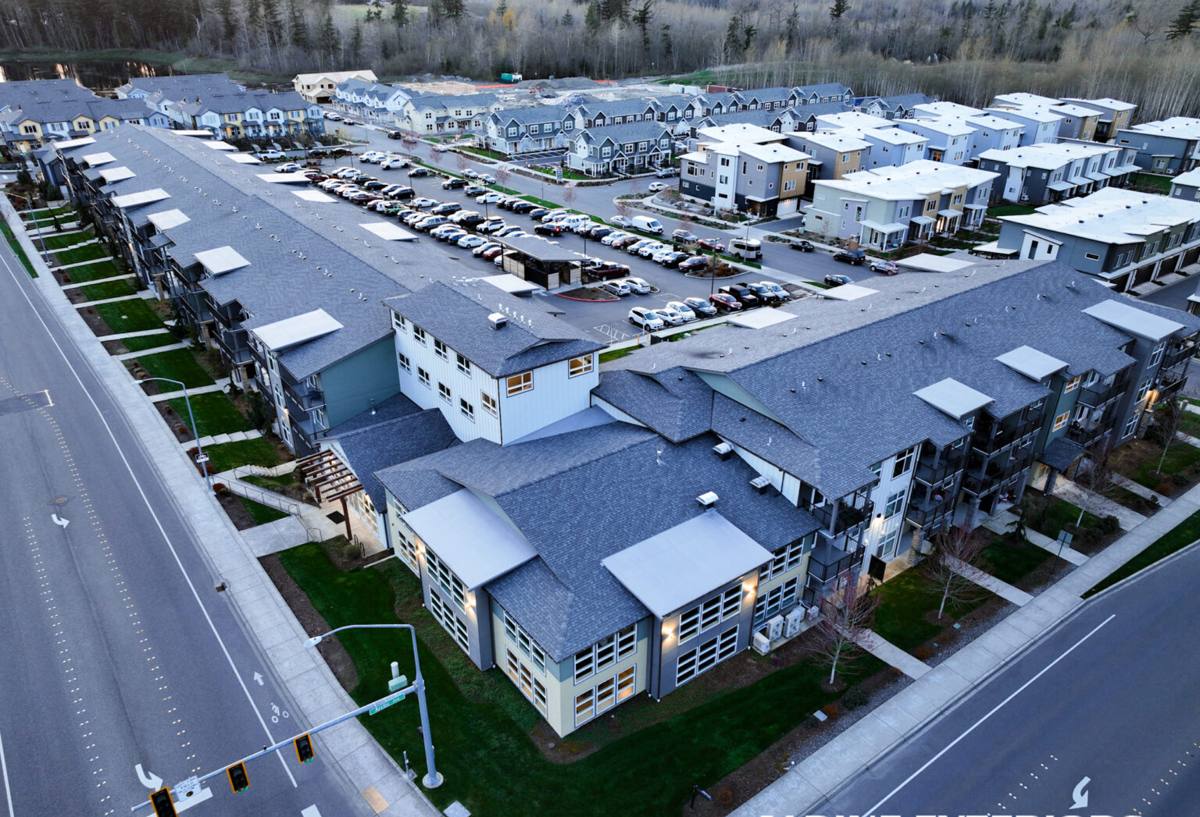
Put those three factors together — salt, wind-driven rain, and a long moss season — and the requirements for a Blaine home's exterior cladding become pretty clear. It needs to be dimensionally stable so it doesn't swell and crack under repeated wet-dry cycling. It needs a factory-applied finish that doesn't depend on the homeowner repainting every few years to stay watertight. It needs to be installed with a drainage plane behind it, not just caulked at the joints. And it needs to be non-combustible, since wildfire smoke and ember exposure have become a real-season concern even west of the Cascades.
This is exactly why we standardized on James Hardie fiber cement and stopped installing anything else. Not because every alternative is bad in every setting, but because in a climate like Blaine's, the margin for error with lower-cost or moisture-sensitive materials is thin, and the cost of a callback — or a rot repair five years later — is a lot higher than the cost of doing it right the first time.
Why We Install Only James Hardie Fiber Cement
James Hardie's fiber cement is engineered specifically for regional climate demands through its HZ5 product line, which is built for the wetter, cooler conditions found throughout Western Washington. Fiber cement itself doesn't absorb bulk water the way wood-based products can, doesn't rot, and isn't an attractive food source for the moisture-loving organisms that thrive in a place like Blaine. The ColorPlus factory finish is baked on under controlled conditions and backed by a real finish warranty, which matters a lot when you're dealing with salt exposure and constant damp — it means the color and the moisture protection aren't riding on how carefully a painter caulked a joint in the field.
We don't install LP SmartSide, vinyl, Cemplank, Allura, or primed wood siding, and we're upfront about why: each of those products asks the homeowner to accept a trade-off — more maintenance, more moisture sensitivity, a less durable finish, or a thinner warranty — that we don't think makes sense to sign up for in this specific climate. Hardie isn't the cheapest option on the shelf, but it's the one we're willing to put our name behind in a marine, high-moss environment.
What a Correct Fiber Cement Installation Involves
Fiber cement is only as good as the installation underneath it. A huge share of the siding failures we get called out to inspect trace back to installation shortcuts, not the material itself. In a coastal, wind-driven-rain environment like Blaine, these details aren't optional extras — they're the difference between siding that lasts decades and siding that traps moisture behind it.
Weather-Resistive Barrier and Drainage Plane
Correct installation starts with a continuous weather-resistive barrier over the sheathing, with a drainage gap or rainscreen behind the siding itself. That gap lets any moisture that does get past the cladding drain and dry out instead of sitting against the sheathing. This step is invisible once the job is done, which is exactly why it's the step that gets skipped by crews trying to save time.
Fasteners, Clearances, and Flashing
Fasteners need to be corrosion-resistant and driven to the manufacturer's specification — not overdriven, not underdriven. Siding needs proper clearance from the ground, roof lines, and decks so water and splash-back don't sit against the bottom edge. Every window, door, and penetration needs correctly lapped flashing so water sheds outward at each transition instead of being funneled behind the wall.
Joints, Caulking, and Trim
Butt joints should be minimized and, where they occur, treated correctly rather than just caulked and painted over. Trim needs to be installed with the same moisture-management logic as the field siding, since trim boards and corners are where a lot of water intrusion actually starts.
| Installation Detail | Why It Matters in Blaine |
|---|---|
| Rainscreen / drainage gap | Lets wind-driven rain that gets behind the cladding drain and dry instead of soaking sheathing |
| Corrosion-resistant fasteners | Salt air accelerates corrosion on standard fasteners over time |
| Correct ground and roof clearances | Reduces splash-back and standing moisture at siding's most vulnerable edges |
| Factory ColorPlus finish, minimal field painting | Removes reliance on repainting for weather protection in a damp climate |
| Proper flashing at penetrations | Prevents wind-driven rain from being funneled behind the wall at windows and trim |
Our Process for a Blaine Siding Project
We approach every Blaine job the same methodical way, adjusted for the specific exposure of that lot — waterfront-adjacent, wind-exposed, or shaded and moss-prone.
- On-site assessment: we look at existing siding condition, moisture damage, exposure direction, and shading before recommending anything.
- Measurement and product selection: we spec the correct James Hardie profile, texture, and HZ5 formulation for the home, along with color from the ColorPlus palette.
- Tear-off and inspection: once old siding is off, we inspect sheathing for hidden moisture damage before closing the wall back up — this is where problems that started years ago actually get found.
- Weather barrier and rainscreen installation: the drainage system goes in correctly, not as an afterthought.
- Siding installation to manufacturer spec: fastening, clearances, and flashing done to Hardie's published requirements, not shortcuts.
- Final walkthrough: we go over the finished job with the homeowner before calling it done.
Maintenance in a Salt Air, High-Moss Climate
Fiber cement is low-maintenance compared to wood or vinyl, but "low-maintenance" doesn't mean "no-maintenance" anywhere near the water. A little seasonal attention goes a long way toward protecting the investment.
- Rinse siding annually to remove salt residue and airborne grime, especially on walls facing the water or prevailing wind
- Keep gutters clear so overflow doesn't run down the siding face
- Trim back vegetation and tree cover that keeps north-facing or shaded walls damp and slow to dry
- Treat moss or algae growth early with a gentle wash rather than letting it establish and stain the finish
- Inspect caulking at trim joints and penetrations every year or two and recaulk as needed
- Watch for any soft spots, staining, or bubbling at the base of walls, which can signal a drainage or flashing issue worth checking
Cost Factors for Blaine Siding Projects
Every home is different, so we don't quote pricing sight unseen, but a few factors consistently move the cost of a Blaine fiber cement project up or down.
| Factor | Effect on Project |
|---|---|
| Home size and wall complexity | More corners, gables, and dormers mean more cutting, trim work, and labor time |
| Existing siding removal and disposal | Tear-off of old material adds labor and disposal cost versus a bare-wall install |
| Sheathing repair needs | Moisture damage found during tear-off may require sheathing or framing repair before siding goes back on |
| Siding profile and texture choice | Lap width, shingle-style panels, and trim details affect material and labor cost |
| Color selection | Factory ColorPlus finishes vary in cost by line, but eliminate future repainting cost |
| Site access and exposure | Waterfront or wind-exposed sites can add time for weather protection and scheduling around conditions |
Why Hiring a Crew That Already Works in Blaine Matters
Coastal Whatcom County exposure isn't the same everywhere, and a crew that mostly works drier inland jobs around Lynden won't automatically build in the extra margin a water-adjacent Blaine home needs. Knowing which walls in this area typically take the worst of the wind-driven rain, how much moss pressure to expect on shaded elevations, and how salt exposure affects fastener and flashing choices isn't something you learn from a manual — it comes from having actually worked on homes in this specific stretch of coastline. A crew with that local experience makes fewer assumptions and catches problems, like hidden moisture damage from a prior installation, before they become expensive surprises.
It also matters for something simpler: showing up. Local crews aren't juggling long drive times or spreading themselves across a wide service area, which means better scheduling reliability and a faster response if something needs a follow-up look after the job is done.
Get a Straight Answer for Your Blaine Home
If your siding is showing moss staining, chalky paint, soft spots, or just age, we're happy to take a look and give you an honest read on what's going on and what it would take to fix it right. There's no pressure and no obligation — just a straightforward assessment from a crew that installs one product, does it correctly, and knows this stretch of coastline. Use the form below to request a free estimate.