 Lynden Exterior
 Roofing for Kendall's Climate, Not a Generic One
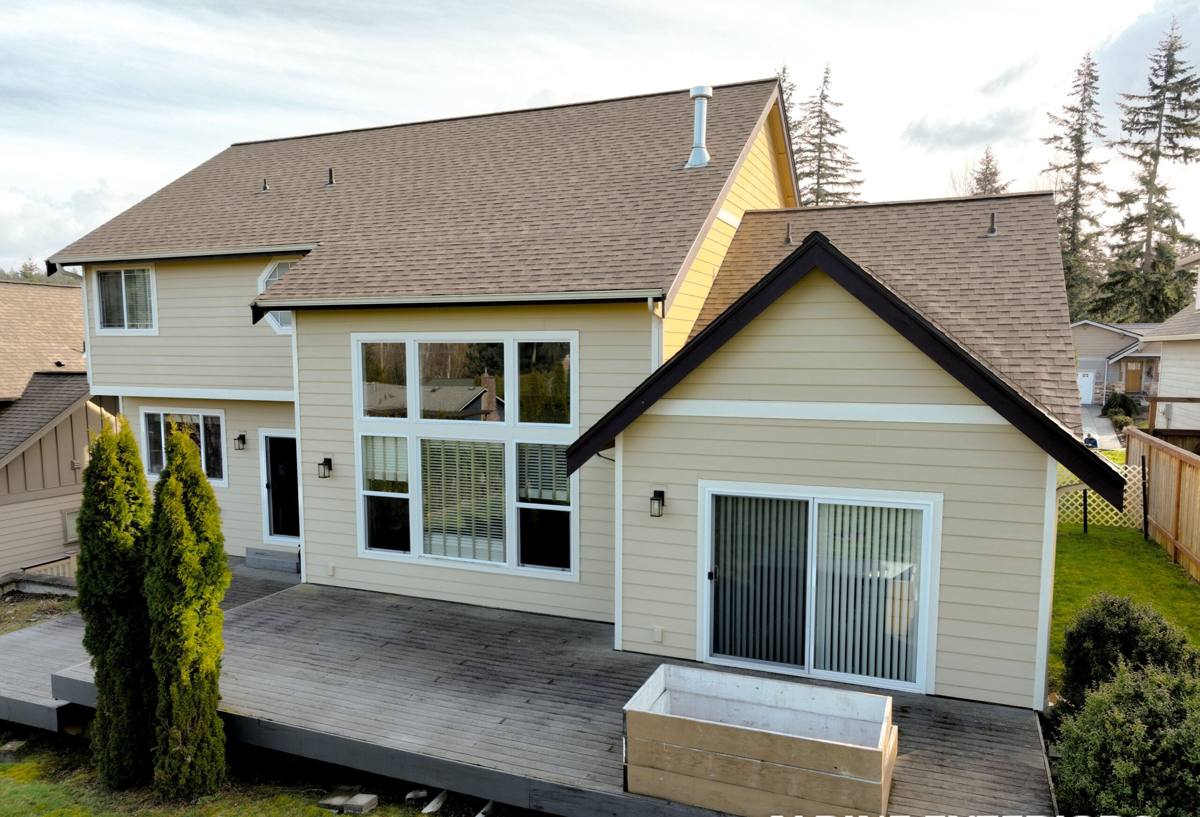
Kendall sits in the rural, tree-lined stretch of Whatcom County east of Lynden, where tall conifers shade most rooflines for a good part of the day and the weather rolls in off the Salish Sea before climbing toward the foothills. That combination — persistent shade, marine-influenced moisture, and long stretches of overcast, damp weather — is exactly the environment that wears down an asphalt shingle roof faster than a manufacturer's spec sheet would suggest. A roof that performs fine in a drier, sunnier part of the state can struggle here if it wasn't installed with this specific climate in mind.
We treat asphalt shingle roofing in Kendall as its own job, not a copy-paste of what we'd do somewhere with less tree cover or less rain. That means different attention to ventilation, different flashing details around valleys and penetrations, and a frank conversation with homeowners about what maintenance actually matters here versus what's just a checkbox elsewhere.
What Whatcom County Weather Does to a Shingle Roof
Moss and Algae Pressure
Shaded, moisture-retaining roof surfaces are prime real estate for moss and algae. Moss isn't just cosmetic — its root structure works into the granule surface of a shingle and lifts tabs, and mats of moss hold water against the roof deck far longer than bare shingle would. Over several seasons, that trapped moisture accelerates granule loss and can work its way toward the underlayment, especially around valleys, ridge lines, and anywhere debris collects.
Driving Rain and Wind-Driven Moisture
This part of Whatcom County gets rain that doesn't just fall straight down — it comes in sideways during storms, which puts real pressure on flashing details, ridge caps, and any place where a roof plane meets a wall, chimney, or skylight. A shingle roof can look fine from the ground and still have a compromised flashing detail quietly letting water in during wind-driven storms.
Salt Air and Corrosion
Whatcom County's proximity to the Salish Sea means a low but steady level of salt-laden air moves through the region, especially during storm systems. Salt exposure doesn't rot shingles the way moss does, but it does accelerate corrosion on exposed metal — nail heads, flashing, and roof vents — which is part of why we favor corrosion-resistant fasteners and flashing materials on every install, not just the ones closest to the water.
What a Correct Asphalt Shingle Installation Actually Involves
A shingle roof is only as good as the layers underneath it. Homeowners rarely see most of what determines whether a roof lasts 15 years or 30, because it's covered up by the time the job looks "done." Here's what we consider non-negotiable on every Kendall installation:
Deck Inspection and Repair
Before a single shingle goes down, the roof deck gets inspected for soft spots, delamination, or rot — common where moss has been holding moisture against the roof for years. Any compromised sheathing gets replaced. Shingling over a soft deck just hides a problem that will resurface as sagging or leaks.
Underlayment Suited to the Climate
Given how much moisture this area sees, we use a synthetic or self-adhered underlayment appropriate to the roof's exposure, with extra ice-and-water-shield-style membrane at vulnerable points — eaves, valleys, and around penetrations — even though hard freezes aren't the primary concern here. The bigger issue locally is wind-driven rain finding its way under standard felt, and a properly detailed underlayment is the backup layer that catches what the shingles don't.
Ventilation
Poor attic ventilation traps moisture underneath the roof deck, which contributes to premature shingle failure from below — a problem that's easy to miss because it doesn't show up as an obvious leak. We check intake at the soffits and exhaust at the ridge or roof vents to make sure air is actually moving, not just technically present.
Flashing Detail Work
Step flashing at walls, counter-flashing at chimneys, and properly lapped valley flashing are where most roof leaks actually originate — not in the open field of shingles. This is the part of the job that separates a roof that holds up through driving rain from one that develops slow leaks nobody can find for years.
Choosing a Shingle That Makes Sense for Kendall
Not every asphalt shingle product is a good fit for a shaded, moss-prone, rain-heavy roof. We walk homeowners through the real trade-offs rather than defaulting to whatever's cheapest or most heavily marketed.
| Shingle Type | Best For | Trade-Offs in This Climate |
|---|---|---|
| Standard 3-tab | Budget-conscious re-roofs, simple rooflines | Lower wind rating and shorter lifespan; less resistant to the granule loss moss and algae cause |
| Architectural / laminate | Most Kendall homes — better durability, dimensional look | Higher upfront cost, but holds up noticeably better under sustained moisture and wind |
| Algae-resistant (copper- or zinc-infused granules) | Heavily shaded lots, north-facing slopes | Slight cost premium; significantly reduces (not eliminates) algae staining and growth |
| Impact-resistant (Class 4) | Homes wanting longer-term durability and possible insurance credit | Higher material cost; worth asking your insurer whether it qualifies for a premium discount |
For most Kendall properties — especially anywhere with heavy tree cover — we lean toward architectural shingles with algae-resistant granules. It's a modest cost increase that directly addresses the biggest local threat to shingle longevity: sustained moisture and biological growth, not just wind or hail.
How We Approach a Kendall Roofing Project
1. On-Site Assessment
We look at more than the shingles themselves — tree cover, roof pitch, existing moss or algae staining, attic ventilation, and the condition of flashing and roof penetrations all factor into an honest recommendation.
2. Clear Scope and Straight Talk on Options
We explain what's actually needed versus what's optional, including whether a full tear-off makes more sense than a layover (in most cases here, it does — trapped moisture under old layers is a real risk in this climate).
3. Tear-Off and Deck Repair
Old material comes off completely so we can inspect and repair the deck. This is also when we address any moss-related rot that isn't visible from the ground.
4. Installation with Local Detailing
Underlayment, flashing, and shingle installation proceed with the moisture and wind considerations specific to this area — not a one-size-fits-all approach.
5. Final Walkthrough
We review the completed work, ventilation, and any maintenance recommendations specific to your property's shade and moss exposure.
Maintenance That Actually Matters Here
A correctly installed roof still needs upkeep in this climate — skipping it is the single biggest reason otherwise-sound roofs fail early in shaded, moss-prone areas like Kendall.
- Have moss and algae growth professionally treated and removed rather than pressure-washed, which can strip granules and shorten shingle life
- Keep gutters and valleys clear of needles and debris that trap moisture against the roof
- Trim back overhanging branches to reduce shade, debris, and physical abrasion on the roof surface
- Schedule a visual inspection after major windstorms to check flashing and ridge caps
- Address small leaks or missing granules quickly — moss and moisture problems compound fast when left alone
- Confirm attic ventilation isn't blocked by insulation or debris, especially after any attic work
What Affects the Cost of a Kendall Re-Roof
| Factor | Why It Matters |
|---|---|
| Roof pitch and complexity | Steeper, multi-plane roofs take longer and require more safety setup and flashing work |
| Deck condition | Rot or soft sheathing found under old moss growth adds repair cost that isn't visible until tear-off |
| Number of existing layers | Multiple old layers mean more tear-off labor and disposal before installation can begin |
| Shingle class chosen | Standard 3-tab, architectural, algae-resistant, and impact-resistant products all carry different material costs |
| Access and tree cover | Dense trees near the roofline can require extra care, staging, or trimming coordination |
We give straightforward, itemized estimates rather than a single lump number, so homeowners can see exactly what's driving the price and where there's room to adjust scope if needed.
Why It Matters That We Already Work in Kendall
A crew that mostly roofs in drier, less shaded parts of the state may not think twice about ventilation detail or moss-resistant granules — those things matter less where they usually work. Working regularly in and around Lynden and the surrounding Whatcom County communities means we see the same recurring problems on Kendall-area roofs: moss working into granules, flashing fatigued by wind-driven rain, and attics that were never properly vented for a shaded lot. That familiarity shapes how we scope and install every roof, rather than treating this climate as an afterthought.
It also means we're not guessing at what fails first out here — we've seen it, repaired it, and adjusted our installation standards because of it.
Get an Honest Look at Your Roof
Whether you're dealing with visible moss, aging shingles, or you just want a straight answer on whether your roof still has good years left in it, we're glad to take a look. Fill out the form below for a free, no-pressure estimate on asphalt shingle roofing for your Kendall home.