 Lynden Exterior
 Building a Deck That Can Actually Handle Kendall
Kendall sits back from Lynden toward the foothills, with more tree cover, more shade, and more rain hanging around on the ground than you get out on the open flats. That combination changes how a deck should be built. A composite deck installed the same way you'd build one on a sunny, exposed lot in town will often struggle here — trapped moisture, moss creeping across the boards, and a substructure that never quite dries out between storms. A deck built for Kendall specifically holds up a lot better and stays a lot cleaner.
This page covers what we actually do differently for composite decks in this part of Whatcom County: the climate factors, the build details, the material choices, and the ongoing care that keeps a deck looking good instead of green.
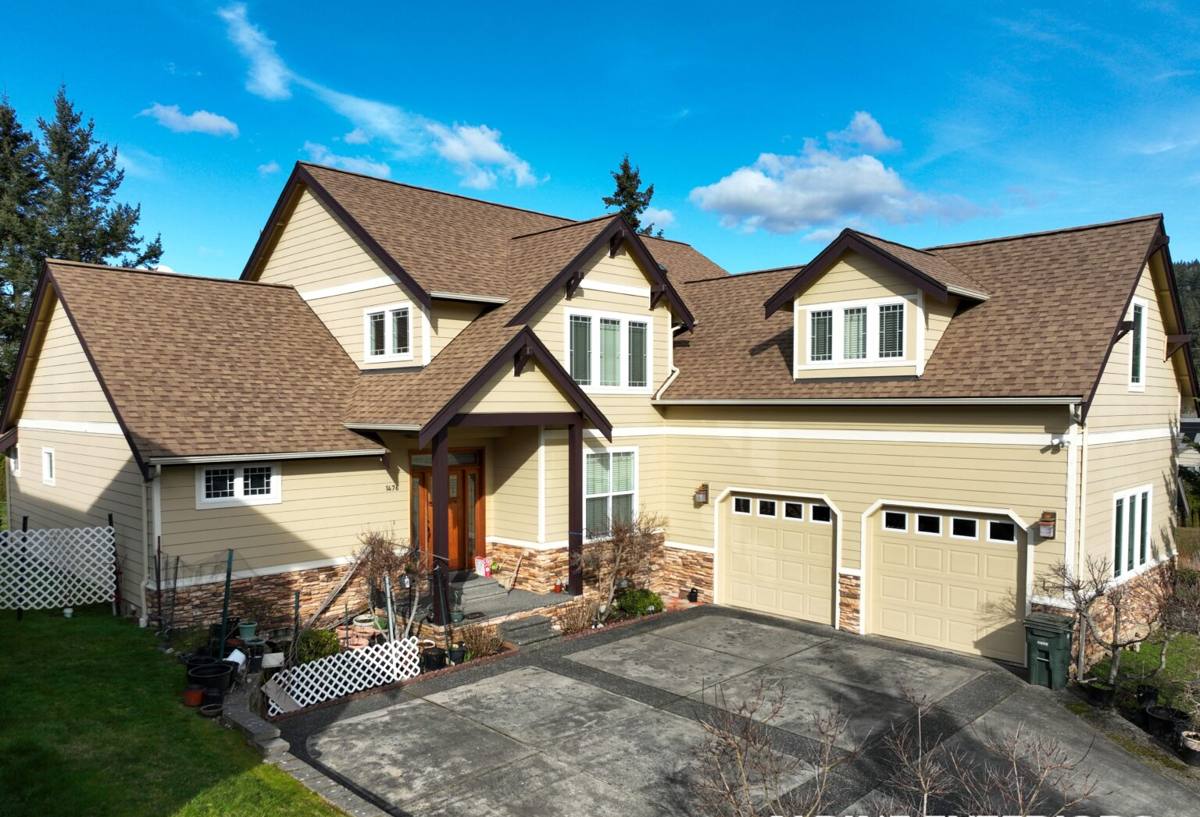
What Kendall's Climate Actually Does to a Deck
Rain That Doesn't Let Up
Whatcom County gets a lot of rain, and the driving, sideways kind is common here, not just straight-down showers. That matters for a deck because water gets pushed under railings, into board gaps, and against the house at the ledger connection — the one spot where a leak becomes a real structural problem instead of a cosmetic one. Any deck we build here is designed assuming water will find its way to places you don't expect, and detailed so it has somewhere to go.
Shade, Tree Cover, and Moss Season
Kendall's mix of mature trees and closer-set forest edges means a lot of decks sit in partial shade for large parts of the day, sometimes most of the year on north-facing sides. Shade plus moisture is exactly what moss and algae need, and once it gets a foothold on a deck surface or in the gaps between boards, it holds even more water against the material underneath. What we call "moss season" up here isn't a week or two — on shaded lots it can run most of the wet half of the year.
Marine Air Off the Sound
Like the rest of Whatcom County, Kendall sits close enough to the Salish Sea and Puget Sound that marine air moves through regularly, carrying salt and moisture even well inland. It's not the same direct exposure as a waterfront deck, but it's enough to accelerate corrosion on the wrong fasteners and hardware over the years. We spec accordingly rather than assuming an inland lot is exempt from it.
What a Correctly Built Composite Deck Includes
Composite boards get most of the attention because they're what you see and touch, but the framing underneath them is what determines whether the deck is still solid in fifteen years. On a lot with Kendall's rain and shade profile, we pay extra attention to a few things that are easy to skip.
Substructure and Ventilation
Joists and beams get wrapped or taped where composite boards will sit on top of them, so the wood framing isn't sitting in standing moisture under a surface that never fully dries. We also keep an eye on airflow underneath the deck — a low deck built tight to the ground with no ventilation traps humidity against the framing year-round, which is a bigger problem here than on a drier lot.
Fasteners and Hardware
Given the marine air moving through the area, we use fasteners and structural hardware rated for the exposure, not just whatever is cheapest at the yard. Mixing incompatible metals, or using standard exterior screws where coated or stainless hardware is called for, is one of the more common shortcuts that shows up as rust streaks and loosening boards a few years down the road.
Flashing at the House
Where the deck attaches to the house, proper ledger flashing directs water away from the wall framing instead of letting it wick in behind the siding. This is the single most important — and most commonly rushed — detail in deck construction. Driving rain finds this seam faster than almost any other part of the structure.
Composite vs. the Alternatives
Composite isn't automatically the right call for every deck, but for Kendall's climate profile it solves several problems that wood-based decking doesn't. Here's an honest comparison based on how each material actually behaves in a wet, shaded environment, not on marketing claims.
| Material | Behavior in Rain and Shade | Moss and Algae Resistance | Maintenance Load |
|---|---|---|---|
| Composite (capped) | Doesn't absorb water into the board core; resists warping and rot | Can still grow surface moss in deep shade, but doesn't feed it the way wood does | Occasional cleaning; no staining or sealing |
| Pressure-treated wood | Absorbs moisture, prone to cupping and checking over time | Feeds moss and algae readily, especially where shaded | Regular sealing, staining, and inspection for rot |
| Cedar | Naturally rot-resistant but still absorbs water; softer surface | Better than treated pine but still susceptible in constant shade | Periodic sealing to hold color and resist splitting |
| PVC (cellular) | Fully water-resistant; won't absorb moisture at all | Resists staining well but surface moss can still sit on top | Low; can look less natural and feel different underfoot |
For a lot with heavy shade and long wet stretches, capped composite tends to be the best balance: it won't rot, warp, or soak up water the way wood does, and it holds up structurally even when it stays damp for weeks at a time.
Not All Composite Boards Are the Same
Capped vs. Uncapped
Capped composite has a protective outer shell wrapped around a composite core, which is what actually resists moisture absorption, staining, and fading. Uncapped composite — an older style still sold in some lines — is more porous and behaves closer to wood in how it takes on moisture, which matters a lot on a shaded, damp lot. We install capped product as our standard for exactly this reason, not because uncapped composite is defective, but because it's the wrong fit for this climate.
Board Profiles and Picture-Framing
Grooved-edge boards with hidden fastener clips give a clean surface with no visible screw heads, and they also avoid the small pockets of standing water that form around exposed fastener heads over time. Picture-framing — running a perimeter board perpendicular to the field boards — gives a finished edge and covers exposed end grain, which is one of the more vulnerable spots on any composite board.
Our Process, Start to Finish
- On-site assessment — we look at drainage, sun exposure, existing structure (if replacing a deck), and how the space is actually used.
- Design and material selection — board style, color, railing system, and layout, sized to the site rather than a standard template.
- Permitting — we handle the paperwork for the applicable jurisdiction so the deck is built and inspected to code.
- Demolition (if replacing an old deck) — including a check of ledger and framing condition once the old decking is off.
- Framing and flashing — footings, ledger attachment and flashing, joists, and moisture protection before any composite goes down.
- Decking, railing, and fascia installation — hidden fasteners, picture-framing, and railing systems installed to spec.
- Final walk-through — we go over the finished deck with you before calling the job done.
Keeping a Kendall Deck Clean Through Moss Season
Composite cuts down maintenance dramatically compared to wood, but "low-maintenance" isn't "no-maintenance," especially on a shaded lot. A little regular attention keeps moss and algae from getting a foothold in the first place, which is a lot easier than removing it once it's established.
- Sweep leaves and debris off the deck regularly through fall — wet leaves left sitting are one of the fastest ways to start a moss patch.
- Rinse the deck surface every few weeks during the wettest months, especially in shaded corners and under furniture that blocks airflow.
- Keep gutters and downspouts clear so water isn't dumping directly onto or near the deck.
- Trim back overhanging branches where practical to let more light and air reach the surface.
- Clean between board gaps periodically — trapped organic debris there is what actually feeds moss growth, not the board material itself.
- Check railing posts and stair connections once a year for any movement, especially after a hard winter.
What Drives the Cost
Every deck is different, and we won't quote a price without seeing the site, but these are the main factors that move the number up or down.
| Factor | Why It Matters |
|---|---|
| Deck size and shape | More square footage and more corners or angles both add material and labor time. |
| Height and stairs | A deck off a second story or with multiple stair runs needs more structural work than a low, single-level deck. |
| Existing structure condition | Replacing decking on sound framing costs less than a full rebuild where framing or footings need replacing. |
| Board tier and railing choice | Composite lines vary in price, and railing systems (composite, aluminum, cable) range widely in cost. |
| Site access | A lot with tight access or a difficult slope takes longer to build on than a flat, open yard. |
As a general guide, composite deck projects typically run from the low thousands for a small, simple replacement up to well into five figures for a large multi-level deck with premium railing. We'll give you real numbers once we've actually looked at your site.
Why Hiring a Crew That Already Works in Kendall Matters
A contractor who mostly works closer to town, on flatter, sunnier lots, doesn't always think about ventilation, drainage, and moss exposure the same way — because it hasn't been the main problem they're solving. Working regularly in Kendall and the surrounding foothill areas means we're used to building for shade, for standing moisture, and for sites where the deck needs to shed water in more directions than a straightforward lot would. It also means we know the permitting expectations for the area and won't be guessing at what an inspector wants to see.
If you're planning a new composite deck or replacing one that's showing its age, we're happy to come take a look and walk you through what we'd actually recommend for your specific lot — no pressure, no hard sell. Use the form below to request a free estimate.