 Lynden Exterior
 Why Kendall Roofs Wear Differently Than Roofs Elsewhere
Kendall sits in the foothill country northeast of Lynden, where open farmland gives way to tree-lined lots along the Nooksack River valley. That mix matters for roofs. Homes tucked under fir and cedar cover get less direct sun and more standing shade, which means shingles stay damp longer after every rain. Homes out in the open fields take the full brunt of wind-driven storms moving in off the Sound, with rain forced sideways under flashing and shingle edges that were never designed to shed water from that angle. Add in Whatcom County's long, low-intensity rainy season — not the heaviest rainfall totals in the state, but some of the most consistent, moisture-laden air for months at a stretch — and you get roofs that simply don't dry out the way roofs do in drier parts of Washington.
That constant dampness, combined with the salt-tinged marine air that moves through the county, is what drives most of the repair calls we get in this area. It's rarely one dramatic failure. It's small, slow problems — a lifted shingle tab, a soft spot of moss, a flashing seam that's been wicking water for two winters — that finally show up as a stain on a ceiling.
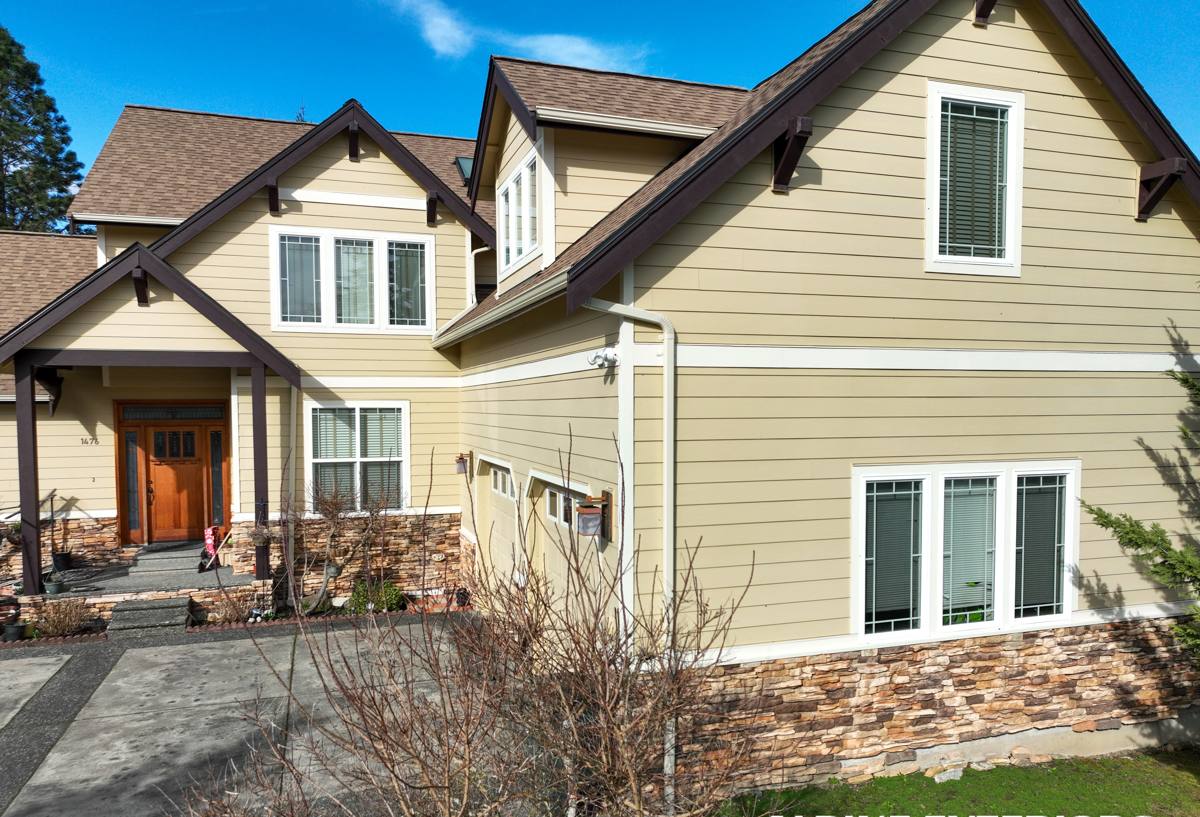
Moss: The Slow Damage Nobody Notices Until It's a Leak
Moss is the single biggest reason we get called out to Kendall roofs that are otherwise in decent shape. It's not just cosmetic. Moss holds moisture directly against the shingle surface around the clock, which accelerates granule loss, softens the mat underneath, and lifts shingle edges just enough for wind-driven rain to get underneath. On shaded, north-facing slopes and roofs under tree canopy, moss can re-establish within a single wet season if it isn't controlled properly.
What correct moss handling actually looks like
- Physical removal with soft tools that don't scrape granules off the shingle — pressure washing a shingle roof is one of the fastest ways to shorten its remaining life
- A rinse-applied treatment rather than a heavy chemical soak that can run off into gutters, downspouts, and landscaping
- Checking for soft decking or granule loss underneath before calling the area "clean," since moss often masks the damage it caused
- A plan for zinc or copper strips near the ridge on chronically shaded slopes, where it's a practical long-term deterrent
Treating moss without checking what's underneath it just resets the clock on the same problem. Part of any honest Kendall roof repair is telling a homeowner when a section needs more than a cleaning.
The Most Common Repairs We Handle in the Kendall Area
Roof repair covers a wide range of jobs, and not every problem needs the same fix. Here's what we see most often on homes in and around Kendall:
- Flashing failures at chimneys, skylights, and roof-to-wall transitions — usually the first place driving rain finds its way in
- Valley leaks where two roof slopes meet and water volume concentrates, especially on roofs with tight tree cover shedding needles and debris into the valley
- Wind-lifted or missing shingles after a storm, particularly on slopes facing open fields with no windbreak
- Nail pops and cracked shingles from age, foot traffic, or seasonal freeze-thaw cycling
- Gutter and edge damage that backs water up under the first course of shingles instead of letting it drain
- Soft or spongy decking discovered under moss or a failed flashing detail, which needs to be addressed before any new material goes down
Most of these are legitimate repairs, not replacement situations — as long as they're caught before they've had a chance to spread.
Repair or Replace? How We Make That Call Honestly
This is the question that matters most, and it's also where homeowners get burned by contractors pushing one answer regardless of what the roof actually needs. Our standard is simple: if a roof has isolated damage, sound decking, and shingles that still have real life left in them, it gets repaired. If the damage is widespread, the decking is compromised in multiple areas, or the shingles are past their expected service life and brittle throughout, a repair is just a temporary patch on a roof that needs to be replaced.
| Factor | Leans toward repair | Leans toward replacement |
|---|---|---|
| Age of roof | Under 15-18 years, asphalt shingle | Approaching or past manufacturer's rated life |
| Extent of damage | One slope, one valley, or a single flashing point | Multiple slopes or recurring leaks in different spots |
| Decking condition | Solid, no soft spots found | Soft, delaminated, or water-stained in several areas |
| Shingle condition elsewhere | Granules intact, tabs still flexible | Widespread granule loss, brittle or curling shingles |
| History | First repair call in years | Third or fourth repair call in a short span |
We'll always show you what we found before recommending a direction, including photos of anything hidden under shingles or moss that led to the call.
What a Correct Repair Involves, Step by Step
A repair that actually holds up through a Whatcom County winter isn't just swapping a shingle. It involves:
- Full-area inspection — not just the spot where the leak showed up inside, since water often travels sideways along decking before it drips through
- Removing damaged material back to sound shingle and sound decking, not just covering the visible problem
- Replacing any wet or soft decking before new shingles or flashing go down over it
- Reinstalling flashing with proper overlap and sealant, tied correctly into the existing underlayment rather than just caulked over the old piece
- Matching shingle type, profile, and as close to color as the existing product allows, so the repair doesn't stand out or create a second weak seam
- Checking adjacent fasteners and seams while the area is open, since a repair is the cheapest time to catch a second problem before it becomes its own leak
Skipping any of these steps is how a "repaired" roof ends up leaking again in the same spot within a year or two.
Materials: What We Recommend and Why
Most Kendall homes are asphalt composition shingle, and for repair work, matching the existing product with a comparable architectural shingle is usually the right call — it blends better, performs consistently with what's already on the roof, and keeps warranty coverage intact. On metal, cedar shake, or older three-tab roofs, repair takes more judgment, since sourcing a true match gets harder as a roof ages.
Our standard for repair materials
- We match shingle weight and wind rating to the existing roof, not just the color
- We use the same class of underlayment and flashing metal already on the house where possible, so materials expand and contract together
- We're upfront when an exact match isn't available anymore — sometimes the honest answer is a slightly visible patch versus a full slope replacement, and that's the homeowner's call, not ours
- We don't push a full tear-off when a properly executed repair will genuinely hold
Our Process for Kendall Roof Repair Calls
We keep this straightforward because roof repair shouldn't feel complicated for the homeowner:
- Inspection first. We get on the roof, document what we find with photos, and check the attic or interior ceiling near any reported leak.
- A clear, written scope. You get an explanation of what's damaged, what caused it, and what the repair involves — no vague line items.
- Honest pricing. Small repairs — a flashing reseal, a handful of shingles, a section of moss treatment — typically run a few hundred dollars. Larger repairs involving decking replacement or multiple flashing points cost more, and we'll walk you through why before we start, not after.
- Weather-aware scheduling. We plan repair work around dry windows whenever the forecast allows, since sealants and flashing work need dry conditions to perform correctly.
- Cleanup. Old material, nails, and debris come off the property — we don't leave a job site looking worse than when we found it.
Between-Service Checklist for Kendall Homeowners
You don't need to get on your own roof to catch problems early. From the ground or a ladder at the eaves, look for:
- Dark streaking or green-tinged patches, especially on shaded or tree-covered slopes — early moss before it takes hold
- Granules collecting in gutters or at downspout outlets after a hard rain
- Shingle tabs that look lifted or curled at the edges, particularly after a windstorm
- Sagging or ponding along valleys or behind chimneys
- Water stains on interior ceilings, especially after several days of steady rain rather than a single storm
- Daylight visible through the roof deck from inside an unfinished attic
Catching any of these early is almost always the difference between a repair and a replacement.
Why a Crew That Already Works Kendall Matters
Roof repair is one of those trades where local familiarity actually changes the outcome. A crew that regularly works this stretch of Whatcom County knows how differently a roof under fir canopy near the river behaves compared to one out on open farmland exposed to the wind — and prices and schedules the job accordingly instead of guessing. We're also familiar with the permitting and inspection expectations that apply to work in unincorporated Whatcom County versus inside Lynden city limits, which matters for anything beyond a straightforward like-for-like repair.
Just as important: a local crew is accountable. If a repair doesn't hold through the next round of driving rain, we're not far away and we're not hard to reach. That's a different relationship than a company that drives in from out of the area for one job and doesn't come back.
If you've got a leak, a mossy patch that's worrying you, or just want an honest read on whether your roof needs a repair or something more, we're glad to take a look. Fill out the form below for a free, no-pressure estimate — we'll tell you what we actually find, not just what's easiest to sell.