 Lynden Exterior
 Roofing a Laurel Home Right, Not Just Fast
Laurel sits in a stretch of Whatcom County where the weather doesn't do a home any favors. Homes here take on salt-laden air moving in off the water, long stretches of driving rain through the fall and winter, and a moss season that can run most of the year in shaded, north-facing spots. A roof that's installed correctly for this environment will outlast one that's just installed to code. A roof that's installed to look fast on a schedule, cutting corners on flashing or ventilation, will show it within a few winters — usually as moss buildup, soft decking, or leaks around penetrations that never should have failed that early.
This page is about one thing: putting a new roof on a Laurel-area home the right way, using materials and methods matched to what this specific area actually deals with year-round.
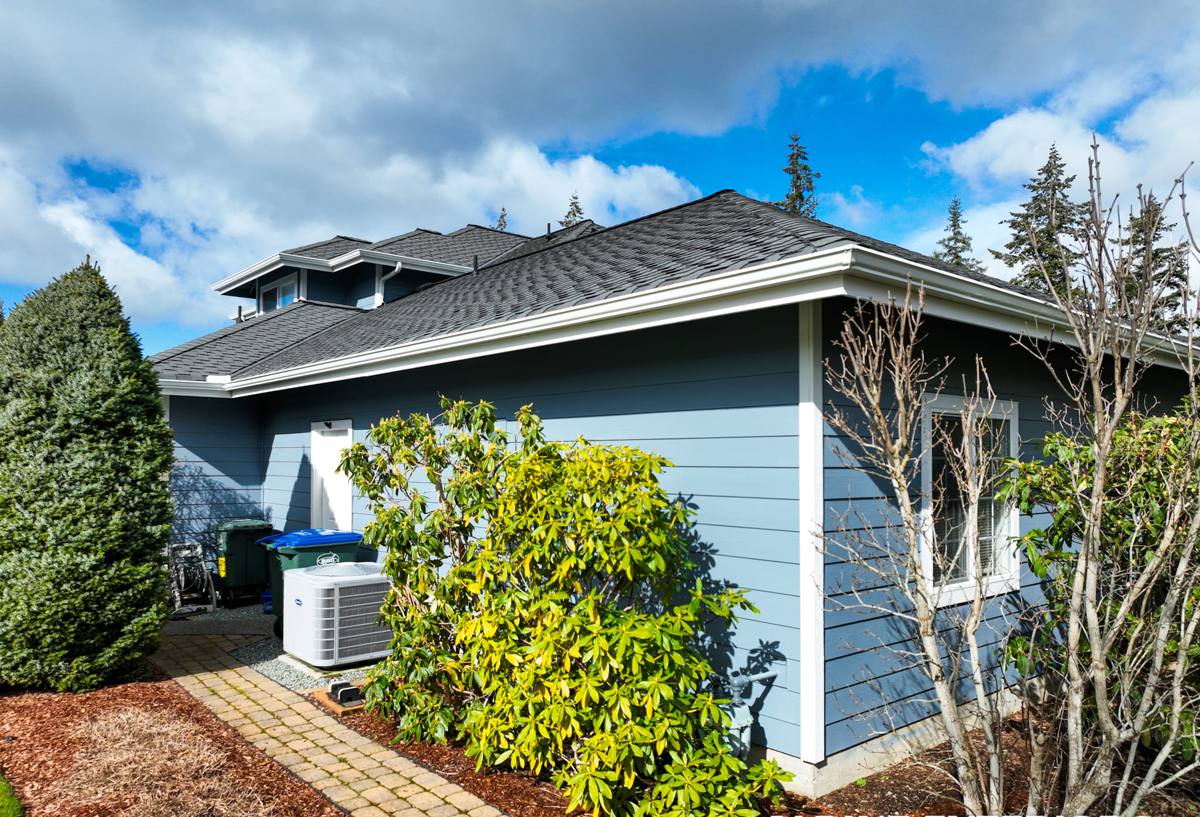
What Laurel's Climate Actually Does to a Roof
It helps to be specific about the mechanisms, because "it rains a lot here" undersells what's really happening to shingles, decking, and flashing over time.
Salt Air
Airborne salt accelerates corrosion on any exposed metal — nails, flashing, vent boots, gutter fasteners. Standard fasteners and unprotected metal components degrade faster near the coast than they would inland, which is why fastener and flashing choice matters more here than in a lot of other parts of the state.
Driving Rain
Wind-driven rain doesn't just fall straight down — it gets pushed up and under shingle edges, around vent pipes, and into any gap in flashing that a calm-weather rain would never find. A roof built for this area needs underlayment and flashing details sized for wind-driven moisture, not just vertical rainfall.
A Long Moss Season
Shaded rooflines, tree cover, and consistently damp conditions give moss a long window to establish itself. Once moss takes hold, it holds moisture against the shingle surface, lifts shingle edges as it grows, and shortens the roof's usable life. Moss isn't just cosmetic — it's a slow, ongoing moisture problem sitting directly on your roof deck.
Put those three together — salt air, driving rain, and a long moss season — and you get a climate that punishes roofs installed with generic, one-size-fits-all methods. Laurel homes need roofing details chosen specifically for this combination.
Signs a Laurel Home Needs a New Roof, Not Another Repair
Repairs make sense when a roof has isolated damage and years of life left. A full replacement makes sense when the underlying materials are worn out everywhere, not just in one spot. Common signs it's time to stop patching:
- Shingles that are cupping, curling, or losing granules across large sections of the roof, not just one area
- Moss coverage that returns within a season or two of being cleaned off
- Soft or spongy spots in the roof deck when walked on
- Daylight visible through the attic sheathing, or damp insulation after storms
- Repeated leaks in different spots each winter rather than the same one
- A roof that's approaching or past the manufacturer's expected service life for its material and this climate
- Visible sagging along the roofline or between rafters
If you're seeing two or more of these, a replacement is usually the more honest recommendation than another round of patching — and we'll tell you that directly during an inspection, even if a repair would be the easier sale.
What a Correctly Installed Roof Actually Involves
A new roof is more than shingles nailed to plywood. For a Laurel-area home, the details below are what separate a roof that holds up for its full service life from one that starts failing early.
Tear-Off and Deck Inspection
We remove the old roofing down to the deck rather than layering over it, because you can't evaluate — or properly waterproof — a deck you can't see. Any soft, rotted, or delaminated sheathing gets replaced before anything new goes down. Skipping this step is the single most common shortcut that leads to early failure.
Underlayment Built for Wind-Driven Rain
Given how much wind-driven rain this area sees, underlayment selection matters. Self-adhered ice-and-water membrane at eaves, valleys, and around penetrations gives the roof a second line of defense in exactly the spots where driving rain and moss buildup cause the most damage.
Flashing and Fasteners Chosen for Salt Exposure
Around chimneys, skylights, vent pipes, and roof-to-wall transitions, we use flashing and fastener materials selected to resist corrosion, not the cheapest option that happens to meet minimum code. This is a small cost difference at install time and a significant difference in how the roof performs a decade from now.
Balanced Attic Ventilation
Proper intake and exhaust ventilation keeps the underside of the deck dry and temperature-stable, which does two things: it extends shingle life, and it reduces the damp, shaded conditions that let moss and algae take hold in the first place. A roof can have great shingles and still fail early if ventilation is wrong.
Correct Nailing and Exposure
Manufacturer nailing patterns and shingle exposure exist for a reason — mainly wind resistance. In an area that gets driving rain and real wind events, under-nailing or over-exposing shingles is a shortcut that shows up as lifted or blown-off shingles within a few storm seasons.
Comparing Roofing Materials for a Laurel-Area Home
There's no single "best" roofing material for every home — it depends on your roof's exposure, your budget, and how long you want to go between major maintenance. Here's how the common options stack up for this climate specifically.
| Material | Moss & Moisture Resistance | Salt Air Durability | Typical Lifespan | Maintenance |
|---|---|---|---|---|
| Architectural asphalt shingles | Good with proper ventilation and periodic cleaning | Good with corrosion-resistant fasteners | 25–30 years | Moderate — periodic moss treatment recommended |
| 3-tab asphalt shingles | Fair — shorter lifespan reduces margin for moss-related wear | Fair | 15–20 years | Moderate to higher over time |
| Standing seam metal | Excellent — smooth surface sheds moisture, resists moss growth | Very good with coated/marine-grade fasteners | 40–60+ years | Low |
| Composite / synthetic shake | Good — engineered to resist moisture absorption | Good | 30–50 years | Low to moderate |
For most Laurel homes, architectural asphalt shingles remain the most practical balance of upfront cost and performance, provided ventilation and flashing are done correctly. Homes with heavy tree cover, steep rooflines, or owners who want to minimize long-term maintenance often do better with standing seam metal, despite the higher upfront investment.
Our Installation Process
- On-site inspection and estimate — we walk the roof, check the attic, and assess ventilation, flashing points, and deck condition before quoting anything.
- Material selection — we walk through options based on your roof's exposure, your budget, and how long you want between major maintenance.
- Scheduling around weather — given the rain pattern here, we plan installs for dry windows and stage materials to keep the deck protected if weather turns mid-project.
- Tear-off and deck repair — full removal of old roofing, deck inspection, and replacement of any compromised sheathing.
- Underlayment, flashing, and ventilation installation — the layers that determine how the roof performs over the next 20-plus years.
- Shingle or panel installation — installed to manufacturer specifications for nailing pattern and exposure.
- Cleanup and final walkthrough — magnetic sweep for debris, gutter check, and a walkthrough so you know exactly what was done.
Ventilation and Moss: The Long-Term Maintenance Piece
A new roof isn't a one-time event you can forget about — it's the start of a maintenance relationship, especially somewhere with a moss season as long as this one. Proper ventilation at install time does most of the heavy lifting, but a few habits extend the life of any roof in this climate:
- Keep gutters and downspouts clear so water isn't sitting against the roof edge
- Trim back overhanging branches that keep sections of the roof shaded and damp
- Have moss growth treated before it spreads, rather than waiting until it's covering a full slope
- Schedule a roof check after major storms, particularly ones with high wind
- Watch for granule buildup in gutters, which signals accelerated shingle wear
Why a Crew That Already Works in Laurel Matters
Roofing details that work fine in a dry inland climate can underperform here. A crew that already works Laurel and the surrounding Lynden area isn't guessing at underlayment coverage, fastener corrosion resistance, or ventilation sizing — they've seen what actually fails on homes in this specific environment and build accordingly from the start. That's the difference between a roof installed to pass inspection and a roof installed to actually hold up through a Whatcom County winter.
It also means faster, more accurate estimates. We're not learning the area's weather patterns on your project — we already know what a roof here needs to handle.
What Affects the Cost of a New Roof in Laurel
Every roof is different, so we won't put a number here that doesn't apply to your home. What we can tell you is what actually drives the cost up or down, so an estimate makes sense when you get one:
- Roof size and the number of planes, valleys, and penetrations
- Pitch and accessibility — steeper or harder-to-access roofs take more labor
- Current deck condition — how much sheathing needs replacing, if any
- Material choice — asphalt, metal, and composite options span a wide cost range
- Ventilation and flashing upgrades needed to bring the roof up to standard
- Layers of existing roofing to remove
The only way to get an accurate number is a physical inspection — anyone quoting a full roof price without seeing your roof and attic is guessing.
Questions to Ask Before Hiring a Roofer
Before signing anything, it's worth confirming a few basics with any contractor you're considering for a Laurel-area roof:
- Are they licensed and insured to do roofing work in Washington State?
- Do they inspect the attic and deck, or just the surface from the ground?
- Will they specify the underlayment, flashing, and ventilation details in writing, not just the shingle brand?
- Do they have experience with the moss and moisture conditions specific to this area?
- Is the warranty clearly explained — what's covered by the manufacturer versus the installer?
If your roof is showing wear, or you just want an honest read on how much life it has left, we're happy to take a look. The estimate is free, there's no pressure to sign anything on the spot, and you'll get a straight answer about whether you need a new roof or just a repair — fill out the form below to get started.