 Lynden Exterior
 Metal Roofing for Maple Falls: Built for Whatcom County's Wet Side
Maple Falls sits within our broader Lynden-area service footprint in Whatcom County, and homes out this way deal with the same core weather pattern that shapes roofing across the rest of the county: salt-tinged marine air working its way inland, rain that arrives sideways as often as it falls straight down, and a moss season that can run most of the year on any roof plane that stays shaded or damp. Add in more tree cover than you'd find on an open valley lot, and roofs here often stay wet longer between storms than homeowners expect. None of that rules out any particular roofing material, but it does mean the material and the installation both have to be chosen with those specific stresses in mind, not treated as an afterthought.
This page is focused on one thing: metal roofing for a Maple Falls home. Not siding, not windows, not roofing in general — what a metal roof specifically needs to hold up here, what a correct installation actually involves, and how our process works from first inspection to final walkthrough.
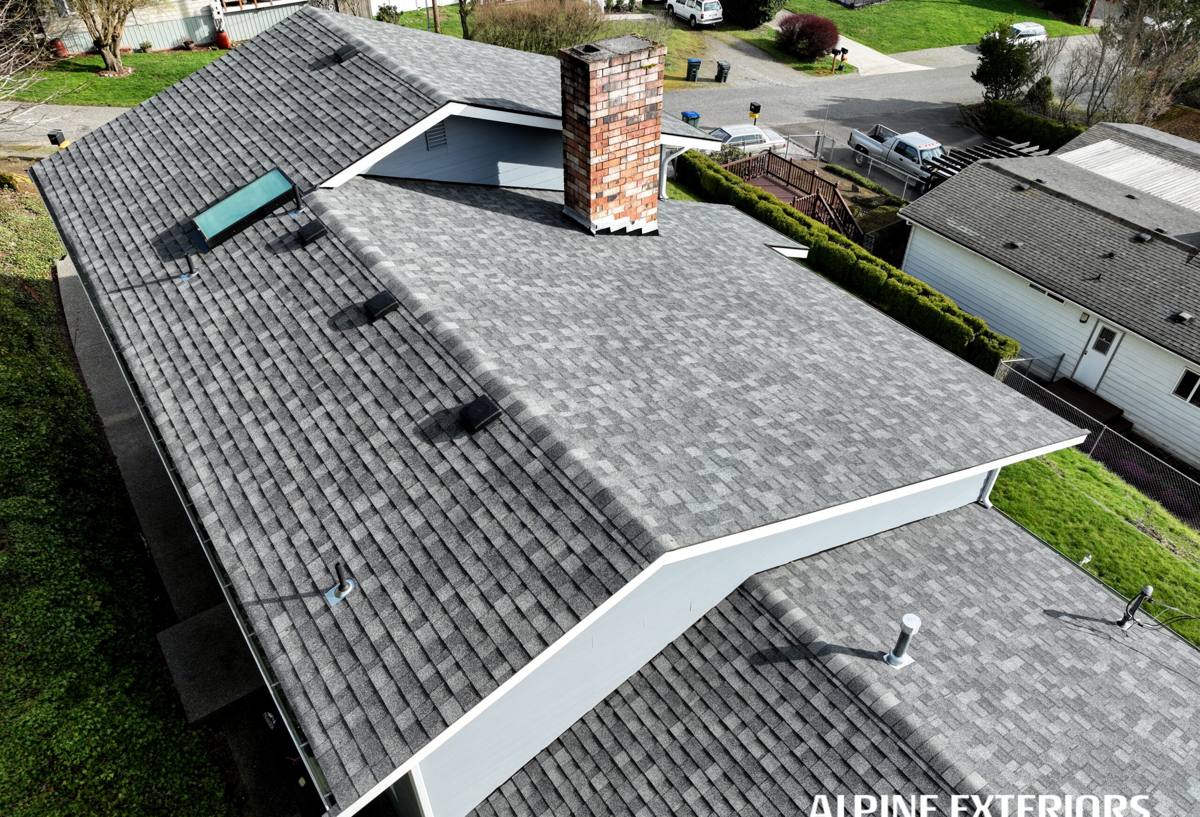
What This Climate Does to a Metal Roof
Driving Rain and Wind-Driven Moisture
Rain in this part of Whatcom County rarely falls straight down for long. Wind pushes it sideways and sometimes upward under roof edges, which is a heavier and more directional load than an annual rainfall number suggests. A metal roof handles that well when the panel system, underlayment, and flashing are all working together — but a roof with weak flashing details or gaps at panel laps can still let water track in, no matter how good the panels themselves are.
A Long Moss Season on Shaded Roof Planes
Mild, damp conditions and heavier tree cover in and around Maple Falls add up to a long moss and algae season on any roof surface that doesn't get much direct sun. Metal roofing has a real advantage here — its smooth, non-porous surface gives moss and algae far less to grip onto compared to a textured shingle surface — but it isn't immune. Debris that collects in valleys or against snow guards and trim can still hold moisture long enough for growth to start, especially on low-pitch sections or under overhanging branches.
Fastener and Flashing Corrosion Over Time
Metal roofing is only as durable as its weakest metal component. Salt-influenced air moving through this part of the county accelerates corrosion on undersized, uncoated, or mismatched fasteners and flashing far faster than it degrades the roofing panels themselves. A roof can have twenty years of life left in the panels and still develop leaks and rust streaking within a decade because the screws or trim metal weren't specified for sustained moisture exposure.
Why Metal Roofing Makes Sense for a Maple Falls Home
Metal isn't the right fit for every roof or every budget, and we'll tell you honestly when a well-built shingle roof is the more practical choice. But for a lot of Maple Falls homes, metal roofing earns its higher upfront cost over the life of the roof:
- Sheds moss and debris better: The smooth panel surface gives organic growth far less to hold onto than a shingle's textured surface, which matters directly on shaded, tree-covered lots.
- Handles wind-driven rain aggressively: Interlocking or overlapping panel seams, installed correctly, shed sideways-driven moisture better than a shingle system relying on gravity and granule adhesion alone.
- Long service life: A correctly installed metal roof commonly outlasts two or more asphalt shingle roofs, which means fewer full tear-offs and less lifetime disruption over the time you own the home.
- Low ongoing maintenance: Beyond periodic gutter and valley clearing, a metal roof doesn't demand the moss treatments and granule loss monitoring that shingle roofs need in this climate.
- Fire resistance: Metal roofing is non-combustible, which can matter for both peace of mind and insurance considerations, particularly on wooded lots.
The honest trade-offs: metal roofing costs noticeably more upfront than asphalt shingles, panel systems are less forgiving of installation mistakes than shingles are, and if a panel is ever damaged, matching and replacing a single section is a more specialized repair than swapping a few shingles. None of that makes metal the wrong choice — it just means the installation quality matters even more than it does with shingles, because there's less margin for error.
Standing Seam vs. Exposed-Fastener Panels
"Metal roofing" covers more than one system, and the two most common options for a residential roof perform differently in this climate.
| System | How It's Fastened | Fit for Maple Falls Conditions |
|---|---|---|
| Standing seam (concealed fastener) | Panels interlock at raised seams; fasteners are hidden underneath, not exposed to weather | Best long-term performance against wind-driven rain and thermal movement; higher upfront cost |
| Screw-down (exposed fastener) | Panels are fastened directly through the face with exposed screws and washers | Lower upfront cost, but exposed fasteners and washers are the first thing to fail from sustained moisture and need periodic re-torquing or replacement |
Standing seam systems generally make more sense for a Maple Falls home given the sustained moisture and moss exposure, since there's no exposed fastener penetrating the panel face for water to work its way around over time. Screw-down panels are a legitimate, lower-cost option, but we'll tell you upfront that they carry a real long-term maintenance obligation in this climate — the exposed washers and screws age faster than the panels themselves and need to be checked and eventually replaced, not just installed and forgotten.
What a Correct Metal Roof Installation Involves
Deck Prep and Underlayment
A metal roof needs a sound, dry deck underneath it just as much as a shingle roof does — metal doesn't fix a rotting substrate, it just sits on top of one. We inspect the deck fully, whether that means a tear-off of existing roofing or new construction, and use an underlayment rated for high-heat, high-moisture conditions specifically compatible with metal panels, not a generic felt product.
Panel Fastening and Thermal Movement
Metal panels expand and contract with temperature swings more than shingles do, and a correct installation accounts for that movement rather than fighting it. Standing seam clips are designed to let panels move slightly without stressing the fasteners or seams; screw-down systems need proper hole sizing and washer condition so the panel isn't pinned rigidly in place. Getting this wrong is one of the more common causes of premature fastener failure and oil-canning — a rippled or wavy appearance in the panel field — on rushed installations.
Flashing at Valleys, Chimneys, and Penetrations
As with any roof, most leaks on a metal roof start at the transitions, not the open panel field. Valleys, chimney flashing, vent pipe boots, and roof-to-wall intersections all need flashing that's built to work with the specific panel profile being installed, properly lapped and sealed as part of the system rather than caulked as an afterthought.
Avoiding Dissimilar-Metal Corrosion
Mixing incompatible metals, an aluminum panel fastened with the wrong screw type, or a copper vent flashing set directly against a steel panel, can trigger galvanic corrosion that eats away at one of the metals over time. It's a detail that's easy to overlook and expensive to fix after the fact, which is why matching fasteners, flashing, and panel material correctly is part of the spec, not an afterthought.
Metal Roofing Cost Factors Worth Understanding
Two metal roofing bids for the same house can look very different once you understand what's actually driving the number.
| Factor | What It Affects |
|---|---|
| Panel system (standing seam vs. screw-down) | Material and labor cost, long-term maintenance obligation |
| Steel vs. aluminum panels | Weight, corrosion resistance, and upfront material cost |
| Paint or coating grade | How well the finish resists fading and chalking under sustained UV and moisture exposure |
| Tear-off vs. new deck | Whether existing roofing and any hidden deck damage need to be addressed first |
| Roof pitch, complexity, and access | Labor time, staging, and safety requirements, especially on steep or hard-to-reach roofs |
| Flashing and penetration count | How much custom flashing work valleys, chimneys, and vents require |
A written estimate that itemizes these components separately gives you a far more useful basis for comparison than a single bottom-line number. If a bid is noticeably lower than others you've received, it's worth asking specifically what panel system, gauge, and coating are being quoted before assuming it's simply a better deal.
How Our Process Works
- In-person inspection: We look at the existing roof and deck condition ourselves rather than estimating from a description or photo.
- Written estimate: You get an itemized bid covering panel system, underlayment, flashing scope, and finish — not a single vague line item.
- Scheduling around weather: Wet-season delays are a normal part of roofing work in this area, and we build reasonable flexibility into the timeline rather than treating it as a surprise.
- Tear-off and deck prep: Existing roofing comes off where needed, and any deck damage we find gets addressed before panels go on.
- Underlayment, flashing, and panel installation: Each layer goes on to manufacturer specification, with extra attention at valleys, penetrations, and roof-to-wall transitions.
- Final walkthrough: We review the finished roof with you in person before considering the job complete.
Signs a Maple Falls Roof Is Worth a Second Look
- An aging asphalt shingle roof nearing the end of its service life that you're weighing against a longer-term metal replacement
- Moss or algae streaking that returns quickly after cleaning, especially on shaded or tree-covered roof planes
- Rust streaking or visible corrosion on existing flashing, vent boots, or fasteners
- Panels or trim on an existing metal roof that have loosened, with exposed fasteners backing out over time
- Water staining on interior ceilings near valleys, chimneys, or roof-to-wall transitions
- Frequent granule loss or curling shingles on a roof you're considering replacing with metal instead of re-shingling again
Any of these is worth a professional look before another wet season passes. Whether the right answer is a repair, a shingle replacement, or a switch to metal depends on the specific roof, and we'll walk you through the honest trade-offs rather than defaulting to whichever option is easiest to sell.
Why Hiring a Crew That Already Works Maple Falls Matters
A crew that regularly works roofs in and around Maple Falls and the broader Lynden area has already seen how sustained moisture and shade behave on real roofs here, not just how a panel system performs on a spec sheet. That shows up in practical decisions on install day: how much flashing attention a given valley actually needs, which fastener and coating specs hold up under this area's tree cover and moisture load, and which details are worth the extra time so you're not dealing with a callback two winters later. It also matters afterward — a workmanship warranty is only as good as the company standing behind it, and a contractor with an established local presence is one you can actually reach if a question comes up down the road.
Questions Worth Asking Before You Hire
- Do they specify standing seam or screw-down, panel gauge, and coating type in writing, not just "metal roof"?
- Is flashing work at valleys, chimneys, and penetrations explicitly written into the bid?
- Do they carry current Washington contractor licensing, liability insurance, and workers' compensation?
- Can they explain how they'll handle dissimilar-metal compatibility between panels, fasteners, and flashing?
- Does the estimate separate the manufacturer's material warranty from their own workmanship warranty?
- Can they point to recent, real roofing work in or near the Lynden area?
If you're weighing a metal roof for your Maple Falls home, or just want an honest read on whether it's the right fit for your specific roof, we're glad to take a look and walk you through the real trade-offs. Use the form below to request a free, no-pressure estimate.