 Lynden Exterior
 Roofs in Maple Falls Take a Different Kind of Beating
Maple Falls sits in a part of Whatcom County where weather doesn't let up for long. Homes here deal with driving rain that comes sideways off the foothills, long stretches of wet, shaded conditions that keep roofs damp for days at a time, and a moss season that can run eight months or more depending on tree cover and exposure. Add in the salt-tinged air that moves through Whatcom County from the coast, and you've got a combination of stressors that wears out a roof faster than the manufacturer's brochure ever suggests.
None of that means Maple Falls roofs are doomed to fail early. It means the materials, the details under the shingles, and the workmanship have to be matched to what this climate actually does to a roof — not what a roof needs in a drier part of the state. That's the difference between a roof replacement that holds up for its full expected life and one that starts showing problems in year eight or nine.
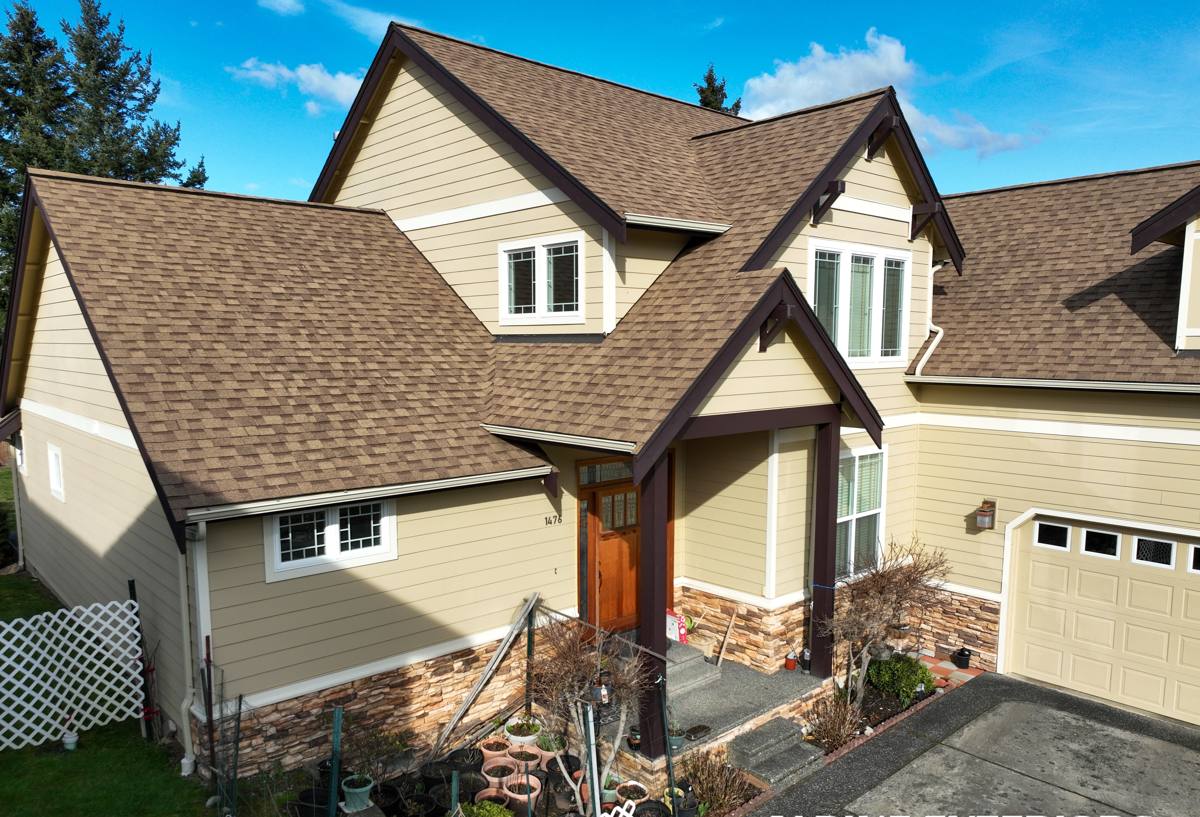
Signs Your Maple Falls Roof Needs Replacing, Not Patching
Not every roof problem calls for a full replacement. But there's a point where patching becomes a waste of money, and homes in this climate tend to hit that point earlier than homes in drier regions. Some signs worth taking seriously:
- Granules collecting in gutters or at downspouts, which means the shingles are wearing down to bare mat
- Moss that keeps returning within a season or two of cleaning, even after treatment
- Soft or spongy spots when walking the roof, which usually means the decking underneath is wet or rotting
- Daylight visible through the attic roof boards, or damp insulation after a heavy rain
- Shingles that are curling, cupping, or cracking, especially on south- and west-facing slopes
- A roof that's already had two or more rounds of repairs in the last five years
If you're seeing more than one of these, it's usually cheaper in the long run to replace than to keep chasing leaks one repair at a time.
What a Correct Roof Replacement Includes
A roof replacement is more than swapping old shingles for new ones. In a climate like this, the materials and the details beneath the surface matter as much as what's visible from the street.
Choosing a Material Built for This Climate
There's no single "best" roofing material for every home — it depends on your budget, your roof's pitch, how much shade and moss pressure the roof deals with, and how long you want to go before the next replacement. Here's how the common options compare for a Whatcom County home like the ones in Maple Falls:
| Material | Typical Lifespan | Moss & Moisture Resistance | Upfront Cost |
|---|---|---|---|
| Standard asphalt composition shingles | 15-20 years | Moderate; benefits from algae-resistant granules | Low |
| Architectural (dimensional) shingles | 25-30 years | Good, especially with algae-resistant options | Moderate |
| Standing-seam metal | 40-50+ years | Excellent; sheds moss and moisture quickly | High |
| Synthetic slate/shake composites | 30-50 years | Good; resists rot that wood shake is prone to | High |
We steer most Maple Falls homeowners toward algae-resistant architectural shingles as the practical middle ground — they hold up well against the region's moss and moisture without the upfront cost of metal. For homes with heavy tree cover or steep, shaded slopes where moss is a constant fight, metal earns its higher price tag by shedding water and debris faster than any shingle can.
The Parts You Don't See: Underlayment, Flashing, and Ventilation
Most roof failures in this region don't start with the shingles — they start underneath them. A correct replacement addresses three things that are easy to skip but expensive to skip out on:
- Underlayment: Synthetic underlayment sheds water better and holds up longer than old-style felt, especially during the weeks a roof might sit exposed mid-project in wet weather.
- Flashing: Every valley, chimney, skylight, and wall intersection needs new flashing, not reused flashing. This is where the majority of "mystery leaks" actually originate.
- Ventilation: A roof deck that can't breathe stays damp longer after every rain, which speeds up moss growth and can rot decking from underneath. Balanced intake and exhaust venting is part of doing the job right, not an upsell.
Our Roof Replacement Process, Start to Finish
- On-site inspection. We walk the roof, check the attic, and look at decking condition, ventilation, and any problem areas before recommending anything.
- Honest scope and estimate. You get a written estimate that spells out material, tear-off, decking allowance, and labor — no vague line items.
- Material selection. We walk through the tradeoffs for your specific roof (pitch, shade, budget) rather than pushing one product for every job.
- Tear-off and decking check. Old roofing comes off down to the deck, and any soft or rotted sheathing gets replaced before anything new goes down.
- Underlayment, flashing, and ventilation installed. This is the stage that determines how the roof performs in year ten, not just year one.
- New roofing installed to manufacturer spec. Proper nailing patterns and exposure matter for wind and warranty coverage alike.
- Cleanup and final walkthrough. Site is cleared of debris and nails, and we walk the finished roof with you before calling the job done.
Moss and Algae: What to Expect Between Roofs
No roofing material is permanently moss-proof in a climate that stays damp and shaded as much of the year as Whatcom County does. What changes with a correct replacement is how much maintenance the roof needs and how much damage moss can actually do before it's addressed. A newer roof with algae-resistant shingles, proper ventilation, and clean flashing will still need occasional moss treatment or gentle cleaning — but it won't be losing granules or trapping moisture the way an aging, worn roof does. We're happy to walk homeowners through a simple maintenance routine (zinc or copper strips, periodic gentle cleaning, keeping gutters clear) that meaningfully extends the life of a new roof without turning it into a chore.
What Drives the Cost of a Maple Falls Roof Replacement
Every roof is different, so we don't quote prices sight unseen — but the factors that move the number up or down are consistent. Understanding them helps you compare estimates apples to apples.
| Factor | Why It Matters |
|---|---|
| Roof size and number of stories | More square footage and steeper access mean more material and labor time |
| Roof pitch and complexity | Steep roofs and roofs with many valleys, dormers, or penetrations take longer and require more flashing work |
| Decking condition | Rotted or soft sheathing found during tear-off has to be replaced, which isn't always visible until the old roofing is off |
| Material choice | Standard shingles, architectural shingles, and metal carry different material and labor costs, as shown above |
| Ventilation and flashing needs | Homes with inadequate original ventilation may need vent additions, which adds a modest cost but pays off in roof longevity |
| Access and site conditions | Trees close to the roofline, tight driveways, or steep lots can affect how efficiently a crew can work |
Most full asphalt-shingle roof replacements land in the low-to-mid five-figure range for an average home; metal or synthetic slate roofing runs meaningfully higher due to material cost. The only way to get a number that means anything is a walk-through of your actual roof.
Why Hiring a Crew That Already Works in Maple Falls Matters
A roofing crew that's worked across Lynden and the surrounding Whatcom County communities knows what this climate does to a roof over time — not from a textbook, but from tearing off enough old roofs to see the pattern repeat: moss buildup in the same shaded valleys, flashing failures in the same spots, decking rot where ventilation was skipped originally. That experience shows up in small decisions during the job that a crew unfamiliar with the region might not think to make, like where to add extra ventilation or which flashing details need extra attention given how much rain this area sees.
It also matters for practical reasons: a local crew can respond quickly if weather threatens a job mid-tear-off, understands realistic scheduling around the region's wet months, and is around after the job is done if a question comes up.
Questions to Ask Before You Hire a Roofing Contractor
- Are you licensed, bonded, and insured in Washington State, and can you provide proof?
- Will you provide a written estimate that breaks out material, labor, and decking allowance separately?
- What underlayment, flashing, and ventilation approach do you use, and why?
- Who handles warranty claims — you, or do I have to deal with the manufacturer directly?
- Can you provide references from roofing jobs in this area, not just anywhere in the region?
- What happens if you find rotted decking once the old roof is off?
- How do you handle weather delays on a project like mine?
Ready for a Straight Answer on Your Roof?
If your roof is showing its age or you just want an honest opinion on whether repair or replacement makes more sense, we're glad to take a look. There's no pressure and no sales pitch — just a real inspection and a clear estimate for a roof built to handle what Maple Falls weather actually throws at it. Fill out the form below to get started.