 Lynden Exterior
 Why Birch Bay Roofs Take More Punishment Than Most
Birch Bay sits right on the water, and that changes what a roof has to deal with year after year. Salt-laden air moves inland off the Strait of Georgia and settles on every exposed surface, working on fasteners, flashing, and metal components in ways that inland Whatcom County roofs simply don't experience. Add in wind-driven rain that comes in sideways during winter storms, plus tree cover and shaded lots that keep shingles damp for days at a stretch, and you get a roof that ages faster than the manufacturer's warranty chart suggests it should.
None of this means a Birch Bay roof is doomed to fail early. It means the installation has to account for these conditions from the start — the right underlayment, the right fastening, the right ventilation, and materials chosen with the coastline in mind rather than a generic spec sheet. That's the difference between a roof that looks fine for five years and one that actually holds up for its full service life.
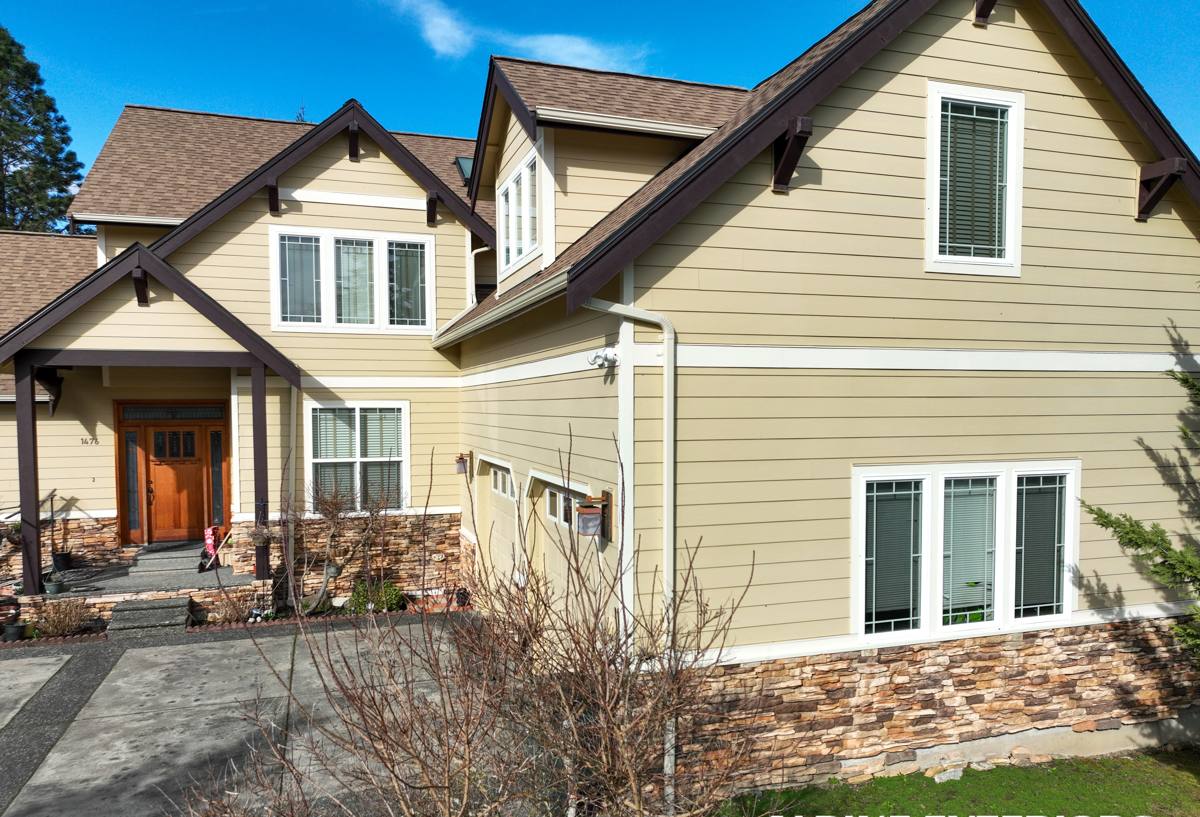
Signs It's Time for a New Roof, Not Another Repair
Plenty of roofs get patched for years past the point where a patch is really doing much good. In a marine environment like Birch Bay, a few signs tend to show up earlier than they would elsewhere:
- Granule loss heavy enough that you can see bare, shiny patches on asphalt shingles
- Shingles curling or cupping at the edges, especially on the west- and southwest-facing slopes that take the worst of the weather off the water
- Moss mats holding moisture against the roof deck for weeks at a time, particularly on shaded, north-facing sections
- Flashing that's been resealed more than once around chimneys, skylights, or vent pipes and is still leaking
- Staining or soft spots on interior ceilings after wind-driven rain events
- A roof already carrying more than one layer of shingles, which limits repair options and hides deck damage
If you're seeing two or more of these, it's usually more cost-effective in the long run to replace than to keep chasing leaks one at a time.
Picking the Right Material for a Marine Environment
Every roofing material handles salt air, moisture, and moss differently. There's no single "best" choice for every Birch Bay home — it depends on your budget, your roof's exposure, and how much long-term maintenance you're willing to take on. Here's how the common options compare in this climate:
| Material | Salt-Air Durability | Moss Resistance | Typical Lifespan | Relative Cost |
|---|---|---|---|---|
| Architectural asphalt shingle (algae-resistant) | Good with quality fasteners and flashing | Moderate — benefits from zinc/copper strips | 20–30 years | Lowest |
| Standing seam metal | Very good with marine-grade coatings and fasteners | Excellent — sheds moss and debris | 40–50+ years | Highest |
| Synthetic/composite shingle | Good, doesn't corrode | Good | 30–40 years | Mid to high |
A Note on Moss-Resistant Treatments
For shaded Birch Bay lots — and there are a lot of them, given the tree cover along the bluffs and back roads — we'll often recommend zinc or copper strips near the ridge on asphalt roofs. Rain washing over the strip carries trace metal down the slope, which discourages moss growth without chemical treatments that need reapplying. It's a small addition at install time that pays off over the life of the roof.
What a Correct New Roof Installation Actually Includes
A new roof is more than shingles nailed to plywood. In a location like Birch Bay, where wind-driven rain is the real enemy rather than snow load or ice dams, the details underneath the visible surface matter more than usual.
Full Tear-Off and Deck Inspection
We remove the old roofing down to bare decking on every installation. That's the only way to actually see the plywood or OSB underneath and catch soft, delaminated, or rotted sections before they're covered up again. Skipping this step — or roofing over an existing layer — just hides problems that will eventually telegraph through the new surface.
Underlayment and Water-Resistant Barrier
We run a synthetic underlayment across the full deck, with self-adhering ice-and-water membrane at the eaves, valleys, and around every penetration. In most of the Pacific Northwest that membrane is thought of as ice-dam protection, but on the coast it earns its keep differently — it's the backup layer that stops wind-driven rain from being forced up and under the shingle field during a hard blow off the water.
Flashing and Penetrations
Chimneys, skylights, vent pipes, and sidewalls all need properly formed step and counter-flashing, not just a bead of sealant. Sealant fails; correctly lapped metal flashing doesn't rely on caulking to stay watertight. This is one of the most common shortcuts we see on older Birch Bay roofs, and it's usually the first place a new roof starts leaking if it's rushed.
Fastening for Wind Exposure
Birch Bay's open exposure to the water means higher sustained wind loads than a sheltered Lynden lot a few miles inland. We follow the manufacturer's high-wind fastening schedule — the right nail pattern, placement, and count — rather than a standard schedule that assumes a calmer site.
Ventilation and Moisture Control Near the Water
Humid marine air makes balanced attic ventilation more important, not less. Without enough intake at the soffits and exhaust at the ridge, warm moist air trapped in the attic condenses on the underside of the roof deck. Over time that condensation rots sheathing from the inside — a failure mode that has nothing to do with the shingles themselves and won't show up as an obvious leak until real damage has already been done. Every new roof installation should include a ventilation check as part of the scope, not as an afterthought once the shingles are already on.
Our Installation Process
Here's how a typical Birch Bay roof replacement runs from start to finish:
- Inspection and estimate — we walk the roof, check the attic for ventilation and moisture issues, and measure for an accurate material quantity
- Site protection — landscaping, siding, windows, and driveways get covered or protected before tear-off starts
- Tear-off and deck inspection — old roofing removed down to decking, with any damaged sheathing replaced on the spot
- Dry-in — underlayment and ice-and-water membrane installed the same day the deck is exposed, so the home is never left open to weather overnight
- Flashing and ventilation work — step flashing, counter-flashing, drip edge, and intake/exhaust vents installed or upgraded
- Roofing material installation — shingles or panels installed per manufacturer spec and high-wind fastening pattern
- Cleanup and magnetic sweep — job site cleared of debris and swept for stray fasteners
- Final walkthrough — we go over the finished roof and warranty paperwork with you before calling the job done
What Affects the Cost of a New Roof in Birch Bay
Every estimate is different, but the same handful of factors drive most of the variation we see between jobs in this area:
| Factor | Why It Matters |
|---|---|
| Roof size and pitch | More square footage and steeper slopes mean more material and labor time |
| Number of existing layers | Removing two or more old layers takes longer than a single tear-off |
| Deck condition | Rotted or soft sheathing found during tear-off needs replacement before roofing can continue |
| Material choice | Asphalt, synthetic, and metal carry different material and installation costs, as shown above |
| Roof complexity | Valleys, dormers, chimneys, and skylights each add flashing detail and labor |
| Site access | Waterfront lots, limited driveway space, or steep grades can affect staging and cleanup time |
We give straightforward, itemized estimates so you can see exactly what's driving the number — not a flat quote with no explanation behind it.
Timeline and Scheduling Around Coastal Weather
Most single-family roof replacements in Birch Bay take one to three days once work starts, depending on size and complexity. The bigger scheduling factor is the weather window. Because we tear off down to bare decking, we plan installations around stretches of dry weather and get a home fully dried in — underlayment and membrane installed — the same day the old roof comes off. We're not going to leave a Birch Bay roof exposed overnight with rain moving in off the water, and we'll adjust the schedule rather than rush a tear-off into a bad forecast.
Why a Local Crew That Already Works Birch Bay Matters
A roofing crew based out of Lynden that regularly works Birch Bay jobs knows things a crew from farther away has to learn on your dime. That includes which slopes on a given street take the worst of the wind and rain, how shaded, tree-heavy lots hold moss longer into the season, and what Whatcom County's permitting process requires for a full replacement. It also means faster response if a storm causes damage between your inspection and your install date, since we're not driving in from out of the area.
Local experience also shows up in small decisions — recommending zinc strips on a shaded lot, specifying corrosion-resistant fasteners near the water, or knowing which flashing details tend to fail first on older Birch Bay homes because we've replaced roofs on the street before. Those are the kinds of judgment calls that come from doing the work here repeatedly, not from a generic install checklist.
Keeping Your New Roof Performing After Installation
A correctly installed roof still needs a little seasonal attention in this climate to hit its full expected lifespan:
- Clear gutters and downspouts before the fall rains so water isn't backing up under the eaves
- Have moss buildup removed gently before it forms thick mats that trap moisture against shingles
- Keep overhanging branches trimmed back to cut down on shade and debris that feed moss growth
- Schedule a quick visual inspection after any major windstorm off the water
- Check attic ventilation periodically to make sure soffit vents haven't been blocked by insulation or debris
None of this is intensive work, but staying on top of it is what separates a roof that reaches its full warranty life from one that doesn't.
If your Birch Bay home is due for a new roof, we're happy to take a look and walk you through what we're seeing — no pressure, no obligation. Fill out the form below and we'll get an estimate scheduled.