 Lynden Exterior
 Roof Repair Built for Ferndale's Weather, Not Just Any Roof
Ferndale sits close enough to the water that salt-laden air is a daily fact of life, not an occasional nuisance. Add Whatcom County's long stretch of driving winter rain and a moss season that can run eight months or more, and you get a climate that is genuinely hard on roofing — harder than most manufacturers' warranty language accounts for. A roof repair here has to hold up to all three at once: corrosion-prone fasteners and flashing, water finding its way through the smallest gap during weeks of sideways rain, and moss that works its way under shingle edges and lifts them over time.
This page is specifically about repairing roofs on homes in and around Ferndale — not a general roofing overview. If you're seeing a stain on a ceiling, a curling shingle, or dark green-black streaks creeping across the roof plane, this is what a proper fix looks like and why the details matter more here than they would somewhere drier and further inland.
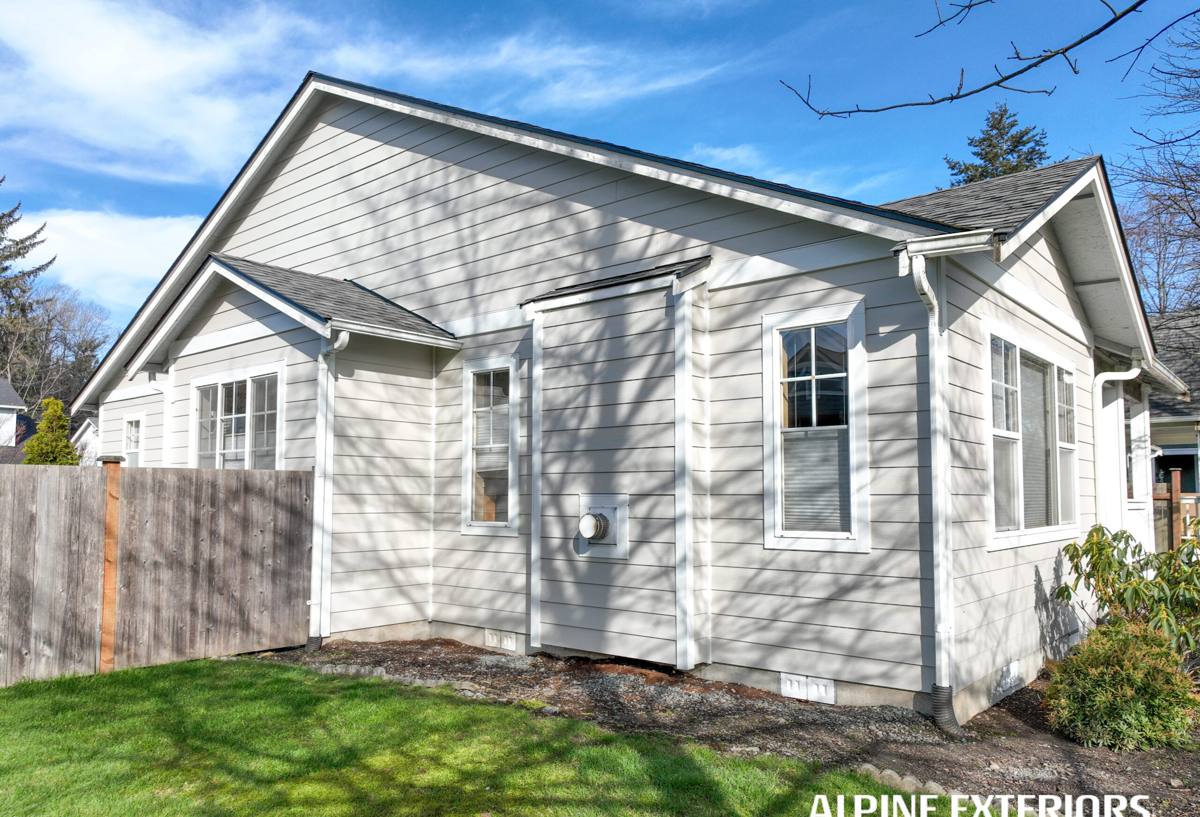
What Ferndale's Climate Actually Does to a Roof
Three regional factors show up again and again on roofs we inspect in this area:
- Salt air accelerates corrosion on exposed metal — nail heads, flashing, gutter fasteners, and any exposed screws on metal roofing. Once a fastener starts to rust, it loses its grip and the seal around it fails.
- Driving rain off the water doesn't fall straight down — wind pushes it sideways and up under laps, edges, and flashing that would stay dry in a calmer climate. Repairs that only address the visible gap and ignore wind-driven water direction tend to leak again.
- Moss thrives in the shade, moisture, and mild temperatures typical here. It roots into shingle granules, holds moisture against the roof deck, and physically lifts shingle tabs as it grows, opening a path for water that wasn't there when the roof was new.
None of these alone is unusual. Together, on a sustained basis, they're why roofs in Ferndale often need attention sooner than the same product would in a drier part of the state.
Signs a Ferndale Roof Needs Repair Now
Some damage is obvious. A lot of it isn't, especially from the ground. Here's what we tell homeowners to watch for between inspections:
- Water stains on ceilings or upper interior walls, even faint ones — they rarely go away on their own
- Shingles that are curling, cracked, or missing granules (granule loss shows up as gritty buildup in gutters)
- Dark streaking or thick moss growth, particularly on north-facing slopes that stay shaded and damp longer
- Rusted or lifted flashing around chimneys, vent pipes, and skylights
- Sagging spots anywhere on the roof plane, which can indicate deck damage underneath
- Daylight visible through the roof deck from inside the attic
- Granules collecting at downspout outlets after rain
Any one of these is worth a look. Several at once usually means the roof has been quietly losing ground for a while.
What a Correct Repair Actually Involves
Finding the Real Source, Not Just the Symptom
Water doesn't always show up on the ceiling directly below where it entered — it can travel along rafters or sheathing before dripping. A repair that patches the spot above the stain without tracing the actual entry point often fails within a season or two. We inspect the full roof plane, the attic side where accessible, and the flashing details before deciding what to fix.
Matching Materials, Not Improvising
A patch using the wrong shingle profile, an incompatible flashing metal, or mismatched fastener type creates a new weak point even if it stops the immediate leak. Galvanic corrosion between dissimilar metals is a real issue in a salt-air environment — mixing fastener and flashing metals that react against each other shortens the life of the repair.
Flashing and Sealant Done Right
Most roof leaks trace back to flashing, not the shingles themselves — around chimneys, skylights, vent pipes, and where a roof plane meets a wall. Flashing has to be layered correctly with the roofing material (not just caulked over) so water sheds outward instead of getting trapped and forced under the edge by wind.
Addressing Moss, Not Just Cleaning It Off
Scraping visible moss without treating the surface and improving airflow or shade conditions where possible means it comes back. A proper repair in a moss-prone area treats the affected section, clears debris that holds moisture, and checks whether gutters and downspouts are actually moving water away from the roof edge instead of backing it up.
Common Repair Types We Handle in Ferndale
| Repair Type | Typical Cause Locally | Urgency |
|---|---|---|
| Flashing repair/replacement (chimney, vent, skylight) | Corrosion from salt air, sealant breakdown, wind-driven rain | High — most common source of active leaks |
| Shingle replacement (localized) | Wind lift, moss lifting tabs, granule loss from age | Moderate to high depending on exposure |
| Moss treatment and section repair | Shaded, damp roof planes with long moss season | Moderate — prevents deck damage if addressed early |
| Gutter and drip edge repair | Rust, sagging from debris weight, improper original install | Moderate — poor drainage accelerates other damage |
| Deck repair (localized rot) | Long-term undetected leak, usually found once shingles are pulled back | High — structural, needs prompt attention |
Repair or Replace? How We Help You Decide
Not every roof problem needs a full replacement, and not every leak is fixable with a patch. We look at age, the extent of damage, and how many separate issues are stacking up before making a recommendation — and we'll tell you honestly if a repair is the right call even when a replacement would be the bigger job for us.
| Factor | Leans Toward Repair | Leans Toward Replacement |
|---|---|---|
| Roof age | Under 15 years, isolated issue | Nearing or past expected material lifespan |
| Extent of damage | One or two localized problem areas | Multiple failure points across several roof planes |
| Deck condition | Solid, dry sheathing under the affected area | Soft spots or rot found in more than one location |
| Granule loss | Minimal, concentrated near one repair site | Widespread, shingles visibly balding |
| Moss history | First occurrence, treatable | Repeated moss damage lifting shingles in multiple areas |
When in doubt, we'll show you what we find and explain the reasoning — not just quote a number.
Our Repair Process
- Inspection. We walk the roof and check attic access where possible, looking past the obvious symptom for the actual cause.
- Written scope. You get a clear explanation of what's damaged, what's causing it, and what the repair involves — no guessing at what you're paying for.
- Material matching. We source shingles, flashing, and fasteners that match or properly integrate with your existing roof system, accounting for the corrosion risk of salt air.
- The repair itself. Flashing reset or replaced, damaged materials removed and replaced, deck repaired if needed, moss treated where present.
- Final check. We confirm the repair sheds water correctly under the kind of wind-driven rain conditions Ferndale actually gets, not just a calm-day visual check.
Why a Crew That Already Works Ferndale Matters
A roofer who mostly works drier, inland areas can still do competent general roofing work — but they may not automatically account for galvanic corrosion between mismatched metals, or recognize that a north-facing slope shaded by neighboring trees needs different moss treatment timing than a south-facing one. Crews who regularly work Whatcom County's coastal-influenced towns see the same failure patterns repeat: flashing that corroded faster than expected, moss that came back because drainage wasn't fixed alongside it, repairs that held in dry weather but failed the first time wind pushed rain sideways under an edge.
That familiarity isn't about having a monopoly on good workmanship — it's about not having to relearn the local failure patterns on your roof.
Keeping a Repaired Roof in Good Shape
A good repair buys you time, but a few habits extend it:
- Clear gutters and downspouts at least twice a year — clogged drainage backs water up under shingle edges
- Trim back overhanging branches where practical to reduce shade and debris on moss-prone slopes
- Have the roof looked at after any major windstorm, even if nothing looks obviously wrong from the ground
- Address small moss patches early, before they've had a season to establish and lift shingle tabs
- Keep an eye on attic ventilation — poor airflow traps moisture and speeds up deck and shingle deterioration from the inside
If you're seeing signs of a leak, moss buildup, or damaged flashing on a Ferndale home, we're happy to take a look and give you a straight answer on what it needs. Estimates are free, with no pressure to act on anything beyond what the roof actually requires — just fill out the form below to get started.