 Lynden Exterior
 Roof Repair Built for the Wiser Lake Climate
Homes around Wiser Lake sit in one of the more demanding microclimates in Whatcom County. The combination of moist, salt-tinged marine air, long stretches of driving rain, and shade from mature trees near the water means roofs here work harder than roofs just a few miles inland. A repair that holds up on a dry, open lot in another part of Lynden won't necessarily hold up on a shaded roof plane facing the lake. We repair roofs in this specific area regularly, and we build every repair around what actually happens to a roof here — not a generic checklist.
This page focuses on one service for one area: roof repair for houses in and around Wiser Lake. If you're dealing with a leak, damaged shingles, moss buildup, or a roof that's simply aging faster than it should, this is what a correct repair looks like for your specific conditions.
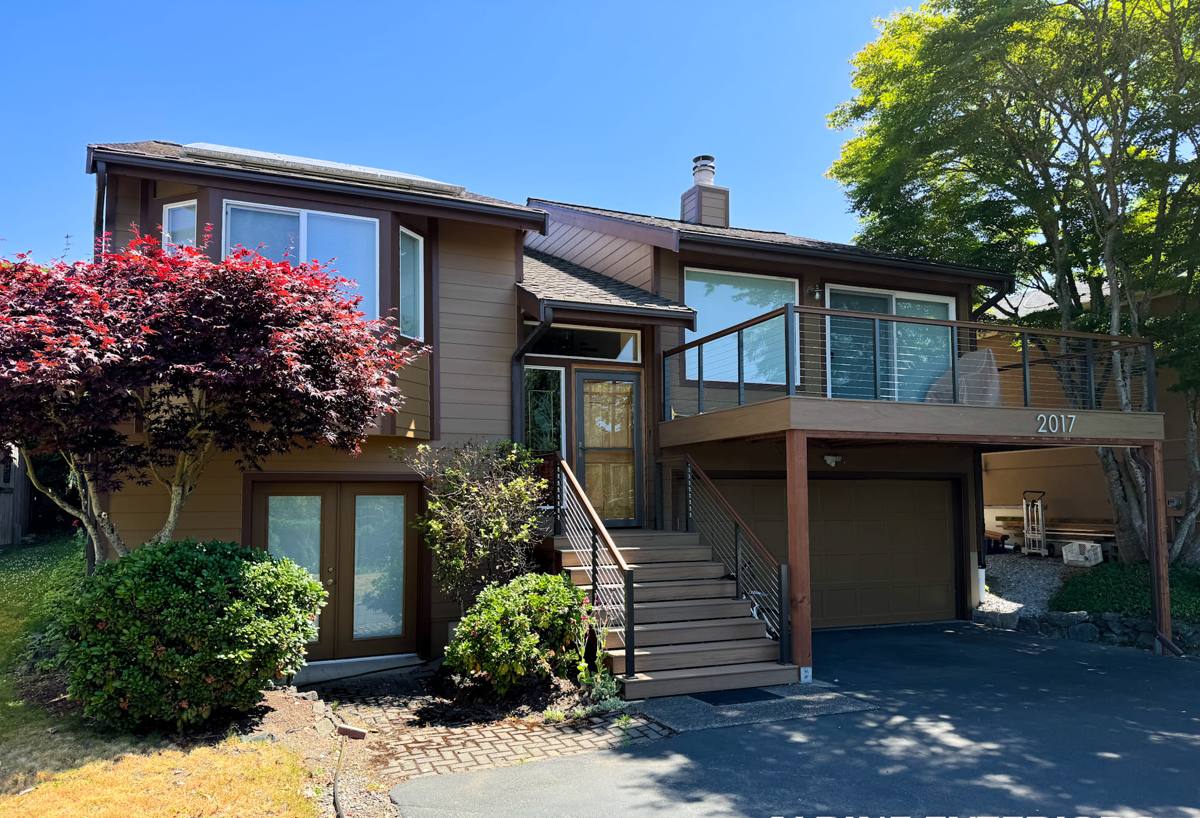
What Makes Wiser Lake Roofs Age Differently
Salt Air and Material Fatigue
Whatcom County's marine-influenced air carries fine salt and moisture that settles on roofing materials day after day. Over years, this accelerates corrosion on exposed metal — flashing, fasteners, vents, and gutter hardware — well before the shingles themselves show their age. A repair that reuses corroded flashing or standard fasteners is a repair that fails again within a few seasons.
Driving Rain and Wind-Driven Leaks
Rain in this part of Washington rarely falls straight down. Wind off the lake pushes it sideways and up under laps, ridge caps, and poorly sealed penetrations. Leaks around Wiser Lake often show up in places that would stay dry in a calmer climate — under rakes, at wall-to-roof transitions, and around chimneys and vents that face the prevailing weather.
A Moss Season That Never Really Ends
Shade, standing moisture, and mild temperatures give moss and algae a long growing window here — often most of the year rather than a single "moss season." Left alone, moss lifts shingle edges, holds water against the roof deck, and works its way under flashing. By the time moss is visible from the ground, it has usually been doing damage underneath for a while.
Common Repair Issues We See in This Area
Roofs near Wiser Lake tend to develop a fairly consistent pattern of problems. Knowing what to expect helps homeowners catch issues early, before a small repair turns into a bigger one.
- Moss-lifted shingles along shaded slopes and north-facing roof planes
- Corroded or failing flashing at chimneys, skylights, and roof-to-wall junctions
- Wind-driven leaks at ridge caps and exposed rakes that take the brunt of storms off the lake
- Clogged or sagging gutters from tree debris, causing water to back up under the roof edge
- Granule loss and brittle shingles on older asphalt roofs exposed to constant moisture cycling
- Soft or damp decking discovered under moss or old flashing during a repair inspection
Signs Your Roof Needs Attention Now
Some roof problems are obvious. Others aren't — especially with a low-slope or steep roof you can't easily see from the ground. Watch for these signs:
- Green or dark streaks, or visible moss patches, on any part of the roof
- Water stains on ceilings or upper walls, especially after a windy rainstorm
- Shingles that look curled, cracked, or lifted at the edges
- Granules collecting in gutters or at downspout outlets
- Daylight visible through the roof deck from inside an attic
- Gutters pulling away from the fascia or overflowing during heavy rain
- Musty smell in an attic or upper closet, which often points to trapped moisture
What a Correct Repair Actually Involves
Diagnosis Before Patching
A leak on the ceiling is rarely directly below the actual entry point on the roof — water travels along decking and framing before it shows up inside. A correct repair starts with tracing the leak to its real source, checking the surrounding flashing, underlayment, and decking condition, not just covering the visible symptom.
Matching Materials and Techniques
Patching a repair with mismatched shingles or the wrong flashing profile might look fine for a season, but it rarely performs the same as the surrounding roof. We match shingle type, weight, and color as closely as possible, and we use corrosion-resistant flashing and fasteners suited to this area's salt-air exposure, not standard hardware that will corrode again in a few years.
Moss and Debris Treatment
Repairing a leak without addressing the moss or debris that likely contributed to it just resets the clock on the same failure. Where moss is present, we clear it carefully by hand — not with a pressure washer, which drives water under shingles and strips protective granules — and treat the area to slow regrowth.
Repair or Replace? Weighing the Real Factors
Not every roof problem near Wiser Lake calls for a full replacement, but not every leak should be patched indefinitely either. These are the factors that actually matter when deciding:
| Factor | Leans Toward Repair | Leans Toward Replacement |
|---|---|---|
| Roof age | Under 15 years, or newer material with life left | Nearing or past the material's expected lifespan |
| Extent of damage | Isolated to one slope, flashing point, or section | Spread across multiple areas or slopes |
| Decking condition | Solid, no soft spots found during inspection | Soft, damp, or rotted decking in multiple areas |
| Moss/algae history | Recent growth, caught early | Long-term, repeated moss damage under shingles |
| Repair frequency | First or second repair in this area | Same spot has needed repair multiple times |
An honest inspection should tell you which column your roof falls into — and a contractor who works in this area regularly can usually tell within one visit whether a repair will genuinely hold or whether you're better off addressing the whole roof section at once.
Our Process for Wiser Lake Roof Repairs
- Inspection: We walk the roof (weather permitting) and check the attic from the inside, tracing any leak back to its actual source rather than assuming based on the ceiling stain location.
- Straightforward estimate: You get a clear explanation of what's wrong, what it will take to fix it correctly, and an honest cost range before any work starts.
- Repair: We remove damaged material down to sound decking, replace flashing and fasteners with corrosion-resistant hardware, and match shingles as closely as available materials allow.
- Moss and debris cleanup: Where relevant, we clear moss and debris from the repair area and surrounding roof sections so the fix isn't undermined by conditions we already knew about.
- Final check and cleanup: We check the repair from inside the attic where possible, clean up the work area, and walk you through what was done.
Roofing Materials and Moss-Resistant Choices
When a repair area calls for new shingles or partial material replacement, it's worth understanding the honest trade-offs between common options in a wet, shaded climate like this one.
Standard asphalt shingles are the most common and most affordable option, and they perform well when properly maintained — but on shaded, moss-prone slopes they need more attention over time, since organic growth can shorten their effective life if left unaddressed.
Algae-resistant (AR) shingles use embedded copper granules to slow algae and moss growth. They cost somewhat more upfront but can reduce how often a shaded roof needs cleaning and moss treatment — a reasonable trade-off for lake-adjacent properties with heavy tree cover.
Metal roofing sheds moisture quickly and resists moss better than most materials, but it comes with a higher upfront cost and requires correct installation to manage condensation and fastener sealing — a job that's unforgiving of shortcuts in a climate this wet.
We'll walk you through what makes sense for your specific roof and budget rather than pushing one material as a blanket answer — the right choice depends on your roof's slope, shade exposure, and how long you plan to stay in the home.
Why Local Experience with Wiser Lake Roofs Matters
A contractor who mostly works drier, more open sites elsewhere in Whatcom County may not immediately recognize the specific pattern of wear that shows up on a shaded, lake-adjacent roof. We work in this area regularly, which means we know to check the flashing at wall transitions first, we bring corrosion-resistant hardware as standard rather than an upsell, and we don't treat moss as a cosmetic issue — because around here, it usually isn't. That familiarity translates into fewer repeat visits and a repair that's built for the conditions your roof actually faces, not a generic set of conditions.
If you're seeing moss, a leak, or damaged shingles on a home near Wiser Lake, we're happy to take a look. Reach out for a free, no-pressure estimate using the form below — we'll give you a straight answer on what's going on and what it will take to fix it right.