 Lynden Exterior
 Roof Replacement for Acme Homes, Done by a Crew Already Working Whatcom County
Acme sits in the kind of Whatcom County setting where a roof earns its keep — tree cover, damp ground, and long stretches of gray weather that don't let up for months at a time. Homes out here tend to sit on larger, more wooded lots than in-town Lynden properties, which changes what a roof actually has to deal with: more shade, more falling debris, more standing moisture on the surface after a storm passes through. A roof replacement here isn't the same job as one in a drier, more exposed part of the state, and it shouldn't be priced, planned, or installed like one.
We're based in Lynden and already do work throughout the surrounding Whatcom County area, including Acme. That matters more than it sounds like it should — a crew that's driven these roads and worked these lots before shows up already knowing what the climate does to a roof out here, instead of figuring it out on your dime.
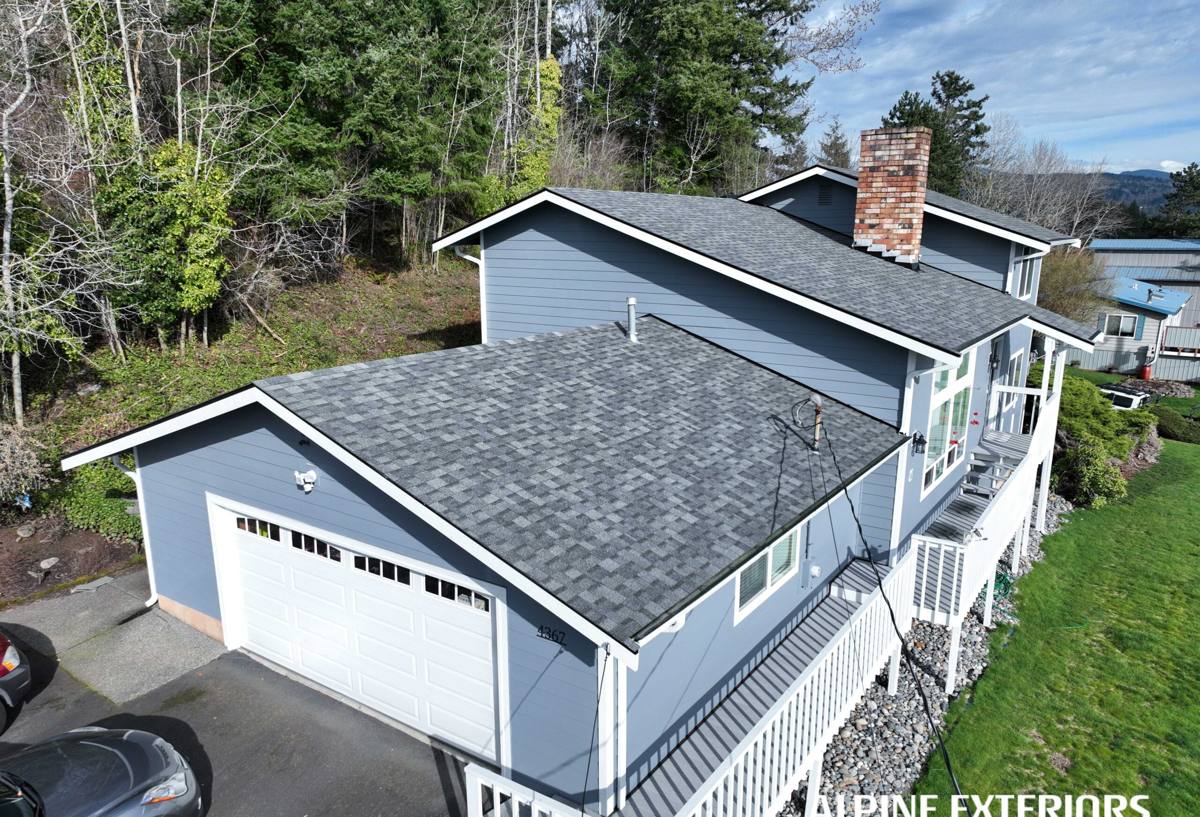
What the Local Climate Actually Does to a Roof
Western Washington's marine air, driving rain, and long moss season aren't just a weather forecast — they're the three things that shorten a roof's life if it isn't built and maintained to handle them.
- Driving rain: wind-driven storms push water sideways and uphill under shingle edges, valleys, and around anything that penetrates the roof deck — vents, chimneys, skylights. Flashing and underlayment quality matter more here than in calmer climates.
- Moss and organic growth: tree cover and near-constant moisture mean moss, lichen, and algae get a long runway to establish themselves, especially on north-facing slopes and shaded sections that never fully dry out between rain events.
- Salt-tinged, humid air: the region's marine influence keeps humidity high most of the year, which accelerates corrosion on exposed metal fasteners, flashing, and any hardware that isn't rated for it.
None of this means Acme homes need exotic materials or a wildly different roof. It means the details — ventilation, flashing, fastener choice, underlayment — have to be done right, because this climate finds every shortcut eventually.
Signs a Roof Needs Replacement, Not Another Repair
Homeowners often ask us to "just patch it" when the roof has already moved past the point where a patch does much good. A few honest signs it's time to talk replacement instead:
- Granule loss heavy enough that you can see bare, shiny patches on shingles, or granules collecting in gutters
- Multiple layers of moss or algae that keep coming back within a season or two of cleaning
- Soft or spongy spots underfoot on the roof deck, which usually means the decking itself has taken on water
- Curling, cracked, or missing shingles across more than one slope, not just one isolated spot
- Daylight visible through the attic roof boards, or consistent staining on attic sheathing
- The roof is at or past 20-25 years old (asphalt) and repairs are becoming more frequent
If you're only seeing one or two of these in a small area, a repair may genuinely be the right call — we'll tell you that instead of pushing a full tear-off you don't need yet.
What a Correct Roof Replacement Actually Involves
Tear-off and deck inspection
A proper replacement starts with removing the old roofing down to the deck — not layering over it. That's the only way to actually see the wood underneath, which matters in a climate where slow leaks can rot sheathing long before it shows up as a ceiling stain indoors. Any soft, delaminated, or water-damaged decking gets replaced before anything new goes down.
Underlayment and water protection
Given how much wind-driven rain this area sees, we use synthetic underlayment across the field and self-adhered ice-and-water barrier at the vulnerable spots — eaves, valleys, around chimneys and skylights, and low-slope transitions. This is the layer that protects the deck if wind ever drives water up under the shingle line, and it's not a place to cut corners.
Flashing
Flashing failures, not shingle failures, are the most common cause of roof leaks we find. Step flashing at walls, counter-flashing at chimneys, and valley flashing all get replaced as part of a full roof replacement, not reused from the old roof.
Ventilation
A roof that can't breathe traps moisture in the attic, which feeds the same moss and rot problems the climate already encourages from the outside. We check intake (soffit vents) and exhaust (ridge or box vents) balance as part of every replacement — adding ventilation is one of the more overlooked upgrades on older Acme-area homes.
New roofing material, installed to manufacturer spec
Nail placement, exposure, and starter course details all affect how well a roof resists wind-driven rain. We install to the manufacturer's published specifications, not shortcuts, because that's also what keeps the manufacturer's warranty valid if something ever needs to be claimed.
Material Options and What Drives the Cost
Most Acme-area replacements come down to a choice between a few well-proven material categories. Here's how they generally compare for this climate:
| Material | Typical Lifespan | How It Handles Moss/Moisture | Relative Cost |
|---|---|---|---|
| 3-tab asphalt shingle | 15-20 years | More prone to moss/algae staining over time | Lowest |
| Architectural (laminate) asphalt | 25-30 years | Thicker profile sheds water better; algae-resistant granule options available | Moderate |
| Standing seam metal | 40-50+ years | Sheds moisture fast, very resistant to moss growth | Higher upfront |
| Cedar shake | 20-30 years with maintenance | Attractive but needs regular upkeep in a wet, shaded climate; higher moisture sensitivity | Higher, plus ongoing maintenance |
Beyond the material itself, cost is driven by roof size and pitch, number of layers being removed, deck repairs found during tear-off, chimney and skylight flashing complexity, and access — tree-covered, harder-to-reach roofs common on larger Acme lots can add setup time compared to an open, in-town roof. We walk through all of this during the estimate so there aren't surprises once the tear-off starts.
Our Process, Start to Finish
- On-site inspection and honest assessment — we look at the whole roof system, not just the shingles, and tell you if repair is a legitimate option before recommending replacement.
- Written estimate — material options, scope of work, and a clear price, with no pressure to decide on the spot.
- Scheduling around weather — given how much rain this region gets, timing a tear-off matters; we plan around forecasts, not just our calendar.
- Tear-off and deck repair — full removal, deck inspected and repaired as needed before anything new is installed.
- Underlayment, flashing, and ventilation work — the parts that actually determine how the roof performs in this climate over the next few decades.
- New roofing installed to spec — proper nailing, exposure, and detailing at valleys, walls, and penetrations.
- Cleanup and magnetic sweep — property cleared of debris and stray fasteners before we call the job done.
- Final walkthrough — we go over the finished roof with you before wrapping up.
Living With a Long Moss Season
Even a correctly installed roof will pick up some moss over time in a climate like this — that's normal, not a sign of failure. What matters is keeping it from taking hold long-term. A few things that help between our visits:
- Keep overhanging branches trimmed back where practical, since shade and falling debris both feed moss growth
- Have gutters cleared regularly so water isn't sitting against the roof edge
- Address moss with a gentle, roof-safe treatment rather than pressure washing, which can strip granules and shorten shingle life
- Have the roof looked at every couple of years, especially after a heavy storm season
Zinc or copper strips near the ridge can also help slow moss regrowth on shaded slopes — something worth discussing at the estimate if moss has been a recurring problem on your property.
Why a Crew That Already Works Acme Matters
A roof replacement estimate is only as good as the person giving it. A crew that regularly works this part of Whatcom County already knows how driving rain behaves on a shaded, tree-covered lot, what kind of decking issues tend to show up in homes of a certain age out here, and how to time a tear-off around a weather pattern that doesn't always cooperate. That local familiarity shows up in fewer surprises mid-project and a roof that's actually built for the conditions it has to survive, not a generic install.
It also means faster response if something needs a follow-up look after the job is done — we're not driving in from across the region to check a flashing detail or answer a question.
Questions to Ask Before You Hire Anyone for a Roof Replacement
- Are you licensed and insured to work in Washington State, and can you provide proof?
- Will you remove the old roofing down to the deck, or install over the existing layer?
- What underlayment and ice-and-water barrier do you use, and where specifically will it go?
- How do you handle attic ventilation as part of a replacement?
- What's included in the manufacturer's warranty, and does your installation qualify for it?
- Do you provide a written estimate with a clear scope before work starts?
- How do you handle unexpected deck damage found during tear-off?
Any contractor who bristles at these questions, or can't give a straight answer, is worth thinking twice about — a roof is one of the more expensive systems on your home, and it's not the place to guess.
Get a Straight Answer About Your Roof
If your Acme-area roof is showing its age, or you just want an honest read on whether repair or replacement is the right call, we're glad to come take a look. The estimate is free, there's no pressure, and if repair is genuinely the better option for your situation, that's what we'll tell you. Fill out the form below to get started.