 Lynden Exterior
 Siding Installation in Deming: Built for the Nooksack Valley, Not Just the Brochure
Deming sits along the Nooksack River in the shadow of the foothills leading up toward Mount Baker, and that location shapes what siding has to survive here. This isn't a windswept coastal bluff, but it isn't a dry inland town either. Whatcom County pulls damp, salt-tinged marine air in off the Sound, and by the time it reaches the river valley it mixes with heavy tree cover, low winter sun angles, and slow-draining shaded ground. The result is siding that stays wet longer than it would in town, and wet siding is where every real siding problem starts.
A siding installation in Deming has to account for that reality from the first piece of house wrap to the last piece of trim. That means thinking about drainage planes, fastener patterns, and material choice differently than a generic "install some siding" job sheet would suggest.
Moisture, Moss, and Tree Cover Along the River
Homes tucked under fir and cedar canopy — common all through this part of the valley — get less direct sun and more standing dampness on their north and east walls. That's exactly where moss and algae take hold first, and where driving rain during fall and winter storms tends to find any weak point in a siding system. Long moss season isn't just a cosmetic issue; sustained moisture against a wall assembly is what eventually leads to rot in sheathing, trim, and framing if the siding and the water management behind it aren't doing their job together.
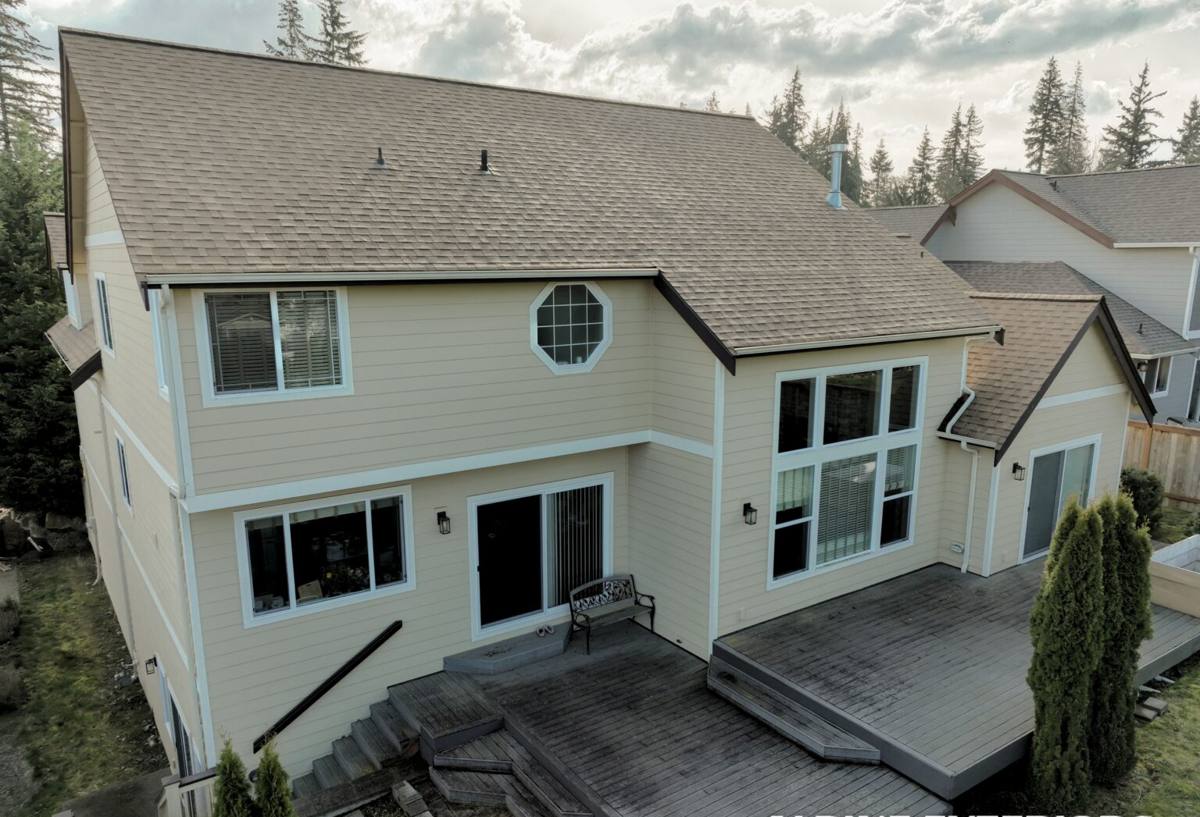
Why Deming Homes Wear Siding Differently Than In-Town Lynden
A house a few miles outside town, closer to the river and surrounded by trees, dries out slower after a storm than a house on an open, sun-exposed lot. Slower drying means more cumulative moisture exposure over a winter, which means the margin for error on installation details is smaller. Gaps at butt joints, missing kick-out flashing, or caulk used in place of proper flashing might go unnoticed for years on a dry, sunny lot — but on a shaded Deming property they turn into moss-streaked, soft, or delaminating siding much faster.
This is also why we treat every Deming estimate as its own project rather than a copy of a job in town. Tree placement, wall orientation, roofline overhangs, and how close the house sits to the river or to standing timber all change what the siding needs to hold up.
What a Correct Siding Installation Actually Involves
Siding is a system, not a single product. The board or panel you see is the last of several layers, and each layer has to be right for the whole assembly to perform.
Water Management Starts Before the Siding Goes On
- A continuous weather-resistive barrier, lapped correctly from bottom to top so water sheds outward, not into the wall
- Properly integrated flashing at every window, door, and roof-to-wall intersection — this is where the majority of real-world leaks originate
- Kick-out flashing anywhere a roofline meets a wall, directing runoff away from the siding instead of behind it
- A drainage gap or rainscreen strategy so any moisture that does get behind the cladding can actually drain and dry
Fasteners, Clearances, and Manufacturer Specs
Fiber cement siding has specific fastener spacing, nailing patterns, and clearance requirements from grade, roofing, and decking — details published by the manufacturer for a reason. Siding installed tight to a deck surface or too close to grade will wick moisture no matter how good the product is. Getting these clearances right is especially important on Deming lots where ground moisture and shade already work against fast drying.
Why We Install Only James Hardie Fiber Cement
We standardized on James Hardie fiber cement siding and stopped installing vinyl, LP SmartSide-style engineered wood, primed spruce, and cedar as full-house siding. That's a deliberate professional decision, not a marketing angle, and it's worth explaining honestly rather than just asserting it.
Vinyl is inexpensive and low-maintenance in the sense that it doesn't need painting, but it's a thin plastic product that expands and contracts with temperature, can warp or crack in impact, and its seams and J-channels give moisture plenty of places to get behind the wall in a wet climate like this one. Engineered wood products and untreated cedar or spruce siding depend heavily on the paint or finish system and on perfect installation to keep moisture out of the wood substrate — and in a valley with a long moss season and slow-drying shaded walls, any lapse in that finish becomes an entry point for rot over time.
James Hardie fiber cement is cement, sand, and cellulose fiber — it doesn't rot, it's non-combustible, and it holds paint (in ColorPlus factory finish) far longer than site-applied coatings on wood-based products. Hardie also engineers specific formulations, called HZ10 and HZ5, for different climate zones, which lets us match the product to what this region's rain and humidity actually demand instead of using one generic board everywhere.
| Consideration | James Hardie Fiber Cement | Vinyl / Engineered Wood |
|---|---|---|
| Moisture & rot resistance | Cement-based, does not rot or absorb water into its structure | Vulnerable at seams (vinyl) or wood substrate (engineered wood/cedar) if finish fails |
| Combustibility | Non-combustible material | Combustible (vinyl melts/deforms; wood-based products burn) |
| Moss & algae resistance | Factory finish resists staining better long-term | Porous or textured surfaces can hold moisture and organic growth |
| Maintenance over time | Repaint interval measured in decades with ColorPlus finish | Vinyl fades/chalks; wood-based products need recoating on a shorter cycle |
| Impact durability | Resists hail, debris, and impact well | Vinyl can crack in cold; softer wood substrates dent |
Our Process for a Deming Siding Installation
- On-site walkthrough of the home, checking wall orientation, tree cover, roofline transitions, and any existing moisture or moss damage
- Written scope covering tear-off (if replacing existing siding), sheathing inspection and repair, house wrap, flashing details, and the specific Hardie product and profile
- Removal of old siding and inspection of the sheathing underneath — this step often reveals whether prior water intrusion has already caused hidden damage
- Installation of the weather-resistive barrier and all flashing before a single piece of siding goes up
- Installation of James Hardie siding to manufacturer fastener and clearance specifications, including proper gaps at grade, decks, and roof intersections
- Final walkthrough covering caulking, trim, paint touch-up, and care guidance suited to a shaded, high-moisture property
Cost Factors for Siding Installation in Deming
Every property is different, so we won't quote a number without seeing the house, but the factors that move the price on a Deming job tend to be consistent.
| Factor | Why It Matters Here |
|---|---|
| Existing siding removal | Tear-off adds labor, and shaded homes sometimes reveal sheathing rot that needs repair before new siding goes on |
| Wall complexity | Gables, dormers, and multiple roof intersections mean more flashing detail and labor |
| Access and tree clearance | Wooded lots sometimes need limbing or staging adjustments before crews can safely work the walls |
| Siding profile and trim | Lap siding, panel systems, and trim boards carry different material and labor costs |
| Extent of moisture damage found | Rotted sheathing or framing discovered during tear-off has to be repaired before installation continues |
Signs a Deming Home May Need New Siding
- Moss or algae streaking that returns quickly after cleaning, especially on shaded or north-facing walls
- Soft or spongy spots when pressed, particularly near the bottom courses or around window trim
- Paint that's peeling, bubbling, or failing faster than it should be repainted
- Visible gaps, warping, or separation at siding seams and corner boards
- A musty smell or discoloration on interior walls that back up to exterior siding
Why Hiring a Crew That Already Works This Area Matters
Siding installation isn't just a product choice — it's a set of judgment calls about flashing details, drainage, and fastener placement that a crew makes on nearly every wall. A contractor who regularly works Deming and the surrounding river-valley properties has already seen how tree cover, shade, and prolonged moss season affect a wall assembly, and builds those lessons into the install rather than treating every house the same. That familiarity shows up in the details that don't get noticed until years later — the flashing that was actually lapped correctly, the clearance at grade that was actually held, the siding that's still doing its job through another wet Whatcom County winter.
If you're weighing a siding installation for a home in Deming, we're glad to walk the property, look at how your walls handle moisture and shade, and put together a written, no-pressure estimate for a James Hardie system built for this specific climate. Use the form below to get started.