 Lynden Exterior
 Storm Damage Roof Repair for Custer, Washington
Custer sits close enough to the water that storms rolling in off the Strait of Georgia hit it with a mix most inland Washington towns never deal with: driving, wind-blown rain that gets pushed sideways under roofing instead of just falling on it, gusts that catch loose shingles and pry them upward, and a salt-tinged air that speeds up corrosion on anything metal. Add in Whatcom County's long, wet moss season and you get a roof that's working harder, in more ways, than most manufacturers' warranties assume. When a storm damages a Custer roof, the repair has to account for all of that — not just patch the obvious hole.
This page covers what storm damage actually looks like on homes in this area, what a correct repair involves, how our process works from first call to finished job, and why it matters to hire a crew that already knows this stretch of Whatcom County rather than a general contractor working from a checklist built for a drier climate.
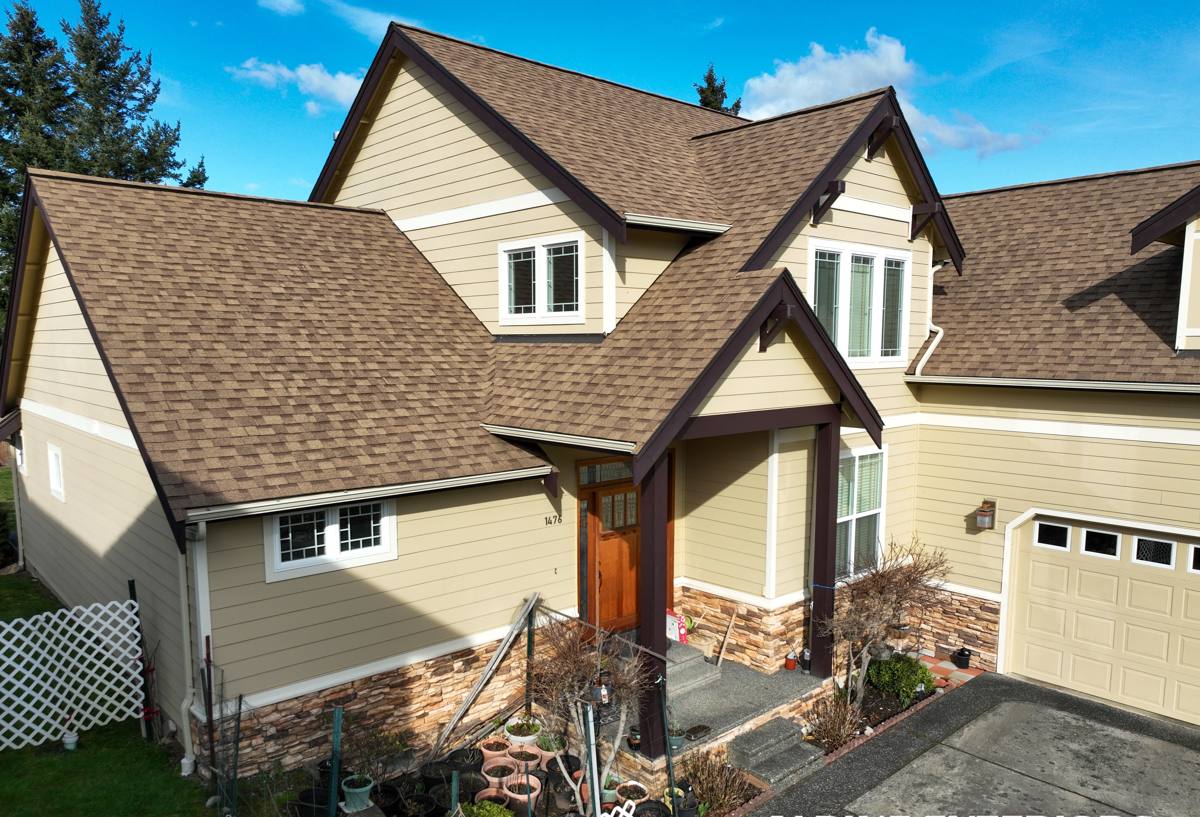
Why Custer Roofs Take a Different Kind of Beating
Every roof deals with wind and rain. What's different here is the combination and the frequency.
Wind off the water
Storms tracking through this part of Whatcom County often arrive with sustained wind rather than a single gust, which matters because sustained wind is what actually lifts shingle edges and works fasteners loose. A single strong gust can crack a shingle; hours of steady wind is what tears a section off entirely or peels back an already-weakened edge.
Driving rain, not just rainfall
Rain that falls straight down mostly runs off a properly shingled roof the way it's supposed to. Rain driven sideways by wind behaves differently — it can get up under shingle tabs, work its way past flashing that's slightly open, and find its way into valleys and around penetrations that would shed a normal rainstorm without issue. This is the mechanism behind a lot of the "why is my ceiling wet, my roof looks fine from the ground" calls we get after a storm.
Salt air and corrosion
Proximity to the water means metal components — flashing, fasteners, drip edge, vent caps — corrode faster here than they would twenty or thirty miles inland. A fastener that's rusted and loosened doesn't hold a shingle down the way it should, and corroded flashing develops pinholes and gaps years before it looks obviously bad from the ground.
A long moss season
Western Washington's mild, wet stretch from fall through spring gives moss and algae a long runway to establish on north-facing slopes and shaded sections. Moss doesn't just look bad — it holds moisture against the shingle surface, lifts shingle edges as it grows, and gives wind something to grab onto during a storm. A roof that's already dealing with moss buildup is more vulnerable to storm damage than a clean one, not less.
What Storm Damage Actually Looks Like
Storm damage isn't always a missing shingle you can spot from the driveway. Some of the most costly damage is the kind that doesn't announce itself right away.
Wind damage
- Shingles lifted, creased, or torn at the tab, even if they're still nailed down
- Whole shingles or shingle courses missing, usually along ridges, edges, or the windward side of the roof
- Fasteners backed out or shingles left "loose" without visible tearing
- Flashing bent, lifted, or separated at chimneys, vents, and wall intersections
Wind-driven water intrusion
This is damage with no obvious exterior sign. Water pushed under a shingle edge or through a compromised flashing joint can travel along the roof deck before it shows up as a stain on an interior ceiling, sometimes feet away from where it actually entered. By the time you see a stain, the underlayment and decking underneath may already be wet.
Impact damage
Falling branches and wind-blown debris are common in storms through this area given the tree cover around Whatcom County. Impact damage can crack shingles, punch through decking in worse cases, or dent and puncture metal flashing and vent components without leaving debris behind once the branch is cleared.
Hidden moisture damage
Once water gets past the shingle layer, it can sit in insulation, saturate decking, and encourage mold growth in the attic — all invisible from a ground-level look at the roof. This is the category of damage that turns a small repair into a much larger one if it sits unaddressed through a second or third storm.
What a Correct Storm Repair Actually Involves
A rushed storm repair often just replaces what's visibly missing and calls it done. A correct repair works outward from the damage to make sure the whole assembly is sound again.
- Full-roof inspection, not just the damaged section. Storms rarely damage only one spot. We check the entire roof, all flashing points, and the attic from underneath.
- Deck inspection under removed shingles. If water got underneath, the plywood or OSB decking may be soft, delaminated, or stained. Any compromised decking gets replaced, not shingled over.
- Underlayment restored to spec. Torn or saturated underlayment is replaced, not patched with tape or sealant as a shortcut.
- Flashing rebuilt where compromised. Bent or corroded flashing gets replaced rather than bent back into place, especially given how much faster metal fails here from salt exposure.
- Matching materials where possible. We match shingle profile, color, and exposure as closely as available product allows so a repaired section doesn't stand out or shed water differently than the surrounding roof.
- Fastening to current wind-exposure standards. Repairs get nailed and sealed to hold up against the same wind conditions that caused the original damage, not just to the minimum needed to close the roof back up.
Our Process, Start to Finish
1. Initial inspection
We walk the roof and the attic, document what we find with photos, and give you a straight answer on what's storm damage, what's pre-existing wear, and what's cosmetic versus structural. We don't pad a scope of work to make a claim look bigger, and we don't undersell damage to win a job cheap.
2. A clear, written scope
You get a written explanation of what needs to happen and why, broken into what's urgent (active leaks, exposed decking) versus what can be scheduled. No vague line items.
3. Insurance documentation, if you're filing a claim
If the damage is significant enough to involve your homeowner's insurance, we provide the photo documentation and scope detail adjusters need to evaluate the claim accurately. We work from what's actually damaged — we're not in the business of inflating a claim, and we'll tell you honestly if a repair likely falls under your deductible rather than encourage an unnecessary claim.
4. The repair itself
Temporary weatherproofing goes on fast if there's an active leak or exposed decking, followed by the permanent repair once materials are matched and scheduled. We don't leave a tarp up longer than necessary through another round of Whatcom County weather.
5. Follow-up
After the repair, we check that flashing, fasteners, and the repaired section are performing the way they should, particularly after the next real weather event.
Repair or Replace? What Actually Drives That Decision
Not every storm-damaged roof needs full replacement, and not every roof that "looks fine" is actually fine. The honest answer depends on a few factors.
| Factor | Leans toward repair | Leans toward replacement |
|---|---|---|
| Extent of damage | Isolated to one slope or section | Widespread across multiple slopes |
| Roof age | Well within expected lifespan | Already near end of expected service life |
| Decking condition | Dry, sound plywood/OSB underneath | Soft, delaminated, or repeatedly wet decking |
| Moss/algae history | Minimal, well-maintained roof | Long-term moss damage already present |
| Matching materials | Current shingle line still available | Discontinued product, visible mismatch likely |
| Prior storm history | First real damage event | Repeated storm repairs on the same sections |
We'll tell you plainly which side of that table your roof falls on. A roof with a single wind-torn section and sound decking underneath doesn't need replacing just because it's convenient to sell a bigger job — and a roof that's taken repeated hits over several seasons often costs more in cumulative repairs than one well-planned replacement would.
Salt Air, Moss, and Keeping the Next Storm From Doing More Damage
Storm repair fixes what already happened. The bigger opportunity is reducing what the next storm can do. A few things matter more here than in drier, inland parts of the state:
- Keeping moss and algae growth controlled, especially on north-facing and shaded slopes, so wind has less to grab onto
- Checking flashing and fasteners for early corrosion before they fail during a storm rather than after
- Trimming back tree limbs that overhang the roof, since branch strikes are a recurring cause of storm damage in this area
- Making sure attic ventilation is adequate, since a well-ventilated attic reduces the moisture buildup that speeds up decking and underlayment failure
What to check after any significant storm
- Interior ceilings and upper-floor walls for new stains, especially near chimneys, skylights, and where roof planes meet
- Attic for daylight, wet insulation, or a musty smell after the storm has passed
- Gutters and downspouts for granules, shingle fragments, or blockage from storm debris
- Visible shingles from the ground for obvious lifting, creasing, or missing sections
- Any exterior lights or fixtures under the roofline for water intrusion, which can point to a leak path above
None of that requires climbing on the roof yourself — most of it is visible from the ground or the attic hatch, and it's enough to know whether a professional look is worth scheduling.
Why It Matters to Hire a Crew That Already Works Custer
A roofing crew that mostly works drier, inland areas will still do competent basic repair work, but they're not necessarily thinking about corrosion timelines on coastal-exposed flashing, or how much moss buildup on a north slope is normal for this climate versus a sign of a bigger problem. A crew that regularly works Custer and the surrounding Whatcom County coastline has already seen how storm damage shows up here specifically — which failure points to check first, which materials hold up against salt air, and which shortcuts don't survive a second storm season.
That familiarity also matters for insurance documentation. Adjusters see a lot of storm claims after a major weather event, and clear, specific documentation that reflects what actually happens to roofs in this exact area moves a claim along faster than a generic scope of work.
Get an Honest Look at Your Roof
If a recent storm has left you with a stain on the ceiling, missing shingles, or just a nagging feeling something's not right up there, it's worth having it checked before the next round of Whatcom County weather finds the weak spot for you. We offer a free, no-pressure estimate — an honest look at what's actually damaged, what it'll take to fix it right, and what can wait. Use the form below to get started.