 Lynden Exterior
 Window Installation Built for Nooksack's Weather, Not Just the Window Opening
Nooksack sits in the flat, low-lying stretch of Whatcom County east of Lynden, close enough to the Salish Sea that marine air moves through regularly and close enough to the foothills that rain systems stall and dump for days at a time. That combination — salt-tinged moisture in the air, wind-driven rain that hits window seams sideways instead of straight down, and long stretches of gray, damp weather that never quite dry out — is hard on windows in ways that a generic installation guide doesn't address. A window that would perform fine in a dry inland climate can fail here in a few years if it wasn't installed with this specific weather in mind.
This page is about window installation as a service specifically for homes in and around Nooksack. The window unit itself matters, but in this climate the installation — the flashing, the sequencing, the sealant details — is usually what determines whether a window lasts twenty-five years or leaks behind the trim within five.
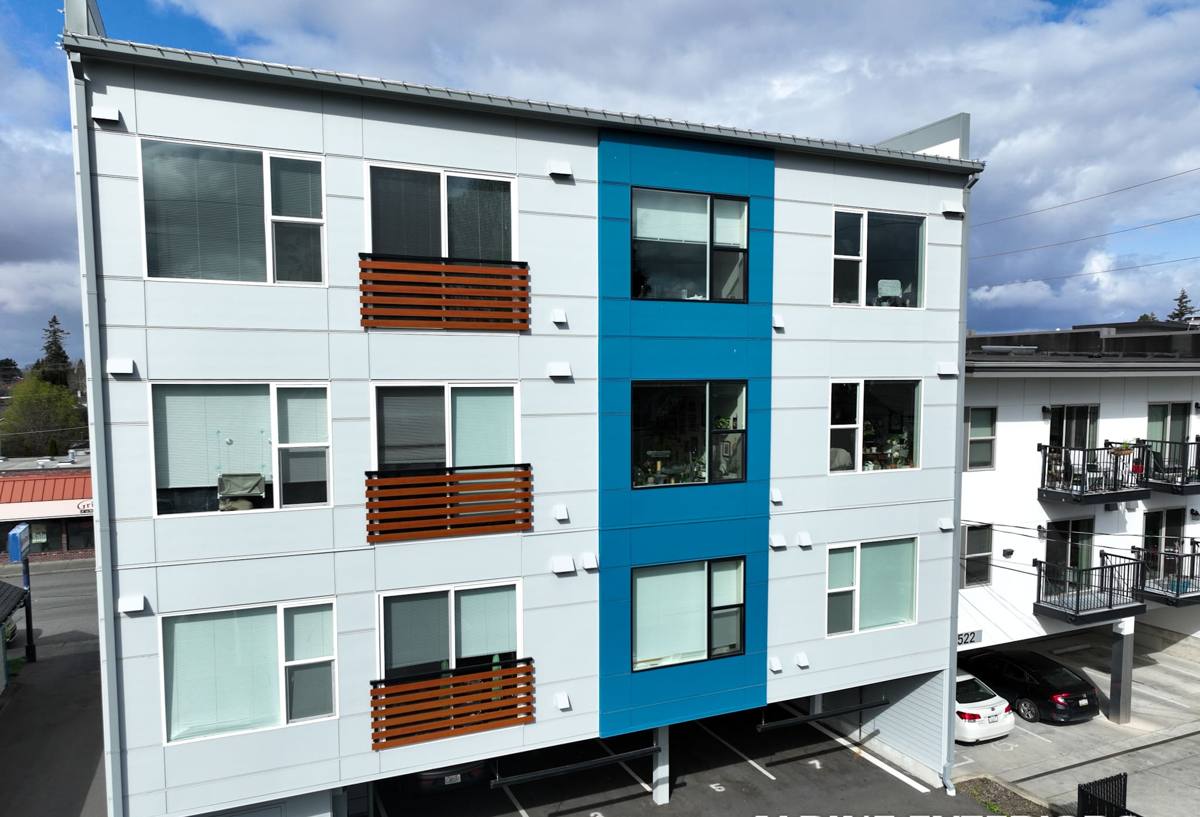
What This Climate Actually Does to a Window Over Time
We see the same failure patterns repeatedly on homes in this area, and almost all of them trace back to moisture management rather than the glass itself:
- Wind-driven rain infiltration. Storms here don't always fall straight down. When wind pushes rain sideways into a wall, any gap in the flashing or sealant becomes an entry point, even on windows that look fine from the outside.
- Persistent shade and dampness growing moss and algae. North-facing windows, or windows shaded by trees or roof overhangs, stay damp longer after every rain. Over a few wet seasons that shows up as moss or black staining on sills, tracks, and trim.
- Fogged glass from failed seals. Older aluminum-frame and early-generation vinyl windows in this region commonly develop cloudy or foggy glass between the panes once the insulated glass seal breaks down — a slow process the damp climate accelerates.
- Hidden rot around older wood-frame windows. If the original flashing wasn't done correctly (common in older construction), water works its way behind the trim slowly, and the sheathing or framing underneath can be soft or rotted long before it's visible from inside.
- Hardware corrosion. Salt-influenced air is harder on cheaper hinges, latches, and balance hardware than most homeowners expect, even a fair distance inland.
Signs Your Current Windows Are Losing the Fight
Most homeowners don't replace windows on a schedule — they replace them when the windows start failing. Here's what to watch for:
- Condensation or fog trapped between the panes of glass (not on the surface — that's normal condensation)
- Soft, spongy, or discolored trim and sill material when pressed
- Moss, algae, or dark staining creeping up from the bottom of the frame
- A noticeable draft near the frame edges even when the window is fully latched
- Windows that stick, won't latch tightly, or have become hard to open
- A heating bill that's crept up without any other explanation
- Visible daylight or gaps around the frame from outside
Any one of these on its own isn't necessarily urgent. Several of them together, especially combined with soft trim, usually means water has been getting behind the window for a while.
Retrofit Insert vs. Full-Frame Replacement
There are two fundamentally different ways to replace a window, and the right choice depends on the condition of what's already there — not just personal preference. We evaluate this on-site before recommending either one.
| Approach | Best for | What it involves | Trade-offs |
|---|---|---|---|
| Retrofit / insert replacement | Existing frame is structurally sound, no rot, size and style are staying the same | New window unit is set into the existing frame; exterior trim and siding are largely undisturbed | Faster and less disruptive, but it can't fix a frame that's already compromised — it seals a problem in rather than solving it |
| Full-frame replacement | Rot or water damage present, changing size or style, or the original flashing was never done correctly | Old frame is removed down to the rough opening, sheathing and flashing are inspected and repaired, new flashing and window are installed to current standards | More labor and some disruption to interior/exterior trim, but it's the only way to actually correct a moisture problem at the source |
If we open a wall and find rot, we'll always recommend full-frame, even if that wasn't the original plan — installing a new window into a compromised opening just guarantees a repeat of the same failure a few years later.
Material Options Worth Considering in a Marine Climate
The frame material matters less than correct installation, but it's not irrelevant, especially with salt air and near-constant moisture cycling in the picture.
| Material | Moisture / salt-air behavior | Maintenance | Typical cost position |
|---|---|---|---|
| Vinyl | Doesn't corrode or rot; performs well in damp, salt-influenced air | Low — occasional cleaning, no painting or sealing needed | Most affordable |
| Fiberglass | Very stable in temperature and moisture swings; strong resistance to warping | Low, though some finishes benefit from repainting over decades | Mid to upper range |
| Wood-clad (wood interior, clad exterior) | Good performance if the cladding and flashing are done correctly, but any breach in the cladding exposes wood to rot | Higher — exterior cladding needs to stay sealed, interior wood may need periodic finishing | Highest |
For most Nooksack homes, we steer people toward vinyl or fiberglass for a straightforward reason: this climate punishes any product where a small installation or maintenance lapse leads to trapped moisture against exposed wood. Wood-clad windows can absolutely work here, but they demand more disciplined long-term upkeep, and that's a fair trade-off homeowners should go into with open eyes rather than a surprise five years in.
The Part That Actually Prevents Rot: Flashing and Water Management
Homeowners naturally focus on the window itself — the brand, the glass package, the frame color. But in our experience, the single biggest factor in whether a window installation holds up in this climate is the flashing detail around the rough opening, not the window unit.
Correct installation follows a shingle-style, layered sequence: the sill pan goes in first to direct any water that gets past the window back out and away from the framing, the window gets set and sealed, and then the side and top flashing overlap in the right order so that water draining down the wall sheds over each layer instead of behind it. House wrap integration matters just as much — the wrap needs to lap correctly over the flashing so the whole assembly works as one drainage system, not a collection of separate parts hoping to line up.
This is also where we see the most damage from well-meaning but incomplete work: a window that looks perfectly installed from the outside, caulked neatly around the trim, with no flashing pan or proper overlap underneath. Caulk is a backup, not a strategy — it degrades, and when it does, whatever is behind it needs to be able to shed water on its own.
Energy Performance Worth Paying For
Whatcom County doesn't get brutal cold snaps often, but it does get long stretches of damp, chilly weather where a poorly rated window shows its weaknesses — cold spots near the glass, drafts, and interior condensation on the frame or glass edges on cold mornings. A window with a solid U-factor and a low-E coating suited to a marine climate keeps the interior glass surface warmer, which cuts down on that condensation and makes rooms near windows noticeably more comfortable, not just cheaper to heat.
We'll walk through glass and gas-fill options based on your home's orientation and how the room is used — a window that gets hit with afternoon sun needs a different glass package than one on a shaded north wall.
Our Installation Process
- On-site assessment. We inspect the existing frame, sill, and where accessible, the sheathing behind it, looking specifically for soft spots or signs of past water intrusion before recommending retrofit or full-frame.
- Measurement and product selection. Exact measurements, plus a conversation about material, glass package, and style based on that window's exposure to sun, wind, and rain.
- Site protection. Interior floors and furnishings and the exterior work area are protected before removal starts.
- Careful removal. The old unit comes out and we inspect the opening — this is when hidden rot, if any, gets found.
- Repair and re-flash as needed. Any damaged sheathing or framing gets repaired, and flashing is installed in correct overlapping order with the house wrap.
- Set, shim, and fasten. The new window is set level, plumb, and square — not just eyeballed — and fastened per the manufacturer's specification.
- Correct insulation of the gap. The space between the frame and rough opening is insulated properly, not packed tight with expanding foam, which can bow the frame and cause operational problems.
- Exterior trim, sealant, and interior finish. Final sealant beads and trim work are completed to shed water on the exterior and finished cleanly on the interior.
- Walkthrough. We open, close, and lock every window with you before calling the job done.
Why a Crew That Already Works Nooksack Matters
Window installation isn't a one-size-fits-all trade. A crew that regularly works homes in and around Nooksack and greater Lynden has already seen how the local housing stock ages, which sides of a house tend to take the worst of the wind-driven rain given the prevailing weather patterns here, and what kind of flashing work older Whatcom County homes typically need once you open the wall. That familiarity shortens the assessment, reduces surprises mid-project, and means the recommendation you get is based on patterns we've actually seen locally, not a generic checklist.
Permitting is worth a mention too: a straightforward like-for-like window replacement often doesn't require a permit, but enlarging an opening, changing a structural header, or other larger changes typically do. Requirements vary by jurisdiction, so we confirm what applies to your specific project rather than assuming.
Ready to Talk About Your Windows?
If you're dealing with foggy glass, drafts, moss creeping up your sills, or you just want an honest read on whether your windows are holding up the way they should, we're happy to take a look. Fill out the form below for a free, no-pressure estimate — we'll tell you what we actually find, retrofit or full-frame, and why.