 Lynden Exterior
 Roofing Built for Abbotsford's Coastal Climate
Abbotsford sits close enough to the Salish Sea and the Fraser Valley's marine weather patterns that roofs here take a different kind of beating than roofs further inland. Salt-laden air moving up from the coast accelerates corrosion on exposed metal fasteners and flashing. Long stretches of driving rain push water sideways under poorly lapped shingles and around badly flashed penetrations. And the shaded, damp winters that define this part of the Pacific Northwest give moss a season that can run eight months or longer if a roof isn't detailed to shed water and dry out between storms. A new roof installed here needs to be built with all three of those realities in mind from the start, not patched later to compensate for a generic installation.
We work in Abbotsford regularly as part of our service area out of Lynden, and the roofs we see fail early almost always have the same root causes: underlayment that wasn't rated for the amount of standing moisture this climate produces, flashing details that were rushed, and ventilation that was an afterthought instead of part of the plan. A correct installation addresses all of that up front.
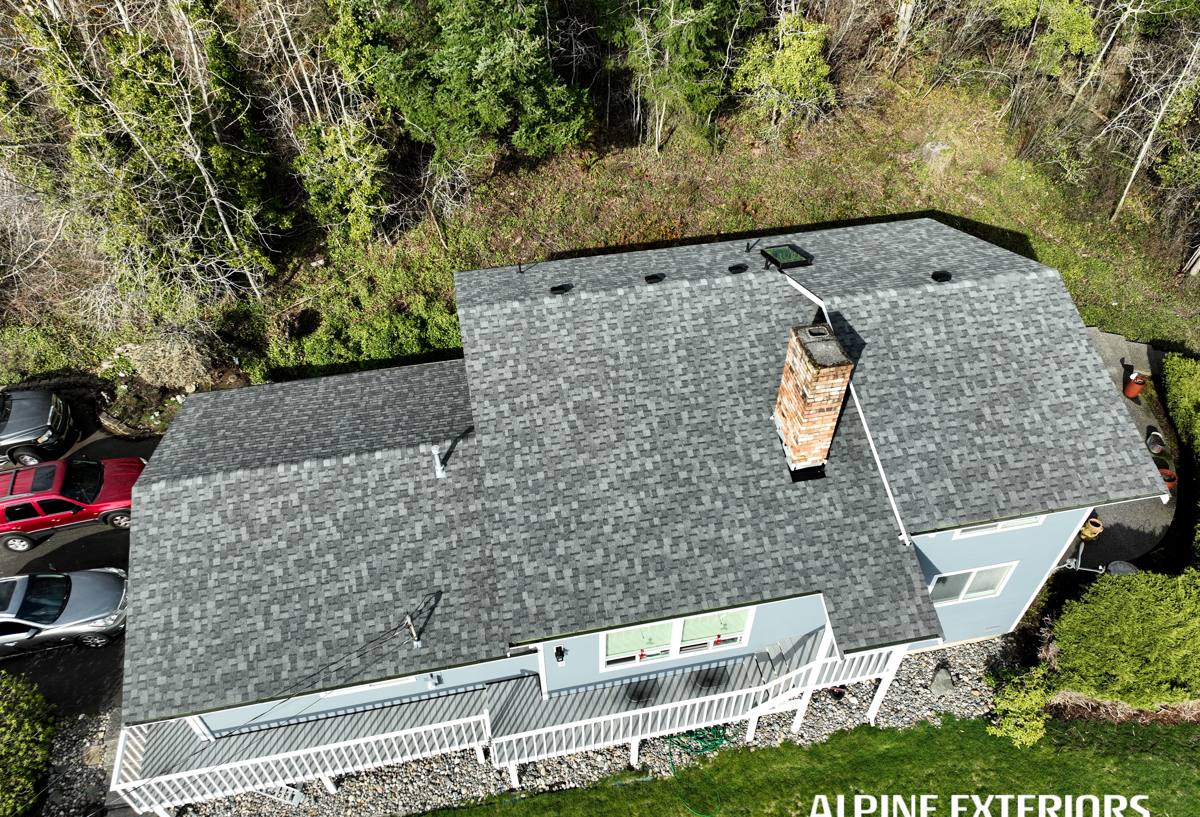
What Abbotsford Homes Actually Need From a New Roof
Moisture Management First
In a climate with this much sustained rainfall, the underlayment layer matters as much as the shingle or metal on top. A synthetic underlayment with proper lap and fastening, combined with self-adhered ice-and-water membrane at eaves, valleys, and roof-to-wall transitions, gives the roof a real second line of defense. Homes here shouldn't be getting a builder-grade felt underlayment and calling it done — the volume of rain Abbotsford sees over a wet season simply finds every shortcut.
Moss and Algae Resistance
Moss doesn't just sit on a roof looking bad — it holds moisture against the shingle surface, lifts tabs as it grows, and works its way under the edges of shingles and into fastener holes over time. Roofs with poor sun exposure, tree cover, or north-facing slopes are especially prone to it. We factor moss-resistant shingle options, proper granule coverage, and metal flashing at ridges (which naturally releases trace zinc or copper that discourages moss growth) into the plan when a home's site conditions call for it.
Wind and Driving Rain
Storms moving through this region don't always come straight down — wind-driven rain hits roof edges, rakes, and valleys at an angle, which is exactly where cheap installations fail first. Proper starter strip placement, correctly lapped valley metal, and sealed nail patterns matter more here than in drier climates where a few installation shortcuts might go unnoticed for years.
What a Correct Installation Actually Involves
A roof replacement isn't just stripping old material and nailing down new. Here's what should happen on every tear-off and install, whether it's a straightforward single-story home or something with more complex rooflines:
- Full tear-off to the deck — never installing new roofing over old material
- Deck inspection and repair or replacement of any soft, water-damaged, or delaminated sheathing
- Ice-and-water shield at eaves, valleys, and any roof-to-wall or roof-to-chimney transition
- Synthetic underlayment across the full field, properly lapped and fastened
- New drip edge at eaves and rakes — old drip edge should not be reused
- Properly lapped valley metal or woven valley detail, depending on roof design
- New flashing at every penetration: vents, skylights, chimneys, and wall intersections
- Correct nailing pattern and placement per manufacturer specification, not just "close enough"
- Balanced intake and exhaust ventilation across the attic space
- Ridge cap installed to manufacturer spec, not just leftover field shingles cut down
Skipping any one of these doesn't necessarily cause a failure in year one. But in a climate that stays wet as long as this one does, shortcuts compound — and they tend to show up as leaks three to seven years down the road, right when a homeowner assumes the roof is still "new."
Ventilation: The Step Most Often Skipped
Attic ventilation doesn't get much attention during a roof sales conversation, but it directly affects how long the new roof lasts. Without balanced intake at the soffits and exhaust at the ridge, moist air gets trapped in the attic. In a climate as damp as Abbotsford's, that trapped moisture condenses against the underside of the deck, promotes rot, and can void portions of a shingle manufacturer's warranty outright. We check existing ventilation as part of every estimate and tell homeowners plainly if the current setup is undersized — it's a relatively small cost to correct during a re-roof compared to fixing deck rot later.
Choosing Roofing Materials for This Climate
There isn't one "best" roofing material for every home — it depends on the roof's pitch, sun exposure, budget, and how long the homeowner plans to stay in the house. Here's how the common options stack up for a coastal, high-moisture climate like this one:
| Material | Typical Lifespan | Climate Considerations |
|---|---|---|
| Architectural asphalt shingle | 25–30 years | Good moss resistance available; most cost-effective; wide color range |
| 3-tab asphalt shingle | 15–20 years | Lower upfront cost but less wind resistance and shorter lifespan in wet climates |
| Metal (standing seam or panel) | 40–60 years | Excellent water shedding and natural moss resistance; higher upfront cost |
| Cedar shake | 20–30 years with upkeep | Requires regular maintenance to resist moss and rot in this climate |
For most Abbotsford homes, a quality architectural asphalt shingle with algae-resistant granules offers the best balance of cost, durability, and moss resistance. Homes with low-slope sections, heavy tree cover, or owners planning to stay long-term sometimes make a stronger case for metal, given how well it sheds water and resists the moss buildup that plagues shaded roof sections.
Cost Factors Worth Understanding Before You Get Quotes
We don't publish blanket pricing because roof cost depends on real variables specific to each home. Understanding these factors helps homeowners make sense of why two quotes for "the same roof" can differ:
| Factor | Why It Matters |
|---|---|
| Roof pitch and complexity | Steep or multi-plane roofs take longer and require more safety setup and cutting |
| Deck condition | Rotted or soft sheathing found during tear-off adds material and labor |
| Number of penetrations | Each vent, skylight, and chimney needs individual flashing work |
| Material choice | Asphalt, metal, and cedar carry different material and labor costs |
| Access and site conditions | Steep driveways, limited staging area, or tall trees can affect logistics |
| Existing ventilation | Undersized ventilation may need soffit or ridge vent upgrades |
A trustworthy estimate walks through these factors specifically for your home rather than quoting a flat per-square rate over the phone.
Why Local Experience in Abbotsford Matters
Roofing crews who don't regularly work this specific area sometimes underestimate how much moisture this climate actually pushes through a roof system over a full year, or they default to underlayment and ventilation specs that are fine for a drier region but undersized here. Working Abbotsford and the surrounding Whatcom and Fraser Valley area consistently means we've seen how roofs installed with shortcuts actually fail in this climate — not in theory, but in the leaks and deck rot we get called out to repair. That experience shapes how we spec every new installation, from underlayment selection to how much ventilation a given attic actually needs.
It also means we're not guessing at permitting requirements, disposal logistics, or seasonal scheduling around this region's wet months — we plan installs around weather windows that give the crew a real chance to keep the deck dry throughout the tear-off and dry-in process.
How Our Process Works
- On-site inspection — we look at the existing roof, attic ventilation, and deck condition (where visible) before quoting anything
- Written estimate — a clear breakdown of material, scope, and any deck or ventilation concerns found during inspection
- Scheduling around weather — tear-offs are planned for dry windows whenever possible to keep the deck protected
- Tear-off and deck inspection — full removal of old material, with any damaged sheathing addressed before anything new goes down
- Installation — underlayment, flashing, ventilation, and roofing material installed to manufacturer spec
- Final walkthrough — cleanup, magnetic sweep for nails, and a review of the finished work with the homeowner
Signs Your Abbotsford Roof May Need Replacement Soon
Not every roof problem calls for a full replacement — but these are the signs worth having a professional look at rather than waiting on:
- Granules collecting in gutters or at downspout outlets
- Shingles that are curling, cupping, or losing their flat profile
- Visible moss growth, especially on shaded or north-facing slopes
- Daylight visible through the roof deck from inside the attic
- Soft spots noticeable when walking the roof
- Recurring leaks around chimneys, skylights, or vent pipes
- A roof approaching or past the manufacturer's rated lifespan
If you're seeing one or two of these signs, a repair may still be reasonable. Several at once usually means the roof system as a whole is reaching the end of its useful life.
If your Abbotsford home is due for a new roof, or you just want an honest read on how much life is left in the one you have, we're glad to come take a look. Estimates are free, there's no pressure to sign anything on the spot, and you'll get a straight answer about what your roof actually needs — use the form below to get started.