 Lynden Exterior
 Deck Building in Custer: Built for Whatcom County's Wet Side
Custer sits in the open agricultural flatland north of Ferndale, close enough to the Salish Sea to catch salt-laden marine air on winter storms, and exposed enough that wind-driven rain reaches decks with little to slow it down. A deck out here isn't just outdoor furniture — it's a structure that spends most of the year wet, shaded for long stretches by low winter sun angles, and prone to holding moisture in ways a deck in a drier inland climate simply doesn't. Building one correctly means designing for water from the start, not just picking a decking material and framing it up.
We build and repair decks throughout this part of Whatcom County, and on decks specifically we treat drainage, fastener choice, and ledger flashing as the details that decide whether a deck lasts fifteen years or fifty. A good-looking deck built without attention to those details will still fail early in this climate — usually from underneath, where nobody's looking until there's a problem.
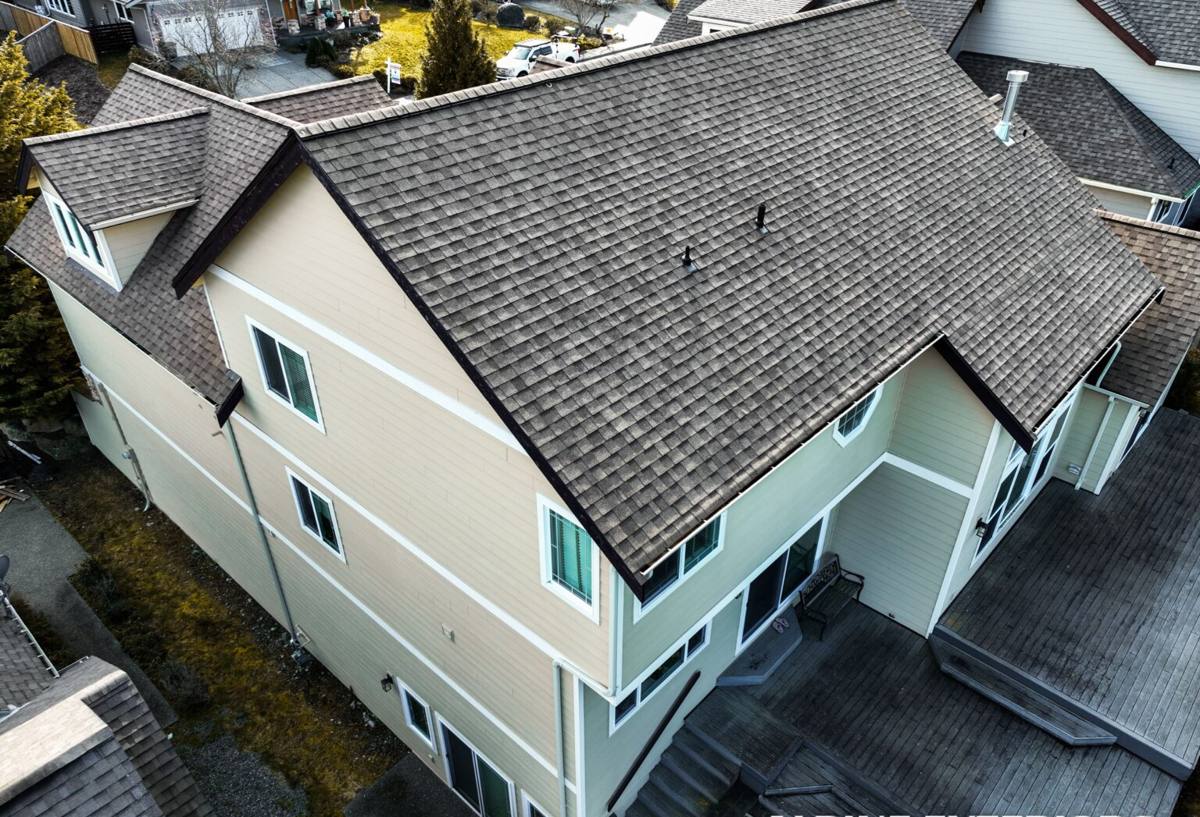
What Custer's Climate Does to Decks
Driving Rain and Standing Water
Flat, open terrain around Custer gives storms coming off the water little to break against, so rain arrives sideways as often as it falls straight down. On a deck, that means water reaches surfaces and gaps that a more sheltered structure would rarely see — under railings, behind post wraps, and into any joint where boards butt together without a drainage gap. Decking that doesn't shed water quickly, or framing that traps it against a ledger board, is where rot gets its start.
Salt Air and Fastener Corrosion
Custer is set back from the immediate waterfront, so it doesn't take the direct salt spray a Birch Bay or Drayton Harbor property does, but enough marine air moves inland on storms to accelerate corrosion on lower-grade fasteners and hardware over time. A deck built with standard interior-rated screws or generic joist hangers can show rust streaks and weakened connections years before a deck built with fasteners rated for exterior, coastal-adjacent exposure.
Moss, Algae, and a Long Growth Season
Mild temperatures and near-constant dampness through fall, winter, and spring give moss and algae a growth season that stretches across most of the year in Whatcom County. Decking surfaces, especially shaded ones or spots that don't get direct sun to dry out, become slick and green faster than most homeowners expect. Beyond the slip hazard, trapped moisture under a layer of moss accelerates whatever decay process is already underway in the board beneath it.
Freeze-Thaw and Wood Movement
Whatcom County doesn't see extreme cold most winters, but the repeated cycle of wet, cold nights followed by milder days causes wood to swell and contract more than it would in a stable, dry climate. Over years, that movement works fasteners loose, opens gaps at butt joints, and stresses any spot where two materials were fastened without room to move independently.
Signs a Custer Deck Needs Attention
- Soft, spongy, or spring-feeling spots underfoot, especially near the house or stair landing
- Persistent green or black staining that returns quickly after cleaning
- Rust streaks around fasteners, joist hangers, or post brackets
- Gaps opening up at the ledger board where the deck meets the house
- Railing posts that feel loose or wobble under normal weight
- Standing water that takes more than a day to drain after rain
New Build vs. Repair vs. Full Replacement
Not every deck problem in Custer means starting over. A deck with sound framing and a failing surface board here and there is often a straightforward repair. A deck with rot at the ledger connection, a compromised support post, or framing that's been absorbing water for years usually isn't — patching individual boards on a structure with a failing frame underneath just delays a bigger repair while the underlying problem keeps spreading.
| Condition | Repair Usually Makes Sense | Replacement Usually Makes Sense |
|---|---|---|
| A few worn or splintering surface boards | Yes — board-by-board replacement | Only if most of the deck is aging out together |
| Loose railing or post hardware | Yes — hardware and fastener upgrade | Not on its own |
| Soft or rotted ledger board connection | Rarely a lasting fix on its own | Yes — full reframe at that connection |
| Undersized or sagging joists | Sometimes, with sistered framing | Yes, if sagging is widespread |
| Original deck 20+ years old, never resealed | Possible short-term fix | Yes, for real long-term value |
Ledger Flashing: The Detail Most Decks Fail On
The ledger board — where the deck attaches to the house — is the single most common failure point on decks in wet climates, and Custer's rain exposure makes it no exception. Water running down the siding above a deck needs somewhere to go besides behind the ledger board and into the house's rim joist. Proper flashing means a code-compliant ledger flashing system that laps correctly with the home's weather-resistive barrier, a gap or flashing tape between the ledger and the house to let water drain rather than pool, and structural connectors sized for the actual load rather than a handful of undersized lag screws. This is standard on every deck we build, not an upgrade.
What Goes Wrong Without It
On repair calls around Custer, ledger rot is almost always traceable to one of two causes: flashing that was skipped or installed backward so it channels water into the house rather than away from it, or a ledger bolted flush against the siding with no drainage gap at all. Both problems are invisible from the deck surface for years, which is exactly why they're so damaging by the time someone notices soft framing.
Choosing Decking Material for This Climate
We install both wood and composite decking, and we walk homeowners through the honest trade-offs rather than pushing one option as the only right answer for every project. What matters most for a Custer deck is how the material handles sustained moisture, how it performs in shaded, slow-drying spots, and what upkeep the homeowner is realistically willing to commit to.
- Pressure-treated wood: Lower upfront cost, but requires regular sealing or staining to keep water out — skipping that maintenance in this climate shortens its life noticeably.
- Cedar: Naturally more rot-resistant than many woods and a good look for the region, but still needs periodic finish maintenance to perform well under constant marine moisture.
- Composite decking: Higher upfront cost but no staining or sealing required, and it resists the moss staining and moisture absorption that wood surfaces deal with here — a real advantage on shaded, slow-drying decks.
- Fastener and hardware grade: Whatever the surface material, we specify corrosion-resistant fasteners and structural hardware rated for coastal-adjacent exposure, since that's often the actual point of failure, not the decking itself.
Framing and Structural Considerations
A deck's structure matters more to its lifespan than the surface material sitting on top of it. Joist spacing, beam sizing, and post footing depth all need to account for Whatcom County's frost depth and this region's snow and wind load requirements, not just whatever the decking manufacturer's minimum recommendation happens to be. We also grade and space framing to encourage drainage rather than trap water against structural members, since a deck that drains well from the frame down needs far less surface maintenance to stay sound.
Footings in Custer's Soil
Soil conditions around Custer's agricultural flatland can hold more moisture at depth than sandier or better-drained sites closer to the coast. Footings need to be set to proper frost depth and sized for the load they're carrying, and we don't shortcut footing depth or diameter to save time on a job — that's the part of a deck nobody sees again once it's built, and it's the part that determines whether the whole structure stays stable for decades.
Railings, Stairs, and Code Requirements
Railing height, baluster spacing, and stair rise-and-run all fall under Washington's residential building code, and getting them right matters for safety as much as for passing inspection. In a climate this wet, railing post connections deserve the same attention to fastener corrosion resistance as the rest of the structure, since a loose or corroded post connection is a safety issue, not just a maintenance one. We build railings and stairs to code as standard practice and pull permits where required rather than treating that as optional.
A Practical Maintenance Checklist for Custer Deck Owners
- Clear leaves and debris from between boards and off ledger flashing at least twice a year
- Check for standing water after a hard rain — anywhere it sits longer than a day is worth investigating
- Look at fastener heads and hardware annually for early rust staining
- Reseal or restain wood decking on the manufacturer's recommended schedule, not just when it looks faded
- Have the ledger connection and framing checked every few years, since that's the spot most likely to fail out of sight
Our Process
We start with an on-site look at the property — grade, sun exposure, existing structure if there is one — and talk through decking material options based on how the site actually drains and how much upkeep the homeowner wants to take on. From there we provide a written scope covering framing, footing depth, ledger flashing detail, and decking or railing material before any work begins. Permitting and code-compliant railing and stair construction are handled as standard practice, not an add-on.
If you're planning a new deck in Custer, dealing with a soft spot or rot on an existing one, or just want a second opinion on whether repair or replacement makes more sense, we're happy to take a look. Reach out below for a free, no-pressure estimate.