 Lynden Exterior
 Acme's Climate Is Harder on Siding Than Most Homeowners Realize
Acme sits back in the Whatcom County foothills east of Lynden, tucked closer to the tree line and the Nooksack River drainage than the open valley floor. That location comes with real trade-offs for exterior materials. The same marine weather systems that push moisture off the Salish Sea into all of Whatcom County settle into these foothill pockets and linger — driving rain that comes in sideways during fall and winter storms, heavy morning dew through spring, and a moss season that can run eight months or longer under the tree canopy that surrounds most Acme properties.
Siding here isn't just a cosmetic layer. It's the first line of defense against a climate that rarely lets a wall assembly fully dry out between rain events. A product or installation that would hold up fine in a drier inland climate can fail years early in Acme if it wasn't built and installed for this kind of sustained moisture exposure.
What the Rain and Tree Cover Actually Do
Driving rain forces water sideways into laps, seams, and trim joints that a straight-down rain would never reach. Combined with the shade from surrounding fir and cedar stands, siding in Acme dries slower than siding on an open lot closer to town. That extended dry-back time is exactly what moss, algae, and mildew need to establish themselves — and once organic growth takes hold on a porous or improperly sealed surface, it holds moisture against the wall even longer, accelerating whatever damage is already happening underneath.
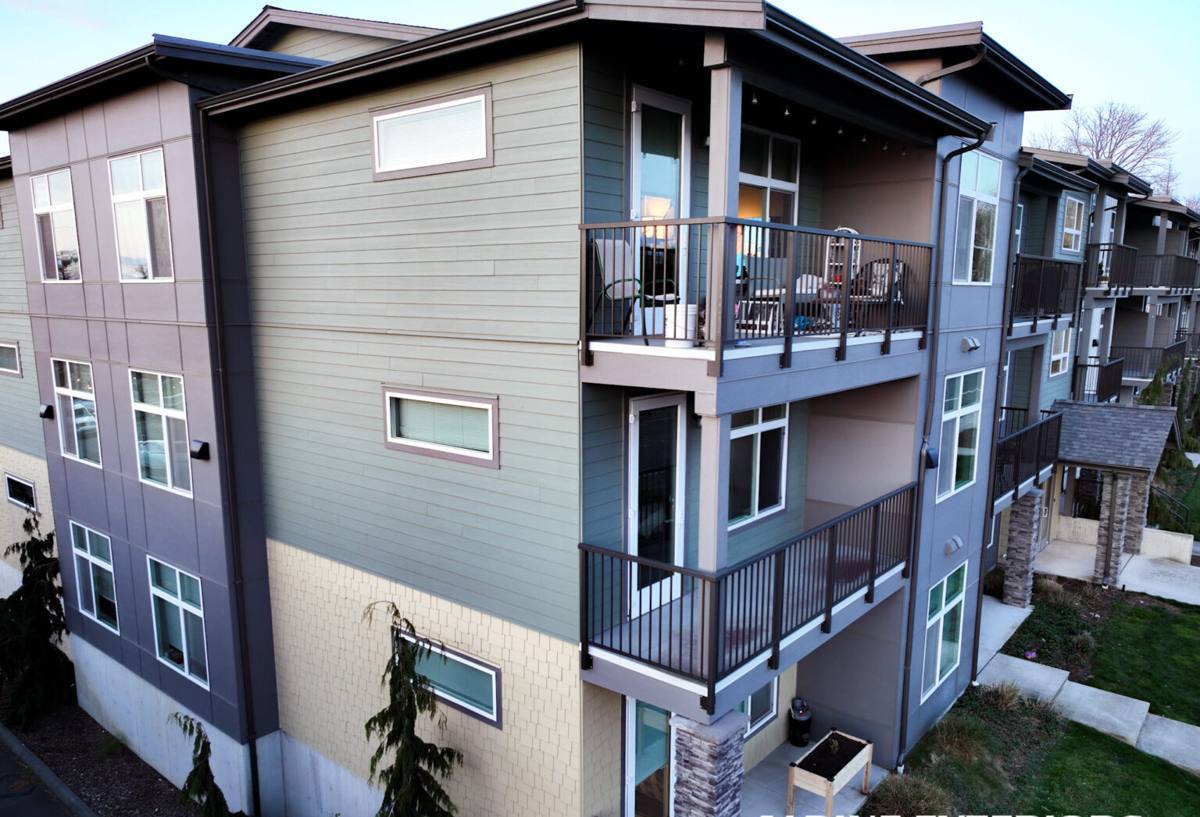
Signs an Acme Home Needs Siding Replacement, Not Just a Repair
Not every siding problem calls for a full tear-off. But in a climate this wet, certain symptoms usually mean the damage has moved past the surface and into the wall assembly:
- Soft, spongy, or crumbling siding when pressed, especially near the bottom courses and around window and door trim
- Persistent moss or algae staining that returns within weeks of cleaning
- Visible gaps, warping, or bowing boards, particularly on north- and west-facing walls that get the least sun exposure
- Peeling or bubbling paint that keeps coming back no matter how often it's repainted
- A musty smell near exterior walls or unexplained interior moisture near baseboards
- Siding installed more than 20-25 years ago, especially older wood, hardboard, or early-generation composite products not engineered for this climate
If you're seeing more than one of these, it's worth having someone look at the sheathing underneath, not just the visible siding. In our experience working around Whatcom County foothill properties, moisture damage found on the surface is often a preview of what's happening one layer deeper.
Why Material Choice Matters More Here Than in a Dry Climate
In a low-moisture region, almost any siding product can perform adequately for a while. In a foothill microclimate like Acme's, the material itself becomes one of the biggest factors in how long the job actually lasts. Wood species, hardboard products, and vinyl each carry specific vulnerabilities that show up faster under sustained damp, shaded conditions — swelling, delamination, warping, or simply losing their finish faster than the manufacturer's marketing suggests.
That's the core reason we standardized on James Hardie fiber cement siding for every job we do, including here in Acme. It's non-combustible, doesn't swell or rot the way wood-based products can, and it's manufactured in climate-specific "HZ" formulations engineered for exactly the wet, marine-influenced conditions Whatcom County sees year-round. We're not chasing the cheapest material that will pass inspection — we're installing what we've found actually holds up in this climate over decades, not just years.
What a Correct Siding Replacement Involves
Replacing siding on a home exposed to Acme's rain and shade patterns is not simply pulling off old boards and nailing up new ones. A job done to spec involves several layers most homeowners never see:
The Water-Resistive Barrier
Every square foot of sheathing gets a properly lapped weather-resistive barrier before any siding goes up. In a climate where wind-driven rain is routine, how this barrier is lapped and taped — and how it integrates with window and door flashing — matters as much as the siding itself.
Flashing and Drainage Details
Head flashing above windows and doors, kickout flashing where roof lines meet walls, and proper clearance at the base of the wall all need to be correct. These are the details that determine whether water sheds away from the structure or gets trapped behind the siding — and they're also the details that get skipped on rushed jobs.
Fastening and Clearances
James Hardie siding has specific fastening patterns, clearance requirements from grade and roof lines, and gapping specifications at butt joints. Installed off-spec, even the best fiber cement product can trap moisture or fail prematurely — which is why correct installation is just as important as material choice.
James Hardie Products We Install in Acme
| Product Line | Best Suited For | Notes |
|---|---|---|
| HardiePlank Lap Siding | Most Acme homes, traditional and modern styles | Available in multiple exposures and textures; ColorPlus factory finish |
| HardiePanel Vertical Siding | Accent walls, gables, modern designs | Often paired with lap siding for visual contrast |
| HardieShingle | Craftsman-style homes, accent areas | Staggered or straight-edge panels for a shingle look without wood's upkeep |
| HardieTrim | Corners, window and door surrounds | Matched fiber cement trim to avoid mismatched wood rot points |
All of these come in James Hardie's climate-engineered HZ formulations, factory-finished with ColorPlus Technology so the color coat is baked on rather than field-applied — which matters in a climate where a field-applied paint job has less time to properly cure between rain events.
How Our Process Works
- Free on-site assessment — we walk the exterior, check for soft spots, moisture damage, and existing flashing issues before quoting anything
- Written scope and estimate — clear on what's being replaced, what product lines and colors, and what the timeline looks like
- Tear-off and sheathing check — old siding comes off and we inspect the sheathing underneath for rot or damage before closing the wall back up
- Weather barrier and flashing installation — the unseen layer that determines how well the job performs over the next 20-30 years
- Hardie siding installation to manufacturer spec — correct fastening, gapping, and clearances throughout
- Final walkthrough — we go over the finished work with you before calling the job done
What Drives Cost on an Acme Siding Job
| Factor | Why It Matters |
|---|---|
| Home size and wall complexity | More corners, gables, and dormers mean more cutting, flashing, and labor time |
| Extent of hidden damage | Rotted sheathing found during tear-off adds repair scope before new siding can go up |
| Product line and texture | Lap vs. panel vs. shingle profiles, and smooth vs. woodgrain textures, carry different material costs |
| Access and site conditions | Sloped lots, tree cover, and tight setbacks common in Acme can affect staging and scaffolding needs |
| Trim and accent work | Full HardieTrim packages and accent panel details add scope beyond basic field siding |
We don't quote a job until we've actually seen the walls — broad ranges without an inspection tend to be wrong in one direction or the other, and we'd rather give you an accurate number than a fast one.
Why a Crew That Already Works Acme Matters
Acme isn't downtown Lynden. Lot access, tree cover, well and septic layouts, and the specific way rain and shade interact on foothill properties are things you learn by working the area repeatedly, not by reading a spec sheet. A crew that's already familiar with how homes in this part of Whatcom County are sited and how moisture behaves around them is going to catch problems — and avoid creating new ones — faster than a crew seeing the terrain for the first time.
It also means realistic scheduling. Foothill weather windows can be narrower than what you'd plan around in town, and a crew that knows the area builds that into the timeline instead of getting caught mid-project by an early rain system.
Protecting the Investment After Installation
Correctly installed James Hardie siding is low-maintenance, but "low-maintenance" doesn't mean "no maintenance," especially under Acme's tree cover. A short annual routine goes a long way:
- Rinse siding annually to clear pollen, dust, and early moss growth before it establishes
- Keep gutters clear so overflow doesn't run down the wall face
- Trim back branches and vegetation that keep siding shaded and damp
- Check caulking at trim and penetrations every year or two and touch up as needed
- Walk the exterior after major storms and note any impact damage early, before it becomes an entry point for moisture
If you're seeing signs of wear on your Acme home's siding, or you're simply planning ahead before the next wet season sets in, we'll come take a look and give you a straightforward, no-pressure estimate — no obligation, just an honest read on where things stand.