 Lynden Exterior
 Why Siding Choice Matters More in Laurel Than It Does Elsewhere
Laurel sits in the lowlands just outside Lynden, in a stretch of Whatcom County where marine air off the Salish Sea pushes inland regularly, driving rain comes in sideways more often than straight down, and shaded, tree-lined lots stay damp well after a storm has passed. None of that is unusual for this part of Washington. But it does mean the siding on a Laurel home is doing real work every week of the year, not just sitting there for curb appeal.
Salt-laden air accelerates corrosion on fasteners and trim. Wind-driven rain finds any gap in flashing or caulk and pushes water where it doesn't belong. And a long, cool moss season means anything organic — wood, cellulose-based composites, even some cheaper composites — stays wet long enough to feed growth instead of drying out between rains. Siding that isn't built and installed for this specific combination of conditions tends to show it early: streaking, soft spots, swelling at the edges, paint that fails years ahead of schedule.
This page is about one job done right: James Hardie fiber cement siding, installed correctly, on a home in the Laurel area.
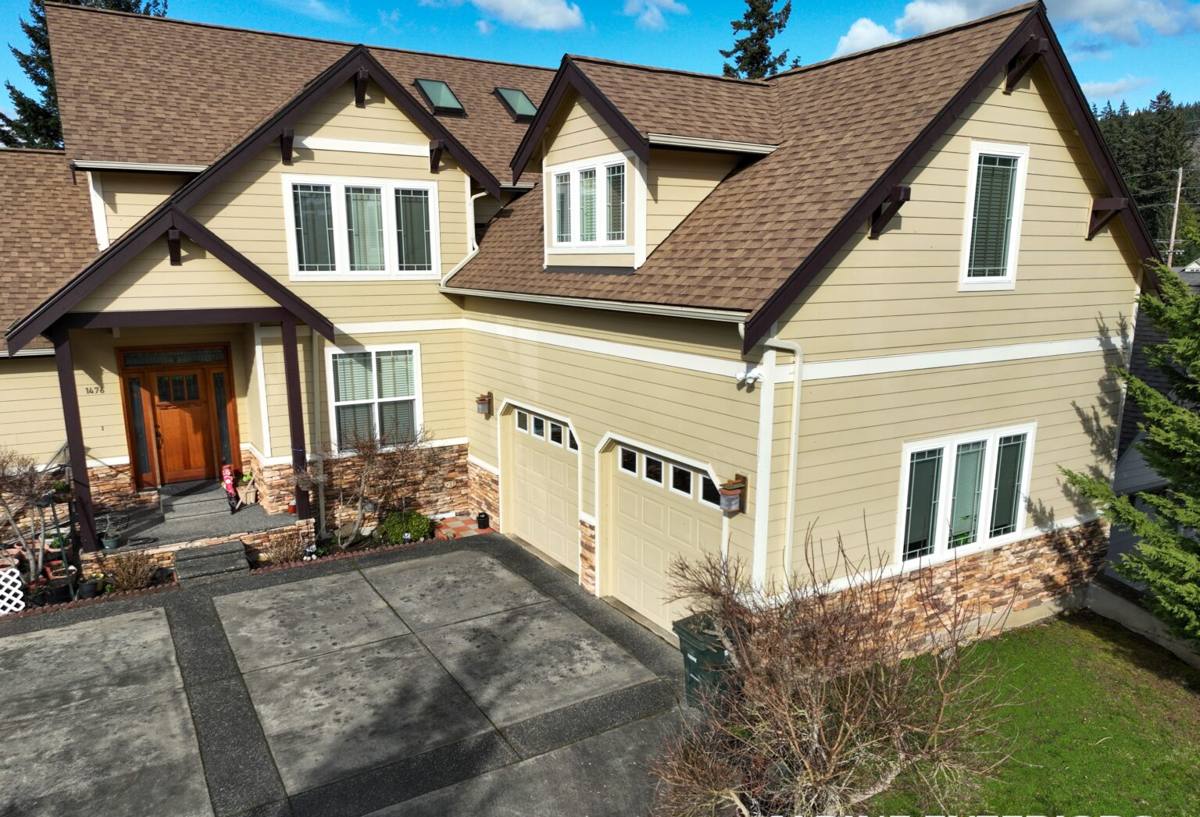
What James Hardie Siding Actually Is
James Hardie siding is fiber cement — a blend of cellulose fiber, sand, and Portland cement, cured and engineered into planks, panels, and trim. It's not plastic (like vinyl) and it's not wood-based (like LP SmartSide or cedar). That composition is the whole reason it behaves differently in a climate like ours.
Fiber cement doesn't absorb water the way wood-based products do, so it doesn't swell, warp, or delaminate from repeated wetting and drying cycles. It's also non-combustible, which matters more each year as wildfire smoke and dry-season risk become a bigger part of Pacific Northwest summers. James Hardie makes climate-specific product lines — its HZ5 formulation is engineered for regions that get significant moisture exposure, which fits Whatcom County's rainfall and humidity profile.
The factory-applied ColorPlus finish is baked on under controlled conditions, rather than field-painted after installation. That finish is formulated to resist fading and hold up against moss and mildew staining far longer than a standard field-applied paint job on wood or composite siding.
Why This Company Installs Only James Hardie
We don't install LP SmartSide, vinyl, or the other fiber cement alternatives on the market, and that's a deliberate standard, not an oversight. Wood-based composites are more forgiving to install quickly but more sensitive to sustained moisture exposure over time — exactly the condition Laurel's climate creates for months at a stretch. Vinyl is inexpensive and low-maintenance in mild climates, but it can warp under prolonged UV and doesn't hold color or resist impact the way fiber cement does. Other fiber cement brands exist, but James Hardie's engineering-specific product lines, factory finish process, and transferable warranty are the combination we've chosen to stand behind on every job.
Standardizing on one product means our crews aren't relearning installation quirks between jobs — every fastening pattern, every flashing detail, every caulk joint on a Laurel home gets the same disciplined approach because it's the only system we build.
Choosing the Right Hardie Product Line for a Laurel Home
Lap Siding
HardiePlank lap siding is the most common choice for homes in this area — it reads as traditional horizontal siding, comes in several exposure widths and textures (smooth or cedar-grain), and handles wind-driven rain well when the laps and flashing are done correctly.
Panel and Shingle Styles
HardiePanel gives a more modern, vertical or board-and-batten look, often used as an accent alongside lap siding. HardieShingle mimics a shingled or shake appearance for homes going for a more traditional Pacific Northwest look, without the moisture sensitivity of actual cedar shingles.
Trim and Soffit
HardieTrim is used around windows, doors, corners, and fascia. Trim boards take more direct weather exposure than field siding in many cases, so we treat trim detailing — not just the flat wall area — as a critical part of a correct install.
| Product Line | Best Used For | Look |
|---|---|---|
| HardiePlank Lap | Full-home siding, most common choice | Traditional horizontal lap |
| HardiePanel | Accent walls, gables, modern designs | Vertical or board-and-batten |
| HardieShingle | Traditional or craftsman-style homes | Shingle or shake profile |
| HardieTrim | Windows, doors, corners, fascia | Smooth or textured trim boards |
What Correct Installation Involves
Flashing and Water Management First
In a climate that sends rain sideways during winter storms, flashing is what actually keeps water out — not the siding itself. Window and door flashing, kick-out flashing at roof lines, and proper weather-resistant barrier overlap all have to be done in the correct sequence, before a single piece of siding goes up. Skipping or rushing this step is the single biggest cause of hidden moisture damage behind siding that looks fine from the street.
Fastening and Gaps
James Hardie specifies exact nailing patterns, fastener types, and minimum gaps between boards, trim, and adjoining surfaces like decks and roofs. Those gaps aren't cosmetic — they let the assembly drain and dry instead of trapping water against the building. We follow the manufacturer's installation instructions to the letter, because deviating from them is also what can void the warranty.
Caulking and Sealant Practice
Correct caulking uses the right sealant in the right joints — not everywhere. Over-caulking can trap moisture just as easily as under-caulking lets it in. Getting this balance right takes experience with the product, not just a caulk gun and good intentions.
Our Process, Start to Finish
- On-site assessment of your Laurel home's current siding, moisture points, and exposure to wind and rain
- Written estimate covering product line, color, trim details, and scope
- Removal of old siding and inspection of the sheathing underneath for any hidden damage
- Repair of any compromised sheathing or framing before new siding goes up
- Installation of weather-resistant barrier, flashing, and James Hardie siding per manufacturer specification
- Final trim, caulking, and touch-up work
- Site cleanup and a final walkthrough with you
Cost Factors for a Laurel Siding Project
Every home is different, so we don't quote pricing without seeing the job, but these are the factors that move the number most:
| Factor | Why It Affects Cost |
|---|---|
| Existing siding removal | Tear-off and disposal add labor time versus a bare-sheathing install |
| Sheathing condition | Rot or water damage found underneath requires repair before new siding goes on |
| Product line and texture | Panel and shingle styles typically run higher than standard lap siding |
| Trim complexity | Homes with more corners, windows, and rooflines need more detail work |
| Home size and story height | More square footage and taller walls mean more material and labor |
Why a Crew That Already Works Laurel Matters
A siding crew that's worked other homes in and around Lynden already knows how Whatcom County's rain patterns and marine air behave against a wall assembly — which elevations take the worst of the wind-driven rain, how long moss season really runs here, and where local permitting requirements apply. That's the difference between a general contractor treating your home like any job anywhere, and a crew that's already calibrated its flashing and fastening approach to what this specific climate throws at a house.
It also means faster, more accurate estimates. We're not guessing at how a Laurel lot's tree cover or exposure will affect moisture — we've seen it on the house down the road.
Keeping Your Hardie Siding Looking Right Through Moss Season
James Hardie siding with a proper ColorPlus finish needs far less upkeep than wood or vinyl, but it isn't zero-maintenance. A little seasonal attention keeps it performing the way it's designed to:
- Rinse siding annually with a garden hose and soft brush to clear pollen, dust, and early moss growth — avoid high-pressure washing, which can force water behind boards or joints
- Check caulked joints around windows, doors, and trim each fall before the wet season sets in, and have any cracked or missing caulk addressed
- Keep gutters clear so overflow doesn't run down the siding face repeatedly in the same spot
- Trim back vegetation and tree branches that keep siding shaded and damp longer than the rest of the house
- Watch for any dark green or black staining at ground level or under eaves — persistent moss buildup is worth a quick inspection, not just a wash
If you're weighing a siding replacement for a home in the Laurel area and want a straight answer about what your house actually needs, we're happy to take a look. Reach out for a free, no-pressure estimate using the form below.