 Lynden Exterior
 Siding for Acme's Wooded, Wet Corner of Whatcom County
Acme sits in a different microclimate than the open farmland closer to Lynden proper. Tucked along the South Fork Nooksack valley toward the Mount Baker foothills, homes here tend to sit on wooded or partially wooded lots with more tree cover, more shade, and more standing moisture than the flatter, more exposed properties to the north and west. That combination — heavy regional rainfall, dense canopy, and slower-drying siding surfaces — is exactly the kind of environment where the wrong siding material or a mediocre installation shows its weaknesses fastest.
Whatcom County as a whole deals with driving rain, a long moss season, and the salt-laden air that moves inland off the Strait of Georgia and Bellingham Bay during storm systems. Acme's wooded terrain adds its own layer on top of that: less direct sun to dry siding out between rain events, more organic debris collecting in gutters and against wall surfaces, and higher ambient humidity under the tree line. If you own a home in or near Acme, your siding is working harder than siding on a similar house sitting in the open.
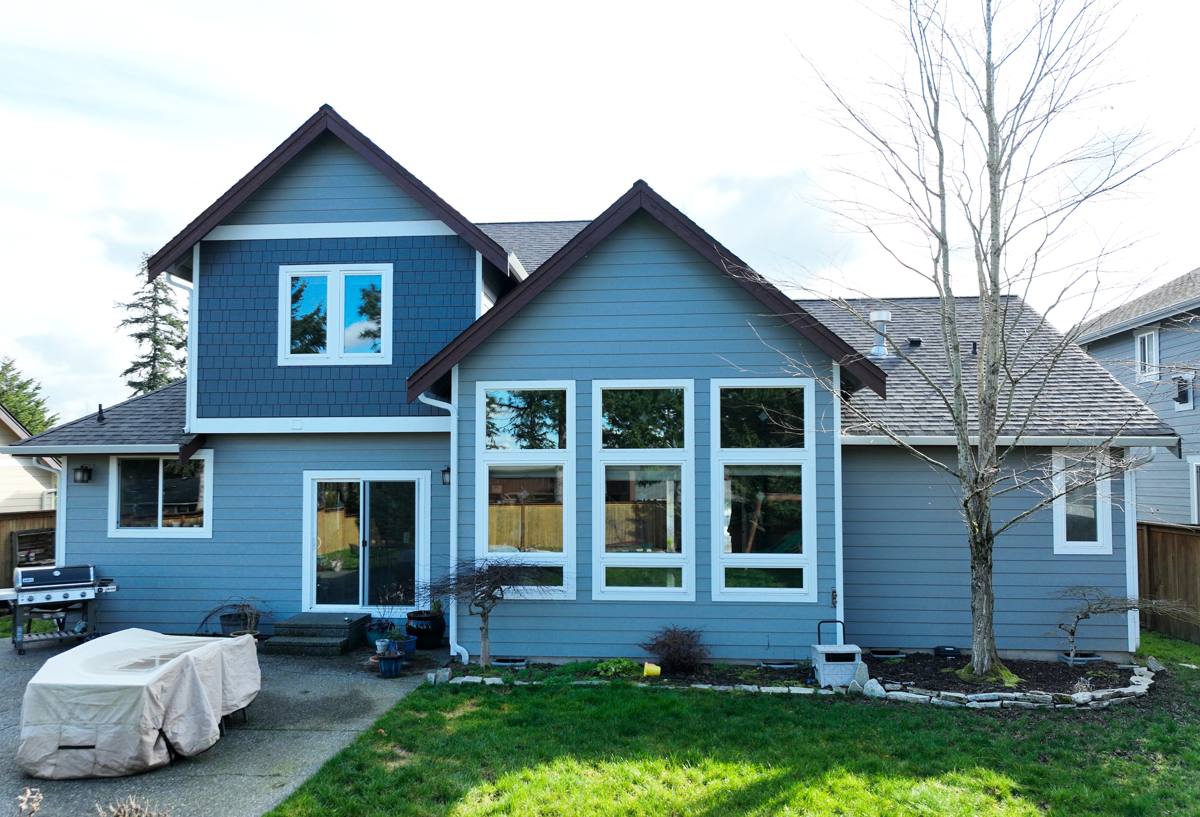
What Acme's Climate Does to Siding Over Time
Every siding material eventually shows wear, but the pattern of that wear depends heavily on moisture exposure and sun exposure — and Acme skews toward the worst combination of both: lots of moisture, not much sun to dry it off.
Moss, Algae, and Slow-Drying Surfaces
Shaded siding stays damp longer after every rain. That damp surface is exactly what moss and algae need to establish themselves, and once they do, they hold even more moisture against the wall. On wood-based products this accelerates rot at seams and butt joints. On products with a weaker factory finish, it shows up as discoloration and staining that no amount of pressure washing fully removes without damaging the surface underneath.
Freeze-Thaw and Temperature Swings
Whatcom County gets genuine winter cold snaps, and Acme's higher elevation and proximity to the foothills mean slightly colder nights than in town. Any siding material that absorbs water and then freezes is at risk of cracking, warping, or delaminating over repeated freeze-thaw cycles. This is a real factor in material selection, not a marketing point.
Wildland Proximity
Acme sits closer to forested and rural land than most of Lynden's in-town neighborhoods. That doesn't mean every home faces a wildfire risk, but it's a reasonable thing to factor into an exterior materials decision when the option exists to choose a non-combustible product at no meaningful downside.
Why We Only Install James Hardie Fiber Cement
We made a decision as a company to install James Hardie fiber cement siding exclusively — not vinyl, not LP SmartSide, not primed spruce or cedar, not other fiber cement brands. That's not a sales pitch; it's the product line that holds up best against exactly the conditions Acme homes face.
- Non-combustible core. Fiber cement doesn't feed a fire the way wood-based or many engineered wood products can, which matters more in a semi-rural, tree-lined setting than it does downtown.
- ColorPlus factory finish. A baked-on finish resists the staining and fading that shaded, moisture-heavy walls cause faster than sun-exposed ones, and it holds color without the repainting cycle that site-finished siding needs.
- HardieZone HZ5 engineering. Hardie manufactures different product formulations for different climate zones. The HZ5 line is built for regions with freeze-thaw cycles and sustained moisture — which is the Pacific Northwest, not the Sunbelt formulation (HZ10) some crews install without checking.
- Transferable, substantial warranty. A real manufacturer warranty on both the material and the finish, which matters more on a home that's going to sit under trees getting rained on for nine months of the year.
We won't install vinyl, LP SmartSide, Cemplank, Allura, or unprimed wood siding on Acme homes — not because those products have no legitimate use anywhere, but because we've standardized on the one product line that gives us confidence it'll still look and perform well a decade or two into a shaded, wet Whatcom County lot.
Siding Material Comparison for Acme's Conditions
| Material | Moisture / Moss Resistance | Combustibility | Finish Longevity |
|---|---|---|---|
| James Hardie fiber cement | Strong — engineered for wet, shaded exposure | Non-combustible | Factory ColorPlus finish, long-lasting |
| Vinyl siding | Doesn't rot, but traps moisture behind it; can warp | Combustible, can deform under heat | Color fades, cannot be repainted cleanly |
| LP SmartSide (engineered wood) | Vulnerable at cut edges and seams if moisture intrudes | Combustible | Field-applied finish needs maintenance |
| Primed spruce or cedar | Absorbs moisture, prone to rot in shaded areas | Combustible | Requires repainting every several years |
What a Correct Siding Installation Actually Involves
The material is only half the equation. A shaded, high-moisture lot punishes a sloppy installation faster than an exposed, sunny one does, because there's less drying time between rain events to correct for small mistakes. On every Acme project we treat the following as non-negotiable:
Drainage Plane and Rain Screen Gap
Siding shouldn't sit flush against the wall sheathing. A proper water-resistive barrier plus a drainage gap lets any moisture that gets behind the siding drain and dry out instead of sitting against the wall assembly — critical when the siding itself is staying damp longer under tree cover.
Flashing at Every Penetration
Windows, doors, hose bibs, light fixtures, and roof-to-wall transitions are where water intrudes. Correct step flashing, head flashing, and kick-out flashing at roof lines are what actually keep water out — the siding itself is the last line of defense, not the first.
Fastening and Clearances
Hardie panels have a specified fastening pattern and minimum clearances from grade, roof lines, and decks. Getting these wrong is one of the most common ways an otherwise good product fails early, and it's also one of the most common ways a manufacturer warranty gets voided.
Joint Treatment and Caulking
Butt joints and trim transitions need to be treated correctly — either with proper flashing behind the joint or manufacturer-approved sealant — so they don't become the entry point for the exact moisture problem the siding is supposed to prevent.
Our Process for Acme Siding Projects
- On-site inspection. We look at existing siding condition, moisture damage, shade patterns, gutter performance, and any rot in the sheathing underneath before quoting anything.
- Written estimate. A clear scope covering tear-off, sheathing repair if needed, house wrap, flashing, Hardie material and color, and cleanup.
- Tear-off and sheathing assessment. Old siding comes off and we check the sheathing underneath for rot before anything new goes up — this is where shaded, wet lots often reveal problems that weren't visible from outside.
- Weather barrier and drainage plane installation. House wrap and rain screen furring go on correctly before a single piece of siding is hung.
- Hardie installation to spec. Panels or lap siding installed with correct fastening, clearances, and flashing at every penetration.
- Trim, caulking, and touch-up. Joints sealed, trim finished, and any factory-finish touch-up done to spec.
- Final walkthrough and cleanup. We walk the job with you and clear the site, including debris that tends to accumulate faster on wooded lots.
Signs Your Acme Home Needs New Siding
- Dark streaking or green/black growth that comes back within weeks of cleaning
- Soft or spongy spots when you press on siding near the ground or under eaves
- Visible warping, bowing, or gaps opening up between boards
- Paint that's peeling or blistering rather than just fading
- Higher heating bills that suggest the wall assembly isn't sealing the way it should
- Persistent moisture smell or visible mold near exterior walls on the inside of the home
Why Hiring a Crew That Already Works in Acme Matters
Acme isn't downtown Lynden. Properties here often have longer driveways, septic and well systems to work around, tree cover that affects staging and material drying time, and county permitting through Whatcom County rather than city processes. A crew that's used to working in-town setups can still do the job, but a crew that already understands rural Whatcom County access, weather timing, and shaded-lot moisture behavior plans the job better from day one — fewer surprises once tear-off starts, and fewer callbacks after the first wet season.
We also know what correct fiber cement installation looks like specifically in this kind of terrain, which is different from installing the same product on an open, sunny lot in town. That's not a small distinction on a material that depends on proper drying and drainage to perform the way it's engineered to.
Cost Factors for Siding Installation in Acme
| Factor | Why It Matters Here |
|---|---|
| Existing sheathing condition | Wooded, shaded lots see more moisture intrusion over time, which sometimes means sheathing repair before new siding goes on |
| Home size and wall complexity | More corners, dormers, and penetrations mean more flashing detail work |
| Access and staging | Longer driveways and tree-lined lots can affect equipment and material staging |
| Trim and color selection | ColorPlus finishes and trim packages vary in cost depending on style |
| Tear-off vs. new construction | Removing and disposing of old siding adds labor and debris cost compared to new builds |
We don't publish blanket pricing because every one of these factors changes the number meaningfully — but we'll walk your property, explain what we see, and give you a real written estimate with no pressure to sign anything on the spot.
Get a Free Estimate for Your Acme Home
If your siding is showing moss staining, soft spots, or just isn't standing up to the shade and rain the way it used to, we're happy to come take a look. The estimate is free, there's no pressure, and you'll get a straight answer about what your home actually needs — use the form below to get started.