 Lynden Exterior
 Roofing for a Border Climate That Doesn't Let Up
Aldergrove, BC sits just north of the Lynden–Aldergrove border crossing, close enough to Whatcom County that homes on both sides of the line deal with the same weather patterns. That means a wet, mild Pacific Northwest climate with a long rainy season, damp air moving in off the Salish Sea and Fraser Valley lowlands, and winters where roofs rarely get a real chance to dry out between storms. Asphalt shingle roofs are the most common roofing system in this area for good reason — they're proven, repairable, and cost-effective when installed correctly. The problem isn't the material. It's that a lot of shingle roofs in this region are installed the same way they'd be installed in a dry climate, and that shortcut shows up as moss, granule loss, and leaks years earlier than it should.
We work both sides of the border regularly, which means we see the same roof problems on Aldergrove properties that we see on homes throughout Whatcom County. The fixes are the same too. What changes is how much attention you pay to moisture management, ventilation, and moss control up front.
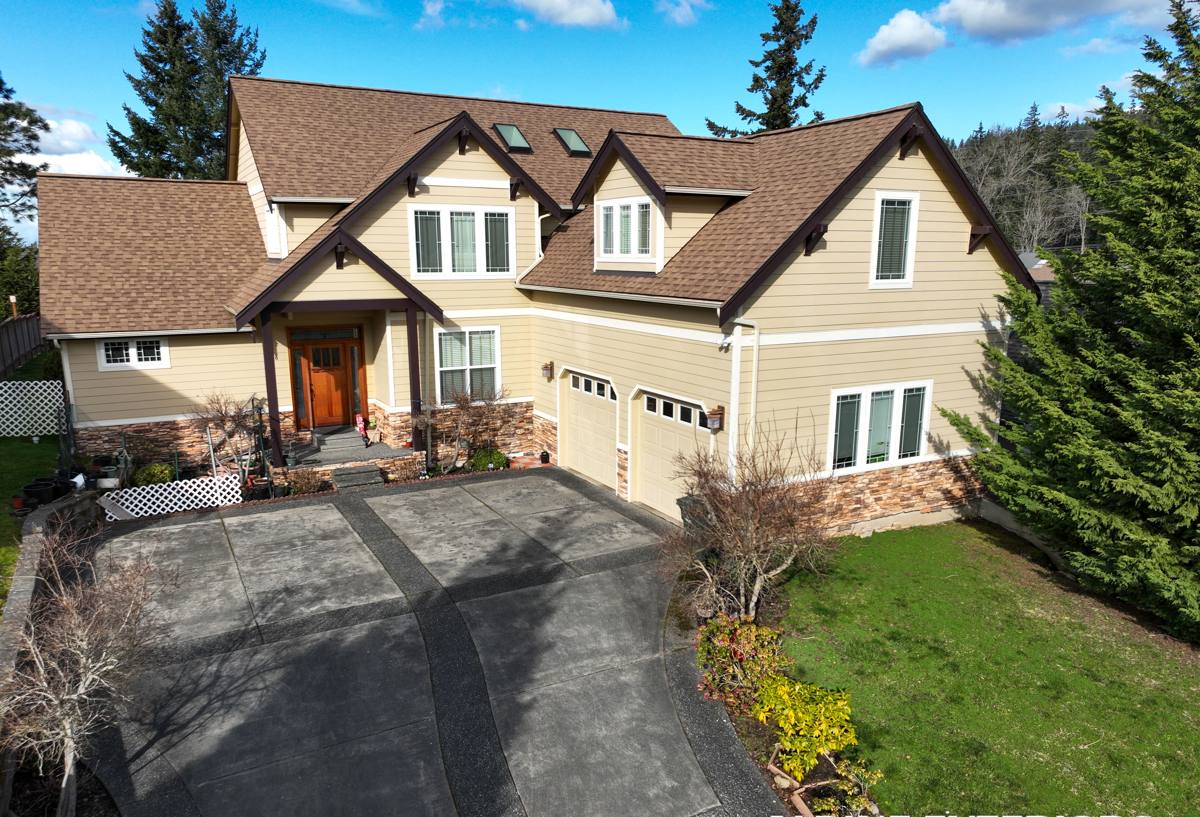
What Driving Rain and a Long Moss Season Actually Do to a Shingle Roof
Wind-driven rain finds the weak points
When rain comes in sideways instead of straight down, it doesn't just run off the shingle surface — it gets pushed up under shingle tabs, into exposed nail heads, and around flashing that's only marginally sealed. A roof that would hold up fine in a calmer climate can leak within a few seasons here if the underlayment, flashing details, and shingle overlap weren't built for wind-driven conditions.
Moss doesn't just look bad — it lifts shingles
Moss thrives in shaded, north-facing, and tree-covered sections of a roof, which describes a lot of properties in and around Aldergrove. As moss colonies grow, they root into the granule surface and lift shingle edges just enough to let water underneath. Over a few seasons that lifted edge becomes a chronic leak point, and the moss itself holds moisture against the shingle mat far longer than open air would allow, accelerating wear.
Salt-tinged marine air adds slow corrosion
This area gets enough marine influence off the Salish Sea that exposed metal components — flashing, drip edge, nail heads, vent stacks — corrode faster than they would further inland. Cheap or exposed fasteners are usually the first thing to fail, well before the shingles themselves are worn out.
What a Correctly Installed Asphalt Shingle Roof Includes
A shingle roof built for this climate isn't just shingles nailed to plywood. Every layer underneath does a specific job, and skipping or shortcutting any one of them is where premature leaks come from.
- Ice and water shield at eaves, valleys, and around every penetration — not just the minimum code strip, but full protection at the areas most exposed to wind-driven rain and ice damming during cold snaps.
- Synthetic underlayment across the full deck, which sheds water better and lasts longer than old-style felt when a roof sits exposed during a multi-day install in wet weather.
- Balanced attic ventilation — intake at the soffits, exhaust at the ridge — so moisture from inside the house doesn't get trapped against the underside of the deck and rot it from below.
- Proper nailing pattern with the correct number of fasteners placed in the manufacturer's nailing zone, not just enough to hold the shingle down temporarily.
- Metal flashing, not just cement or tar at chimneys, walls, skylights, and valleys — mechanically fastened and layered correctly with the underlayment and shingles, not caulked over as an afterthought.
- Algae- and moss-resistant shingles on any section of roof with shade or tree cover, which is most of Aldergrove given the tree canopy typical of this area.
Choosing the Right Shingle for This Climate
Not every asphalt shingle product is built the same, and in a climate this wet, that difference matters more than it would somewhere dry. Here's how the common options compare for a home in this area:
| Shingle Type | Best For | Climate Trade-offs |
|---|---|---|
| 3-tab asphalt | Budget-focused re-roofs, simple roof lines | Lower wind rating and shorter lifespan; less margin for error in wind-driven rain |
| Architectural (dimensional) asphalt | Most homes in this area | Heavier mat, better wind resistance, longer warranty life — our standard recommendation here |
| Algae-resistant (AR) shingles | Shaded roofs, north-facing slopes, tree-covered lots | Copper- or zinc-infused granules resist the dark streaking and moss growth this climate encourages |
| Impact-rated shingles | Homes wanting extra durability against wind and debris | Higher upfront cost; worth it on exposed or wind-heavy sites |
For most Aldergrove-area homes, we recommend a mid- to upper-tier architectural shingle with algae resistance built in, especially on any slope that sits under trees for part of the day. It costs more than 3-tab up front but earns that back in fewer moss treatments and a longer service life before re-roofing.
Our Process for Aldergrove-Area Roofing Projects
1. On-site inspection and honest scoping
We walk the roof, check the attic for ventilation and moisture issues, and look at flashing points before quoting anything. If a full replacement isn't needed yet, we'll say so.
2. Clear, written estimate
You'll see the shingle line, underlayment, flashing plan, and ventilation work broken out — not a single vague number. That way you know exactly what you're paying for and can compare it against any other quote.
3. Deck inspection during tear-off
Once the old roof is off, we check the decking for soft spots or rot before anything new goes down. In a climate this wet, hidden deck damage is common on older roofs, especially near valleys and eaves.
4. Full underlayment and flashing installation
Ice and water shield, synthetic underlayment, and new metal flashing go in before a single shingle is laid — this is the part of the job that actually determines whether the roof leaks in year three or year twenty.
5. Shingle installation and ventilation check
Shingles go down to manufacturer spec, and we confirm soffit and ridge ventilation are balanced before we call the job done.
6. Final walkthrough
We walk the finished roof with you, cover basic maintenance, and make sure debris and old materials are cleared from the property.
Keeping Moss and Debris From Shortening Your Roof's Life
A new roof still needs some upkeep in this climate, particularly if the property has tree cover. This isn't about constant maintenance — it's a short list of things worth doing on a normal schedule.
- Clear leaves and needles out of valleys and off the roof surface at least once a year, more often under heavy tree cover
- Keep gutters and downspouts flowing freely so water isn't backing up under the eave line
- Have moss treated or gently removed before it spreads, rather than after it's lifted shingle tabs
- Trim back overhanging branches to cut down on shade, debris, and moss-friendly conditions
- Check attic ventilation isn't blocked by insulation, especially after any attic work
- Get flashing points — chimneys, vents, skylights — looked at every few years, since these fail before the shingle field usually does
What Drives the Cost of a Shingle Roof in This Area
Every roof is different, so we won't quote a number without seeing yours, but these are the factors that move the price up or down on most Aldergrove-area jobs:
| Factor | Why It Matters Here |
|---|---|
| Roof complexity (valleys, dormers, slopes) | More flashing detail and cut waste on complicated roof lines |
| Deck condition under old shingles | Wet-climate roofs more often need deck repair or replacement discovered during tear-off |
| Shingle tier chosen | 3-tab vs. architectural vs. algae-resistant products carry different material costs |
| Ventilation upgrades needed | Older homes often need added soffit or ridge venting to meet current standards |
| Access and roof pitch | Steeper or harder-to-access roofs take longer and require more safety setup |
| Layers of existing roofing | Multiple old layers mean more tear-off labor and disposal |
Why Hiring a Crew That Already Works This Border Area Matters
Aldergrove sits right on the Whatcom County–Fraser Valley line, and roofing crews that only work one side of the border often aren't used to the logistics, weather patterns, or product realities of the other. We work throughout the Lynden area and into the Aldergrove and greater Fraser Valley communities regularly, so we already know what this climate does to a roof over time — which shingle tiers hold up, which flashing details matter most in wind-driven rain, and how much moss pressure a shaded roof is actually going to see.
That local familiarity also means straight answers. We're not guessing at what your roof needs based on a climate zone chart — we're basing it on roofs we've installed and serviced in this exact area, in this exact weather.
Repair or Replace? Signs to Watch For
Not every roof problem means a full replacement. Here's a general guide to help you think about where your roof stands:
- Isolated leak, roof under 15 years old: usually a flashing or localized repair, not a full re-roof
- Widespread granule loss and curling shingles: the shingle mat is breaking down — replacement territory
- Heavy moss across multiple slopes: treatable if caught early; if shingles are already lifted underneath, that section may need replacing
- Soft or spongy decking felt from inside the attic: water has been getting through longer than the shingles show on the surface
- Roof original to a home built more than 20-25 years ago: even with no visible problems, it's worth a proactive inspection
If you're not sure which category your roof falls into, that's exactly what an inspection is for — we'd rather tell you a repair will hold for a few more years than sell you a roof you don't need yet.
If you're weighing a repair, a full replacement, or just want an honest read on where your roof stands, we're happy to take a look. Fill out the form below for a free, no-pressure estimate on your Aldergrove-area home.