 Lynden Exterior
 Building Decks for Bellingham's Climate
Bellingham sits close enough to the water that salt air is a real factor in how outdoor structures age, and it gets the same steady, driving rain that defines this stretch of Whatcom County. Add a long moss season that runs from fall through spring, and a deck here is under more sustained moisture stress than almost anywhere else in the state. A deck built to a generic spec — the kind that would hold up fine in a dry climate — will show problems within a few seasons: soft spots, black streaking, loose fasteners, and moss creeping into every shaded joint.
Building correctly for Bellingham isn't about using exotic materials. It's about respecting a few details that matter more here than they do elsewhere: drainage under and around the structure, fastener selection that resists both moisture and salt exposure, and decking material chosen with realistic expectations about maintenance, not just looks on install day.
What Local Homes Actually Need From a Deck
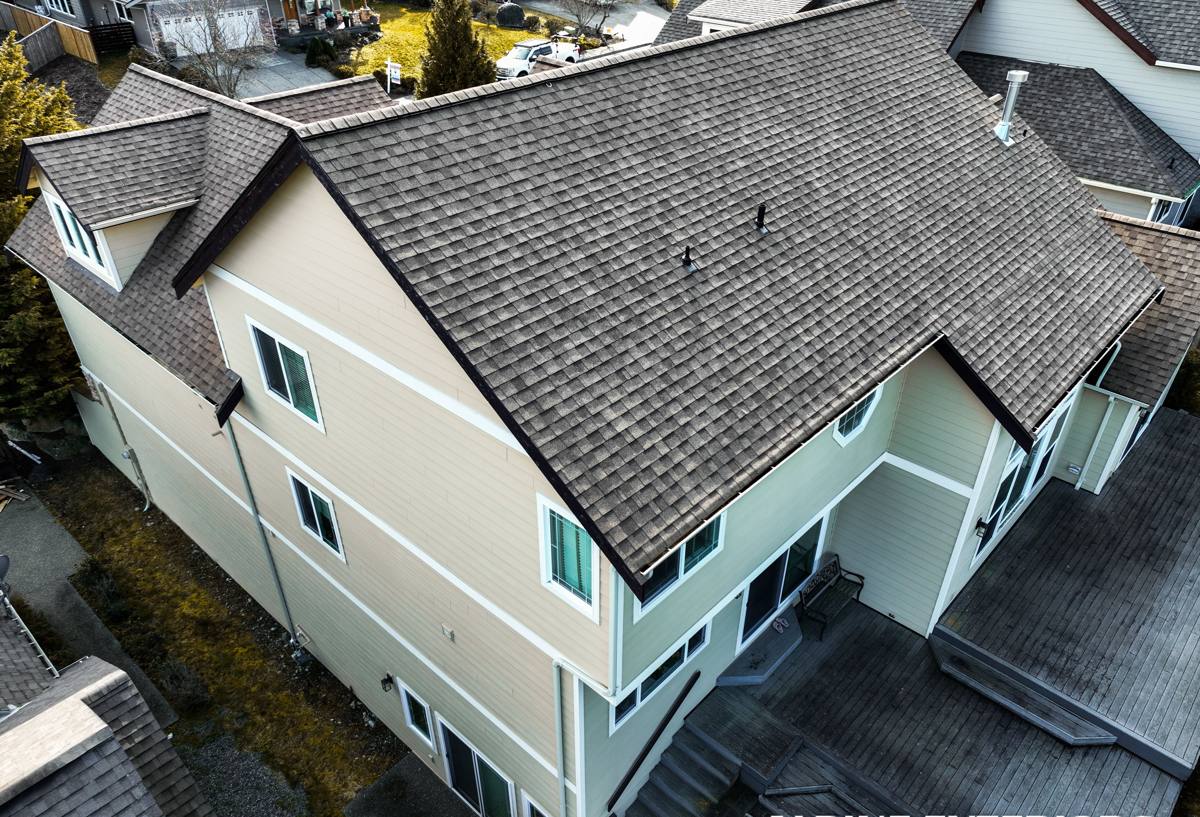
Most of the decks we're asked to fix, not build, fail for the same handful of reasons. The framing sat too close to grade and never fully dried out between rains. Fasteners weren't rated for the exposure and started corroding within a few years, staining the wood around them. Or the decking ran flat against the joists with no airflow underneath, so moisture got trapped and moss and mildew took hold in the gaps almost immediately.
A deck built for this area needs to manage water actively, not just shed it in a heavy downpour. That means:
- Elevated framing with real clearance to grade, so air can move underneath and the structure dries between rain events
- Stainless steel or heavy hot-dip galvanized fasteners and hardware — standard coated screws corrode faster in coastal moisture and leave rust streaks in the boards
- Proper board spacing and, where relevant, joist tape or flashing to keep water out of end grain and fastener penetrations
- Footings set below frost depth and sized for the soil conditions on your lot, not a one-size-fits-all number
- A surface material chosen with moss and algae growth in mind, not just color and grain pattern
Choosing a Decking Material That Holds Up Here
Wood vs. Composite vs. PVC
Every decking material available today can be made to work in Bellingham's climate — the question is how much upkeep you're willing to commit to and how the material behaves once it's wet, which in this area is most of the year.
| Material | Moisture Behavior | Moss/Mildew Resistance | Maintenance |
|---|---|---|---|
| Pressure-treated wood | Absorbs and releases moisture; can cup or check if not sealed regularly | Needs regular cleaning and sealing to resist growth | Annual cleaning, re-sealing every 1-2 years |
| Cedar | Naturally more stable than treated pine, still absorbs moisture over time | Better natural resistance, but still needs care in shaded, damp areas | Periodic cleaning and oil/sealer application |
| Capped composite | Does not absorb moisture into the core; surface sheds water | Good resistance, though surface film can still grow algae in deep shade | Occasional washing, no sealing or staining |
| PVC / cellular decking | Fully moisture-resistant core | Best resistance of the common options in wet, shaded spots | Occasional washing only |
We don't push everyone toward composite or PVC — a well-detailed wood deck, built with the drainage and fastening standards above and maintained on a real schedule, holds up fine here too. What we won't do is install wood decking flat on the ground with no airflow, or use standard exterior screws instead of coastal-rated hardware, because those shortcuts show up as callbacks within a couple of years, not decades.
Hidden Fastener Systems
For composite and PVC decking, we generally recommend hidden fastener clip systems over face-screwing. They eliminate the screw penetrations where water most often finds its way into the board core, and they leave a cleaner surface with fewer places for moss spores and debris to collect. The trade-off is a slightly higher install cost and a bit more precision required during layout, which is where experience with the specific product line matters.
Our Deck-Building Process
1. On-Site Consultation and Design
We walk the site, look at drainage patterns, sun and shade exposure, and how the deck will tie into the house, then talk through material options honestly — including what each one will actually cost you in upkeep over time, not just at purchase.
2. Permitting
Most new decks and significant deck replacements in Whatcom County and the City of Bellingham require a building permit, particularly for structures above a certain height off grade or attached to the home's structure. We handle the permit application and inspection scheduling as part of the job so you're not chasing paperwork.
3. Framing and Footings
This is where a Bellingham deck earns its long-term durability. We set footings to the required depth, use ledger flashing and proper attachment where the deck ties into the house, and frame with clearance and airflow in mind from the start.
4. Decking Installation
Board spacing, fastening method, and orientation are set based on the material chosen and the site's drainage and sun exposure — a shaded deck under trees gets different spacing and material recommendations than an open, sunny one.
5. Railings, Stairs, and Finish Details
Guardrails, stair stringers, and any built-in features are finished to code, with the same fastener and material standards carried through the whole structure — not just the visible decking.
6. Final Walkthrough
We walk the finished deck with you, cover basic care for whatever material you chose, and make sure everything is signed off with the required inspections.
Permits and Code Basics in Whatcom County
Requirements vary depending on whether your property is inside Bellingham city limits or unincorporated Whatcom County, and on the deck's height, size, and attachment to the house. Guardrail height, baluster spacing, and stair geometry are all governed by code and get checked at inspection. We build to pass inspection the first time — trying to shortcut this on a deck almost always costs more later, either in rework or in resale complications when a permit is missing.
Keeping Moss and Mildew From Taking Over
Even a correctly built deck needs some ongoing attention in a climate like this. The goal isn't to eliminate moss and algae entirely — that's not realistic anywhere near Bellingham Bay — it's to keep them from getting a foothold in the joints, fastener heads, and shaded corners where they cause the most damage.
- Sweep debris (leaves, needles, seed pods) off the deck regularly, especially in fall — trapped organic matter holds moisture and feeds moss
- Rinse or wash the surface a few times a year, more often in heavily shaded areas
- Keep gutters and downspouts near the deck clear so runoff isn't dumping directly onto or under the structure
- Trim back overhanging vegetation to let more light and airflow reach shaded sections
- Check fastener heads and board ends yearly for early signs of staining or softening
- Re-seal wood decking on the schedule appropriate to the product — don't wait until it's visibly gray and dry
Cost Factors to Expect
Every deck is priced around its own footprint, framing complexity, and material choice, so we won't quote a number without seeing the site. What consistently moves the price:
| Factor | Why It Matters |
|---|---|
| Height off grade | Taller decks need deeper footings, more substantial framing, and code-required guardrails |
| Material selection | Treated wood costs less up front; composite and PVC cost more initially but less in upkeep over the deck's life |
| Site access and drainage | Difficult access or poor natural drainage adds labor and sometimes grading or drainage work |
| Attachment method | Ledger-attached decks require flashing and structural tie-in work that freestanding decks don't |
| Railings and features | Custom railing styles, built-in seating, or multi-level designs add both material and labor |
Why a Crew That Already Works This Area Matters
A contractor who builds decks all over the state will get the framing right in general terms. A crew that already works Bellingham and the rest of Whatcom County has seen firsthand which shortcuts fail in this specific climate — the fastener that rusts a season early near the water, the shaded north-facing deck that needs a different material recommendation than the same design on a sunny lot, the ledger flashing detail that keeps a rim joist from rotting out from behind. That's the kind of judgment that only comes from doing this work under these conditions, repeatedly, and dealing with the callbacks when it's not done right.
If you're planning a new deck or replacing one that's showing its age, we're happy to walk the site with you, talk through material options honestly, and put together a plan built for the way Bellingham weather actually behaves. Reach out for a free, no-pressure estimate using the form below.