 Lynden Exterior
 Window Replacement in Bellingham: Built for This Coastline
Bellingham sits close enough to the water that salt-laden air, wind-driven rain, and long stretches of overcast, moisture-heavy weather are simply part of owning a home here. Windows in this part of Whatcom County take a different kind of beating than windows fifty miles inland. Frames get more standing moisture exposure, seals get tested by wind gusts off the bay, and anything with exposed metal fasteners or untreated wood trim starts showing wear years before it would in a drier climate. If you're noticing fogged glass, sticking sashes, drafts around the frame, or trim that's gone soft, it's usually not bad luck — it's the environment doing what it does here, and it's a sign the window system has reached the end of what caulk and weatherstripping can fix.
This page is specifically about window replacement for homes in and around Bellingham. Not a general overview of every window product on the market — just what actually matters for houses in this area, what a correct installation looks like given our weather, and how we approach the job as a crew that works this region regularly.
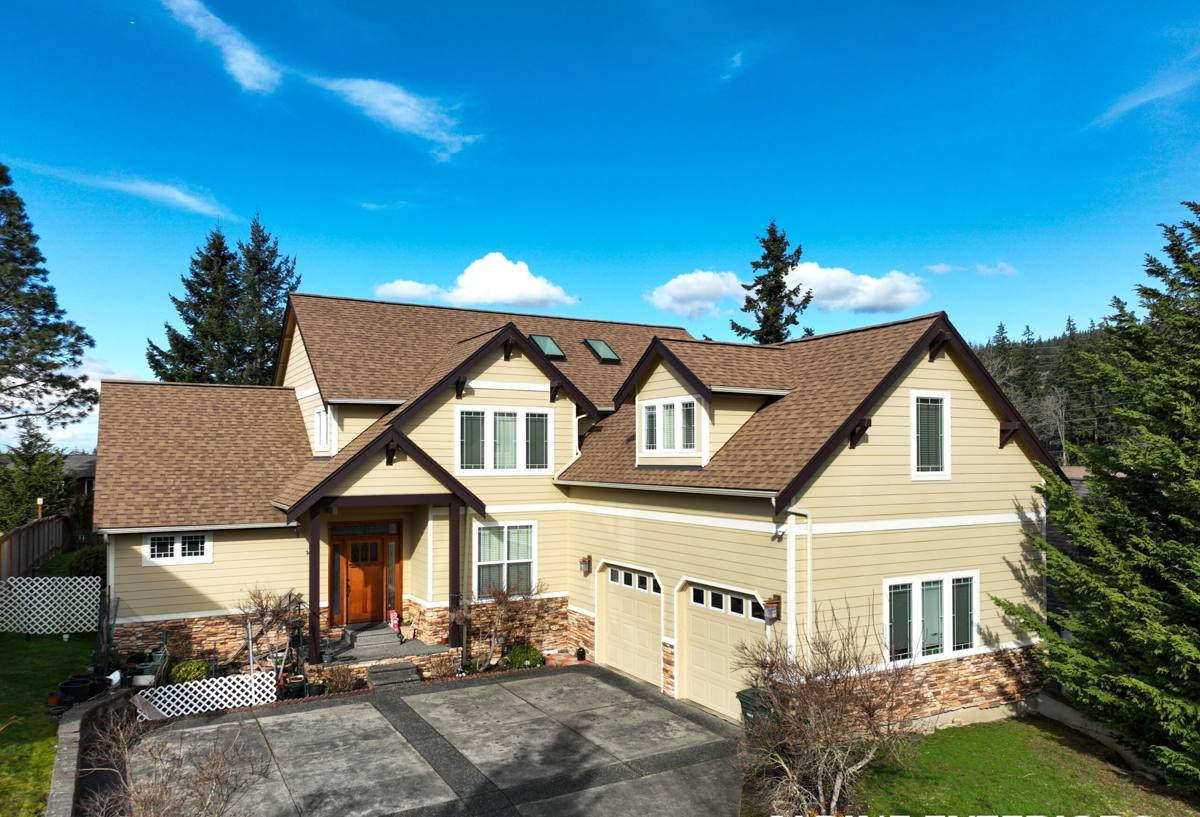
What Bellingham's Climate Actually Does to Windows
Salt Air and Corrosion
Proximity to Bellingham Bay means airborne salt reaches further inland than most homeowners expect, especially on days with onshore wind. Salt accelerates corrosion on unprotected metal hardware, hinges, and cheaper aluminum components. Over time this shows up as pitting, stiff or seized locks, and streaking on the frame finish. It's a slow process, which is exactly why it gets ignored until a window won't latch properly anymore.
Driving Rain and Wind-Loading
Storms coming off the water don't just drop rain straight down — they push it sideways into vertical surfaces, including window assemblies. A window that would be fine in a calm climate can leak here if the flashing detail, sill pan, or sealant joint isn't done correctly, because the water is being forced into gaps under pressure rather than just running off. This is one of the most common causes of hidden rot we find around older window openings in this area: not a bad window, but a water management detail that was never right in the first place.
Moss, Mildew, and Prolonged Dampness
Whatcom County's long moss season isn't just a roof and gutter problem. Wood trim, sills, and even some vinyl cladding around window openings stay damp longer here than in drier parts of the state, which gives mold, mildew, and slow wood decay more time to work. Once moisture gets behind a window frame and can't dry out between rain events, deterioration accelerates even if the surface still looks okay.
Signs a Bellingham Home Needs Window Replacement, Not Just Repair
- Fogging or a visible haze between panes (failed seal on double- or triple-pane glass)
- Soft, spongy, or discolored wood at the sill or lower frame corners
- Persistent drafts even after weatherstripping has been replaced
- Windows that are difficult to open, close, or lock — often from swelling or hardware corrosion
- Visible gaps between the frame and siding, or paint/caulk that keeps failing in the same spot
- Noticeably higher heating bills compared to similar homes nearby
- Condensation on the inside of the glass during cold, damp stretches
Any one of these alone might just need attention. Several at once, especially combined with visible frame damage, usually means the window has reached the point where repair is a temporary patch rather than a real fix.
What a Correct Window Replacement Involves Here
The window unit itself matters, but in this climate the installation detail is what actually determines whether the job holds up. We treat these as non-negotiable on every Bellingham project:
Sill Pan and Flashing
A proper sill pan at the base of the opening gives any water that gets past the exterior seal somewhere to go, rather than sitting against the framing. Flashing above and around the window has to integrate with the existing water-resistive barrier, not just get caulked over the top of it. This is the single biggest difference between a window that lasts and one that causes a rot problem five years later.
Sealant Selection and Placement
Not every sealant is rated for the temperature swings and constant damp/dry cycling this area produces. We use products suited to marine and coastal climates and apply them in a way that allows the assembly to still drain and dry — sealing every gap solid sounds thorough but can trap moisture instead of shedding it.
Hardware and Frame Material
Given the salt air exposure, we pay attention to hardware finish and frame material corrosion resistance, not just glass performance. A window with an excellent energy rating but hardware that seizes up in three years isn't a good fit for this area.
Insulation Around the Frame
Gaps around the new frame get properly insulated and air-sealed — not stuffed with excess spray foam, which can bow frames, and not left loose, which creates drafts and cold spots.
Our Process for Bellingham Window Replacement
- On-site assessment — We look at each opening individually, checking for existing water damage, framing condition, and how the window is currently flashed before recommending anything.
- Honest scope of work — If we find rot or water intrusion behind the existing window, we tell you before work starts, not after we've already opened the wall.
- Product selection based on exposure — A window on the windward, storm-facing side of a house may warrant a different spec than one on a sheltered side, even on the same home.
- Removal and prep — Old units are removed carefully to expose the full opening so we can address any hidden moisture damage rather than replace the window and cover up an existing problem.
- Installation with proper flashing and sill pan detailing — Every opening gets water management, not just a window dropped into place and caulked.
- Interior and exterior finish work — Trim, insulation, and sealant finished to match the home and hold up to the local weather.
- Final walkthrough — We check operation, sealing, and finish with you before considering the job done.
Cost Factors for Window Replacement in This Area
Every home and every opening is different, so we don't quote pricing without seeing the job, but these are the factors that most commonly move the price up or down for Bellingham homeowners:
| Factor | Why It Matters Here |
|---|---|
| Number and size of openings | Straightforward scope driver, same as anywhere |
| Existing water or rot damage found during removal | More common near the coast; adds repair scope before the new window goes in |
| Exposure side of the house | Storm-facing walls may call for higher-spec sealing or hardware |
| Frame material (vinyl, fiberglass, wood-clad) | Corrosion and moisture resistance vary, which matters more in salt air |
| Full-frame replacement vs. insert replacement | Full-frame allows proper flashing correction; inserts are faster but can't fix an existing water management problem |
| Trim and siding tie-in | Matching existing exterior finish around the new opening |
As a general guideline, straightforward insert replacements on standard-size openings tend to run in the low-to-mid thousands per window, while full-frame replacements with flashing correction or trim work cost more. We'll give you specific numbers after seeing the actual openings.
Why a Locally Experienced Crew Matters
Window replacement isn't just a product installation — it's a water management decision. A crew that hasn't worked this specific stretch of coastline can get the glass right and still get the flashing, drainage, or sealant wrong for what Bellingham's weather actually does to a building envelope. We work in Whatcom County regularly, which means we've seen how these openings fail here specifically: where water tends to get pushed, which details tend to get skipped on older homes, and what actually holds up through another wet season. That's not something you can substitute with a lower price from a crew that's mostly worked drier inland markets.
Maintaining Your New Windows in a Coastal Climate
- Rinse exterior frames periodically, especially after storms, to reduce salt buildup
- Check and clean weep holes so water can drain out rather than pool
- Inspect exterior caulk lines annually and address any cracking early
- Keep nearby vegetation trimmed back so airflow can help surfaces dry between rain events
- Operate locks and hardware periodically even on windows you rarely open, to prevent seizing
If your windows in Bellingham are showing their age or you're just not sure whether repair or replacement makes sense, we're happy to take a look. We offer free, no-pressure estimates — use the form below to get started.