 Lynden Exterior
 Board & Batten Siding on Birch Bay's Coastline
Board and batten has become one of the most requested siding profiles in Birch Bay, and it's easy to see why. The vertical lines read as clean and modern on newer builds, and they echo the barns and beach cottages that have always dotted this stretch of Whatcom County. But a siding style that looks right and a siding system that performs right on a property exposed to open water are two different things. Board and batten has more seams, more fasteners, and more surface area exposed to weather than a standard lap profile, which means the margin for error on a coastal Birch Bay home is smaller than it is a few miles inland.
This page is about what board and batten siding actually needs to hold up in Birch Bay specifically — not board and batten in general terms borrowed from a drier climate.
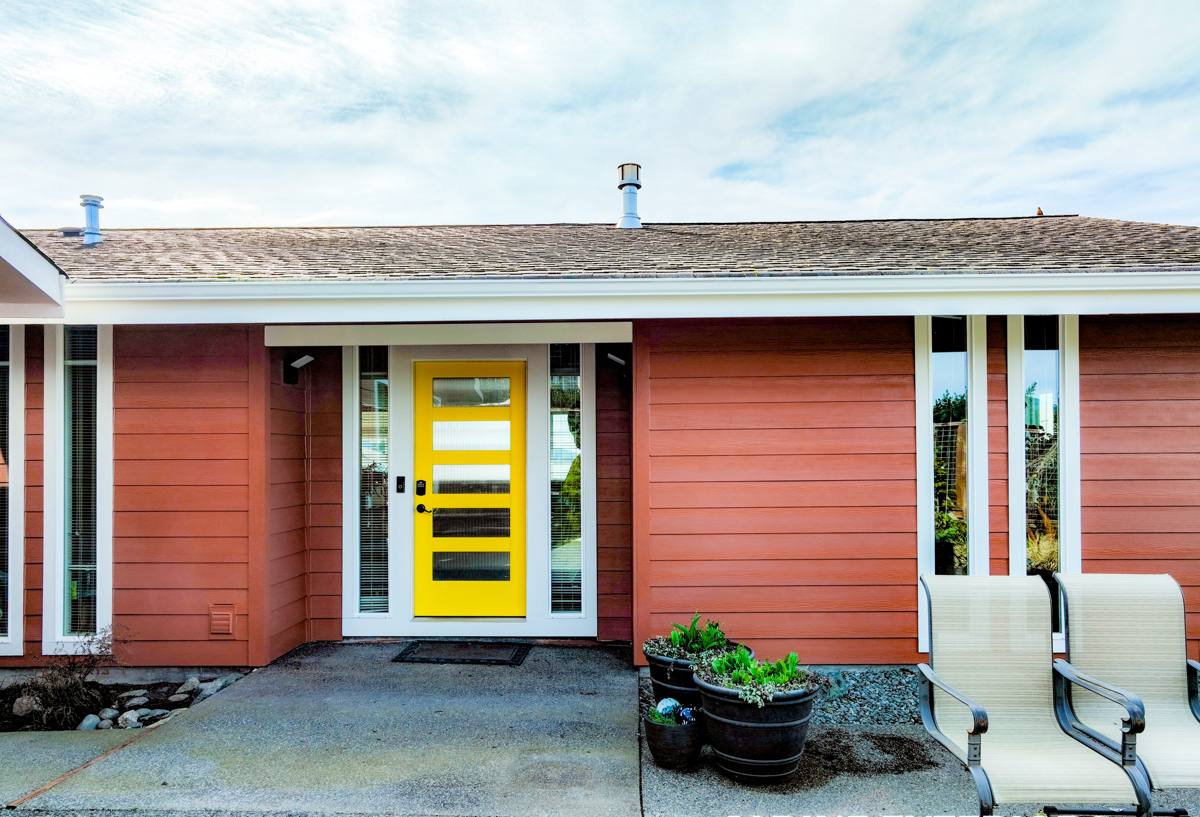
What Birch Bay's Climate Does to Board and Batten Siding
Salt Air and Fasteners
Homes near the water in Birch Bay live with airborne salt on a near-constant basis. Salt is corrosive to unprotected metal, and board and batten siding depends on a lot of exposed and semi-exposed fastener heads — the battens themselves are typically face-nailed or blind-nailed at regular intervals along their full height. If those fasteners aren't rated for coastal exposure, corrosion starts at the fastener, then telegraphs outward as staining, streaking, and eventually a loose batten that lets water behind the panel.
Driving Rain and Wind-Loaded Walls
Whatcom County's weather off the water doesn't just rain straight down — wind pushes it sideways into the wall assembly, and board and batten's vertical seams give wind-driven rain more opportunities to find a path inward than a shingled lap profile does. Every batten-to-panel joint is a place where the water-resistive barrier and flashing details behind the siding have to actually work, not just look finished.
Moss Season
Birch Bay's long wet season, combined with shaded north- and west-facing walls near trees and other structures, gives moss and algae a long runway to establish themselves. On siding materials that absorb moisture, that growth doesn't just sit on the surface — it holds water against the substrate, which shortens the life of paint, caulk, and in worse cases, the panel itself.
Why Board and Batten Behaves Differently Than Lap Siding
Lap siding sheds water by design — each course overlaps the one below it, so gravity does most of the work. Board and batten is a flat plane with vertical seams covered by a batten strip, which means the system relies far more on the quality of the water-resistive barrier, the flashing at every horizontal interruption, and the fastening pattern than it does on shape alone. That's not a knock on the style — it's why installation quality matters more with board and batten than with almost any other siding profile, and why we treat it as a different job, not a lap job turned sideways.
What a Correct Board and Batten Installation Involves
Substrate and Weather-Resistive Barrier
Everything starts behind the siding. A code-compliant weather-resistive barrier, properly lapped and sealed at every penetration, is what actually keeps a Birch Bay wall dry — the siding is the second line of defense, not the first. Skipping or rushing this step is invisible on installation day and expensive to discover later.
Fastening Pattern and Batten Spacing
Panel and batten spacing, fastener type, and fastener spacing all need to follow the manufacturer's engineering — not a crew's habit from installing a different product. Coastal-rated fasteners, correct penetration depth, and consistent batten placement are what keep the wall performing after five winters of salt and wind, not just on the day it's finished.
Flashing at Trim, Windows, and Corners
Every window, door, corner, and horizontal trim break is a place where water wants to get behind the siding. Proper head flashing, kick-out flashing at roof-wall intersections, and sealed transitions at trim boards are what separate a board and batten job that lasts from one that looks fine until the first hard windstorm off the water.
Why We Install James Hardie, Not Other Board and Batten Materials
Board and batten is available in vinyl, engineered wood (like LP SmartSide), primed spruce, cedar, and James Hardie fiber cement — and we only install the last one. Vinyl board and batten flexes and can distort in heat, and its seams and battens are typically snapped or clipped rather than mechanically fastened with the same rigidity, which matters on a wall taking direct wind off the water. Engineered wood and primed spruce board and batten are wood-based products — even with factory coatings, any exposed cut edge, fastener hole, or seam gap is an entry point for moisture, and moisture is exactly what Birch Bay's rain and moss season supply in abundance. Cedar board and batten looks excellent but is a real maintenance commitment — refinishing, caulking, and monitoring for rot are ongoing costs, not one-time ones.
James Hardie fiber cement doesn't share those weaknesses. It's non-combustible, it doesn't swell or rot when wet, and it holds its shape and fastener grip through decades of coastal wet-dry cycling. That's the standard we hold every board and batten job to, and it's why we don't offer the alternatives even when a homeowner asks for a lower upfront price.
James Hardie Board and Batten Product Options
James Hardie offers board and batten in a few formats, and the right one depends on the look a homeowner wants and the wall it's going on.
- HardiePanel vertical siding with battens — large-format fiber cement panels installed vertically with separate batten strips over the seams, the traditional board and batten look.
- Hardie Artisan vertical siding — a premium, smoother-finish option for homeowners who want a more refined board and batten appearance.
- ColorPlus factory finish — a baked-on finish available across Hardie's board and batten products, which matters in Birch Bay because it resists the fading and chalking that salt air and UV exposure accelerate on field-painted surfaces.
All of these are engineered within Hardie's climate-specific HZ5 product line, which is built for wetter, harsher weather conditions rather than a generic national spec.
What Board and Batten Siding Costs to Factor In
Board and batten pricing depends on more than square footage. The table below covers the main variables that move the number up or down on a Birch Bay project.
| Cost Factor | Why It Matters in Birch Bay |
|---|---|
| Wall height and wind exposure | Taller, more exposed walls facing open water need more attention to fastening and flashing detail, which adds labor time. |
| Existing siding removal | Tear-off and disposal of failed siding, plus any hidden sheathing repair from past moisture intrusion, is common on older coastal homes. |
| Trim and batten spacing complexity | Tighter batten spacing or custom trim details around windows and corners increases material and labor. |
| Fastener and flashing upgrades | Coastal-rated fasteners and additional flashing at penetrations cost more than base-spec materials but are not optional this close to the water. |
| Finish selection | ColorPlus factory-finished panels cost more upfront than field-painted but remove a recurring repaint cost from the homeowner's future. |
Our Process for Birch Bay Board and Batten Projects
We walk every board and batten project through the same sequence, adjusted for what a particular wall and its wind exposure actually need:
- On-site assessment of existing siding, sheathing condition, and wall exposure to prevailing wind and salt air.
- Removal of failing siding and inspection of the substrate for hidden moisture damage before anything new goes on.
- Installation of a properly lapped weather-resistive barrier and correction of any flashing deficiencies found underneath.
- Installation of James Hardie panels and battens to manufacturer fastening specifications, using coastal-rated fasteners.
- Final flashing, caulking, and trim detail work at every window, door, and corner transition.
- Walkthrough with the homeowner to confirm the finished work before we consider the job done.
Why Hiring a Crew That Already Works Birch Bay Matters
Board and batten installation isn't fundamentally different in Birch Bay than anywhere else — the manufacturer specs don't change by zip code. What changes is how much margin for error a wall has before problems show up, and that margin is thinner here than it is inland. A crew that regularly works this part of Whatcom County already knows to spec coastal-rated fasteners without being asked, already thinks about wind direction when planning flashing details, and already recognizes what early moss growth on a north wall is telling them about moisture behind the siding. That local pattern recognition is the difference between a board and batten job that's built for this coastline and one that was built for a spec sheet.
Get a Straightforward Estimate
If you're weighing board and batten siding for a home in Birch Bay, we're happy to take a look and walk you through what your specific walls need — no pressure, no upsell to a product we don't stand behind. Use the form below to request a free estimate.