 Lynden Exterior
 Birch Bay Roofs Work Harder Than Most
Birch Bay sits right where Whatcom County's weather gets personal. Homes here face onshore wind, salt-laden air, and rain that doesn't fall so much as it arrives sideways. Add in the shade and dampness that many Birch Bay lots carry from surrounding trees, and you've got a recipe for a roof that ages faster than the same materials would twenty minutes inland in Lynden. We replace roofs across Whatcom County, but Birch Bay gets its own conversation because the conditions genuinely call for different decisions — on materials, on detailing, and on timing.
This page is about one job in one place: full roof replacement for Birch Bay homes. Not a repair, not a general overview of roofing — what it actually takes to put a correct, durable roof on a house that sits this close to the water.
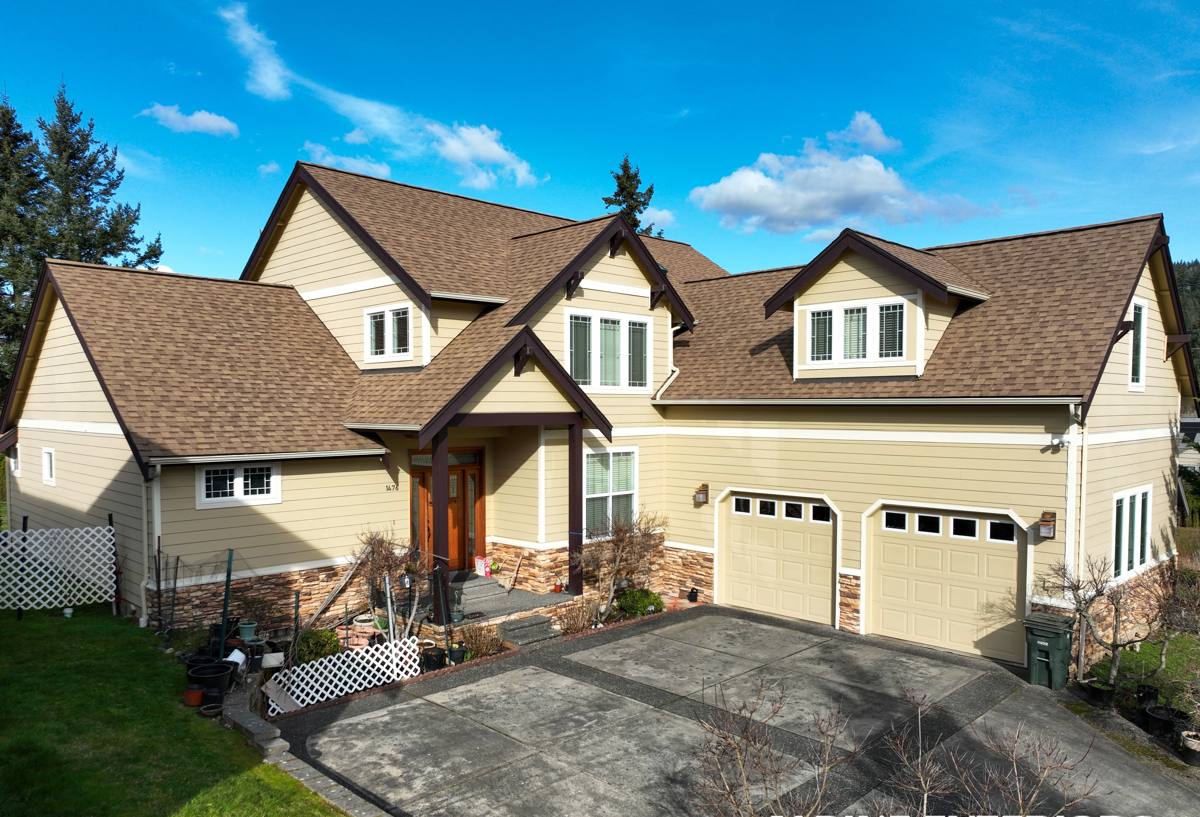
What Salt Air, Rain, and Moss Actually Do to a Roof
Salt Air and Metal Components
Salt air accelerates corrosion on anything metal — fasteners, flashing, vents, gutters. A roofing nail or flashing piece rated for general use can start showing rust well before its expected lifespan in a coastal microclimate like Birch Bay's. This isn't a defect in the product; it's just physics. The fix is choosing corrosion-resistant fasteners and flashing metals from the start, not discovering the problem when streaks start showing up on the siding below.
Driving Rain and Wind-Driven Water
Most roofing failures aren't from rain falling straight down — they're from wind pushing water sideways and uphill under laps, around penetrations, and into anywhere the underlayment or flashing has a weak point. Birch Bay's exposure to wind off the water means a roof here needs to be detailed for wind-driven rain, not just average rainfall totals. That shows up in underlayment choice, fastening patterns, and how much attention goes into valleys, eaves, and anywhere two roof planes meet.
Moss and Prolonged Dampness
Whatcom County's long wet season gives moss plenty of time to establish itself, and shaded, north-facing roof sections in Birch Bay are especially prone to it. Moss holds moisture against the roof surface longer than the material was designed to handle, and on some substrates it can work its way under shingle edges and lift them over time. A roof replacement is the right moment to address moss-prone areas directly — with material choice, decking condition, and sometimes ventilation changes — rather than leaving the next owner to fight the same battle every spring.
Signs a Birch Bay Roof Is Ready for Replacement
Not every issue means a full replacement, but these are the signs worth taking seriously, especially on a home with coastal exposure:
- Granule loss showing up in gutters, or shingles that look bald in patches
- Curling, cupping, or cracked shingles, particularly on south- and west-facing slopes
- Soft spots or sagging when walked, which usually means decking damage underneath
- Rust staining below metal flashing, vents, or valleys
- Persistent moss or algae that comes back within a season of cleaning
- Daylight visible through the roof deck from inside the attic
- Water stains on ceilings or attic framing, especially after wind-driven storms
- A roof already past 20-25 years old, regardless of visible damage
If a roof is showing two or more of these, it's worth a real inspection rather than another round of spot repairs.
Choosing the Right Roofing System for a Birch Bay Home
There's no single "best" roofing material for every house — it depends on the home's exposure, roof pitch, budget, and how long the owner plans to stay. Here's how the common options compare specifically for a coastal, wet-climate property like the ones in Birch Bay:
| Material | Coastal/Moisture Performance | Typical Lifespan | Maintenance Notes |
|---|---|---|---|
| Architectural Asphalt Shingle | Good, with corrosion-resistant fasteners and proper ventilation | 25-30 years | Periodic moss treatment on shaded slopes; most cost-effective option |
| Standing Seam Metal | Excellent when specified with marine-grade coatings and fasteners | 40-50+ years | Low maintenance; higher upfront cost; sheds moss and debris well due to slick surface |
| Synthetic/Composite Shingle | Very good; resists moisture absorption better than wood-look alternatives | 30-40 years | Good middle ground on cost and durability |
| Cedar Shake | Requires diligent maintenance in this climate; moisture and moss are ongoing concerns | 20-30 years with upkeep | We'll discuss trade-offs honestly if this is a priority — upkeep demands are real in a wet, shaded lot |
We'll walk through what makes sense for the specific roof in front of us — pitch, sun exposure, tree cover, and budget all factor in. Our job is to lay out the honest trade-offs, not steer toward whatever's easiest to install.
What a Correct Roof Replacement Involves
A roof replacement is only as good as what's underneath the shingles or panels. On a Birch Bay home, we pay particular attention to:
Full Tear-Off and Deck Inspection
We remove the old roofing completely rather than layering over it, which lets us actually see the decking. Any soft, rotted, or delaminated sheathing gets replaced before anything new goes down — skipping this step is how a new roof ends up failing early from the inside out.
Underlayment Built for Wind-Driven Rain
Given the exposure here, we use underlayment and ice-and-water membrane at eaves, valleys, and penetrations that's rated to handle water pushed by wind, not just gravity-fed runoff.
Corrosion-Resistant Flashing and Fasteners
All flashing, drip edge, and fasteners are specified with the salt-air exposure in mind. This is one of the most overlooked details in coastal roofing and one of the most consequential over a 20-year timeframe.
Ventilation That Fights Moisture, Not Just Heat
Proper intake and exhaust ventilation keeps the underside of the deck dry, which matters as much for moss and rot prevention as it does for attic temperature. A roof can look fine from the ground and still be breaking down from trapped moisture above the insulation.
Our Process, Start to Finish
- Inspection and honest assessment — we look at the whole system: roof, decking, ventilation, flashing, and how the current problems trace back to Birch Bay's specific conditions.
- Written estimate with material options — clear pricing, clear scope, and a straight answer on what's necessary versus optional.
- Scheduling around weather — coastal weather windows matter; we plan tear-off and dry-in to minimize the roof's exposure time.
- Tear-off, deck repair, and dry-in — old roofing removed, decking assessed and repaired, underlayment installed promptly.
- Installation — flashing, fasteners, and roofing material installed to spec, with attention to every valley, penetration, and edge.
- Final walkthrough and cleanup — magnetic sweep for stray fasteners, full site cleanup, and a walkthrough so you know exactly what was done.
What Affects the Cost of a Birch Bay Roof Replacement
| Factor | Why It Matters |
|---|---|
| Roof size and pitch | More surface area and steeper pitches increase material and labor time |
| Decking condition | Rotted or soft sheathing found during tear-off adds material and labor beyond the base estimate |
| Material choice | Asphalt, synthetic, and metal carry different upfront costs and lifespans — see the comparison above |
| Number of penetrations and valleys | Chimneys, skylights, and complex rooflines require more flashing and detail work |
| Access and site conditions | Tree cover, steep lots, or limited equipment access common in Birch Bay can affect labor time |
We don't publish flat prices because every roof is different, but we'll give you a real, itemized number after inspection — not a vague range meant to get a foot in the door.
Why Hiring a Crew That Already Works Birch Bay Matters
A roofing crew that mostly works dry, inland jobs will still build a technically sound roof — but they may not think to spec corrosion-resistant fasteners by default, or plan installation timing around coastal weather windows, or flag a moss-prone north slope before it becomes a problem. We work throughout Lynden and Whatcom County, and Birch Bay's coastal conditions are part of our regular routine, not an exception we have to research on the fly. That familiarity shows up in the details you don't see after the job is done — the ones that determine whether the roof is still performing well in year 15 instead of year 8.
Get a Straight Answer on Your Roof
If your Birch Bay roof is showing wear, or you just want an honest read on how much life it has left, we're happy to take a look. The estimate is free, there's no pressure, and you'll get a clear explanation of what we find and what your real options are.