 Lynden Exterior
 Why Blaine's Coastal Climate Is Hard on a Roof
Homes out toward the Blaine side of our Whatcom County service area deal with a different mix of weather than roofs a few miles inland. Being closer to the water means more salt-laden air moving across the roof deck, more wind-driven rain that gets pushed sideways instead of falling straight down, and a moss season that runs longer than most homeowners expect — often close to nine months out of the year in a wet stretch. None of these things alone destroys a roof quickly. Together, over years, they wear down fasteners, coatings, and flashing details faster than the same materials would fail on a dry inland roof.
Salt air is the one people underestimate most. It's not visible and it doesn't smell like much day to day, but airborne salt is corrosive to bare or poorly coated metal, and it accelerates rust at any point where a fastener, flashing seam, or cut panel edge is exposed. Driving rain finds the same weak points — laps, seams, and penetrations that would shed water fine in a calm rain but let moisture in when wind pushes it uphill or sideways. And moss doesn't just sit there looking bad; it holds moisture against roofing material for months at a time, which is exactly the condition that speeds up both wood rot underneath and coating breakdown on top.
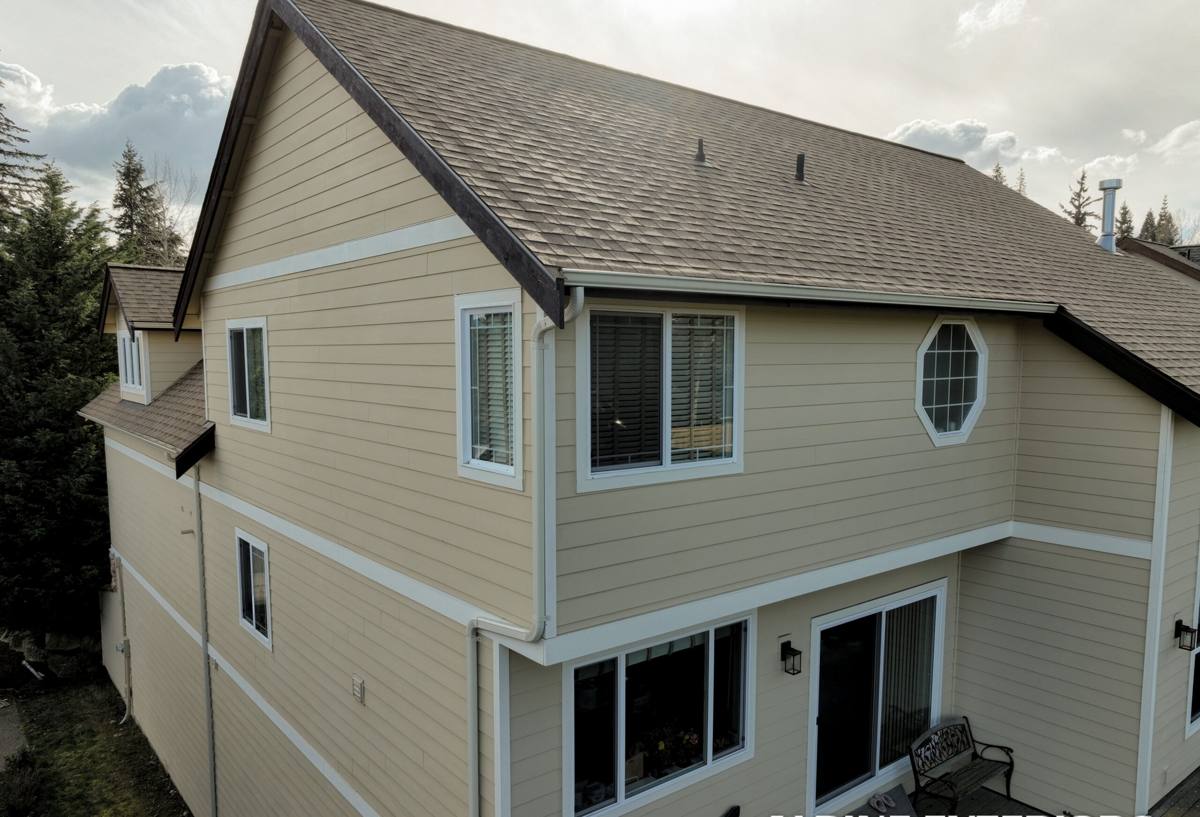
Why Metal Roofing Makes Sense for Blaine Homes
Metal roofing isn't the right fit for every home or every budget, and we'll tell you that plainly during an estimate. But for a property dealing with salt air, driving rain, and heavy moss pressure, a properly specified metal roof addresses more of those issues at once than most other roofing materials.
- Moss resistance: Metal panels don't give moss the rough, porous surface it needs to root the way shingles or wood shakes do, so growth is slower and easier to remove without damaging the roof.
- Water shedding: A steep-slope metal system with proper laps sheds wind-driven rain more effectively than materials that rely on capillary resistance alone.
- Long service life when coated correctly: A steel or aluminum panel with the right coating system, installed with the right fasteners, is built to handle decades of coastal exposure rather than one or two reroofing cycles.
- Lower long-term maintenance once it's installed correctly — the operative phrase being installed correctly, which is where a lot of coastal metal roofs go wrong.
That last point matters more here than in a drier inland area. A metal roof that's a great fit for a home 20 miles from the water can be the wrong spec for a home closer to Blaine if the coating, fastener material, or flashing details aren't upgraded to match the exposure.
Panel and Coating Choices That Matter Near Salt Air
Not all "metal roofing" is the same product. The panel profile, the base metal, and the coating system all change how well a roof holds up against salt and moisture. We walk homeowners through these trade-offs honestly rather than pushing one option for every job.
| Option | Corrosion Resistance Near Salt Air | Maintenance Over Time | Best Fit |
|---|---|---|---|
| Standing seam, concealed fastener | Strong — fasteners are hidden under the seam, out of direct weather | Low; occasional inspection of seams and flashing | Full coastal exposure, long-term ownership |
| Exposed-fastener panel | Moderate — depends heavily on gasket condition and fastener grade | Higher; gaskets and screws need periodic checking and eventual replacement | Budget-conscious jobs, outbuildings, lower-exposure roof planes |
| Bare or lightly coated steel | Weakest option this close to the water | Highest; rust risk at cut edges and fasteners rises over time | We generally steer homeowners away from this near Blaine |
| Quality painted steel or aluminum with a marine-rated coating | Best all-around for this climate | Low to moderate; coating and sealant checks on a normal schedule | Homes with regular salt air and wind-driven rain exposure |
Aluminum has a natural edge over steel in raw corrosion resistance because it doesn't rust the way steel does, but it's a softer metal and typically costs more. A well-coated steel panel with the right finish can perform very well too — the coating quality and installation detailing often matter more than whether the base metal is steel or aluminum. We'll talk through what makes sense for your roof pitch, budget, and how close your property sits to open water and prevailing wind.
Why We're Selective About Exposed-Fastener Panels Near the Coast
Exposed-fastener metal roofing is a legitimate, widely used product, and it costs less than standing seam. Our hesitation about it for full coastal exposure isn't that the product is bad — it's that every screw penetration is a maintenance point. The rubber gasket under each fastener compresses over time, and in an environment with more temperature swing and salt exposure, those gaskets can fail years before a well-installed standing seam roof needs any attention. For a detached garage or a lower-exposure roof plane, that trade-off is often fine. For a primary roof taking the brunt of driving rain off the water, we'll usually recommend spending the difference on concealed fasteners.
What a Correct Installation Actually Involves
A metal roof is only as good as the details underneath it and around its edges. This is where a rushed installation shows up as a leak two winters later, not on day one.
Underlayment and Water Barrier
Under the metal, we use an underlayment system built for the exposure — synthetic underlayment across the field, and self-adhered ice-and-water membrane at eaves, valleys, and any low-slope transitions where wind-driven rain is most likely to push water backward under a panel lap.
Fasteners and Flashing
Fastener material has to match the panel material to avoid galvanic corrosion — mixing incompatible metals right next to salt air is asking for early rust at every screw. Flashing at chimneys, vents, valleys, and wall-to-roof transitions gets formed and lapped correctly rather than relying on caulk to do the job a properly bent flashing piece should be doing.
Ventilation
A metal roof needs the same attic ventilation planning as any other roofing material — intake at the eaves, exhaust at the ridge. Trapped moist air under a metal roof deck causes condensation problems that have nothing to do with the panels themselves and everything to do with skipped ventilation work.
Cost Factors for a Blaine-Area Metal Roof
We'd rather explain what drives the price than throw out a number that doesn't mean anything until we've seen your roof. In general, metal roofing costs more upfront than asphalt shingles, and the range within metal roofing itself is wide depending on the choices below.
| Factor | Why It Matters |
|---|---|
| Panel type (exposed-fastener vs. standing seam) | Standing seam costs more in materials and labor but reduces long-term maintenance near salt air |
| Coating and base metal | Marine-rated coatings and aluminum cost more than standard painted steel but hold up better to salt exposure |
| Roof complexity | Valleys, dormers, and multiple roof planes add flashing work and labor time |
| Tear-off and deck condition | Moss and moisture damage found during tear-off can mean deck repair before the new roof goes on |
| Ventilation upgrades | Adding or correcting intake/exhaust ventilation is sometimes needed and adds to the scope |
Homeowners often see broad national ranges quoted online for metal roofing; what actually applies to your home depends on the factors above, plus your specific roof size and pitch. We give a real number after walking the roof, not a phone estimate.
Our Process, Start to Finish
- On-site inspection. We look at the existing roof, deck condition, ventilation, and any moss or moisture damage before recommending anything.
- Honest options, not a single upsell. We explain the panel and coating choices that fit your budget and your home's exposure, including when a lower-cost option is genuinely fine.
- Written estimate. Scope, materials, and timeline in writing, no vague allowances.
- Tear-off and deck check. We remove the old roofing and inspect the deck for rot or moisture damage before anything new goes down.
- Underlayment, panels, flashing. Installed in the sequence and detail described above — not shortcuts around ventilation or flashing to save a day of labor.
- Final walkthrough and cleanup. We walk the finished roof with you and clear the site of debris and fasteners.
Living With a Long Moss Season: Maintenance That Actually Matters
A correctly installed metal roof needs far less attention than asphalt shingles, but "far less" isn't "none," especially with a moss season that runs most of the year in this part of Whatcom County.
- Rinse debris and organic buildup off the roof surface once or twice a year, especially after fall leaf drop.
- Keep gutters clear so water isn't backing up under the eave edge during heavy rain.
- Trim back overhanging branches that shade the roof and keep it damp longer than open sun exposure would.
- Do a visual check of flashing, sealant points, and fastener condition after major windstorms.
- Avoid pressure washing directly on panel seams or coatings — it can force water under laps or damage the finish; a soft wash or gentle rinse is safer.
- Call in a professional inspection every few years rather than waiting for a visible leak to show up inside the house.
Why a Crew That Already Works Blaine Matters
Roofing crews based well inland don't always price or detail a job the same way for a coastal property, simply because they're not out here often enough to see how salt air and driving rain actually wear on a roof over time. We're a Lynden-based crew that works this part of Whatcom County regularly, which means we're not guessing about which fastener grade holds up or which flashing details actually need upgrading for homes closer to the water. It also means if a question comes up after the job — a sealant point worth a second look, a storm that raised a concern — we're not far away and not unfamiliar with your roof or your neighborhood's conditions.
If you're weighing metal roofing for a home in the Blaine area, we're glad to walk the roof, look at what's actually going on with moss, moisture, or aging materials, and give you a straight answer — including if metal isn't the right call for your situation. There's no pressure and no cost to get our take; the estimate form below is the easiest way to get started.