 Lynden Exterior
 Board & Batten Siding Built for Custer's Coastal-Adjacent Climate
Custer sits close enough to the water and open farmland north of Lynden that homes here take a different kind of weather beating than siding manufacturers assume in their generic installation guides. Salt-tinged air drifts in off Puget Sound and Birch Bay, driving rain comes in sideways during fall and winter storms, and a long, damp moss season settles onto north- and west-facing walls for months at a time. Board and batten siding — with its bold vertical lines and deep shadow reveals — is one of the most popular exterior choices for Whatcom County homes because it reads as clean, modern, and substantial. But that same profile, with its exposed batten strips and vertical seams, is also less forgiving of moisture mistakes than lap siding if it isn't detailed correctly for this specific climate.
This page is about one thing: getting board and batten siding right on a Custer home, given what this area's weather actually does to a wall system year after year.
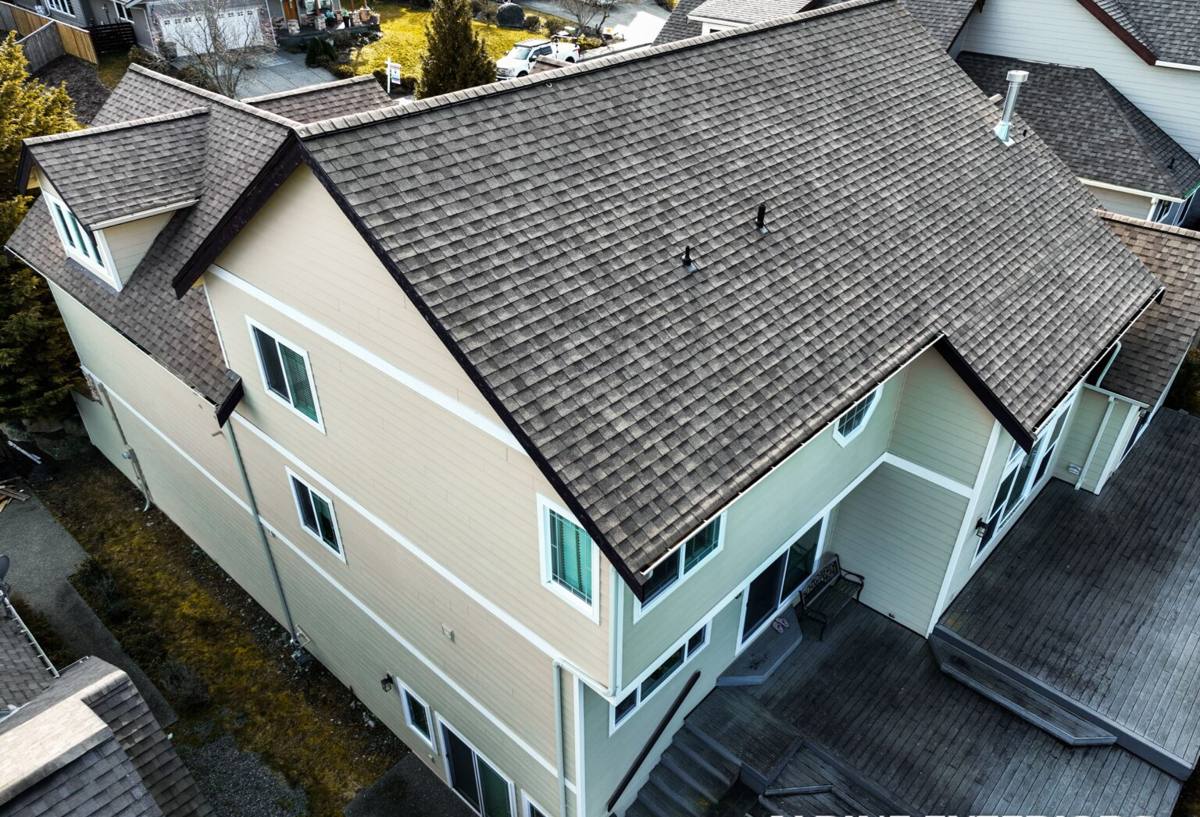
What Board & Batten Actually Needs to Perform Here
Board and batten is a two-layer system — wide vertical panels or boards, with narrower battens covering the seams between them. Done right, it's a durable, attractive siding style. Done wrong, it's one of the more common sources of moisture intrusion we get called out to inspect, because the vertical seams and batten joints create more opportunities for water to find a way behind the cladding than a horizontal lap profile does.
For a Custer home specifically, that means paying close attention to a few things most installers treat as afterthoughts:
- A continuous, correctly lapped weather-resistive barrier (WRB) behind the entire assembly — not just behind the panel joints
- Proper drainage plane or rainscreen gap so any water that does get behind the battens can drain and dry instead of sitting against the wall sheathing
- Correct fastener pattern and spacing through both the panel and batten, driven into structural framing — not just the sheathing
- Flashing detail at every horizontal transition: window and door heads, roof-to-wall intersections, and the base of the wall where board and batten is most exposed to splash-back from driving rain
- Batten spacing and reveal that's consistent enough to shed water outward rather than channel it toward a seam
None of this is exotic. It's standard building science. But it only shows up in the finished product if the crew installing it treats board and batten as a system, not just a look.
Why Vertical Siding Is Less Forgiving Than Lap Siding
Lap siding relies on gravity and overlap to shed water — each course naturally directs water down and over the course below it. Board and batten doesn't get that same built-in advantage at every seam. Water that gets behind a batten has to be caught by the drainage plane and WRB and routed back out, not just relied on to run off the face of the material. That's why the underlying assembly matters more here than the visible finish — and why it's worth asking any contractor bidding board and batten exactly how they're handling drainage, not just what color options they offer.
Salt Air, Driving Rain, and Moss Season — What Each One Does
Custer's exposure to salt-laden air is real, if often underestimated by homeowners moving up from inland areas. Salt accelerates corrosion on fasteners, flashing, and any exposed metal trim. Over years, corroded fasteners in a board and batten wall can loosen the very battens meant to keep water out, creating small gaps right where you don't want them.
Driving rain — the kind that comes in at an angle during a Whatcom County winter storm — puts direct pressure on every seam and joint in a vertical siding system. It's not just about keeping rain off the wall; it's about managing rain that's actively being pushed into gaps by wind.
Moss season is the quieter problem. Long stretches of damp, low-light weather let moss and algae take hold on north-facing and shaded elevations, especially under tree cover common around Custer properties. Moss holds moisture against the siding surface far longer than open sun-exposed walls ever see, and on porous or improperly sealed materials, that sustained dampness works its way into seams and fastener penetrations over time.
The James Hardie Board & Batten System We Install
We install James Hardie fiber cement exclusively, and for board and batten specifically that means HardiePanel vertical siding paired with Hardie's batten trim, finished in a factory-applied ColorPlus coating. A few reasons this combination holds up to what Custer's climate does over time:
- Non-combustible fiber cement core that doesn't swell, rot, or delaminate the way wood-based or wood-derivative panel products can when repeatedly wetted
- ColorPlus factory finish, baked on under controlled conditions rather than field-applied, which resists the fading and moss-friendly surface breakdown that flat field paint jobs are prone to
- HZ5 formulation, engineered for cold, wet Pacific Northwest climates, giving the material better performance against moisture cycling than Hardie's standard HZ10 line built for hot, dry regions
- A transferable manufacturer warranty that stays meaningful because the product itself is dimensionally stable — warranties are only as good as the material holding up long enough to matter
We don't install LP SmartSide, vinyl board and batten, Cemplank, Allura, or primed wood products for this profile. Each has legitimate uses elsewhere, but for a vertical siding system exposed to Custer's combination of salt air, wind-driven rain, and extended damp periods, we've standardized on Hardie because the failure modes we see in the field with the alternatives — edge swelling, seam gapping, coating breakdown, moisture-driven warping — show up disproportionately on vertical profiles where every seam is a potential entry point.
Material Comparison for a Vertical Siding Profile
| Material | Moisture Behavior | Coastal/Salt Air Durability | Typical Long-Term Concern |
|---|---|---|---|
| James Hardie fiber cement | Dimensionally stable, doesn't swell or rot when wetted | Strong — non-combustible core, factory finish resists coastal wear | Requires correct install detail; poor installation undermines an otherwise durable product |
| Wood-based panel siding (LP-type) | Engineered wood core can swell at cut edges and seams if moisture penetrates | Moderate — more sensitive to sustained damp exposure than fiber cement | Edge and seam integrity depends heavily on field sealing and maintenance |
| Vinyl board and batten | Doesn't rot, but expands/contracts significantly with temperature swings | Fair — can become brittle and fade faster under sun and salt exposure over decades | Seams can loosen or warp; limited long-term color retention |
| Cedar or primed wood | Natural material, absorbs and releases moisture constantly | Weak without diligent, ongoing maintenance | Highest maintenance burden — repainting, sealing, and moss/rot monitoring on a recurring cycle |
How We Approach a Custer Board & Batten Job
Every project starts with an assessment of the existing wall assembly, not just a measurement for materials. On older Custer homes, that often means confirming what's currently behind the siding — whether the WRB is intact, whether there's any evidence of past moisture intrusion around windows or at the base of walls, and whether the framing underneath is sound enough to fasten into correctly.
Our General Process
- On-site evaluation of the existing siding, sheathing condition, and problem areas (window heads, roof-wall intersections, ground-level splash zones)
- Removal of failing siding and inspection of the sheathing and framing underneath before anything new goes on
- Installation or repair of a continuous, properly lapped weather-resistive barrier
- Rainscreen or drainage gap installation appropriate to the wall assembly, so any incidental moisture can drain and dry
- Flashing at every horizontal penetration and transition — window and door heads, roof lines, and wall base
- HardiePanel installation with correct fastener spacing into structural framing, followed by batten placement per manufacturer spec
- Final inspection of seams, caulking points, and trim before walkthrough
None of these steps are unique to us — they're what the manufacturer's installation manual and sound building practice both call for. The difference is whether a crew actually follows them on every wall, every time, including the parts that aren't visible once the job is finished.
Maintaining Board & Batten Through Whatcom County Winters
Even correctly installed fiber cement board and batten benefits from a simple annual check, especially given how long Custer's wet season runs:
- Look over north- and shade-facing walls each fall for early moss or algae growth and remove it gently before it spreads
- Check that gutters and downspouts are directing water away from the wall base, not letting it splash back onto lower siding courses
- Inspect caulking at trim and penetration points annually — caulk is a maintenance item even on a low-maintenance material
- Keep vegetation and irrigation spray pulled back from siding to avoid prolonged dampness against the wall
- Watch fastener heads and trim for early corrosion signs, particularly on walls facing prevailing weather
Why It Matters That We Already Work in Custer
Board and batten failures we're called to fix are rarely about the siding material itself — they're about a detail that got skipped because the crew wasn't accounting for how this specific area's weather behaves. A contractor who already works Custer and greater Lynden knows which elevations catch the worst of the driving rain, which properties see heavier moss buildup from surrounding tree cover, and how to size flashing and drainage details for what actually happens here over a Whatcom County winter — not a generic install spec written for a different climate. That local pattern recognition is the difference between a board and batten job that looks good for one season and one that holds up through a decade of salt air, storms, and moss.
Get a Straightforward Estimate
If you're weighing board and batten siding for a Custer property, we're happy to take a look, walk through what your home's specific exposure calls for, and give you a clear, no-pressure estimate. Use the form below to get started.