 Lynden Exterior
 Board & Batten Siding for Laurel Homes
Board and batten has become one of the most requested looks for homes in and around Laurel, and it's not hard to see why. The wide vertical boards and narrow battens give a house strong, clean lines — whether it's dressing up a farmhouse-style build, adding texture to a modern remodel, or replacing tired horizontal lap siding that's had enough of Whatcom County weather. But board and batten is also one of the least forgiving siding profiles if it's installed wrong. Vertical seams, exposed batten joints, and a lot of fastener penetrations mean this style depends on correct water management more than almost any other siding profile we install. In a climate that mixes salt air, driving rain off the water, and a moss season that can stretch for months, "looks right from the street" and "is actually performing" are two very different things.
This page is about doing board and batten correctly for a Laurel-area home — what the local climate demands from it, what the material and installation actually need to look like, and how our process protects the investment once the boards go up.
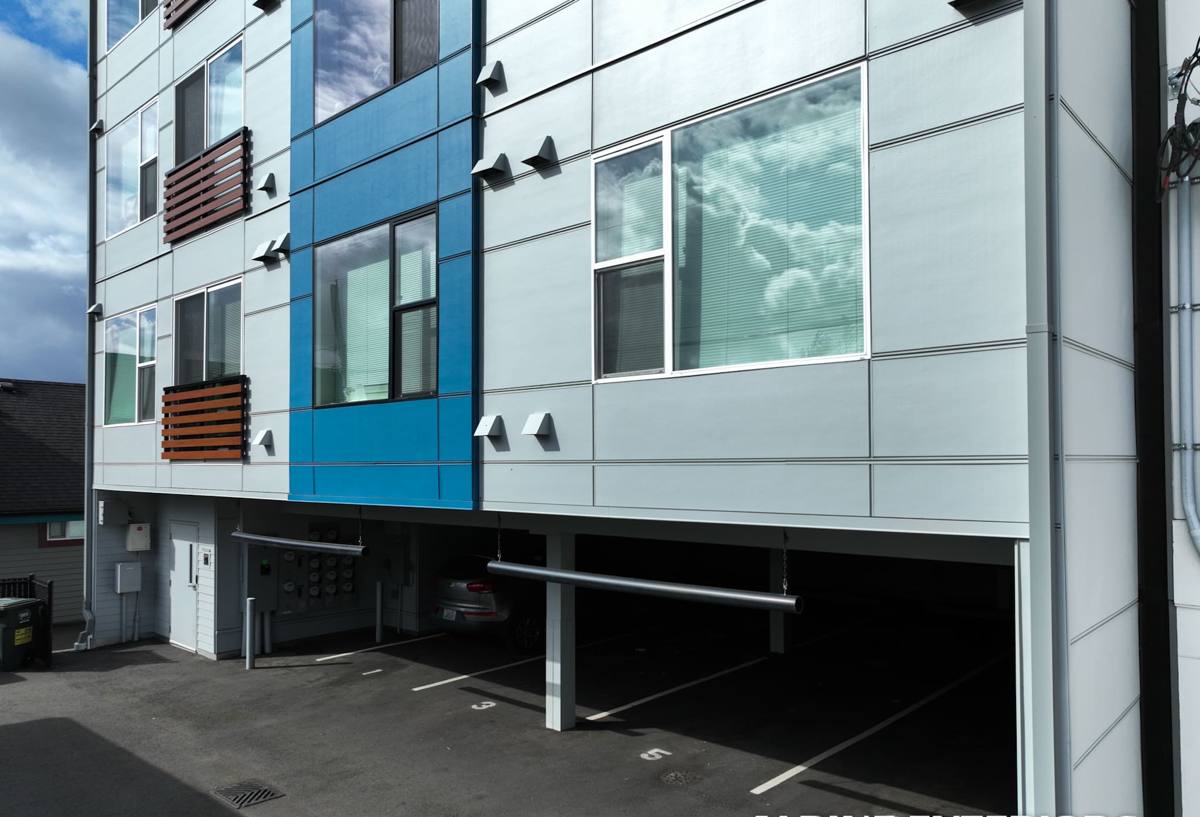
What Laurel's Climate Does to Vertical Siding
Laurel sits in the same Whatcom County weather pattern that shapes every project we do around Lynden — damp, marine-influenced, and rarely dry for long stretches at a time. A few specific factors matter more for board and batten than for other siding styles:
Salt Air and Fastener Corrosion
Proximity to Puget Sound and Bellingham Bay puts a steady trace of salt into the air across this part of the county. Salt air accelerates corrosion on any exposed or marginal-quality fasteners, flashing, and trim hardware. Board and batten uses more visible face fasteners and butt joints than lap siding, so the quality of the fastener and how it's installed matters more here — a corroding nail head under a batten is a slow leak waiting to happen.
Driving Rain
Wind-driven rain doesn't just fall straight down — it gets pushed sideways into vertical seams, batten edges, and butt joints where two boards meet. Board and batten has more linear feet of vertical joint than horizontal lap siding of the same wall area, and every one of those joints is a potential entry point if it isn't detailed correctly.
Extended Moss Season
Cool, wet conditions for much of the year create ideal growing conditions for moss and algae, especially on north-facing walls, under eaves, and anywhere airflow is limited. Moss holds moisture against the siding surface far longer than a bare wall would dry on its own, which is a problem for any material that absorbs water — and it's an aesthetic problem for board and batten in particular, since moss streaking on flat vertical boards is highly visible.
Why Board & Batten Is More Sensitive to Material Choice
Every siding profile has to manage water, but board and batten's geometry makes the margin for error smaller. The battens themselves create narrow channels that can trap moisture against the wall if there isn't a drainage path behind them. The wide boards used in board and batten expand and contract with humidity more visibly than narrow lap boards — any material prone to swelling, cupping, or absorbing water at the joints will show it as buckling, gapping, or paint failure faster on a board and batten wall than on a lap-sided one.
This is exactly where the material decision matters most. Wood board and batten looks great new but needs a maintenance commitment most homeowners underestimate — re-caulking, repainting, and watching for rot at the base and around joints, especially in a climate that rarely lets wood fully dry out. Vinyl board and batten avoids rot but flexes, fades, and can't hold the crisp, flat panel look this style depends on over time. LP SmartSide and similar engineered wood products perform reasonably when installed and maintained exactly to spec, but they're wood-based at the core, and any breach in the factory coating gives moisture a way into the substrate.
We install James Hardie fiber cement exclusively, and board and batten is one of the clearest examples of why. Fiber cement doesn't swell, doesn't rot, and doesn't feed moss the way wood fiber does. It holds a flat, true panel line for the life of the siding instead of cupping or bowing at the joints — which matters a lot on a profile where every board is a visible vertical plane.
The James Hardie System We Use
For board and batten, we typically install HardiePanel vertical siding with Hardie batten strips over the panel joints, finished in a factory ColorPlus color. A few things about this system are worth understanding before you commit to the look:
- Non-combustible core — fiber cement doesn't contribute fuel to a fire, which matters for insurance conversations as much as safety.
- ColorPlus factory finish — the color is baked on at the factory under controlled conditions, not brushed on-site, which gives more even coverage and a longer color life than field-applied paint.
- HZ5 engineering — Hardie's HZ product line is engineered for wetter, harsher climates like ours, with moisture and freeze-thaw performance built into the formulation rather than added on.
- Stable dimensions — the panels don't expand and contract the way wood does, so board lines and batten reveals stay straight and tight instead of opening gaps over a few seasons.
It's a premium product, and we're upfront that it costs more upfront than vinyl or engineered wood. The trade-off is a siding system that's still doing its job — and still looking like it — long after cheaper alternatives have needed repair, repainting, or replacement.
What a Correct Board & Batten Installation Actually Involves
The finished look of board and batten hides most of the work that determines whether it lasts. This is where a lot of installations — regardless of material — go wrong.
Drainage Plane and Rainscreen Gap
A weather-resistive barrier goes on the wall first, and in our climate we install a rainscreen gap (typically a furring strip or drainage mat) behind the siding. That gap lets any water that gets past the surface drain out and lets air circulate to dry the wall assembly — critical for a moss-prone climate where walls rarely get a long dry stretch.
Flashing at Every Transition
Windows, doors, roof lines, and the base of the wall all need proper flashing integrated with the weather barrier before the first board goes up. Board and batten's vertical joints make flashing details at horizontal transitions even more important, since water traveling down a board has to be redirected out at every intersection, not just absorbed or caulked over.
Fastening and Joint Spacing
Boards are fastened per Hardie's engineering specs — correct nail type, spacing, and penetration depth — with batten placement covering the panel joints rather than relying on caulk alone to seal them. Butt joints get back-flashed, not just butted and caulked, so the seal doesn't depend entirely on caulk holding up to years of driving rain and UV.
Clearances
Board and batten needs the same ground and roofline clearances as any other siding — enough gap at grade to keep splash-back and standing water off the bottom edge, and enough clearance at rooflines to avoid trapping runoff against the siding.
Our Process for a Laurel Project
- On-site assessment — we look at wall exposure, existing moisture damage, drainage patterns around the foundation, and how much sun/shade each elevation gets (a major factor in moss growth).
- Removal and substrate check — old siding comes off and we inspect sheathing for rot or damage before anything new goes on. This step catches problems that get hidden if a crew sides over existing material.
- Weather barrier and rainscreen install — the drainage plane and flashing details go in before a single board is hung.
- Board and batten installation — panels and battens go up to Hardie's fastening and joint spec, with attention to keeping vertical lines straight and reveals consistent.
- Final walkthrough — we go over the finished job with you, including what maintenance to expect and how the warranty works.
Material Comparison for Board & Batten
| Material | Moisture Behavior | Upkeep in This Climate | Typical Lifespan |
|---|---|---|---|
| James Hardie Fiber Cement | Doesn't swell or rot; engineered for wet climates (HZ5) | Occasional wash; factory finish resists fading | Multi-decade with proper install |
| Cedar / Primed Wood | Absorbs moisture; prone to cupping at wide boards | Regular repainting/staining, caulk maintenance, moss watch | Shorter without diligent upkeep |
| LP SmartSide | Wood-based core; vulnerable if coating is breached | Coating inspection, prompt repair of any damage | Moderate, install-quality dependent |
| Vinyl Board & Batten | Doesn't rot but flexes and can gap at panel joints | Low, but fades and can crack in cold snaps | Shorter; UV and impact sensitive |
Upfront cost for board and batten runs higher than plain lap siding in any material, simply because of the extra battens and labor involved in the layout. Fiber cement carries a higher material cost than vinyl or engineered wood, but the gap narrows once you account for repainting cycles, caulk maintenance, and earlier replacement that lower-cost materials tend to need in this climate.
Maintaining Board & Batten Through Moss Season
No siding is maintenance-free, but fiber cement keeps the list short compared to wood or engineered wood alternatives:
- Rinse siding annually, focusing on north-facing walls and areas under trees or eaves where moss and algae take hold first
- Keep gutters clear so overflow doesn't run down the face of the siding
- Trim back vegetation and tree limbs that shade walls and keep them damp longer than necessary
- Check caulking at window and door trim yearly, even though the boards themselves don't need it
- Address any impact damage promptly rather than letting a chip sit exposed through a wet winter
Why It Matters to Hire a Crew That Already Works in the Laurel Area
Board and batten installed to a generic national spec doesn't automatically hold up here. A crew that works this part of Whatcom County regularly already understands how salt air, driving rain, and a long moss season interact with a wall assembly — and adjusts flashing, drainage, and material choices accordingly instead of applying a one-size-fits-all approach. That local experience shows up years later, not on install day, in whether the joints stayed tight, the color held, and the wall behind the siding stayed dry.
If you're considering board and batten for a home in Laurel or elsewhere around Lynden, we're happy to walk the property, talk through what your specific exposure needs, and give you a straightforward, no-pressure estimate using the form below.