 Lynden Exterior
 Siding Repair Around Wiser Lake: A Different Set of Conditions
Wiser Lake sits just outside Lynden in a part of Whatcom County where the exterior of a house works harder than it does in a lot of other places. It's not just the general Pacific Northwest weather pattern — salt-tinged air moving in off the Salish Sea, long stretches of driving rain, and a moss season that runs from fall well into spring. Properties around Wiser Lake add another layer on top of that: standing water nearby, morning fog that lingers over the lake surface, and tree cover close to the shoreline that keeps humidity high and airflow low around a home's walls. That combination doesn't necessarily mean more repairs, but it does mean the repairs that come up tend to be moisture-driven, and they tend to show up first in the spots that stay shaded, low, or close to the water.
We've worked on enough exteriors in this area to know that a siding repair job here isn't the same task as one twenty minutes away on a dry, open, south-facing lot in town. The diagnosis has to account for where the water is actually coming from, not just where the damage happens to be visible.
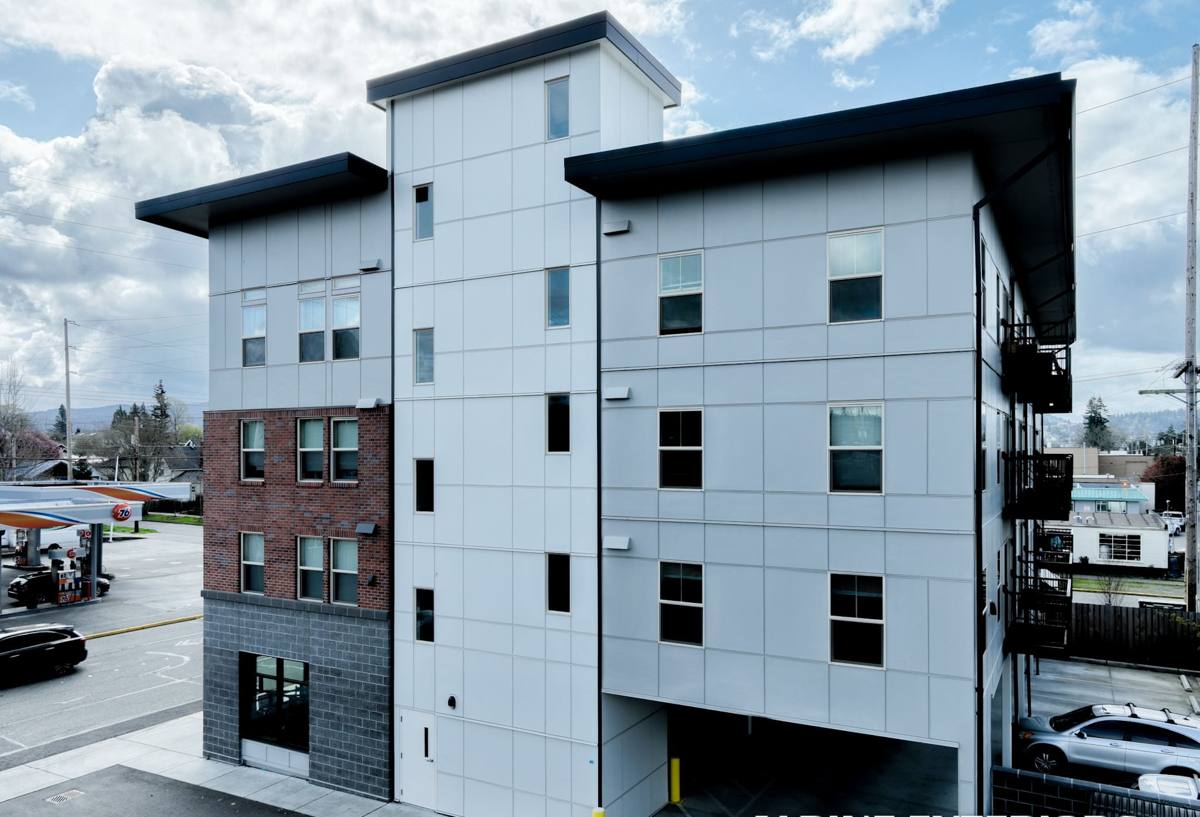
What Lake Moisture, Driving Rain, and Moss Actually Do to Siding
Salt air doesn't need to be right on the coast to matter. It travels inland on weather systems and settles into the same low-lying, humid pockets that lake proximity already creates, and it accelerates corrosion on exposed fasteners and hardware while keeping painted or coated surfaces damp longer than they'd stay in a drier spot. On siding that depends on an intact coating to keep water out, that shortens the clock on when problems start.
Driving rain is the second factor, and it's a bigger one than most homeowners expect. Rain pushed sideways by wind doesn't run straight down a wall the way it would in a calm shower — it gets forced into laps, seams, and fastener penetrations that a fair-weather installation never had to resist. Around Wiser Lake, where open water and tree lines create their own local wind patterns, that wind-driven rain finds gaps in flashing, caulking, and butt joints that wouldn't be a problem in a more sheltered location.
Moss and mildew round it out. Shaded walls, north-facing exposures, and anything near tree cover or close to the water stay damp for extended periods through fall, winter, and much of spring — exactly the conditions moss needs to establish and spread. On wood-based or wood-look siding, that ongoing dampness isn't just a staining issue. Sustained moisture against a moisture-absorbent material eventually causes swelling, softening, and rot, usually starting at butt joints, bottom edges, and anywhere caulking has failed.
Why This Matters More for Repair Than New Construction
A brand-new install has fresh flashing, fresh caulking, and a fresh factory finish working in its favor. Repair work is different — by the time a homeowner calls, the protective layer has usually already been compromised somewhere, and the job isn't done right until that entry point is found and corrected, not just covered back up.
Signs Your Siding Needs Repair Rather Than a Full Re-Side
Most siding problems don't require replacing an entire wall. They require an accurate read on how far the damage has spread and whether the material and structure underneath are still sound. Here's what we look for on a Wiser Lake service call:
- Soft, spongy spots when you press on the siding, especially near the bottom courses or around window and door trim
- Visible cracking, chipping, or separation at seams and butt joints
- Persistent moss or dark staining that keeps returning after cleaning, particularly on shaded or north-facing walls
- Bubbling, peeling, or chalking paint or finish on a small, localized section rather than the whole house
- Gaps or pulling away at trim boards, corner boards, or J-channel around windows
- Water stains or a musty smell on interior walls that back up to an exterior wall showing exterior damage
- Fastener heads that have backed out, rusted, or left streaking below them
If damage is contained to a wall section, a few boards, or a trim detail, targeted repair is usually the right call. If the underlying sheathing has been wet long enough to soften or rot across a broader area, or if the siding itself is a moisture-absorbent material that's failing system-wide, that's a different conversation — and we'll tell you honestly which situation you're in rather than defaulting to whichever answer is more profitable for us.
What a Correct Siding Repair Job Actually Involves
A repair that just patches the visible symptom without addressing why water got in there in the first place tends to fail again within a season or two, especially in this climate. Doing it correctly means going a step further every time:
Finding the Real Entry Point
Visible rot or staining is usually downstream of the actual problem — a gap in flashing above a window, a failed kick-out flashing at a roofline, caulking that's shrunk and cracked, or a fastener pattern that never sealed properly. We trace the water path back before we cut into anything, because replacing a board without fixing the entry point just buys a year or two before the same spot fails again.
Matching Material and Profile
Repairs need to match the existing siding's profile, exposure, and finish closely enough that the patch doesn't stand out and doesn't create a new seam that's more vulnerable than the surrounding wall. On James Hardie siding, that means using the correct HZ product line and matching lap exposure, not just a similar-looking board.
Flashing and Fastening to Spec
Every cut edge and new seam is a potential water entry point unless it's flashed and sealed correctly. We follow manufacturer fastening and clearance specifications rather than field-guessing, because in a high-moisture climate the difference between a repair that holds and one that doesn't usually comes down to details most people never see once the job is finished.
Checking What's Underneath
Before closing anything back up, we check the house wrap or building paper and the sheathing behind the damaged siding. If moisture has already gotten past the siding layer, patching the surface without addressing what's underneath just hides a problem instead of solving it.
Common Repair Scenarios We See in the Wiser Lake Area
A few patterns come up often enough around Wiser Lake and similar lake-adjacent, tree-covered properties in the Lynden area that they're worth calling out specifically.
Moisture Rot at the Base of Walls
Low areas near grade, especially where landscaping or mulch sits close to the siding, hold moisture longer and are more exposed to splashback. Combined with the humidity that comes off nearby water, bottom-course rot is one of the most common repair calls we get in this specific area.
Persistent Moss on Shaded and North-Facing Walls
Tree cover near the lake keeps some walls in near-constant shade through fall and winter. Moss that keeps coming back despite cleaning is usually a sign that the wall isn't drying out between rain events, which is worth addressing at the source — trimming back vegetation, improving airflow, or checking drainage — rather than just cleaning the surface again.
Failed Caulking and Trim Separation
Wind exposure off open water accelerates the wear on caulked joints and trim connections. Once a joint opens up, wind-driven rain gets pushed directly into it, so these small gaps tend to turn into bigger repairs faster here than they would in a more sheltered part of town.
Repair or Replace: How We Help You Decide
Homeowners often assume any visible damage means the whole wall needs to come off. That's rarely true, but it's also not something to guess about. We walk through a few factors on every estimate:
| Factor | Favors Repair | Favors Full Replacement |
|---|---|---|
| Extent of damage | Isolated to one wall section or a few boards | Spread across multiple walls or the whole exterior |
| Sheathing condition | Dry and sound behind the damaged siding | Soft, wet, or rotted over a broad area |
| Siding material | James Hardie fiber cement, still structurally sound | Moisture-absorbent material failing system-wide |
| Age and finish condition | Recent install, finish intact elsewhere | Finish chalking, fading, or failing broadly |
| Underlying cause | Single identifiable entry point, correctable | Systemic flashing or drainage issues throughout |
We'd rather give you an honest repair estimate that saves you money today than push a full re-side you don't need — and we'll also tell you plainly when a repair is just delaying a replacement that's coming anyway, so you can plan for it instead of being surprised by it.
Why We Repair and Replace With James Hardie Fiber Cement Only
We don't install or repair with vinyl siding, LP SmartSide, Cemplank, Allura, primed spruce, or cedar. That's a professional standard, not a limitation — and it matters as much for repair work as it does for new installs. In a climate like this one, the materials that tend to need repeat repair share a common weakness: they either absorb moisture directly, rely on a coating or caulking to keep water out indefinitely, or expand and contract enough with temperature and humidity swings that seams gradually work loose.
James Hardie fiber cement is engineered specifically to resist that. It's non-combustible, it doesn't swell, rot, or feed moss the way wood-based products can, and its ColorPlus factory finish is baked on under controlled conditions and warrantied against the fading and chalking that constant moisture and UV cycling cause over time. Hardie also builds climate-specific HZ formulations rather than one generic board, which is relevant here given how much sustained moisture this area sees. When we repair a Hardie wall, we're extending a system built for this climate. When we're asked to patch something else, we'll be straight with you about the trade-offs before we touch it.
Our Process for a Wiser Lake Siding Repair Call
- On-site assessment: We inspect the damaged area and the surrounding wall, checking for moisture beyond what's visible on the surface.
- Diagnose the source: We trace the problem back to its actual entry point — flashing, caulking, drainage, or a fastening issue — rather than treating only the symptom.
- Written estimate: You get a clear scope and price before any work starts, including whether we're recommending repair or flagging a broader issue.
- Repair to spec: Matching material, correct flashing, and manufacturer fastening patterns — not a quick patch that fails again next winter.
- Final check: We confirm the repair sheds water correctly and that nothing was closed up over a moisture problem that's still active.
Why a Crew That Already Works Wiser Lake Matters
Siding repair in a lake-adjacent, tree-shaded property isn't quite the same diagnostic problem as a standard in-town repair, and a crew that's worked this specific area already knows what to check first — where moisture tends to collect, which wall orientations hold onto shade and dampness longest, and how the local wind pattern off the water tends to drive rain into seams that would stay dry elsewhere. That local familiarity shortens the guesswork on the first visit and helps us give you an accurate estimate instead of a padded one built around uncertainty.
It also matters for the ongoing relationship. Siding repair is rarely a one-time interaction — a crew that knows your property and has already been out to it once is in a much better position to advise you honestly the next time something comes up, rather than starting from zero.
If you're seeing soft spots, recurring moss, or trim pulling away from your siding anywhere around Wiser Lake or elsewhere near Lynden, we're happy to take a look and give you a straightforward, no-pressure estimate — free, no obligation, and an honest answer on whether you need a repair or something more.