 Lynden Exterior
 Custer's Roofs Work Harder Than the Rest of the County
Custer sits close enough to the water that homes here take on a different kind of weather than roofs a few miles inland in Lynden proper. The combination of salt-laden air drifting in off the coast, long stretches of driving rain through fall and winter, and a moss season that can run most of the year adds up to faster wear on shingles, faster corrosion on exposed metal, and more moisture working its way into places it shouldn't. A roof replacement done right in Custer isn't just about swapping old shingles for new ones — it's about building a roof system that's matched to what this specific stretch of Whatcom County throws at it.
We've replaced roofs across this area long enough to know which failure patterns show up here again and again, and which shortcuts cost homeowners money two or three years down the road instead of twenty.
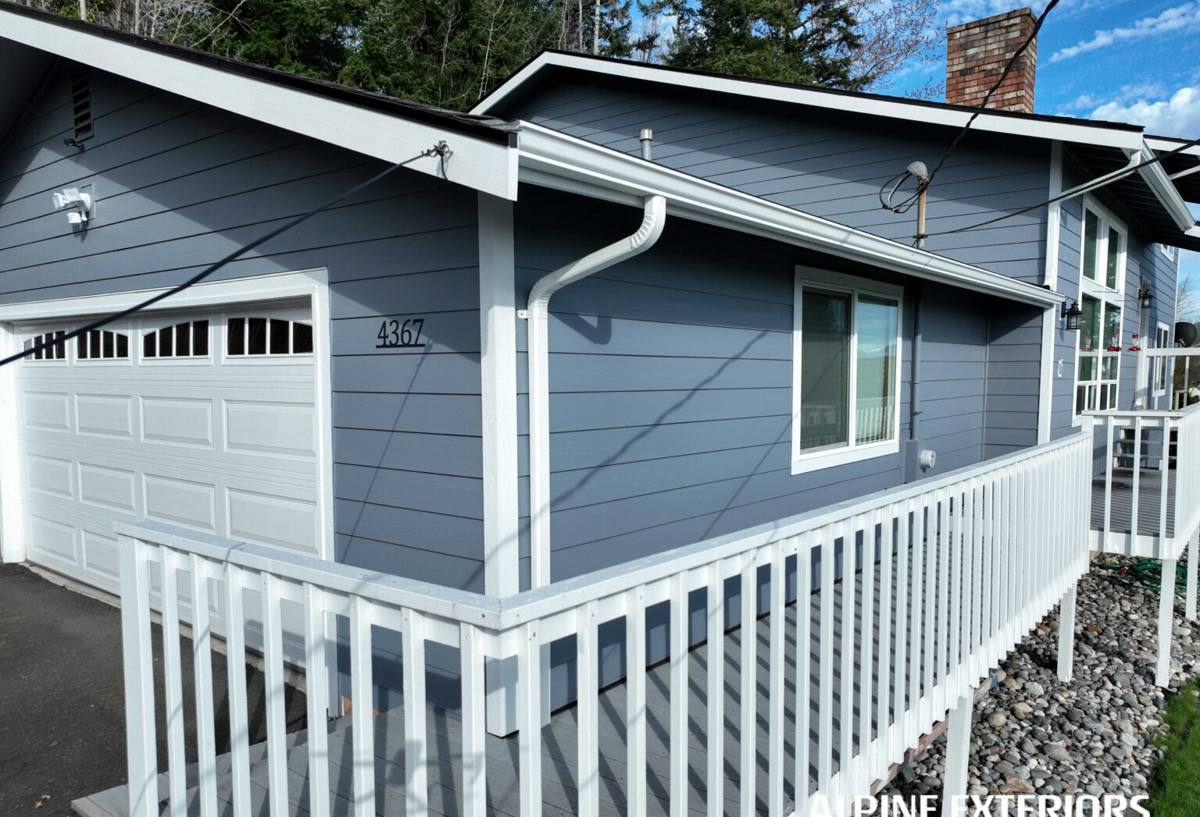
How Salt Air, Rain, and Moss Actually Damage a Roof
Salt Air
Airborne salt accelerates corrosion on anything metal — nail heads, flashing, gutter fasteners, and lower-grade drip edge. Once corrosion starts on a fastener, it loosens its grip and creates a tiny path for water to follow. Multiply that by the hundreds of fasteners on an average roof, and salt exposure quietly shortens the life of a roofing system that would otherwise last decades.
Driving Rain
Rain that comes in sideways during a windstorm doesn't behave like rain falling straight down. It gets pushed up under shingle edges, into valleys, and around flashing that would be perfectly adequate in a calmer climate. Roofs here need tighter seals and more attention to detail at every transition point — valleys, chimneys, skylights, and wall-to-roof intersections — because wind-driven rain finds every weak spot.
Moss and Organic Growth
A long, damp moss season means anything shaded by trees or facing north holds moisture longer than it should. Moss doesn't just look bad — it holds water against the roofing surface, works its way under shingle tabs, and lifts material over time. Left unchecked for years, moss growth is one of the more common reasons we see otherwise mid-life roofs failing early.
Signs a Custer Home Needs Replacement, Not Another Repair
Not every roof problem calls for a full replacement, and we'll tell you honestly when a repair is the right call. But there's a point where patching becomes throwing money at a roof that's already past its useful life. Signs worth taking seriously include:
- Granules collecting in gutters or at the base of downspouts in noticeable amounts
- Shingles that are curling, cupping, or cracking across large sections rather than one isolated spot
- Daylight visible through the roof deck from inside the attic
- Soft or spongy decking underfoot when walked (a sign moisture has already reached the wood)
- Persistent moss coverage that keeps returning within a season of cleaning
- Multiple past repairs in different areas rather than one contained problem
- A roof that's nearing or past the manufacturer's expected service life for its material
If a roof is showing two or more of these at once, replacement is usually the more cost-effective path over the next five to ten years than continuing to chase repairs.
What a Correct Roof Replacement Involves
Tear-Off and Deck Inspection
We remove the existing roofing down to the deck rather than layering over it. That's the only way to actually see the plywood or OSB underneath — including the spots most likely to have taken on moisture damage over the years, like valleys, around old flashing, and near roof penetrations. Any soft or delaminated decking gets replaced before anything new goes down; installing new roofing over a compromised deck just hides the problem.
Underlayment and Water Protection
Given how much rain this area sees, underlayment choice matters more than a lot of homeowners realize. We use ice-and-water shield membrane in valleys, around chimneys and skylights, and along eaves — the areas most prone to wind-driven rain intrusion — paired with a synthetic underlayment across the rest of the deck for a fully sealed water barrier before the finish roofing goes on.
Flashing Detail Work
Flashing is where most roof leaks actually start, not out in the open field of shingles. We install new flashing at every wall intersection, chimney, and penetration rather than reusing old pieces, and we pay particular attention to corrosion-resistant materials given the salt exposure common to Custer properties.
Ventilation Balance
A roof needs balanced intake and exhaust airflow to manage moisture and temperature in the attic. In a climate this damp, poor ventilation traps humid air against the underside of the deck, which contributes to premature rot and can void material warranties. We check existing ventilation as part of every replacement and correct imbalances rather than just matching what was there before.
Choosing Roofing Materials for This Climate
There's no single "best" roofing material — the right choice depends on budget, how much shade and moss exposure the roof sees, and how long you plan to stay in the home. Here's how the common options compare for a Custer property specifically:
| Material | Salt Air Behavior | Moss Resistance | Typical Lifespan |
|---|---|---|---|
| Architectural asphalt shingle | Good with corrosion-resistant fasteners/flashing | Moderate; benefits from algae-resistant granules | 25–30 years |
| Standing seam metal | Excellent when properly coated; check coastal-rated finish | High; sheds moisture quickly | 40–50+ years |
| Synthetic composite shingle | Good; resists corrosion since it's not metal-based | Moderate to high depending on product | 30–50 years |
| Cedar shake | Requires diligent maintenance near salt exposure | Lower without regular treatment | 20–30 years with upkeep |
For most Custer homes, we recommend algae-resistant architectural shingles or standing seam metal as the strongest balance of cost, longevity, and low maintenance given the local climate. Cedar can still be the right aesthetic choice for the right homeowner, but it comes with a higher maintenance commitment in a moss-prone, damp environment — that's a trade-off we'll walk through honestly rather than talk anyone out of what they want.
Our Process, Start to Finish
We keep the process straightforward and communicate at each stage so there are no surprises:
- Free on-site estimate — we inspect the current roof, attic ventilation, and decking condition, and walk you through what we find.
- Material and scope decision — we go over options based on your budget, the home's exposure, and how long you plan to stay in it.
- Scheduling — we plan around weather windows realistically rather than promising dates we can't control.
- Tear-off and deck repair — full removal of old roofing, with any damaged decking replaced before moving forward.
- Underlayment, flashing, and installation — installed to the standards above, not the minimum code requirement.
- Cleanup and final walkthrough — magnetic sweep for nails, full site cleanup, and a walkthrough so you can see the finished work before we consider the job done.
Keeping Moss From Coming Back
A new roof is only the start. Given how long moss season runs here, a little ongoing attention keeps a new roof looking and performing like new for years longer:
- Keep overhanging branches trimmed back to reduce shade and debris buildup
- Clean gutters at least twice a year so water isn't sitting against the roof edge
- Have moss and debris cleaned off gently before it establishes a heavy foothold, rather than after
- Choose algae-resistant shingles or a metal roof if moss has been a recurring issue on the property
Why It Matters That We Already Work in Custer
Roofing crews who mainly work drier, more sheltered parts of Whatcom County sometimes underbuild for what a coastal-adjacent property like a Custer home actually needs — lighter underlayment, standard fasteners instead of corrosion-resistant ones, or ventilation specs pulled from a generic checklist. We build every Custer roof assuming salt air and heavy rain exposure from the start, because that's what actually shows up on these roofs when we tear off the old material. That local familiarity is the difference between a roof that looks fine at handoff and one that's still performing well a decade later.
Questions to Ask Before You Sign With Any Roofing Contractor
- Are you licensed and insured in Washington State, and can I see current proof?
- Will you inspect and replace damaged decking as part of the quoted price, or is that a separate charge if found?
- What underlayment and ice-and-water shield will you use, and where specifically will it be installed?
- What's included in the manufacturer's and workmanship warranty, and what would void it?
- Will you check and correct attic ventilation as part of the job?
- Is cleanup, including a magnetic nail sweep, included?
A contractor who answers these clearly and specifically, without vague reassurances, is usually one worth trusting with the job.
If your Custer home's roof is showing its age or you just want an honest read on where it stands, we're happy to take a look. Estimates are free and there's no pressure to move forward — use the form below to get started.