 Lynden Exterior
 Building Decks for Abbotsford Homes, From a Crew Just Down the Road
Abbotsford sits close enough to Lynden that the two communities share the same weather system, the same soil moisture patterns, and a lot of the same building challenges. A deck built for a home in Abbotsford has to stand up to the same wet winters, the same short summer window for outdoor living, and the same moss-and-mildew pressure that every deck in this corner of the Pacific Northwest deals with. We've built our business around understanding that climate, and we bring that same standard north of the border to every custom deck project we take on in Abbotsford.
This page is specifically about custom deck construction for Abbotsford, BC properties — not a general overview of decking. If you're comparing bids or just trying to understand what a correctly built deck should involve in this region, this is written for you.
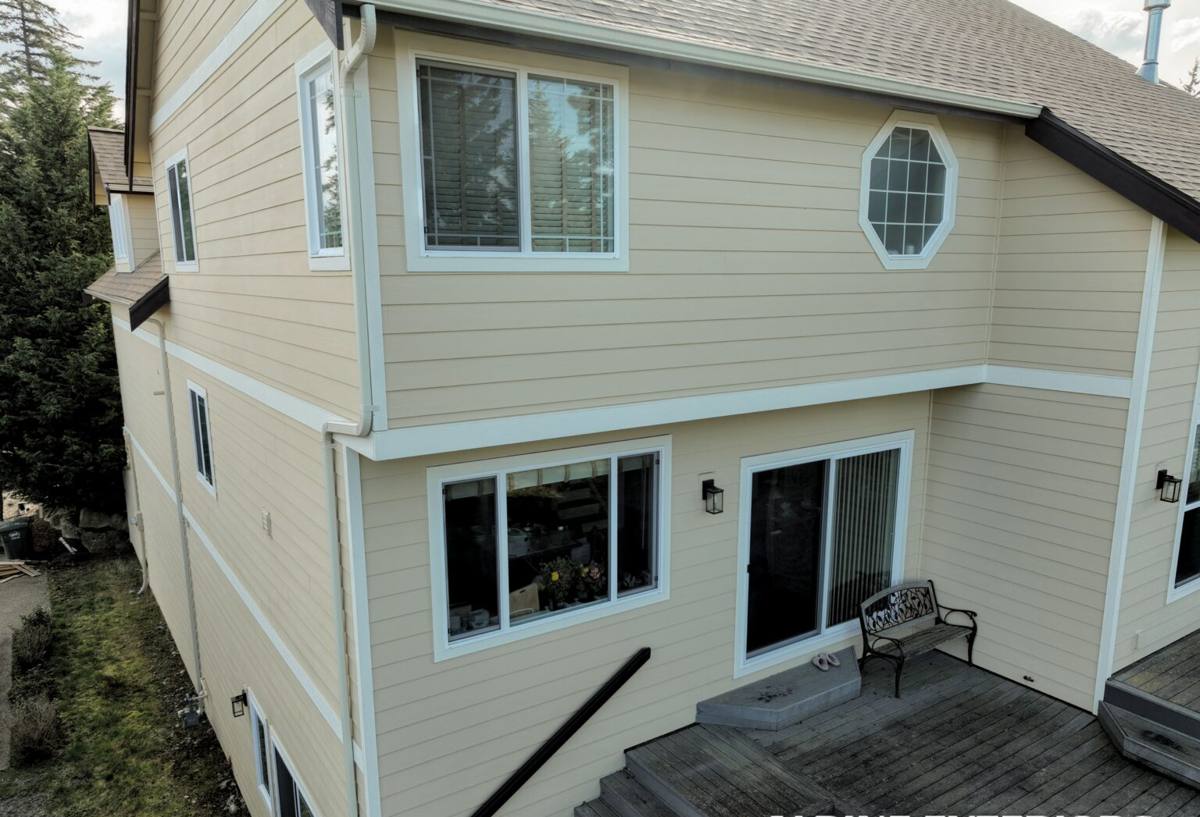
What the Local Climate Actually Does to a Deck
Whatcom County and the Fraser Valley share a marine west coast climate: mild temperatures, but a lot of moisture spread across most of the year. That combination is tougher on a deck than people expect, for a few specific reasons.
Salt Air and Corrosion
Proximity to the coast means salt-laden air travels further inland than most homeowners assume. Over years, that salt content accelerates corrosion on fasteners, brackets, and any exposed metal hardware. A deck built with the wrong grade of fastener can develop rust streaks and weakened connections well before the wood itself shows any wear.
Driving Rain and Water Intrusion
Rain here doesn't just fall — wind-driven rain gets pushed sideways into ledger connections, stair stringers, and any spot where the deck meets the house. If flashing and water management aren't handled correctly at the ledger board, water works its way behind the siding and into the rim joist, which is one of the most common sources of hidden rot we find on older decks in this area.
Moss, Algae, and a Long Damp Season
Between fall and spring, decking surfaces rarely get a long enough dry stretch to fully shed moisture. That extended damp season is exactly what moss and algae need to establish themselves, especially on shaded decks or ones with tight board spacing that traps debris and slows drying. Left unaddressed, that surface growth turns decking into a slip hazard and starts breaking down the wood fibers or coating underneath it.
What a Correctly Built Deck Involves Here
A deck that's going to hold up under these conditions needs to be right at every layer, not just on the surface. That means attention to the structure, the connections, and the surface material together.
Structural Framing
Joists, beams, and posts need to be sized for the actual loads and spans involved, not just built to the minimum a permit will allow. Framing lumber in this climate should be rated for ground contact or exterior exposure where it's close to grade, and every structural connection benefits from corrosion-resistant hardware given the salt content in the air.
Ledger Attachment and Flashing
The ledger board — where the deck attaches to the house — is the single most important water-management detail on the entire structure. Correct flashing, proper fastener spacing, and a code-compliant connection method (not just lag screws driven in without flashing) are what keep water out of the house framing for the long term.
Footings and Post Bases
Frost depth and drainage both matter for footing design. Post bases should hold the post above the decking surface so water doesn't wick up into the end grain, and footings need to be set to the depth the local soil and frost conditions call for.
Decking Material Selection
This is where a lot of the long-term maintenance burden gets decided. Composite, PVC, and quality pressure-treated or cedar boards all perform differently in a wet climate, and the right choice depends on budget, maintenance tolerance, and how much sun or shade the deck gets.
Comparing Decking Materials for This Climate
| Material | Moisture Behavior | Maintenance | Typical Lifespan Here |
|---|---|---|---|
| Pressure-Treated Wood | Absorbs moisture; needs sealed end cuts and regular re-staining | Annual cleaning and re-staining/sealing recommended | 10–15 years with upkeep |
| Cedar | Naturally moisture- and insect-resistant, but still needs sealing | Periodic cleaning and re-sealing to hold color and resist graying | 15–20 years with upkeep |
| Composite | Doesn't absorb water like wood; still needs airflow underneath to prevent trapped moisture | Occasional washing to prevent surface algae/mildew film | 25–30 years, varies by brand |
| PVC/Capped Composite | Fully moisture-resistant surface layer | Lowest maintenance; occasional washing | 25+ years |
We don't push any single product on every homeowner. Each of these materials is a legitimate choice — the right one depends on your budget, how much maintenance you're willing to do, and how much sun exposure the deck gets. What matters more than the brand name on the board is whether the substructure underneath it was built to manage water correctly.
Our Process for Abbotsford Deck Projects
1. On-Site Assessment
We look at the site itself — grade, drainage, sun/shade exposure, how the deck will attach to the house, and what the homeowner actually wants to use the space for. A deck meant for a hot tub carries different structural requirements than one built for a dining table and a few chairs.
2. Design and Material Selection
We walk through material options honestly, including trade-offs in cost, maintenance, and appearance, so the decision fits the budget and the climate rather than just the showroom sample.
3. Permitting
Deck construction crossing the border into Abbotsford, BC falls under Canadian and local building code requirements rather than Washington code. We handle this by coordinating with the appropriate local permitting process for the project's jurisdiction, rather than assuming code parity between the two sides of the border.
4. Construction
Framing first, with attention to ledger flashing and fastener corrosion resistance given the salt air and rain exposure discussed above. Decking, railing, and stairs go on last, built to shed water rather than trap it.
5. Final Walkthrough
We go over care and maintenance expectations specific to the material installed, so there are no surprises about what upkeep looks like in year two or year five.
Why a Crew That Already Works This Region Matters
Deck problems in this part of the country tend to repeat themselves: under-flashed ledgers, undersized footings, decking installed with no airflow underneath, and hardware that wasn't rated for the moisture and salt exposure. A crew that's already dealt with these issues locally isn't guessing at what will hold up — they've seen what fails and why. That matters as much in Abbotsford as it does in Lynden, since the two areas share essentially the same weather pattern and the same failure modes.
It also matters for logistics. A crew based in Lynden is a short trip from Abbotsford, which keeps things practical for site visits, material delivery, and follow-up service after the project is done — none of which are guaranteed with a contractor who has to travel a long distance for every visit.
Signs an Existing Deck Needs Attention
- Soft or spongy spots in the decking boards, especially near the house
- Rust staining around fasteners or visible corrosion on brackets and hardware
- Persistent moss or algae film that returns quickly after cleaning
- Gaps or separation where the deck meets the house (ledger area)
- Wobble in the railing or stair stringers
- Standing water that doesn't drain off the surface within a reasonable time after rain
Any of these are worth having looked at before they turn into a full rebuild. Sometimes it's a repair; sometimes the existing structure has enough underlying issues that a rebuild is the more honest recommendation.
Planning Your Deck Around Actual Use
Beyond material and structure, the layout should match how the space will actually get used. A deck oriented for morning coffee needs different sun exposure planning than one built around evening entertaining. Stair placement, railing style, and even board direction all affect both function and how much standing water and debris the surface deals with over a season. We factor these into the design conversation rather than treating every deck as the same rectangle in a different yard.
If you're planning a custom deck for your Abbotsford property, we'd be glad to walk the site and talk through what makes sense for your home, your budget, and this region's weather. Reach out for a free, no-pressure estimate using the form below.