 Lynden Exterior
 Decks Built for Sumas, Not for a Showroom
Sumas sits in a part of Whatcom County where weather isn't an occasional inconvenience — it's a year-round design constraint. A deck that looks right on a dry install day in July has to survive a wet November, a mossy February, and everything in between. When we build a custom deck for a Sumas homeowner, we're not just matching a picture from a catalog. We're building a structure that has to shed water correctly, resist rot at every joint, and still look good five winters from now.
This page is about one thing: custom deck construction for homes in and around Sumas, built by a crew that already works this part of the county. Not a national franchise pitch, not a generic "decks" page — the specific job, done right, for this specific place.
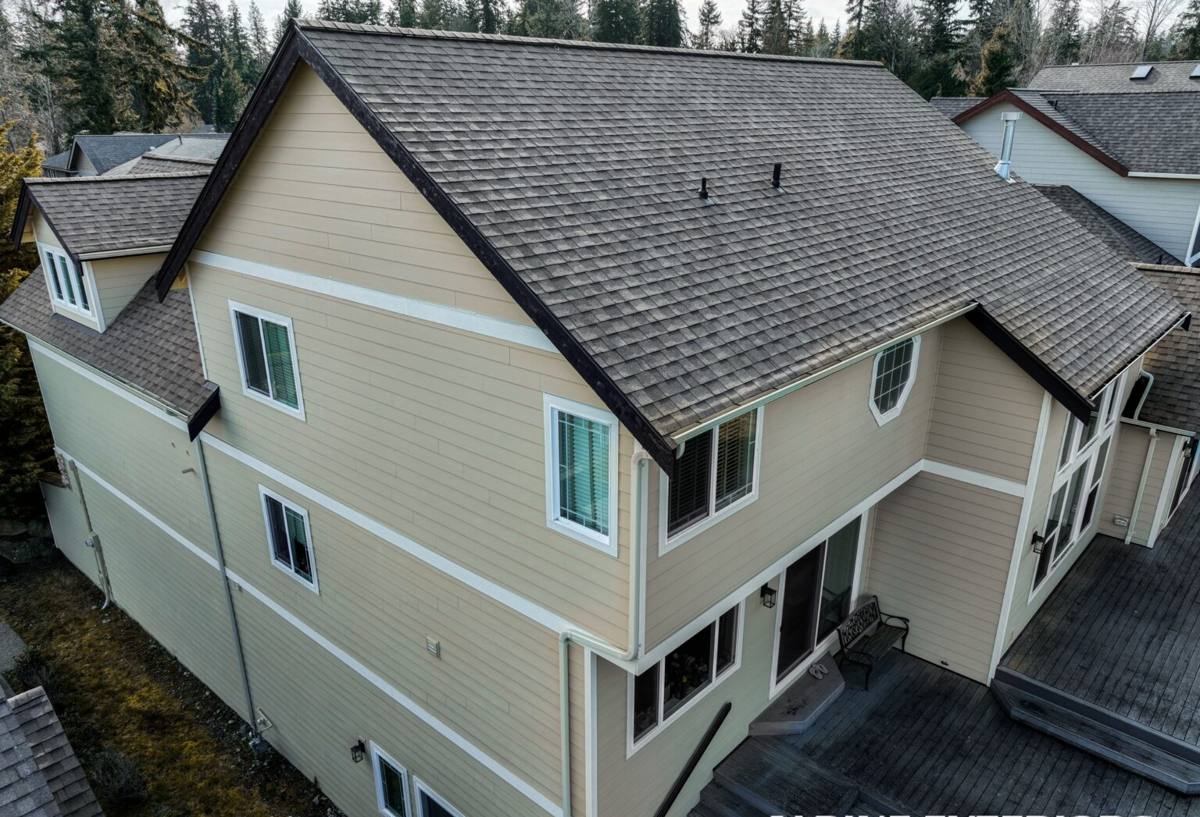
What the Local Climate Does to a Deck
Whatcom County's marine-influenced climate means Sumas-area homes deal with long stretches of driving rain, damp air moving in off the Sound, and a moss season that can stretch from fall through spring. None of that is exotic — but it adds up fast on a deck that wasn't built with drainage and material choice in mind.
The three things that actually cause damage
- Standing water at joints and fasteners. Any spot where water can pool — a low joist, a flush ledger board, a fastener without proper flashing — becomes a rot starting point.
- Moss and organic buildup. A long moss season means anything that stays shaded and damp (north-facing decks, areas under overhangs) will grow a layer of moss and algae that traps moisture against the wood or composite surface.
- Repeated wet-dry cycling. Driving rain followed by drier stretches causes wood to swell and shrink repeatedly. Fasteners back out, boards cup, and finishes crack faster than they would in a drier climate.
A deck built without accounting for these three things doesn't fail because the crew was careless on install day — it fails months or years later, quietly, at the connections you can't see.
Decking Material: What Actually Holds Up Here
There's no single "best" decking material — there's a best material for your budget, your maintenance tolerance, and how much sun or shade your deck gets. In a Sumas yard with mature trees or a north-facing exposure, the calculus shifts toward lower-maintenance materials. In a full-sun spot, standard pressure-treated wood can perform well for years with basic upkeep.
| Material | Upfront Cost | Maintenance Needed | How It Handles Wet, Shaded Areas |
|---|---|---|---|
| Pressure-treated lumber | Lowest | Annual cleaning, periodic sealing | Prone to moss and staining without regular upkeep |
| Cedar | Moderate | Sealing every 1-2 years | Naturally rot-resistant but still needs care in constant shade/moisture |
| Composite decking | Higher | Occasional washing | Resists rot well; can still grow surface algae if never cleaned |
| PVC decking | Highest | Minimal | Best moisture resistance of the group; no organic material to feed rot |
We'll walk you through this trade-off honestly during the estimate — including where composite or PVC genuinely earns its higher price tag on your specific lot, and where standard lumber is a perfectly sound, budget-friendly choice.
Why we're selective about composite installation
Composite and PVC boards perform differently than wood, and installation mistakes with these products show up as problems years later — not on install day. Gaps for expansion, proper joist spacing for the specific product, and correct fastening systems all matter more with composite than with lumber, where the material is more forgiving. We follow manufacturer spacing and fastening specs exactly, because doing it "close enough" is how composite decks end up with buckling or fastener pop-through down the road.
What's Underneath Matters More Than What's On Top
Homeowners naturally focus on the decking surface — the boards you walk on and see every day. But the structure underneath is what determines whether your deck is standing straight in fifteen years or getting condemned in eight.
The framing details we don't skip
- Footings sized and set below frost depth, on undisturbed or properly compacted soil — not just poured on grade.
- Ledger board flashing where the deck attaches to the house, so water is directed away from the band joist and siding, not trapped behind the ledger.
- Joist tape or a moisture barrier on top of framing lumber, protecting the wood from the deck boards' own runoff over time.
- Proper joist spacing for the decking material chosen — composite and lumber often have different span requirements.
- A slight slope away from the house so water sheets off instead of pooling near the foundation.
These aren't upgrades — they're the baseline of a correctly built deck in a wet climate. A crew that skips them isn't saving you money; they're deferring the cost to a future repair bill.
Fasteners and Hardware: The Small Parts That Decide the Lifespan
In a driving-rain climate, the hardware holding your deck together is doing more work than people realize. Standard galvanized fasteners can corrode over time when they're in constant contact with wet, treated lumber. We use stainless steel or coated fasteners rated for ground contact and treated wood compatibility, along with structural connectors (joist hangers, post bases, hurricane ties where appropriate) sized correctly for the load — not undersized hardware dressed up to look adequate.
Railings get the same attention. Post connections are the highest-stress point on any deck — they take lateral load every time someone leans on the rail. We anchor posts through-bolted to framing, not just toe-screwed, because a railing that looks fine can still be dangerously under-secured.
How We Approach a Sumas Deck Project
1. On-site assessment
We walk the actual site — grade, drainage, sun/shade exposure, proximity to trees, and how the deck will tie into the house. This is where climate factors like shade-driven moss risk or a low spot that collects runoff get identified before design, not discovered after.
2. Design and material selection
We talk through material options honestly, including cost, maintenance, and how each performs given your yard's specific exposure — not a one-size-fits-all recommendation.
3. Permitting
Deck projects above certain heights or attached to the home typically require a permit through the applicable local jurisdiction. We handle this as part of the process so you're not left guessing about what's required.
4. Build
Footings, framing, flashing, decking, and railings — built in that order, with each stage inspected before the next begins.
5. Walkthrough
We go over the finished deck with you, including what maintenance it needs and on what schedule, so there are no surprises the first wet season.
Keeping a Sumas-Area Deck in Good Shape Year-Round
Even a correctly built deck needs some seasonal attention in this climate. None of it is complicated, but skipping it is how a well-built deck ages faster than it should.
- Sweep debris and standing leaves off the deck surface regularly, especially in fall.
- Clean moss and algae off the surface at least once a year — more often on shaded sections.
- Check and re-seal wood decking on the manufacturer's recommended schedule (typically every 1-2 years for cedar, more frequently for pressure-treated lumber in shaded spots).
- Inspect railing post connections annually for looseness.
- Confirm gutters and downspouts near the deck aren't dumping extra water onto or near the structure.
- Look underneath the deck once a year for signs of standing water or early rot at the ledger and footings.
Why Hiring Local Actually Changes the Outcome
A crew that already works Lynden and the surrounding Whatcom County area — including Sumas — has already seen how decks in this specific climate hold up or fail over time. That's different from general deck-building experience. We know which spots on a typical Sumas lot tend to stay shaded and damp longest, how local soil behaves for footings, and what permit process applies in this area. That local knowledge shows up in decisions you'd never think to ask about — where to route drainage, how much slope to build in, which material actually makes sense for your yard's exposure — not just in the finished look of the deck.
It also means we're not disappearing after the last board is installed. If something needs attention under warranty, or you have a maintenance question three years in, you're calling a crew that's still working in your area, not a company that moved on to the next region.
Getting a Realistic Cost Picture
Deck pricing depends on size, framing complexity, material choice, and site conditions like slope or accessibility — we're not going to quote a number without seeing the site. What we can tell you honestly is what drives cost up or down.
| Cost Factor | Tends to Lower Cost | Tends to Raise Cost |
|---|---|---|
| Decking material | Pressure-treated lumber | Composite or PVC decking |
| Site access | Flat, easy-access lot | Sloped yard or limited equipment access |
| Height above grade | Low deck, minimal railing | Elevated deck requiring stairs and full railing |
| Framing complexity | Simple rectangular footprint | Multi-level or custom-shaped deck |
We'll walk through where your project lands on each of these during the estimate, so you understand what's driving the number — not just what the number is.
Ready to Talk Through Your Sumas Deck Project
Whether you're starting from a bare patch of yard or replacing a deck that's finally given out, we're happy to come take a look and talk through what makes sense for your home. There's no pressure and no obligation — just an honest read on your site and a straight answer on materials and cost. Fill out the form below to get a free estimate.