 Lynden Exterior
 Bellingham's Climate Is Hard on Windows — Here's Why
Bellingham sits right on the water, and that changes what a window has to survive here compared to a house even twenty miles inland. Salt-laden air off Bellingham Bay works on hardware, fasteners, and unprotected metal over time. Wind-driven rain off the Salish Sea doesn't fall straight down — it gets pushed sideways into wall assemblies, which means the flashing and sealing around a window matters as much as the window itself. And the long gray, damp stretch from fall through spring keeps humidity high for months at a time, which is exactly the environment where moss, algae, and slow-growing mold take hold on sills, tracks, and anything else that stays wet without a chance to dry out.
None of that is unique to any one house — it's just what owning a home in Whatcom County involves. Windows that were fine for a drier, more sheltered part of the state can underperform here, and windows installed without the local conditions in mind tend to show it within a few winters: fogged glass, soft trim, drafts you can feel standing next to the frame.
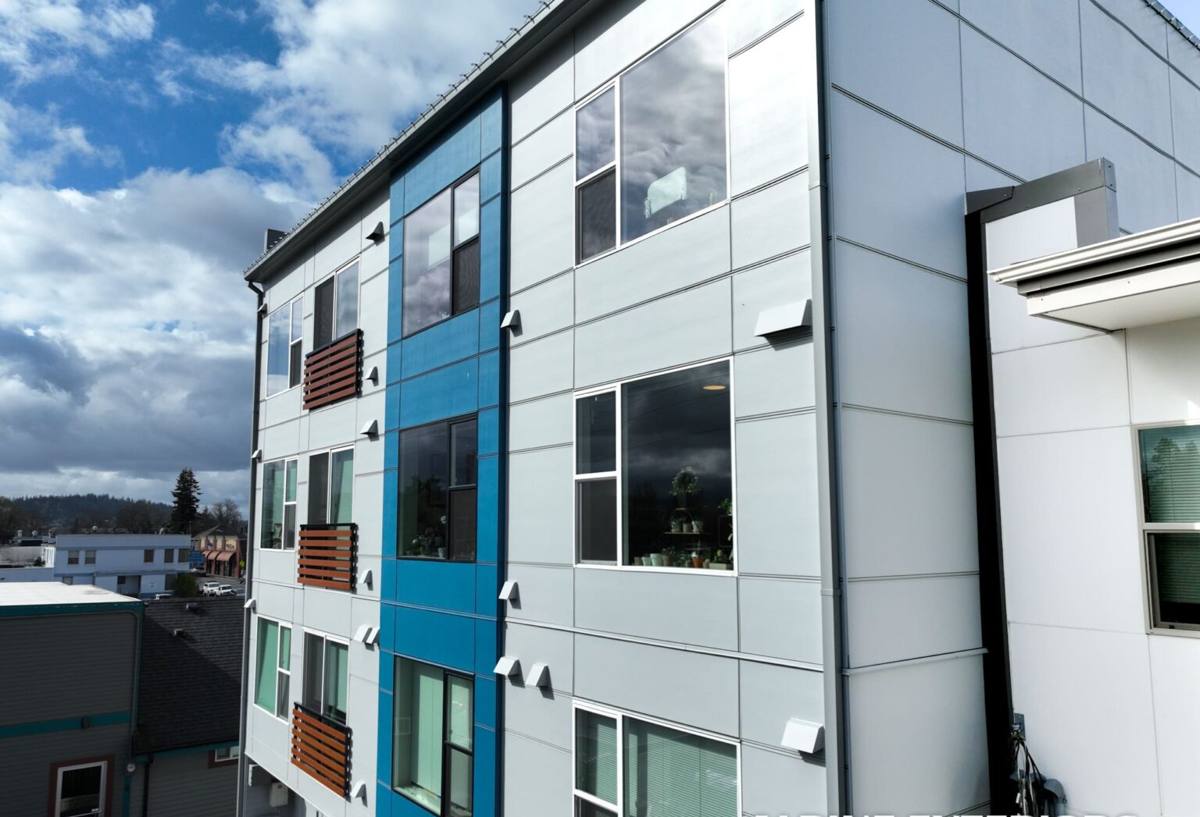
What "Energy-Efficient" Actually Means in This Climate
Energy efficiency in a window isn't one number — it's a combination of how well it stops heat from moving through the glass and frame, how well it resists air leakage, and how well it's sealed into the wall so conditioned air isn't just leaking around the unit instead of through it. For Bellingham's climate, a few ratings matter more than others:
- U-factor — how much heat passes through the window. Lower is better for our cooler, wetter climate where you're heating more months than you're cooling.
- SHGC (Solar Heat Gain Coefficient) — how much solar heat the glass lets in. Less critical here than in sunnier climates, but still worth matching to the window's sun exposure.
- Air leakage rating — a direct measure of drafts. Lower numbers matter a lot when wind-driven rain and gusts off the water are part of the deal.
- Condensation resistance — how well the window resists interior fogging during our damp, humid stretches. Often overlooked, but one of the first things homeowners here notice when a window is underperforming.
Gas-filled double panes (typically argon) with a low-E coating are the baseline for genuine efficiency gains today. Triple-pane can make sense for north-facing walls or homes closer to the water with more wind exposure, but it's not automatically the right call for every room — we'll walk through where it earns its cost and where it doesn't.
Signs Your Current Windows Are Working Against You
Most homeowners don't replace windows because they woke up wanting new windows — they replace them because something's gone wrong. In this climate, the usual culprits are:
- Fog or moisture trapped between panes (the seal has failed and the gas fill is gone)
- Visible condensation on the inside of the glass during cold, damp weeks
- A draft you can feel with your hand near the frame, especially during a windstorm
- Soft or discolored trim, sill, or jamb wood — a sign water has been getting in around the frame, not just at the glass
- Windows that are difficult to open, close, or lock — frames can swell, warp, or shift out of square as moisture cycles in and out over years
- Visible moss, algae, or dark staining building up on exterior sills and lower sashes
Any one of these is worth a look. Several together usually means the whole window — not just the glass — has reached the end of its useful life.
Frame Material: What Holds Up Here and What Doesn't
Frame material affects long-term performance more than most homeowners expect, especially in a marine climate. Here's an honest comparison of the common options:
| Material | Performance in Bellingham's climate | Trade-offs |
|---|---|---|
| Vinyl | Good moisture and corrosion resistance; won't rot or rust | Lower cost, solid efficiency, fewer color and finish options than fiberglass or wood |
| Fiberglass | Excellent dimensional stability — doesn't expand and contract much with our seasonal humidity swings | Higher upfront cost, but holds paint and finishes well over decades |
| Wood-clad | Attractive interior wood look with an exterior shell protecting from weather | The cladding has to be installed and sealed correctly, or moisture finds the seams — more installation-sensitive than vinyl or fiberglass |
| Aluminum | Strong, but a poor insulator and prone to condensation on the frame itself in damp climates | We generally steer clients away from bare aluminum for residential replacements here unless there's a specific architectural reason for it |
We don't push one material on every job. A lot depends on your home's exposure, your budget, and whether you're matching existing trim and finishes. What we won't do is install a product we know is a poor fit for this climate just because it's cheaper up front — that's a decision that usually costs the homeowner more within a decade, not less.
Installation Details That Matter More Than the Window Itself
A high-efficiency window installed poorly will underperform a mid-grade window installed correctly — and in a climate with this much wind-driven rain, installation quality is where most failures actually start. The window itself rarely fails first; the flashing, sealing, and water management around it does.
What a correct installation includes
- A properly sloped sill pan that directs any water that gets past the exterior back out, not into the wall
- Flashing tape integrated with the home's existing weather-resistive barrier — layered so water sheds downward and outward, never trapped behind the window
- Continuous, correctly placed insulation around the full perimeter of the frame — gaps here are a common source of both drafts and localized condensation
- Exterior sealant appropriate for the siding material and joint width, not just a generic caulk bead
- Squaring and shimming the unit so it operates smoothly and seals evenly for its full service life, not just on installation day
This is the part of the job that doesn't show up in a product brochure, and it's also the part most likely to be rushed on a low-bid job. It's worth asking any contractor you're considering to walk you through their flashing and sealing method specifically — a vague answer is a warning sign.
How We Approach a Window Project in Bellingham
Our process is straightforward, and we keep it that way on purpose:
- On-site assessment — we look at your current windows, note water damage, drafts, and exposure (which walls take the most wind and rain), and talk through what you actually need versus what's optional.
- Product selection — we walk through frame material, glass package, and grille or finish options based on your home, your budget, and this climate — not a one-size answer.
- Accurate measurement — every opening gets measured individually; older homes especially are rarely perfectly square, and that affects both product ordering and installation.
- Installation — proper removal, sill and flashing work, insulation, and sealing as described above, done by a crew that installs windows in this climate regularly, not occasionally.
- Cleanup and walkthrough — we clean up the job site and walk you through how the new windows operate, lock, and should be maintained.
We're not the crew that shows up, swaps glass, and disappears. We're local, and we'd rather do the job in a way that holds up through several more Whatcom County winters than one that looks fine until the first bad storm season.
Matching Windows to Your Home's Exposure
Not every wall of a Bellingham home deals with the same conditions. A west- or southwest-facing wall that takes the brunt of storms off the water needs more attention to sealing, hardware corrosion resistance, and glass performance than a sheltered, east-facing wall. Homes closer to the water or on more exposed lots benefit from corrosion-resistant hardware finishes and, in some cases, upgraded glass packages on the exposed side even if the rest of the house uses a standard package. This is one of the reasons a generic, off-the-shelf window order rarely serves a home here as well as a project scoped room by room.
Living With Windows in a Marine Climate
Even a correctly installed, high-quality window benefits from a little seasonal attention here. Keeping weep holes and tracks clear of debris, moss, and standing water prevents the slow buildup that leads to staining and, eventually, seal or hardware problems. Wiping down sills after the wettest stretches of the year and checking exterior caulking annually for cracking or gaps are both quick tasks that meaningfully extend a window's life in this climate. We're happy to point out what to watch for on your specific home once new windows are in.
If you're dealing with drafty, foggy, or hard-to-operate windows, or you're just planning ahead for a home in Bellingham or elsewhere in Whatcom County, we're glad to take a look and give you an honest read on what your home actually needs. Reach out for a free, no-pressure estimate using the form below.