 Lynden Exterior
 Why Laurel Homes Need a Different Approach to Windows
Homes in the Laurel area near Lynden sit in a stretch of Whatcom County that takes weather seriously. You get salt-tinged air drifting in off the coast, long stretches of driving rain that comes in sideways more often than straight down, and a moss season that seems to run longer every year. None of that is dramatic on its own, but stacked together over years, it's exactly the combination that finds every weakness in an older or poorly installed window. A window that would hold up fine in a drier, calmer climate can start failing here well ahead of schedule.
That's the lens we bring to every window job in Laurel: not "what's the newest product available," but "what actually holds up against this specific mix of moisture, salt, and grime, year after year." Energy efficiency matters, but in this climate it's inseparable from moisture management and installation quality. A window with a great efficiency rating that's installed or flashed wrong will still leak, fog, and rot the framing around it.
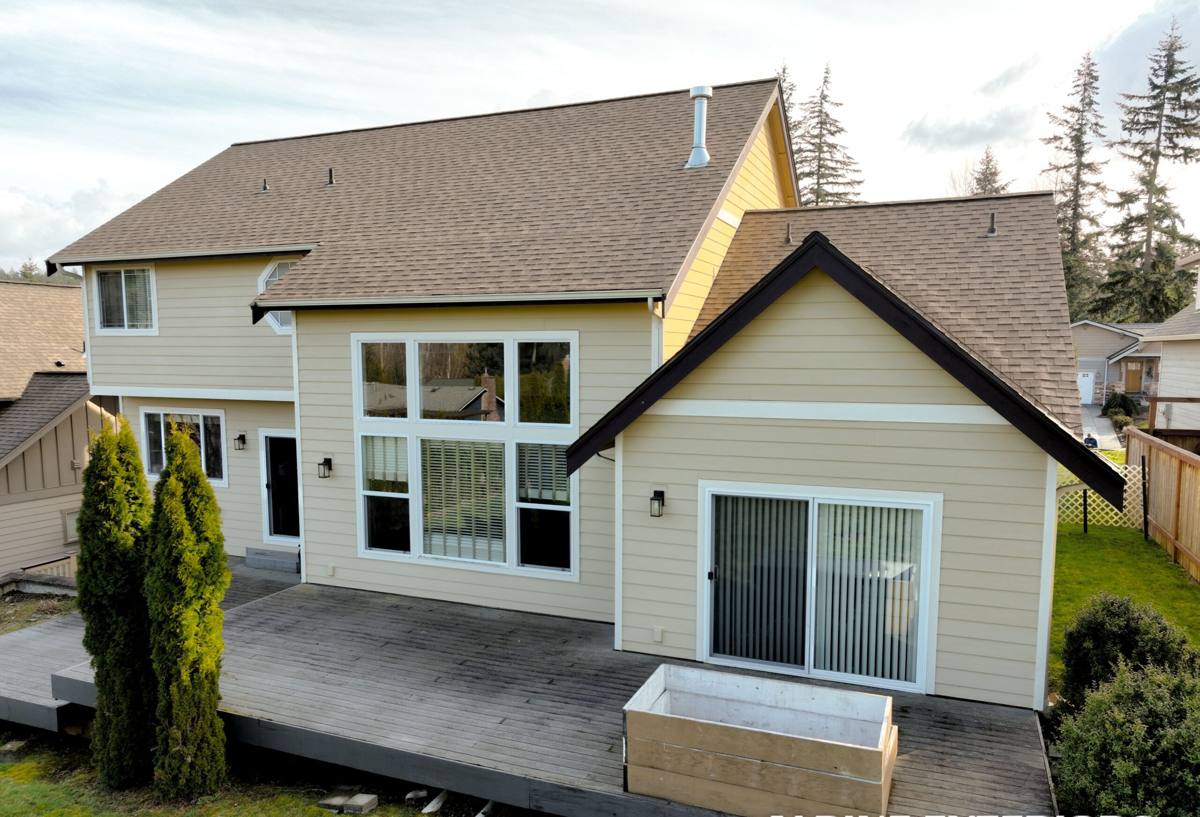
What This Climate Actually Does to Windows
Salt Air
Even homes several miles from open water pick up airborne salt on breezy days, and Laurel's position gets its share of it. Salt accelerates corrosion on hardware, cheaper window frames, and metal fasteners. It also breaks down some sealants faster than a straight rain-only environment would. Over time you see pitting on hinges and locks, and finishes that dull or chalk out earlier than the manufacturer's literature suggests.
Driving Rain
Whatcom County storms don't always come straight down. Wind-driven rain gets pushed sideways and upward under eaves, into gaps that a calm-weather installation might never test. This is where flashing detail and sill design matter more than the glass package. A window can have an excellent U-factor and still let water in if the rough opening wasn't flashed to shed water downward and outward, not into the wall cavity.
The Long Moss Season
Extended damp, low-light stretches feed moss and algae growth on north-facing walls, trim, and window sills — anywhere moisture sits without enough sun or airflow to dry it out. Moss holds moisture against wood trim and vinyl cladding far longer than open air would, which is one of the quieter causes of rot and seal failure we find during window inspections in this area.
What "Correct" Actually Looks Like for a Laurel Window Job
A proper energy-efficient window installation here is really three jobs done well, not one:
- Product selection — frame material, glass package, and hardware suited to salt exposure and constant moisture, not just a good efficiency label
- Flashing and water management — sill pans, house wrap integration, and flashing tape sequenced so water is directed out and down, never trapped behind the window
- Air sealing — low-expansion foam and backer rod at the perimeter, sized correctly so the window isn't bowed and the seal stays intact through seasonal movement
Skip any one of these and the other two don't matter much. We've seen premium windows fail early because the flashing was an afterthought, and we've seen mid-range windows outlast expensive ones simply because the installation kept water and air where they belonged.
Frame Materials: What We Recommend and Why
For Laurel's mix of salt air and sustained damp, we lean toward vinyl and fiberglass frames over bare wood or unclad wood-composite options. This isn't a knock on wood windows generally — they have real advantages in the right setting — but in a climate where trim stays wet for days at a stretch during moss season, unprotected wood needs a maintenance commitment most homeowners don't want to keep up with indefinitely. Fiberglass in particular resists the expansion and contraction that salt-laden humidity and temperature swings can cause, which helps seals stay tight for longer.
Aluminum-clad options exist too, and they hold up reasonably well against moisture, but aluminum conducts heat and cold efficiently, which works against the energy-efficiency goal unless there's a solid thermal break in the frame design. We evaluate that on a case-by-case basis rather than ruling it out entirely.
Frame Material Comparison
| Frame Material | Salt/Moisture Resistance | Maintenance Needs | Typical Efficiency |
|---|---|---|---|
| Vinyl | Good — won't corrode or rot | Low — occasional cleaning | Good, with quality weatherstripping |
| Fiberglass | Very good — dimensionally stable | Low | Very good, less thermal movement |
| Wood (unclad) | Poor without diligent upkeep | High — refinishing, sealing | Good, but seals degrade if wood swells |
| Aluminum-clad | Good exterior durability | Low to moderate | Depends heavily on thermal break quality |
Glass Packages: Matching the Product to the Job
Double-pane, low-E glass with an argon fill is the baseline we consider for most Laurel homes — it's a meaningful step up from older single-pane or early-generation double-pane windows without pushing cost into diminishing returns. For rooms with more direct afternoon exposure, or additions built with large glass areas, we look at coatings tuned to cut solar heat gain rather than just insulating value, since overheating a sunroom or west-facing living room is a real complaint we hear locally.
Triple-pane glass is worth discussing for homes that are especially exposed to wind or noise, but it adds weight and cost, and the efficiency gain over a good double-pane low-E unit is often smaller than homeowners expect. We'll walk through the honest trade-off rather than upselling it as an automatic win.
Our Installation Process
- On-site assessment — we check existing frame condition, look for signs of past water intrusion around openings, and note any moss or algae staining on trim that points to drainage problems
- Product selection walkthrough — we go over frame and glass options against your budget and the specific exposure of each wall (a north-facing wall under trees needs different consideration than a south-facing wall in open sun)
- Removal and opening prep — old windows come out carefully, and we inspect the rough opening and surrounding framing for hidden rot or damage before anything new goes in
- Sill pan and flashing — a sloped sill pan and correctly sequenced flashing tape go in first, shingle-style with the house wrap, so water is always directed outward and down
- Window installation and shimming — the unit is set level, plumb, and square, and shimmed so it isn't under stress that could crack seals prematurely
- Air sealing — low-expansion foam and backer rod at the perimeter gap, sized to avoid bowing the frame
- Exterior trim and sealant — trim is reset or replaced and sealed with products chosen for UV and moisture durability, not just whatever's cheapest at the time
- Final walkthrough — we check operation, locks, and weatherstripping contact before calling the job done
Maintenance That Actually Matters Here
Energy-efficient windows still need some upkeep in this climate, and it's worth knowing what actually moves the needle:
- Rinse frames and tracks periodically to clear salt residue before it accelerates corrosion on hardware
- Keep weep holes (the small drainage openings along the bottom of the frame) clear of dirt and moss so water can escape instead of pooling
- Trim back vegetation and clean gutters so runoff isn't sheeting directly down over window heads
- Check exterior caulking annually, especially after the wettest months, and re-seal any cracked or pulled-away sections promptly
- Watch for moss buildup on sills and trim and remove it before it holds moisture against the surface for weeks at a time
Cost Factors Homeowners Should Understand
Window project costs vary based on more than just the window itself. Here's what typically moves the number, without pretending to quote exact prices sight unseen:
| Factor | Why It Affects Cost |
|---|---|
| Frame material | Fiberglass and higher-end vinyl cost more upfront than basic vinyl but often need less maintenance long-term |
| Glass package | Triple-pane and specialty low-E coatings add cost; standard double-pane low-E is the common mid-range choice |
| Opening condition | Hidden rot or framing damage found during removal adds repair work before a new window can go in correctly |
| Number and size of openings | Larger or custom-sized windows cost more than standard stock sizes |
| Access and site conditions | Second-story or hard-to-access windows take more labor time |
We'd rather walk you through these factors honestly during an estimate than quote a number that doesn't hold up once we see the actual condition of your home.
Why a Crew That Already Works Laurel Makes a Difference
Window installation isn't the same job everywhere. A crew used to installing in a dry inland climate might not think twice about flashing detail that's non-negotiable here. Working regularly in Lynden and the surrounding Whatcom County neighborhoods means we've already seen how salt air, sideways rain, and moss-season dampness show up in real houses — not in a manual, but in actual sill damage, actual corroded hardware, and actual moisture stains we've had to diagnose. That local pattern recognition is what keeps a window installation from becoming a callback six months later.
If you're weighing whether it's time to replace aging windows in your Laurel-area home, we're happy to take a look and give you a straightforward assessment — no pressure, no upsell script, just an honest read on what your home actually needs. Use the form below to request a free estimate.