 Lynden Exterior
 Composite Decking in Everson: Why the Build Matters More Than the Brand
Everson sits just up the road from Lynden, and homes out here take a specific kind of weather beating. Wet fall and winter months bring driving rain that finds its way into any gap in a deck's framing, salt-tinged air off the Sound and Strait works its way inland on windy days and slowly corrodes cheap hardware, and a moss season that can stretch six months or more turns any shaded, damp surface into a slip hazard if the deck wasn't built to shed water and dry out. Composite decking handles this climate better than wood in most cases, but only if it's installed correctly. A composite board over a poorly framed or badly ventilated substructure will still trap moisture, grow moss in the shaded spots, and fail early — just more slowly and more expensively than wood would.
This page covers what an Everson composite deck actually needs, what our process looks like, and why a crew that already works this specific stretch of Whatcom County gets it right the first time.
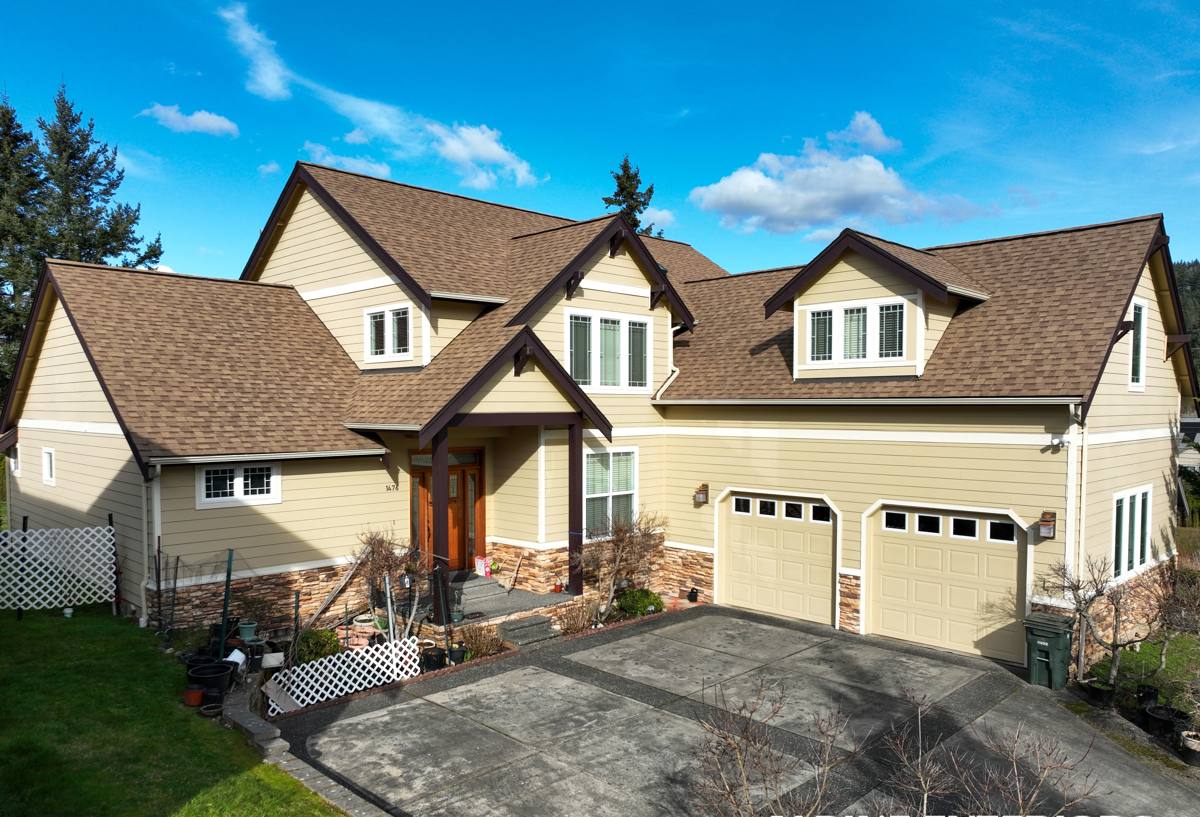
What Everson's Climate Does to a Deck
Driving Rain and Standing Water
Rain in this part of Whatcom County doesn't just fall straight down — wind-driven rain gets pushed sideways into ledger boards, under rail posts, and into any seam that isn't properly flashed. Composite boards themselves don't absorb water the way wood does, but the framing underneath, the fasteners, and any wood-composite hybrid trim still can. If water pools instead of draining off the deck surface and out from underneath it, you get soft spots in the substructure and staining on the board surface even though the composite itself is holding up fine.
Salt Air and Hardware Corrosion
Salt-laden air doesn't damage composite boards directly, but it's hard on anything metal — screws, joist hangers, post brackets, and railing hardware. Cheap or mismatched fasteners corrode faster out here than they would further inland, and a rusting hanger or screw head is often the first visible sign that a deck was built with the wrong hardware for the environment.
Moss Season
Composite decking is far more moss-resistant than wood, but it isn't immune. Moss and algae need moisture, shade, and organic debris to get started, and any deck with poor airflow underneath, tight board spacing, or a north-facing shaded run is going to collect all three. A deck with good under-deck ventilation, proper board gapping, and a surface texture that sheds water dries out fast enough that moss never gets a foothold. One that traps moisture underneath will grow moss in the gap lines even on a "low maintenance" composite product.
What a Correct Composite Decking Job Involves
Most composite deck problems we get called out to fix started with the substructure, not the boards. A correct installation covers all of the following, in order:
Framing and Substructure
- Joist spacing matched to the manufacturer's spec for the specific composite product — composite boards flex differently than wood and many require tighter joist spacing, especially on diagonal or picture-frame layouts
- Pressure-treated or naturally rot-resistant framing lumber, since the composite decking itself won't rot but the frame underneath it can
- Proper ledger board flashing where the deck attaches to the house, so wind-driven rain can't work behind the siding
- Corrosion-resistant, code-rated hardware for every hanger, bracket, and structural fastener
Drainage and Ventilation
The single biggest difference between a composite deck that lasts and one that stains and grows moss early is what happens underneath it. Adequate clearance between the ground (or a lower roof) and the joists lets air move through, which dries the frame and the underside of the boards after every rain. On low-clearance decks or decks built over patios, we account for this with drainage systems or added ventilation rather than just closing the gap and hoping for the best.
Board Installation
Composite boards expand and contract with temperature more than people expect, and gapping has to account for that — too tight and boards can buckle or the surface can crown; too loose and debris collects in the seams. Hidden fastener systems keep the surface clean and eliminate the screw-head corrosion issue entirely, which matters more here than in a drier climate. Board direction and layout also affect how well water sheds off the surface, especially on decks with any pitch toward the house.
Rail Posts and Stairs
Rail post attachment is one of the most common failure points on any deck, composite or wood, because it's a structural connection that has to resist lateral force, not just weight. Stairs need the same attention to flashing and hardware as the deck itself, since exposed stair stringers take even more direct weather than a covered or house-adjacent deck surface.
Composite vs. Other Decking Materials for This Climate
| Material | Moisture Behavior | Maintenance | Moss Resistance | Typical Lifespan |
|---|---|---|---|---|
| Pressure-treated wood | Absorbs water, can warp/crack as it dries | Annual staining/sealing recommended | Low — moss takes hold quickly in shade | 10-15 years with upkeep |
| Composite decking | Board itself doesn't absorb water; substructure still needs protection | Periodic washing, no staining/sealing | Good, if ventilation and gapping are correct | 25-30+ years |
| PVC/capped decking | Fully water-resistant board | Low; can be more sensitive to installation errors | Good | 25-30+ years |
| Cedar | Naturally rot-resistant but still absorbs moisture | Regular sealing/staining to hold up long-term | Moderate | 15-20 years with upkeep |
We install composite decking as our standard recommendation for most Everson-area projects because it holds up well against wind-driven rain and moss without the ongoing sanding, staining, and sealing that wood decks need in this climate. That said, we'll talk through the honest trade-offs for your specific site — shade level, deck height off grade, and how the deck ties into your home — before recommending a product.
Our Composite Decking Process
1. On-Site Assessment
We walk the site, check grade and drainage around where the deck will sit, look at sun and shade exposure through the day, and check how the deck will tie into the house — ledger location, door thresholds, and roofline if it's covered.
2. Framing and Product Selection
We spec the substructure to the composite product's actual joist-spacing requirements rather than a generic wood-deck standard, and we pick fasteners and hardware rated for this climate rather than whatever's cheapest at the local supply house.
3. Build
Framing first, with flashing at every point the deck meets the house or a wall. Then ventilation and drainage detailing before a single composite board goes down. Boards go in last, with attention to gapping, fastener pattern, and layout for water shedding.
4. Rails, Stairs, and Finish Details
Rail posts are attached to blocked, reinforced framing — not just toe-screwed into a joist — and stairs get the same flashing and hardware standard as the deck surface.
5. Walkthrough
We walk the finished deck with you, point out any maintenance basics specific to the product installed, and answer questions before we call the job done.
Maintaining a Composite Deck Through Whatcom County's Wet Season
Composite decking cuts maintenance significantly compared to wood, but "low maintenance" doesn't mean "no maintenance" in a climate that stays wet and shaded for a good chunk of the year.
- Sweep leaves and organic debris off the deck regularly through fall — trapped debris holds moisture against the board surface and is the main food source for moss and algae
- Rinse or wash the surface a few times a year, more often in shaded areas, using a soft brush and mild soap rather than a high-pressure setting that can damage the board's cap layer
- Check that gaps between boards stay clear so water and debris can pass through rather than collecting
- Keep gutters and downspouts near the deck clear so roof runoff isn't dumping extra water onto or under the deck
- Inspect rail post connections and stair hardware once a year for any early corrosion or looseness
Cost Factors for a Composite Deck in Everson
| Factor | Why It Affects Price |
|---|---|
| Deck size and shape | Square footage and layout complexity (angles, picture-framing) drive material and labor |
| Height off grade | Taller decks need more substantial framing, stairs, and rail work |
| Substructure condition | Replacing an existing deck may require new framing if the old structure isn't sound |
| Composite product tier | Board lines vary in cap technology, color/fade warranty, and price point |
| Site access and drainage work | Poor grading or low clearance can require added drainage or ventilation systems |
| Rail and stair design | Composite, metal cable, or glass rail systems all carry different costs |
We're not going to throw out a number without seeing the site — every one of these factors moves the price, and we'd rather give you an honest range after a real look than a guess that doesn't hold up.
Permits and Code in Whatcom County
Most new decks and significant deck rebuilds in unincorporated Whatcom County and nearby jurisdictions require a building permit, particularly when the deck is attached to the house or exceeds a certain height off grade. Requirements around guardrail height, stair rise and run, and ledger attachment are set by code, not preference, and they exist because rail and ledger failures are the most common serious deck injuries. We handle the permit process as part of the job so you're not left figuring out county requirements on your own.
Why a Local Everson Crew Makes a Real Difference
A crew that already works the Lynden and Everson area knows the practical stuff that doesn't show up in a spec sheet — which yards sit low and hold water longer into spring, where fence lines and tree cover create the shaded pockets where moss takes hold first, and how the wind-driven rain off a fall or winter storm actually hits a typical lot out here. That local knowledge shapes real decisions: how much ventilation clearance to build in, where to add extra drainage detailing, and which hardware is worth the upgrade for a specific site's exposure. It also means we're not far away if you have a question after the job's done or want a maintenance check before next winter.
If you're planning a new composite deck or replacing an aging one in Everson, we're happy to walk the site and give you a straightforward, no-pressure estimate. Use the form below to get started.