 Lynden Exterior
 Building Decks for Ferndale's Coastal Climate
Ferndale sits close enough to Bellingham Bay and the Salish Sea that homes here deal with a different set of conditions than decks built twenty miles inland. Salt-laden air moves in off the water, rainfall is frequent and prolonged rather than short and heavy, and much of the year stays cool and damp enough that moss and algae get a real foothold on any horizontal wood surface. A deck built without those three factors in mind — salt exposure, sustained moisture, and moss — will look tired years before it should.
We're based in Lynden and work throughout Whatcom County, and Ferndale is one of the areas where we see the clearest pattern: decks that were built using techniques better suited to a drier climate start showing problems in the first three to five years, while decks built with proper drainage, fastener selection, and material choices hold up for decades. This page walks through what a Ferndale deck actually needs, what our process looks like, and what to watch for whether you're building new or replacing an aging deck.
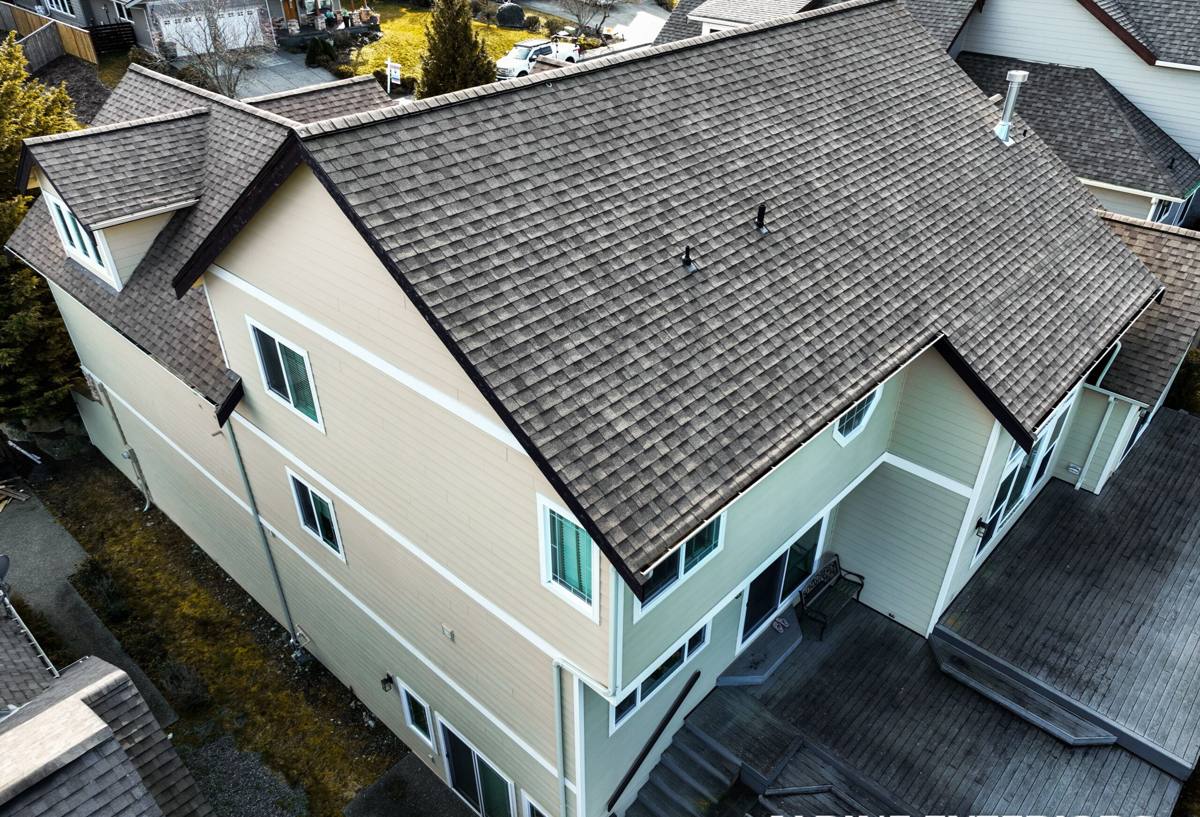
What Salt Air, Rain, and Moss Do to a Deck Over Time
Each of these three stresses attacks a deck differently, and a correct build has to account for all three at once.
Salt Air and Corrosion
Airborne salt accelerates corrosion in any exposed metal — fasteners, brackets, railing hardware, and structural connectors. Standard electro-galvanized screws and nails can start showing rust streaks and pitting well before a deck's wood components are due for attention. Once a fastener starts corroding, it loses holding strength and can stain the surrounding wood or composite decking, which is a cosmetic problem that also signals a structural one underneath.
Driving Rain and Standing Moisture
Whatcom County doesn't get short, intense downpours as often as it gets long stretches of steady rain. That matters because sustained wet conditions give water more time to work into joints, fastener holes, and any spot where two pieces of material meet without a drainage path. Ledger board connections to the house, stair stringer notches, and the undersides of decking boards are the areas most at risk. Wood that stays wet for days at a time is also far more prone to rot and fungal decay than wood that gets rained on and dries quickly.
Moss and Algae Growth
A long moss season is simply a fact of life in this part of Washington. Moss holds moisture against the wood surface, and on stairs or sloped sections it becomes a genuine slip hazard. Flat, poorly ventilated deck surfaces with weak drainage grow moss fastest. Spacing, airflow underneath the deck, and surface texture all affect how much moss takes hold and how easy it is to keep clean.
Choosing the Right Decking Material
There's no single "correct" decking material for every Ferndale home — it depends on budget, how much upkeep you're willing to do, and how the deck will be used. Here's an honest breakdown of the common options as they perform in this specific climate.
| Material | Moisture Performance | Maintenance | Typical Lifespan Here |
|---|---|---|---|
| Pressure-treated fir/hem-fir | Good if sealed regularly; end grain and cut edges need re-treatment | Annual cleaning and re-sealing recommended | 15–20 years with upkeep |
| Cedar | Naturally rot- and insect-resistant, but still needs sealing against constant damp | Periodic cleaning, re-oil every 2–3 years | 20–25 years with upkeep |
| Composite decking | Very good — doesn't absorb water like wood, resists rot | Occasional washing to prevent surface algae/moss film | 25–30+ years, varies by brand and warranty |
| PVC/capped polymer | Excellent — fully sealed surface, no wood fiber to hold moisture | Lowest maintenance of the group | 25–30+ years, varies by brand and warranty |
Composite and capped polymer boards have become popular in this area precisely because they remove wood's biggest weakness in a wet, mossy climate: the ability to absorb and hold water. That said, real cedar or treated fir still make sense for homeowners who want a traditional look and are willing to keep up with sealing. We'll talk through the honest trade-offs for your situation rather than push whatever has the best margin.
Framing and Substructure: Where Most Deck Failures Start
Homeowners tend to focus on the decking surface because that's what you see and walk on, but the substructure is what actually determines how long a deck lasts. In a climate like ours, the framing needs a few things a drier region might skip:
- Proper joist spacing and blocking sized for the actual decking material and span, not just "what's standard"
- Ground clearance and grading underneath the deck so water drains away instead of pooling under the frame
- Joist tape or flashing on top of framing lumber to keep fastener penetrations from becoming water entry points
- Post bases that hold posts off the concrete or ground surface, since wood sitting directly on concrete wicks moisture continuously
- Adequate airflow beneath the deck to let framing dry out between rain events instead of staying damp for weeks
We've replaced decks in this area where the visible decking still looked passable but the joists underneath were soft with rot — because the framing was never protected from moisture the way the surface was. A deck is only as good as what's underneath it.
Ledger Attachment and Flashing
The ledger board — the piece that attaches the deck to the house — is the single most important connection on the entire structure, both structurally and for moisture control. It needs correct flashing that directs water away from the house's wall assembly, proper lag or through-bolt fastening (not just nails), and a gap or flashing detail that keeps water from wicking between the ledger and the siding. Done wrong, this is where deck collapses and hidden rot behind siding both originate. Done right, it's largely invisible once the deck is finished — which is exactly the point.
Fastener and Hardware Selection for Salt Exposure
Given Ferndale's proximity to salt water, we default to hardware rated for coastal or high-corrosion environments rather than the basic galvanized fasteners that are fine in drier inland areas. That generally means stainless steel or heavy hot-dip galvanized fasteners and structural connectors, matched to whatever the decking manufacturer specifies to keep any product warranty intact. Mixing incompatible metals (for example, certain fastener coatings against certain treated lumber chemicals) can accelerate corrosion rather than prevent it, so hardware selection has to be matched to the specific decking and framing materials being used, not chosen generically.
Our Process, Start to Finish
We keep the process straightforward and give you real information at each step rather than surprises at the end.
- On-site assessment: We look at the site itself — grade, drainage, sun/shade exposure, proximity to the water side of the property, and how the deck will connect to the house.
- Material and design discussion: We walk through decking material options, railing style, layout, and any features like built-in seating or multi-level design, with honest pros and cons for each based on your budget and maintenance preference.
- Written estimate: A clear, itemized estimate so you know what you're paying for — materials, labor, permitting if required, and any site prep.
- Permitting: We handle the permit application and coordinate inspections where Whatcom County or the local jurisdiction requires them for the size or height of the structure.
- Demolition and framing: Removal of any existing structure (if this is a replacement), then framing with the moisture-management details described above.
- Decking, railing, and finish work: Installation of the decking surface, railings, stairs, and any lighting or trim.
- Final walkthrough: We go over the finished deck with you, cover basic care and maintenance specific to the material you chose, and address any questions before we consider the job done.
Maintenance That Actually Matters in This Climate
Every decking material benefits from some level of upkeep, and the schedule that works elsewhere often isn't aggressive enough for a deck exposed to salt air and a long wet season. A simple, realistic maintenance checklist:
- Sweep debris and standing leaves off the deck regularly — trapped organic matter holds moisture and feeds moss growth
- Rinse or wash the surface at least once or twice a year to remove salt residue and early algae/moss film before it takes hold
- Inspect fasteners and hardware annually for rust staining or loosening, especially on stair connections and railings
- Check the ledger board area and flashing yearly for any signs of water staining on the siding above or below it
- Re-seal or re-stain wood decking on the schedule appropriate to the product — don't wait until the finish has fully worn away
- Confirm gaps between boards stay clear so water continues to drain through rather than pooling on the surface
Permits and Whatcom County Considerations
Deck projects above a certain height or size typically require a building permit, and attached decks almost always need to meet specific structural and guardrail code requirements. Requirements can vary depending on whether the property falls under Whatcom County jurisdiction or the City of Ferndale, so we confirm the correct permitting path for your specific address before work begins rather than assuming. Skipping required permits can create real problems later — at resale, with insurance, or if the structure needs to be brought up to code retroactively — so we build permitting into the process rather than treating it as optional paperwork.
Why Local Experience Matters for This Job
A deck built to a generic national standard isn't necessarily built for Ferndale. Crews who don't regularly work this specific coastal stretch of Whatcom County can underestimate how much moisture and salt exposure actually affects fastener choice, drainage detailing, and long-term maintenance needs — and that shows up as premature rot, corroded hardware, or a moss-slick deck within a few seasons. Working this area regularly means we've seen which details hold up here and which ones fail, and we build accordingly rather than guessing.
If you're planning a new deck or need to replace one that hasn't held up to Ferndale's weather, we're happy to take a look and give you a straightforward, no-pressure estimate — just fill out the form below.