 Lynden Exterior
 Siding Installation for Ferndale-Area Homes
Homes in and around Ferndale sit close enough to the water and open farmland that they take a different kind of weather beating than houses further inland. Salt-laden air off the coast, wind-driven rain that finds every gap in a wall assembly, and a moss season that can run most of the year all work against ordinary siding. We install siding for this exact stretch of Whatcom County and size every job to what these conditions actually demand, not to a generic spec sheet.
This page covers one thing specifically: new siding installation on Ferndale-area homes. We're not going to walk you through every exterior service we offer — just what a correct siding job looks like here, what it needs to hold up, and how we run the work from first call to final walkthrough.
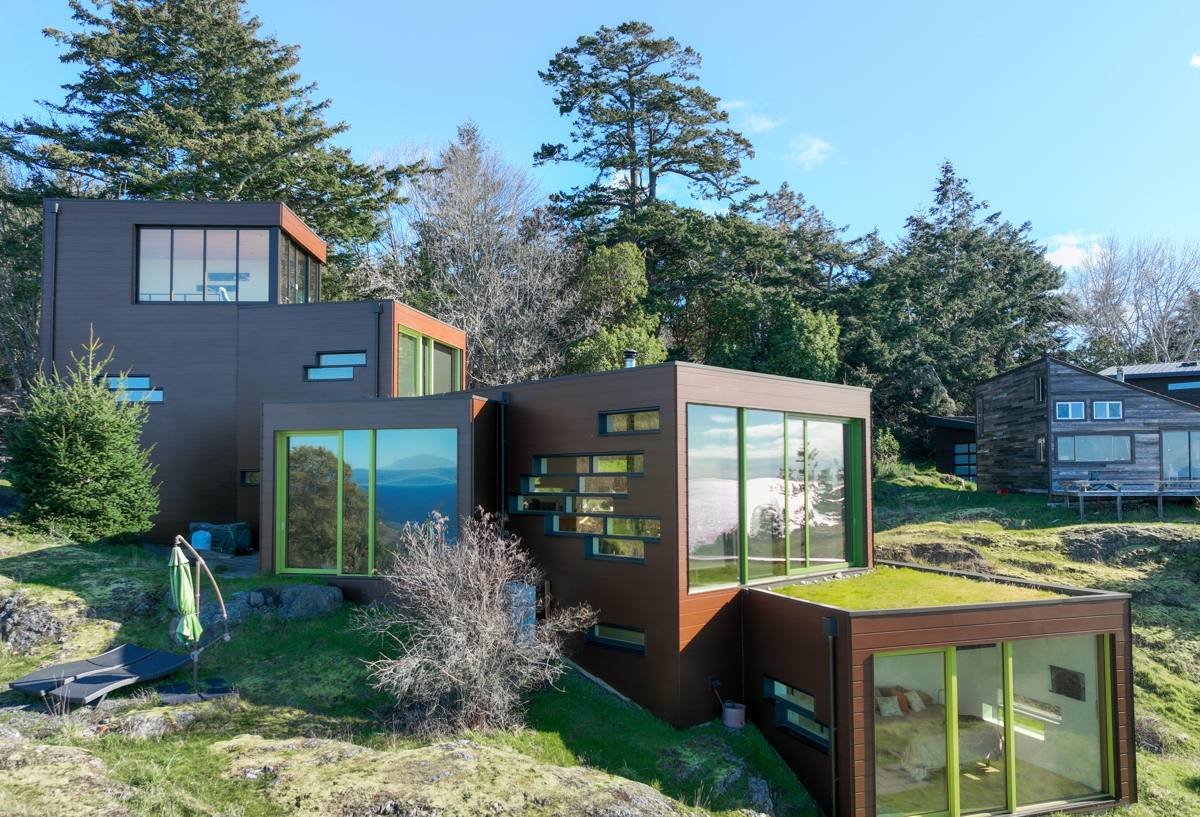
What Ferndale's Climate Does to Siding
Three things drive most of the siding failures we see in this part of Whatcom County:
Salt Air
Proximity to the coast means airborne salt settles on exterior surfaces and accelerates corrosion of fasteners, flashing, and any metal trim that isn't rated for it. Over years, salt exposure also degrades cheaper paint films faster than inland homes ever experience, leading to premature chalking and color loss.
Driving Rain
Wind off the water doesn't just drop rain straight down — it pushes it sideways into wall assemblies, seams, and butt joints. Siding that relies on face-sealed caulk joints instead of proper lap and flashing details is the first thing to show water staining, and eventually rot in the sheathing behind it.
Moss and Sustained Moisture
Long stretches of overcast, damp weather mean siding surfaces stay wet longer between drying cycles than they would in a drier climate. That extended moisture window is exactly what moss, algae, and mildew need to take hold, especially on north-facing walls and anywhere shaded by trees or a neighboring structure.
None of this is unique to Ferndale — it's the reality for most of coastal Whatcom County. But it means siding decisions that might be fine somewhere drier can turn into real maintenance headaches here within a few years.
Why We Install James Hardie Fiber Cement — and Nothing Else
We standardized on James Hardie fiber cement siding for every installation, including every Ferndale project, and we don't install vinyl, LP SmartSide, Cemplank, Allura, primed spruce, or cedar. That's a deliberate professional standard, not a sales pitch, and it's worth explaining honestly.
- Non-combustible core: Fiber cement doesn't feed a fire the way wood-based or engineered-wood siding products can.
- Moisture behavior: Hardie's fiber cement composition resists the swelling, delamination, and rot pathways that wood-based siding is prone to when it takes on repeated moisture cycles.
- Factory-applied ColorPlus finish: The finish is baked on under controlled conditions rather than field-applied, which gives more even coverage and color stability against UV and salt exposure than most site-painted products.
- Climate-engineered HZ formulations: Hardie makes region-specific products (HZ5 for this general climate zone) engineered for freeze-thaw and moisture exposure rather than a one-size-fits-all mix.
- Warranty structure: Hardie's product warranty is transferable and backed by a large, established manufacturer, which matters if you sell the home before the siding's service life is up.
Vinyl, LP SmartSide, and cedar all have legitimate uses and loyal installers elsewhere. Vinyl is inexpensive and low-maintenance in mild climates but can become brittle and prone to cracking or warping under sustained UV and temperature swings, and it doesn't offer the same fire performance. LP SmartSide and cedar are wood-based products — well-engineered in LP's case, genuinely attractive in cedar's — but both depend on maintaining an intact protective coating; once that coating is compromised by a scratch, a poor caulk joint, or age, wood-based substrates are vulnerable to the kind of moisture exposure this region delivers in volume. We'd rather put one product on every home and stand behind it fully than split our crew's expertise across five substrates with different installation rules and failure modes.
What a Correct Installation Actually Involves
Fiber cement siding performs the way it's supposed to only when it's installed to Hardie's published specifications. Cutting corners on any of the following is the most common reason a siding job underperforms, regardless of the product used.
Weather-Resistive Barrier and Flashing
A continuous, correctly lapped weather-resistive barrier goes down first, with flashing integrated at every window, door, and penetration so water is directed out and down rather than trapped behind the cladding. In a driving-rain climate like this one, flashing details are not optional trim work — they're the actual water management system.
Proper Fastening
Hardie panels and lap siding require specific fastener types, spacing, and embedment depth. Corrosion-resistant fasteners matter more here than in a drier inland climate because of the salt air; the wrong fastener can start rusting and staining the face of the siding well before the siding itself would ever fail.
Clearances and Gaps
Hardie specifies minimum clearances from grade, roofing, and decking, plus gap requirements at butt joints and trim to allow for expansion and drainage. Skipping these clearances is one of the fastest ways to trap moisture at the bottom edge of a wall.
Caulking and Joint Treatment
Factory-cut and field-cut edges need to be sealed per manufacturer spec, and joints need the right caulk in the right place — not caulk used as a substitute for proper flashing.
| Install Element | Why It Matters Here |
|---|---|
| Weather-resistive barrier + flashing | Manages wind-driven rain intrusion behind the cladding |
| Corrosion-resistant fasteners | Salt air accelerates rust on the wrong fastener type |
| Correct clearances at grade/trim | Prevents standing moisture that feeds rot and moss |
| Factory ColorPlus finish, sealed cut edges | Holds color and protects the substrate under UV and salt exposure |
| HZ5 climate-rated product line | Engineered for this region's moisture and temperature pattern |
Our Process for Ferndale-Area Jobs
We run every siding installation through the same sequence, adjusted for the specific house and site conditions:
- On-site assessment: We look at the existing siding, sheathing condition, moisture staining patterns, and any areas showing prior moss or algae growth — those tell us where past water management failed.
- Scope and product selection: We spec the Hardie product line, profile, and color for the home, factoring in sun exposure, shading, and proximity to open water or heavy tree cover.
- Removal and substrate check: Old siding comes off and we inspect the sheathing underneath for rot or damage before anything new goes up — this step gets skipped by crews trying to move fast, and it's the single biggest predictor of a siding job's long-term performance.
- Barrier, flashing, and install: Weather-resistive barrier, flashing, and Hardie siding go on to manufacturer spec, with fastener and clearance details followed exactly.
- Final walkthrough: We go over the finished work with you before calling the job done.
Why a Local Crew Matters for This Job
Siding installation isn't just a product question — it's a site-conditions question, and site conditions vary block to block in coastal Whatcom County. A crew that already works the Ferndale and greater Lynden area knows which walls typically take the worst wind-driven rain, which lots hold moisture longer because of tree cover or drainage, and which older homes in the area tend to have specific sheathing or flashing issues from how they were originally built. That local pattern recognition shows up in better flashing decisions and fewer callbacks — not because of any special local secret, but because we've seen the actual conditions on actual houses nearby, repeatedly.
It also means straightforward accountability. We're not a crew passing through the county for one job; we're based here and plan to still be here if you ever have a question about the work years down the road.
Maintenance and Longevity Once It's Installed
Correctly installed Hardie siding is genuinely low-maintenance, but "low-maintenance" doesn't mean "zero attention," especially in a moss-prone climate:
- Rinse siding periodically to clear salt residue and organic buildup before it takes hold, especially on shaded or north-facing walls.
- Keep gutters clear so overflow doesn't run down the face of the siding repeatedly.
- Trim back vegetation touching the siding to improve airflow and drying time.
- Check caulked joints and trim periodically for cracking or separation, and have any issues addressed before water gets behind the cladding.
- Have any impact damage repaired promptly rather than leaving an exposed cut edge unsealed.
None of this is unusual maintenance for exterior cladding — it's just worth doing consistently in a climate that gives moss and algae so much time to establish themselves.
Get a Straight Answer for Your Home
If you're dealing with aging siding, visible moss or staining, or you're just planning ahead for a Ferndale-area home, we're happy to take a look and give you an honest assessment of what it needs. There's a free, no-pressure estimate form below — reach out and we'll walk the property with you before you commit to anything.