 Lynden Exterior
 Why Ferndale Roofs Take a Different Kind of Beating
Ferndale sits close enough to the water that salt-laden air is a real factor in how roofing materials age, and it's exposed to the same winter storm systems that push wind-driven rain sideways across Whatcom County. Add in a moss season that runs long here — often eight months or more of damp, shaded conditions on north-facing slopes — and you've got a roof that's working harder than one in a drier inland climate. A single windstorm rarely causes damage in isolation. More often, it's the last straw on a roof that was already softened by months of moisture and moss growth chewing into shingle mat and flashing edges.
That combination matters when it comes to repair. A patch job that would hold up fine in a mild climate can fail fast here if the underlying wood is already damp or the moss has been lifting shingle tabs for a season before the storm hit. Doing storm repair correctly in this area means treating the storm event as the trigger, not the whole story.
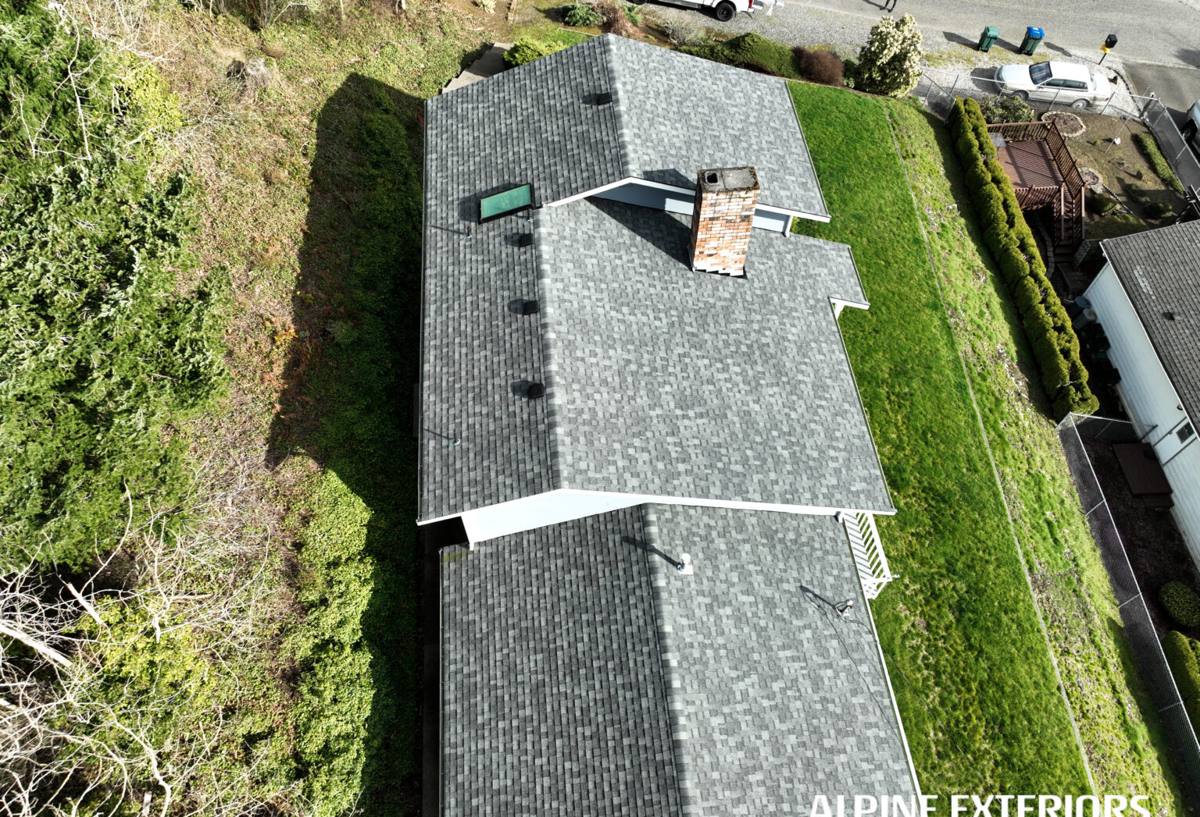
What Storm Damage Actually Looks Like
Not all storm damage is a missing shingle you can spot from the driveway. Some of the most costly damage is the kind that shows up weeks later as a stain on a ceiling.
Signs Worth Checking After Any Significant Wind or Rain Event
- Shingles that are creased, cupped, or lifted at the tab, even if none are fully missing
- Granules collecting in gutters or at downspout outlets — a sign of accelerated wear on the shingle surface
- Bent, lifted, or separated flashing around chimneys, vents, and roof-to-wall transitions
- Damp spots or discoloration on interior ceilings, especially near exterior walls or skylights
- Debris damage — branch strikes or impact marks from wind-blown material
- Moss or dark streaking that's suddenly worse in one area, which can mean water is pooling somewhere it shouldn't
Wind-driven rain is its own category. Standard shingle roofs are designed to shed water moving downward, not water being pushed sideways or upward under a tab. A storm with sustained gusts can force water past flashing details that would otherwise be fine, which is why leaks sometimes appear in spots that look undamaged from the ground.
What a Correct Repair Actually Involves
A rushed storm repair — tarp, seal a few tabs, call it done — treats the symptom and leaves the cause. A correct repair starts with figuring out what actually failed and why, not just where water is currently coming through.
Our Inspection Sequence
- Exterior roof walk to identify the storm-caused damage and separate it from pre-existing wear or moss deterioration
- Flashing check at every penetration and transition — this is where most hidden leaks start
- Decking check at the damaged area, since prolonged moss cover or a slow prior leak can soften plywood before a storm ever hits
- Attic check from the inside where accessible, looking for water staining, damp insulation, or daylight at flashing points
- Matching the repair materials to what's already on the roof, or explaining clearly where an exact match isn't possible
If we find soft or damaged decking under the storm-damaged shingles, that gets addressed as part of the repair — patching shingles over compromised sheathing just moves the problem a few months down the road.
Repair or Replace: How We Help You Decide
Storm damage doesn't automatically mean a new roof, and it doesn't automatically mean a simple patch either. The right call depends on the roof's age, how much of it is affected, and what condition the rest of it is in.
| Factor | Leans Toward Repair | Leans Toward Replacement |
|---|---|---|
| Roof age | Under 10-12 years | Approaching or past expected lifespan |
| Extent of damage | Localized to one slope or section | Scattered across multiple slopes |
| Decking condition | Solid, dry sheathing | Soft spots or rot found during inspection |
| Moss/algae history | Recently treated or clean | Long-term moss damage across large areas |
| Shingle match availability | Matching product still available | Discontinued line, visible patchwork likely |
We'll walk you through where your roof falls on that table honestly. If a repair is the right call, we'll do a repair — we're not going to talk a homeowner into a full replacement they don't need. If the damage is extensive enough that a patch would be a short-term fix at best, we'll say that plainly and explain why.
Materials: What We Use and Why
For asphalt shingle roofs, we lean toward algae-resistant shingle lines in this area — copper- or zinc-infused granules that slow the algae and moss growth that Ferndale's damp, shaded conditions encourage. It's not a permanent fix for moss, but it buys meaningful time and reduces how often a roof needs cleaning and treatment.
On flashing and underlayment, we don't cut corners just because it's a repair rather than a full replacement. Wind-driven rain in this area demands properly lapped, sealed flashing and, where it makes sense, self-adhered underlayment at valleys and penetrations rather than standard felt alone. A repair done with builder-grade underlayment in a spot that's already proven vulnerable to wind-driven rain is a repair that's likely to fail again in the next storm season.
Standing Seam Metal in Storm-Prone Areas
For homeowners considering a larger repair or partial re-roof, standing seam metal is worth a conversation. It handles wind uplift well, sheds moss more easily than asphalt because of its smooth surface, and holds up to salt air with the right coatings. It's a bigger upfront investment and requires correct installation to perform — panel spacing, clip selection, and fastening all matter more with metal than with asphalt, so it's not a product we'd recommend installing without experience specific to this region's wind and moisture conditions.
How Our Process Works
Storm repair calls tend to come in fast, and we keep the process straightforward so you're not left guessing.
- Initial call or estimate request — we ask what you're seeing (active leak, missing shingles, visible damage) so we can prioritize urgent situations
- On-site inspection — full roof and, where accessible, attic assessment, with photos documenting the damage
- Written scope and estimate — what needs to happen, what it will cost, and why, in plain terms
- Temporary protection if needed — tarping or emergency sealing to stop active water intrusion while repair materials or scheduling are finalized
- Repair work — matched materials where possible, proper flashing and underlayment detail work, decking replacement if needed
- Final walkthrough — we show you what was done and why, including anything we found that's worth keeping an eye on going forward
Insurance Claims: What to Know
Many storm damage repairs involve a homeowner's insurance claim. We can document damage with photos and a written scope that supports a claim, and we're glad to meet an adjuster on-site. What we won't do is inflate a scope of work or claim damage that isn't there to help a claim go through — that approach creates problems for homeowners down the line, including potential disputes over the claim itself. Our job is an honest assessment; how that interacts with your policy and adjuster is between you and your insurer, and we're happy to support that conversation with accurate documentation.
What to Do Right After a Storm
- Take photos of visible exterior damage and any interior water intrusion as soon as it's safe to do so
- Avoid getting on the roof yourself, especially on wet or moss-covered surfaces
- Note the date and approximate time of the storm event for your records and any insurance claim
- Call for an inspection promptly — delayed water intrusion can turn a shingle repair into a decking repair
- Hold off on major interior repairs (drywall, flooring) until the roof cause is confirmed fixed
Why It Matters That We Already Work in This Area
A crew that works Ferndale and the surrounding Lynden area regularly has a working sense of which roof details tend to fail first in this specific climate — where wind-driven rain finds its way in, which flashing details age poorly under sustained moss cover, and how quickly damp decking can develop under a north-facing slope that never fully dries out. That's not something you get from a general knowledge of roofing; it comes from doing this work, on this kind of roof, in this weather, repeatedly. It also means we're positioned to respond quickly after area-wide storm events, rather than being one more out-of-town crew working through a long list.
We service Ferndale, Lynden, and the surrounding Whatcom County communities, and we bring the same inspection standard and honest scoping to every storm repair call, whether it's a single lifted shingle or a section of roof that needs decking work.
If your roof took a hit in a recent storm, or you're just not sure whether what you're seeing is worth worrying about, we're happy to take a look. Reach out for a free, no-pressure estimate using the form below.