 Lynden Exterior
 Siding Built for Kendall's Wet, Wooded Climate
Kendall sits in the wooded, low-lying country northeast of Lynden, where the land starts climbing toward the Mt. Baker foothills. That setting is beautiful, but it is hard on exterior building materials. Tree cover keeps siding shaded and damp longer after a storm than it would be on an open lot. Whatcom County's long wet season means many homes here go weeks at a time without a real drying window. And on the days the wind swings in off the water to the west, homes in this part of the county pick up a trace of salt-tinged moisture along with the rain — one more thing untreated wood, house wrap seams, and cheap trim have to fight off.
Put those three things together — persistent dampness, salt-laced air on westerly days, and shade that slows drying — and you get a textbook moss and mildew environment. Siding in Kendall doesn't fail because homeowners neglect it. It fails because a product or an installation wasn't built for this specific combination of conditions. That's the problem we solve.
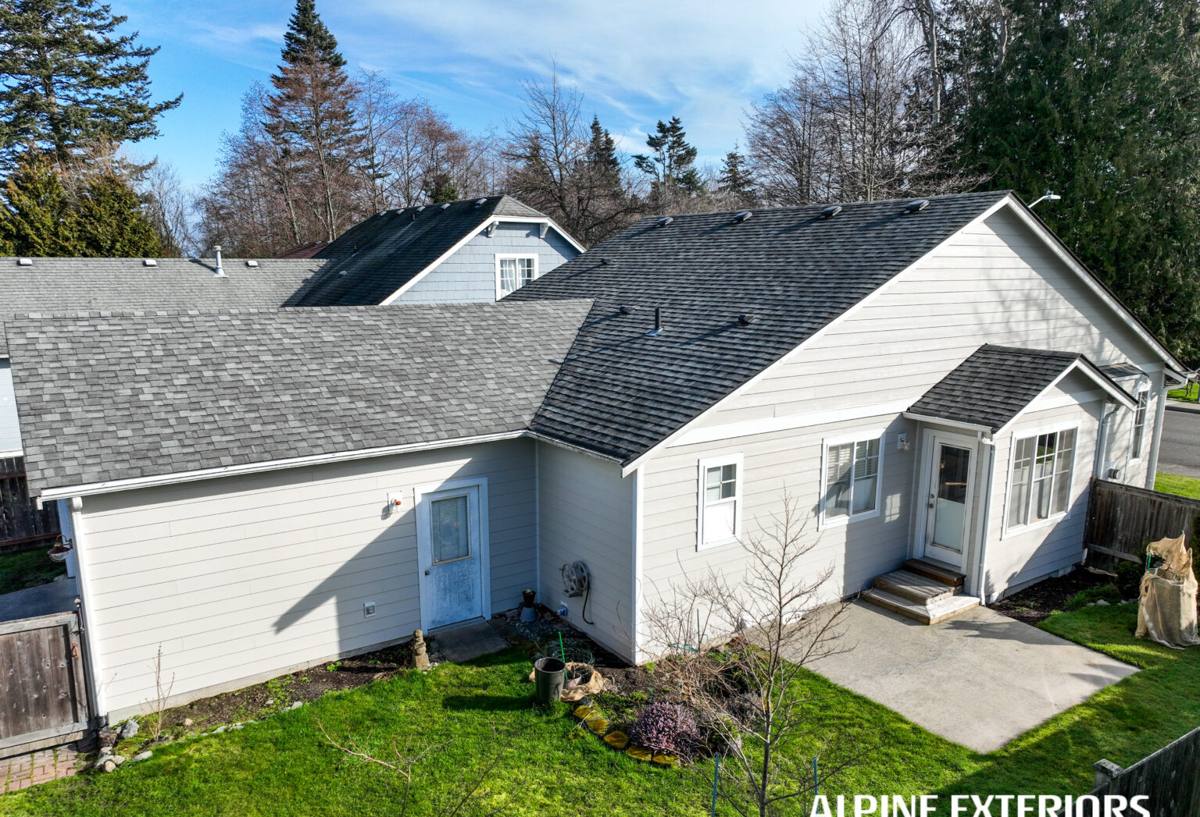
Why We Install Fiber Cement — and Only James Hardie
We install James Hardie fiber cement siding exclusively. We don't install vinyl, LP SmartSide, primed cedar, or other fiber cement brands like Allura or Cemplank. That's not a marketing line — it's a standard we hold because of what we see on homes in this climate over time.
Fiber cement itself is a mix of cement, sand, and cellulose fibers, engineered specifically to resist the moisture cycling, freeze-thaw swings, and UV exposure that break down wood-based and vinyl products faster in the Pacific Northwest. Within fiber cement, James Hardie is the manufacturer we've settled on because of three things: their HardieZone system engineers products specifically for regional moisture and temperature exposure, their ColorPlus factory finish is baked on and warranted rather than field-applied, and their non-combustible core gives homeowners a real fire-resistance benefit that wood-based siding simply cannot match. We'd rather install one product correctly, every time, than juggle multiple brands with different failure points.
HardieZone: Matched to This Region
James Hardie engineers its siding into two zone-specific formulations — HZ5 for colder, wetter, more freeze-prone climates and HZ10 for milder, humid coastal zones. Whatcom County straddles both realities depending on elevation and exposure, which is exactly why product selection isn't a guess — it's a decision our crew makes based on where your Kendall home actually sits.
What a Correct Fiber Cement Installation Actually Involves
Fiber cement siding is only as good as its installation. It is a forgiving material against weather, but an unforgiving material against shortcuts — most of the siding failures we get called out to inspect trace back to installation errors, not the product itself.
Moisture Management Comes First
Before a single plank goes up, the wall needs a correctly lapped weather-resistive barrier, properly flashed windows and doors, and rainscreen or drainage detailing appropriate to the wall assembly. In a damp, shaded environment like Kendall, this step matters more than the siding itself — siding sheds bulk water, but the water-resistive barrier and flashing system are what protect the wall if any moisture gets past it.
Clearances and Fastening
James Hardie specifies minimum clearances from grade, roofing, decks, and other horizontal surfaces — typically several inches — precisely because splash-back and standing moisture are the enemies of long-term performance. We also follow Hardie's fastening and nailing patterns exactly: correct fastener type, correct spacing, and never face-nailing where blind-nailing is specified. Overdriven or underdriven nails are one of the most common causes of premature siding failure we see on inspection.
Joints, Caulking, and Panel Gaps
Butt joints need to be back-flashed or sealed with the correct sealant — not just caulked and painted over. Panel and trim gaps need to be sized per manufacturer spec so the material can expand and contract without buckling. Skipping these details doesn't show up as a problem in year one. It shows up in year five or six, usually as a moisture stain or a soft spot at a joint.
Our Process for a Kendall Siding Project
- On-site assessment — we look at wall orientation, tree cover, drainage, and existing moisture damage before recommending a product line.
- Tear-off and sheathing check — we remove the old siding and inspect the sheathing underneath for rot or soft spots before covering anything up.
- Water-resistive barrier and flashing — installed or corrected to current best practice, regardless of what was there before.
- Hardie installation to manufacturer spec — correct clearances, fastening, and joint treatment throughout.
- Final trim, caulking, and walkthrough — we review the finished work with you before calling the job done.
Choosing the Right Hardie Profile
Not every Hardie product is the right fit for every home. Kendall's mix of traditional and newer construction means we regularly install more than one profile, depending on the style of the home and the wall's exposure.
| Profile | Best Suited For | Moisture Performance Notes |
|---|---|---|
| HardiePlank lap siding | Most single-family homes, traditional and modern styles | Standard horizontal lap sheds water well with correct overlap; most common choice here |
| HardieShingle panels | Homes wanting a cedar-shake look without the maintenance | More seams than lap siding, so flashing detail at each course matters more |
| HardiePanel with battens | Modern/board-and-batten style homes, accent walls | Vertical orientation drains fast but relies heavily on correct joint and batten sealing |
Color is a separate decision from profile. ColorPlus finishes are factory-applied and carry their own finish warranty, which matters in a climate where field-applied paint has to fight UV, moss, and moisture year-round. We'll walk you through the available ColorPlus palette and explain when field painting does or doesn't make sense for your project.
What Drives the Cost of a Siding Job Here
Every home is different, but the same handful of factors move the price up or down on most Kendall projects.
| Cost Factor | Why It Matters |
|---|---|
| Existing wall condition | Rotted sheathing or old moisture damage found during tear-off adds repair work before new siding can go on |
| Home size and wall complexity | Dormers, multiple gables, and cut-up wall lines take more labor per square foot than simple rectangular walls |
| Siding profile chosen | Lap siding, shingle panels, and board-and-batten have different material and labor requirements |
| Trim and accessory scope | Corner boards, window trim, and fascia work are often bundled with a siding job and add to total cost |
| Access and site conditions | Tree-heavy lots, tight side yards, and steep grades — common around Kendall — can slow staging and increase labor time |
We give straightforward, itemized estimates so you can see exactly what you're paying for rather than one lump number.
Living With Fiber Cement Siding in a Moss-Prone Area
James Hardie siding is far more resistant to moisture damage than wood-based products, but no exterior surface in Whatcom County is completely moss-proof, especially on shaded north-facing walls. The good news is that maintenance is simple and infrequent compared to wood or vinyl.
- Rinse siding with a garden hose or soft wash (not a high-pressure setting) once or twice a year, more often on shaded walls
- Keep gutters clear so overflow doesn't run down the siding face and feed moss growth
- Trim back shrubs and tree limbs that hold moisture against the wall or block airflow
- Check caulking at trim and joints annually and have gaps resealed before they let water behind the siding
- Have any soft spots, discoloration, or bubbling paint inspected promptly rather than waiting for it to spread
Compare that to wood siding, which typically needs repainting or restaining every few years in this climate, or vinyl, which can crack in cold snaps and fade unevenly under UV exposure — and the lower long-term maintenance burden of correctly installed fiber cement becomes clear.
Why a Crew That Already Works This Area Matters
Siding installation isn't just about the product — it's about a crew that understands how the local climate actually behaves on a wall, not just in a manufacturer's spec sheet. A crew that regularly works Kendall and the surrounding Lynden area already knows which wall orientations hold moisture longest, which older homes tend to have sheathing issues under the old siding, and how to plan a project around this region's wet season instead of getting caught mid-job by it. That local familiarity shows up in fewer surprises during tear-off, better product recommendations up front, and a finished job that's built for the conditions it actually has to survive — not generic conditions from somewhere else.
If you're weighing a siding replacement or repair on a Kendall-area home, we're happy to take a look and give you a straightforward, no-pressure estimate — no obligation, just an honest read on what your home needs. The form below will get us started.