 Lynden Exterior
 Siding Replacement Built for Kendall's Climate
Kendall homes sit in the wooded, semi-rural stretch of Whatcom County northeast of Lynden, where tree cover keeps whole walls in shade for most of the day and the surrounding low country holds moisture long after a storm has passed. That's a hard setting for exterior siding. Add in the salt-tinged marine air that moves through this part of Whatcom County during weather systems, wind-driven rain that gets pushed sideways into lap joints and trim instead of running straight off, and a moss season that can stretch across most of the year on shaded walls, and you've got a climate that works on siding from several directions at once, not just from the top down.
This page is specifically about siding replacement for Kendall homes — not a repair, not a patch job, but tearing off failing siding and putting on a system that's actually built for what this property sees every winter. We'll walk through when a full replacement is the right call instead of a repair, what that job needs to include to hold up here, and how our process works from first look to final walkthrough.
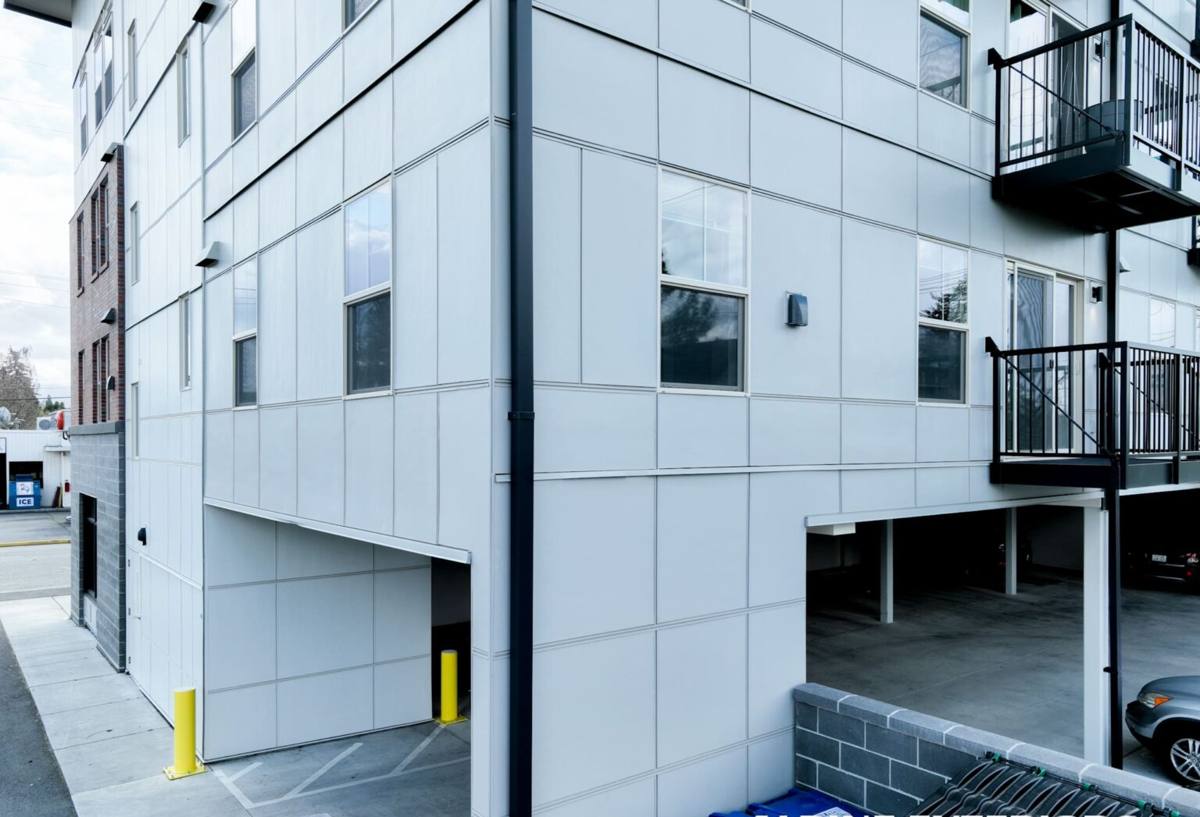
When a Kendall Home Needs Full Replacement, Not a Repair
Not every siding problem calls for tearing the whole wall down to the studs. A storm-damaged section, a few cracked boards, or trim that failed around one window can often be repaired and matched into the surrounding siding without touching anything else. But there's a point past which patching stops being a real fix and just becomes a way of delaying a bigger job, and homes in Kendall's damp, shaded conditions tend to reach that point faster than siding in a drier, more open part of the county.
Signs You're Past the Point of Patching
- Soft, spongy, or crumbling siding in more than one or two isolated spots
- Moisture staining or discoloration on interior walls near exterior corners
- Widespread warping, cupping, or delamination across multiple wall sections
- Siding that's been painted repeatedly to hide failure rather than fix it
- Visible rot or soft sheathing found once a small repair area is opened up
If any of that sounds familiar, the honest answer is usually full replacement. Once moisture has been tracking behind a wall for a while, patching the visible damage and leaving the rest of the original siding in place just means the same failure shows up again a wall section over, on the same timeline that caused the first one.
Why Waiting Costs More in This Climate
In a drier climate, aging siding can sit for a season or two without much consequence beyond looking tired. In Kendall's combination of shade, sustained rain, and humidity, a small gap or crack behind failing siding stays wet far longer than it would somewhere with more sun and airflow. That extended wet time is what turns a surface problem into sheathing and framing damage, which is a materially bigger and more expensive repair than the siding replacement would have been on its own.
Why We Replace Siding With James Hardie Fiber Cement — and Nothing Else
We install James Hardie fiber cement siding exclusively on every replacement job in Kendall and across the rest of our Whatcom County service area. That's not a preference we picked off a supplier catalog — it's a standard we settled on after seeing, repeatedly, which siding systems actually hold up under this specific mix of rain, shade, and moisture, and which ones quietly shift maintenance and repair costs onto the homeowner a few years down the road.
- Non-combustible core: Fiber cement doesn't feed a fire the way wood-based siding products can, which matters for both household safety and insurance underwriting.
- Factory-applied ColorPlus finish: The finish is baked on under controlled factory conditions rather than brushed on in the field, so it resists fading, chalking, and moisture damage far longer than site-applied paint.
- Climate-engineered HZ5 formulation: Hardie's HZ5 product line is engineered specifically for regions with heavy moisture exposure and freeze-thaw cycling, which describes this part of Whatcom County well.
- Dimensional stability: Fiber cement doesn't swell, cup, or warp the way engineered wood siding can after repeated wet-season moisture cycles.
- Strong transferable warranty: Hardie backs its products with one of the more robust warranty structures in the industry, provided the installation follows spec.
We won't install LP SmartSide, vinyl siding, Cemplank, Allura, primed spruce, or cedar on a replacement. Each of those products has a legitimate place in the market, and plenty of homeowners elsewhere are satisfied with them. But we made a professional call that in a climate with this much sustained shade, moisture, and moss pressure, standing behind one system completely is worth more to a Kendall homeowner than offering a cheaper option that trades a lower price today for more maintenance and a shorter real-world lifespan later.
What a Correct Siding Replacement Involves
New siding is only as good as what's underneath it. A replacement that's done right treats the wall as a full system, not just a surface to cover, which matters even more on a Kendall property where the old siding has likely been holding moisture against the wall for years before it's finally torn off.
Tear-Off and Sheathing Inspection
A full tear-off down to the sheathing is the only way to actually see what's been happening behind the old siding. On Kendall homes especially, this step regularly turns up moisture damage, soft sheathing, or early rot that was invisible from outside and never showed up as an interior symptom until it had already been developing for a while. Any sheathing or framing damage found at this stage gets repaired before new siding goes on, not covered over.
Weather-Resistive Barrier and Flashing
A correctly installed weather-resistive barrier is what actually keeps wind-driven rain from reaching the sheathing, and it only works if it's lapped, taped, and integrated correctly with window and door flashing rather than just stapled up as a formality. Most siding failures in this climate trace back to flashing details at windows, doors, and wall penetrations, not to the siding material sitting in the open field of the wall.
Drainage Gap and Fastening
A rain screen or drainage gap between the siding and the weather-resistive barrier gives any moisture that does get past the outer layer somewhere to drain and dry out, instead of sitting trapped against the sheathing the way it can with a tight, gap-free installation. Fastening pattern, clearances from grade and roofline, and correctly lapped joints all follow Hardie's published specification rather than a shortcut approach, since deviating from spec is one of the more common ways a good product ends up performing poorly.
Our Kendall Siding Replacement Process
- In-person inspection: We walk the property and look at the existing siding and, where accessible, the condition behind it, rather than estimating from a photo or a drive-by.
- Written estimate: You get a clear, itemized bid covering tear-off, sheathing repair allowance, weather-resistive barrier, flashing, siding and trim material, and cleanup — not a single vague number.
- Scheduling around weather: We build reasonable flexibility into the timeline, since wet-season delays are a normal part of exterior work in this region rather than an excuse after the fact.
- Tear-off and sheathing repair: Old siding comes off completely, and any moisture or rot damage found underneath is repaired before anything new goes on.
- Weather-resistive barrier, flashing, and drainage gap installation: Each layer goes on to manufacturer specification, with particular attention at windows, doors, and wall penetrations.
- Hardie siding and trim installation: Boards and trim go on with correct fastening, clearances, and joint detailing, following James Hardie's published installation requirements.
- Final walkthrough and cleanup: We review the finished job with you and do a full site cleanup before calling the work done.
Comparing Siding Materials for a Kendall Replacement
| Material | Moisture and Moss Resistance | Maintenance | Fit for Kendall's Climate |
|---|---|---|---|
| Vinyl Siding | Can trap moisture behind panels; doesn't itself rot but hides problems underneath | Low, but panels can warp, crack, or fade over time | Weak — doesn't address the shade and moisture pressure this property sees |
| LP SmartSide / Engineered Wood | Wood-based core is vulnerable to moisture intrusion at cut edges and joints | Moderate to high, especially in sustained damp conditions | Poor fit for prolonged shade and moss exposure |
| Cedar / Primed Wood | Natural material, but absorbs and holds moisture without diligent upkeep | High — regular refinishing and moisture monitoring required | Demanding fit given the length of the local wet and moss season |
| James Hardie Fiber Cement | Dimensionally stable; factory finish resists moisture and organic growth far longer | Low — no repainting cycle required with ColorPlus finish | Strong fit; HZ5 line engineered for this exact moisture and freeze-thaw profile |
Cost per square foot isn't the whole story on a replacement. The bigger factor is how much maintenance and how many repaint or repair cycles a material needs over the years it's on the wall, and in Kendall's shaded, damp conditions that gap between materials shows up faster than it would in a drier climate. Home size, trim complexity, how much sheathing repair the tear-off uncovers, and site access for equipment and staging are the practical variables that move a bid up or down for a given property, which is why a real, in-person estimate matters more than a generic price-per-square-foot number.
Why Hiring a Crew That Already Works in Kendall Matters
A crew that regularly replaces siding on Kendall properties has already seen how heavy tree cover keeps certain walls wet longer than others, which orientations hold moss the longest through the wet season, and how far wind-driven rain actually travels into a wall assembly on an exposed lot versus a sheltered one. That's the kind of practical knowledge that shows up in small decisions on install day — where to add extra flashing attention, which sheathing sections are worth a closer look before covering them — that a crew unfamiliar with this specific setting might not think to make at all.
It also matters after the job is finished. A workmanship warranty only means something if the company behind it is still around and reachable a few years later, and a contractor with an established, ongoing presence in the area is one you can actually get back out to the property if a question comes up.
A Practical Checklist Before You Choose a Siding Contractor
- Do they perform a full tear-off with sheathing inspection, or just an overlay over existing siding?
- Does the estimate name the specific siding product, not just "new siding"?
- Is weather-resistive barrier and flashing work explicitly included and described in the bid?
- Do they carry current WA contractor licensing, liability insurance, and workers' compensation?
- Can they point to recent, real local work in or near Kendall or the greater Lynden area?
- Does the bid separate material warranty coverage from their own workmanship warranty?
If your Kendall home's siding is showing warning signs and you'd like an honest, no-pressure look and a written estimate to compare against anything else you've received, we're glad to come take a look. Use the form below to request a free estimate.