 Lynden Exterior
 Why Laurel Roofs Wear Differently Than You'd Expect
Homes in the Laurel neighborhood face a specific combination of conditions that most roofing material is not designed around out of the box. Whatcom County sits under a long wet season, a steady moss cycle that can run most of the year, and enough exposure to open water that salt-laden air reaches roof hardware, flashing, and fasteners well before a homeowner notices any visible damage. None of that is dramatic on its own, but stacked together over ten or fifteen years, it shortens the useful life of a roof that would last much longer in a drier, calmer climate.
That's the case for treating a Laurel roof replacement as a local job, not a generic one. The right underlayment, the right fastener metal, the right ventilation plan, and the right moss-resistant material all matter more here than they would on the same house fifty miles inland. This page covers what that actually looks like — what the climate does to a roof over time, what a correctly executed replacement involves, and what to expect from a crew that works in this specific area regularly.
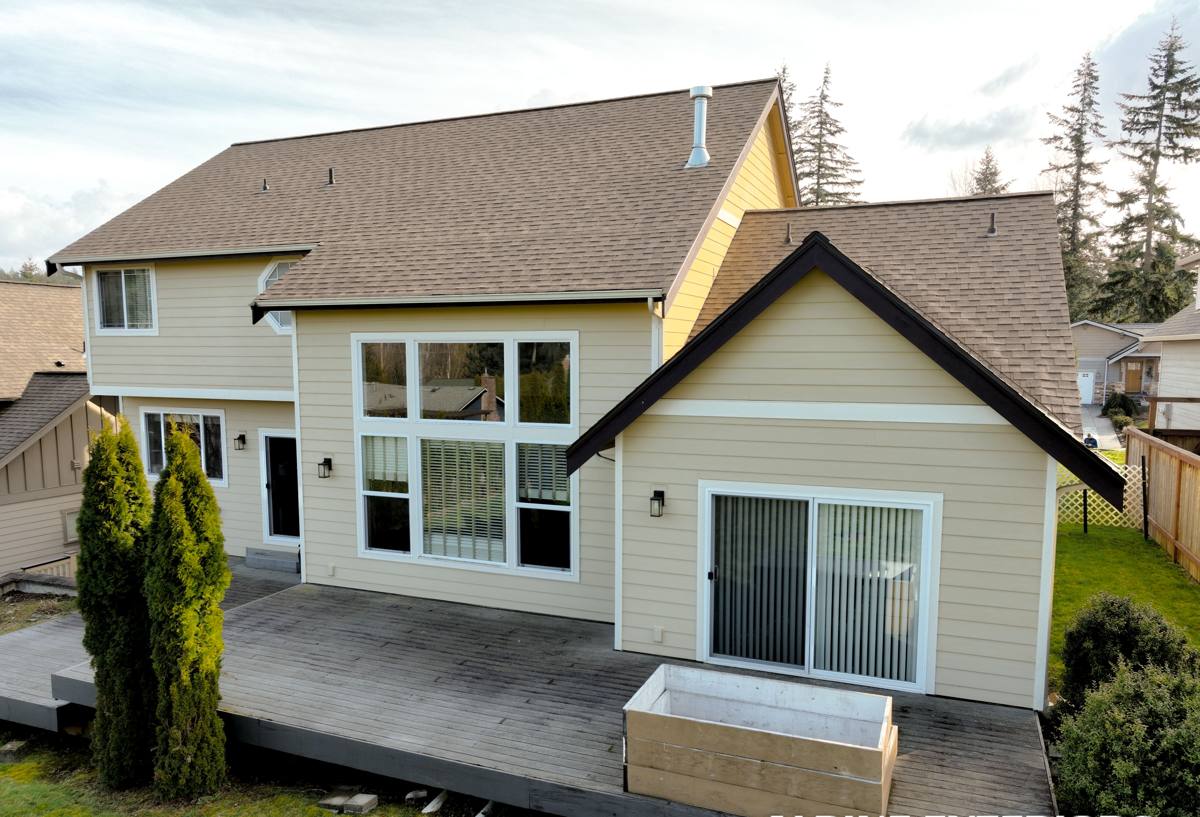
What the Local Climate Does to a Roof Over Time
Moss and Organic Growth
Whatcom County's combination of shade, moisture, and mild temperatures gives moss and algae a long growing season on north-facing and shaded roof slopes. Moss isn't just cosmetic. Its root structures lift shingle edges, trap moisture underneath the roofing material, and hold water against the deck long after the rest of the roof has dried out. Left unaddressed, that trapped moisture accelerates granule loss, rot in the sheathing, and eventually leaks that show up far from where the moss actually grew.
Driving Rain and Wind-Driven Water
Rain here rarely falls straight down. Wind off open water pushes rain sideways into roof valleys, up under shingle tabs, and against vertical transitions like chimneys and dormers. A roofing system built for calm, vertical rainfall can fail in exactly those spots — not because the shingles themselves are bad, but because the underlayment, flashing, and fastening pattern weren't specified for wind-driven exposure.
Salt Air and Corrosion
Proximity to open water means airborne salt reaches roofing hardware over time, even on homes that aren't waterfront. Standard fasteners, flashing, and vent hardware corrode faster under that exposure, which is why material and fastener selection matters as much as the shingle or panel itself. A roof that looks fine from the ground can have compromised nails or flashing seams underneath.
Signs Your Laurel Home Needs Replacement, Not Another Repair
Repairs make sense when a roof has isolated damage and years of usable life left. Replacement becomes the honest recommendation once the underlying material and deck are compromised broadly enough that repairs are just delaying the inevitable. Common indicators we look for on Laurel-area homes include:
- Granule loss heavy enough that shingles look patchy or bald in multiple areas, not just one spot
- Moss growth that returns within a season or two of cleaning, especially on north-facing slopes
- Soft spots or noticeable give when walking the roof deck
- Daylight visible through the attic sheathing, or damp insulation after a storm
- Curling, cupping, or cracked shingles concentrated on the sides that take the most wind and rain
- Rusted, lifted, or corroded flashing around chimneys, vents, and roof-to-wall transitions
- A roof at or past 20-25 years old with no major upgrades to underlayment or ventilation since installation
- Recurring interior stains on ceilings or upper walls that reappear after repairs
If you're only seeing one or two of these, a targeted repair may still be the right call. If several are present at once, replacement usually costs less over time than repeated patchwork.
What a Correct Roof Replacement Actually Involves
Full Tear-Off and Deck Inspection
A proper replacement starts with removing the old roofing down to the deck, not layering new material over old. This is the only way to actually see the sheathing, check for rot or soft spots from years of trapped moisture, and replace any compromised sections before new material goes down. Skipping this step is how new roofs end up failing early over old, hidden damage.
Underlayment Built for Wet Winters
Given how much wind-driven rain this area sees, underlayment choice matters more than most homeowners realize. Self-adhering, high-quality underlayment at eaves, valleys, and other vulnerable transitions provides a second line of defense if wind ever pushes water past the primary roofing material — a realistic scenario here, not a hypothetical one.
Ventilation That Matches the House
Balanced intake and exhaust ventilation keeps the attic close to outdoor temperature and controls moisture buildup — both of which slow moss growth on the roof surface and prevent condensation damage inside the attic. Ventilation is frequently overlooked or under-specified on older homes, and it's one of the most cost-effective upgrades to include during a full replacement rather than tackling separately later.
Flashing Where Roofs Fail First
Chimneys, skylights, wall transitions, and valleys are where the overwhelming majority of roof leaks originate — not the open field of shingles. New, correctly lapped flashing in corrosion-resistant metal at every one of these points is not optional on a job done right, especially with salt air in the mix.
Matching the Roofing Material to This Climate
There's no single "best" roofing material for every home — the right choice depends on budget, roof pitch, architectural style, and how much long-term maintenance a homeowner wants to take on. Here's how the common options compare for a Laurel-area home specifically:
| Material | Moss/Algae Resistance | Wind & Rain Performance | Typical Lifespan | Maintenance Level |
|---|---|---|---|---|
| Standard asphalt composition shingle | Moderate — improves with algae-resistant (AR) granules | Good with proper fastening and underlayment | 20-30 years | Periodic moss treatment recommended |
| Algae-resistant (AR) composition shingle | Strong, especially on shaded slopes | Good with proper fastening and underlayment | 25-30+ years | Lower than standard shingle, still needs occasional cleaning |
| Standing seam metal | Very strong — moss struggles to anchor on smooth metal | Excellent; sheds wind-driven rain well | 40-50+ years | Low, but fasteners and coatings should be corrosion-rated near open water |
| Synthetic/composite shingle | Strong, varies by product line | Very good; engineered for wind uplift resistance | 30-50 years | Low to moderate |
We don't push one material as universally "right." We do steer homeowners away from standard, non-AR shingles on heavily shaded slopes in this climate — not because the shingle is a bad product, but because it puts the homeowner on a shorter moss-cleaning cycle than most people want to sign up for. That's a maintenance trade-off worth knowing before you choose, not after.
Our Roof Replacement Process
- On-site assessment — we inspect the current roof, attic, and ventilation, and check for moss patterns, soft decking, and flashing condition specific to your home's exposure.
- Written scope and material selection — you get a clear, itemized plan covering tear-off, decking repairs (if needed), underlayment, material, ventilation, and flashing — no vague allowances.
- Scheduling around the weather — we plan tear-off and dry-in timing to minimize the window your home is exposed, which matters more here than in drier regions.
- Tear-off and deck repair — old material comes off, the deck is inspected board by board, and any compromised sheathing is replaced before anything new goes down.
- Underlayment, flashing, and ventilation install — the parts of the system that determine whether the roof actually performs in wind-driven rain, done to spec, not shortcut.
- Roofing material installation — installed to manufacturer specification, including nailing pattern and fastener type appropriate for the coastal exposure.
- Final walkthrough — we review the finished roof with you, including care and moss-prevention guidance specific to your home's shading and slope.
What Affects the Cost of a Laurel Roof Replacement
Every roof is different, so we don't quote a number until we've actually inspected the house — but these are the factors that move the price up or down on most jobs in this area:
| Factor | How It Affects Cost |
|---|---|
| Roof size and number of stories | More square footage and steeper access generally increase labor and material cost |
| Roof pitch and complexity | Steep slopes, multiple valleys, and dormers take more labor and material than a simple rectangular roof |
| Number of existing layers | Removing multiple old layers costs more in tear-off and disposal than a single-layer tear-off |
| Decking condition | Rot or soft sheathing found during tear-off adds material and labor to replace it correctly |
| Material selection | Standard shingle, AR shingle, metal, and synthetic options carry different upfront costs and lifespans |
| Ventilation and flashing upgrades | Bringing older ventilation or flashing up to current standards adds cost but reduces long-term risk |
We'll walk through each of these with you during the assessment so the estimate reflects your actual roof, not a generic average.
Why Hiring a Crew That Already Works in Laurel Matters
A roof replacement is only as good as the details most homeowners never see once it's done — the underlayment lap, the fastener metal, the flashing sequence. A crew that regularly works homes in and around Lynden already knows which slopes in this area hold moss the longest, which fastener and flashing metals hold up against salt air, and how local wind patterns off the water tend to drive rain into valleys and roof-to-wall transitions. That's knowledge built from doing the work here repeatedly, not something you can fully substitute with a generic checklist. It also means fewer surprises during permitting and inspection, since the process and expectations for Whatcom County jobs are already familiar.
Protecting Your Investment After the New Roof Goes On
A correctly installed roof still benefits from basic upkeep in this climate. A few habits go a long way toward getting the full lifespan out of the material:
- Keep gutters and downspouts clear so water doesn't back up under roof edges during heavy rain
- Trim back overhanging branches on shaded slopes to reduce moss-friendly conditions
- Have moss growth treated early rather than letting it establish over a full season
- Schedule a visual roof check after major windstorms, especially for flashing and vent boots
- Avoid pressure-washing shingles directly — it strips protective granules and can shorten the roof's life
None of this replaces professional inspection, but it does reduce the odds of small issues turning into deck damage before anyone notices.
If your roof is showing signs of wear, or you just want an honest read on how many years it has left, we're happy to take a look. Use the form below to request a free, no-pressure estimate for your Laurel home.