 Lynden Exterior
 Storm Damage Roofing in Maple Falls: A Different Set of Problems
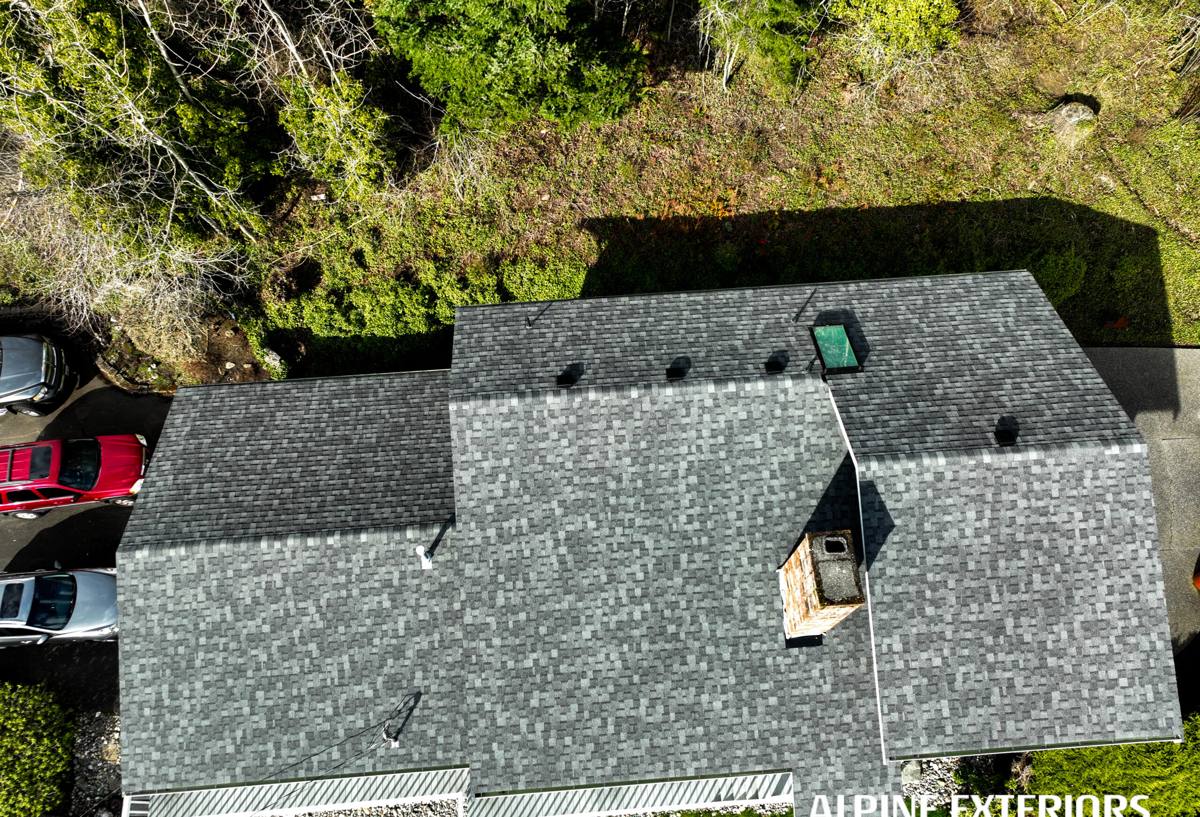
Maple Falls sits up in the Mt. Baker foothills, and that location shapes what happens to a roof here. Homes are surrounded by tall conifers, sit at higher elevation than the valley floor around Lynden, and see a winter mix of heavy rain, wind, and occasional wet snow that valley homes rarely deal with. When a storm rolls through Whatcom County, a Maple Falls roof isn't just taking wind and rain the way a Lynden rooftop does — it's also absorbing impacts from falling limbs, dealing with snow-load stress on older framing, and drying out slower under a forest canopy that blocks sun and airflow for much of the day.
That combination means storm damage here often looks different than storm damage on an open, sunny lot. We've repaired roofs in this area long enough to know what to check first, what tends to get missed, and why a repair that would hold up fine in town can fail fast under a heavy tree canopy.
What Counts as Storm Damage on a Maple Falls Roof
Wind and Pressure Damage
Wind gusts funneling through the foothills can lift shingle tabs, pull flashing loose at ridges and valleys, and work fasteners out of the deck over repeated storms. This kind of damage is often invisible from the ground — a homeowner sees no obvious hole, but the roof's seal against wind-driven rain is compromised.
Impact Damage from Trees and Debris
This is the one that sets forested lots apart. Even a small branch dropped from height can crack a shingle, dent metal flashing, or punch through underlayment at a weak point. Larger limb strikes can crush decking outright. Because tree cover here is heavier than most of the surrounding valley, impact damage is one of the most common storm-related calls we get from this area.
Moisture and Moss-Related Damage
Storms don't just cause sudden damage — they expose damage that moss and constant shade have already been causing slowly. Moss holds moisture against the roofing material, and under heavy tree cover it grows faster and stays wetter longer than it would on a roof that gets regular sun. A storm that would be a non-event on a healthy roof can turn into a leak on a roof where moss has already lifted shingle edges or held water against the deck.
Why Forested, Higher-Elevation Lots Need a Different Repair Approach
A roof repair that ignores the site conditions doesn't hold up long here. Three things drive how we approach a Maple Falls repair differently than a repair in an open, low-elevation neighborhood:
- Slower drying time — shaded roofs stay damp longer after a storm, so we build in extra ventilation and moisture-tolerant materials at repair points rather than assuming quick drying.
- Ongoing debris risk — a repair has to account for the fact that more limbs and needles will come down again. We don't just patch; we check nearby areas for weak points that debris is likely to find next.
- Snow-rain mix in winter — at this elevation, precipitation can swing between rain and wet snow in the same storm. Flashing and underlayment details that only need to shed rain in Lynden proper sometimes need to handle standing snow load here too.
Our Storm Damage Repair Process
1. Inspection, Not Just a Look from the Ground
We get on the roof (weather permitting) or use a pole camera when it isn't safe, and we check more than the obvious damage point. Because impact damage from falling debris often cracks or bruises shingles without an immediate leak, we look at the surrounding field of the roof, not just the spot the homeowner noticed.
2. Temporary Protection When Needed
If a storm has left an active leak or exposed decking, our first priority is stopping water intrusion — tarping or temporary sealing to protect the interior of the home while we plan the permanent repair. This matters more in Maple Falls than in drier parts of Whatcom County, since a shaded roof under continuous drip won't dry out on its own between rain events.
3. Permanent Repair
Once we know the full scope, we replace damaged shingles, decking, flashing, or underlayment as needed and match materials so the repair blends with the existing roof rather than standing out as a patch. We check fastening and sealing at the repair boundary carefully, since that's the seam most likely to fail first if it's rushed.
4. Documentation
We take clear photos of the damage before and after repair. If a homeowner is filing an insurance claim, this documentation is often the difference between a smooth claim and a disputed one.
Repair or Replace: How We Help You Decide
Not every storm-damaged roof needs full replacement, but not every roof should just be patched either. We walk homeowners through the honest trade-offs rather than defaulting to the more expensive option.
| Factor | Leans Toward Repair | Leans Toward Replacement |
|---|---|---|
| Age of roof | Under 10-12 years, otherwise healthy | Near or past expected service life |
| Extent of damage | Isolated to one section or slope | Scattered across multiple slopes |
| Underlying condition | No prior moss or moisture history | Existing moss damage or soft decking found |
| Storm frequency | First significant damage event | Repeated storm damage over recent years |
| Insurance scope | Adjuster approves targeted repair | Adjuster approves full slope or roof replacement |
The most common mistake we see is a quick, cheap patch on a roof that had underlying moss or moisture damage the homeowner didn't know about. It looks fixed, then fails again at the next storm. Part of our job is telling you honestly when a patch is enough and when it's just delaying a bigger repair.
Materials and Methods We Use for Storm Repairs
We match repair materials to the existing roof wherever possible, but for storm-exposed, tree-covered lots like most of Maple Falls, we lean toward a few specific choices at vulnerable points:
- Self-adhering waterproof underlayment at valleys, eaves, and any spot where debris impact is likely, since these areas see the most repeated stress under tree cover.
- Corrosion-resistant flashing, since constant shade and moisture accelerate wear on lower-grade metal.
- Fastening patterns rated for higher wind exposure, appropriate for the more open, elevated stretches around Maple Falls where gusts can be stronger than in the sheltered valley.
We don't push premium upgrades on every repair. If your existing roofing material and flashing are in good shape and the damage is isolated, a like-for-like repair is often the right call — we'll say so.
Insurance Claims: What Homeowners Should Know
Storm damage claims move faster and get approved more fully when the documentation is solid and the scope is accurate. A few things we've learned working storm claims in this area:
- Photograph and report damage as soon as it's safely possible — delayed reporting can raise questions from an adjuster.
- Get a written, itemized estimate rather than a verbal quote; adjusters respond better to specifics.
- Be wary of any contractor who asks you to sign over your insurance check or pressures you to file a claim for damage that doesn't clearly exist — that's not how a legitimate repair process works.
- If an adjuster's scope looks incomplete compared to what we found in our inspection, we'll document the discrepancy so you can request a re-review.
Preventing Repeat Damage: Moss and Debris Management
Because Maple Falls roofs live under more tree cover and more moisture than most of Whatcom County, ongoing maintenance matters more here than in drier, sunnier neighborhoods. A few habits go a long way between storms:
- Clear gutters and valleys of needles and leaf debris at least twice a year — clogged valleys are where moss and standing water start.
- Trim back branches that overhang the roofline where it's safe to do so; less overhang means less impact risk and faster drying.
- Have moss treated before it spreads rather than after it's visibly lifting shingles — early treatment is a fraction of the cost of a moisture repair.
- After any significant windstorm, do a visual check from the ground for missing or displaced shingles, and call for an inspection if anything looks off.
- Keep an eye on interior ceilings near exterior walls after storms — a small stain is easier and cheaper to address than a full leak.
Why It Matters to Hire a Crew That Already Works Maple Falls
A lot of storm damage repair work goes to contractors who show up right after a big weather event, do a fast patch, and move on to the next town. That approach misses the site-specific issues that matter here — the shade, the moss cycle, the debris risk, the elevation swing between rain and snow. We work throughout Lynden and the surrounding Whatcom County area, including the foothill communities like Maple Falls, on a regular basis, not just after headline storms. That means we know what a repair needs to hold up under this area's specific conditions, and we're still around afterward if something needs a follow-up look.
If you've got storm damage on a Maple Falls roof — or you're not sure whether recent weather caused damage that needs attention — we're happy to come take an honest look. Fill out the form below for a free, no-pressure estimate, and we'll tell you straight what we find.