 Lynden Exterior
 Why Everson Homes Need a Metal Roof Built for This Climate
Everson sits in a part of Whatcom County where roofs earn their keep. Homes here deal with a long wet season, driving rain that comes in sideways more often than straight down, and enough moisture in the air most of the year to keep moss and algae in business. A metal roof can handle all of that better than most materials on the market, but only if it's specified and installed correctly for this exact climate. A metal roof designed for a dry inland region isn't the same job as one built for a house that sits under low clouds and steady drizzle for months at a time.
We work on homes throughout the Lynden and Everson area regularly, which means we're not guessing at how this climate treats a roof. We're watching it happen on real houses, season after season, and building our installation standards around what actually holds up here.
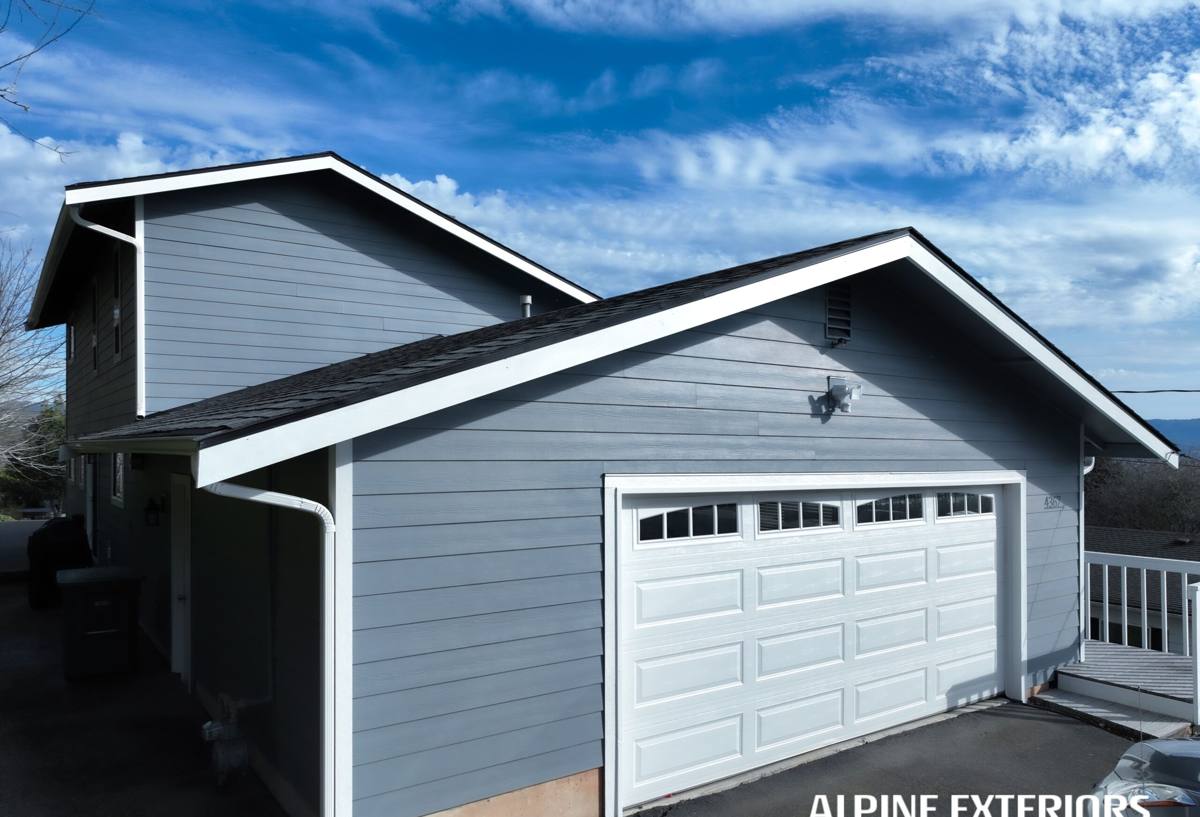
What Salt Air, Rain, and a Long Moss Season Actually Do to a Roof
Every roofing material in this region is fighting the same three things, just to different degrees:
- Moisture intrusion: Sustained rain finds every weak seam, nail hole, and flashing gap over time. A roof that sheds water fine in a light shower can still leak during a multi-day soak if the underlayment and flashing details aren't right.
- Moss and organic growth: Shade, moisture, and mild temperatures are exactly what moss wants. Left unchecked, it holds water against roofing material, works into seams, and shortens the life of anything it colonizes.
- Airborne salts and moisture: Coastal and near-coastal air in this part of Washington carries salt content that accelerates corrosion on unprotected or poorly coated metal fasteners and flashing over the years.
None of these problems are dramatic on day one. They're slow, cumulative issues that show up as premature rust streaking, soft decking, or a roof that needs replacing ten years earlier than it should have. Metal roofing, done right, is one of the more effective ways to get ahead of all three.
Why Metal Makes Sense for This Job
Metal roofing isn't the right fit for every house or every budget, and we'll tell you honestly if we think another material suits your situation better. But for a lot of Everson homes, metal earns its higher upfront cost:
- Steep slopes and slick panel surfaces shed rain fast instead of letting it sit and soak in.
- A properly finished metal surface gives moss and algae far less to grab onto compared to porous roofing materials, which cuts down on growth over time — though it doesn't make a roof moss-proof.
- Quality coated steel and aluminum panels resist corrosion well when the fastener system and flashing metals are matched correctly, which matters more here than in drier climates.
- A correctly installed metal roof typically outlasts asphalt shingle roofing by decades, which matters when you're weighing lifetime cost, not just install-day cost.
Metal Roofing Options We Install
Not all metal roofing is the same product wearing different colors. The panel type, gauge, and finish all affect how a roof performs in a wet, moss-prone climate like ours.
| Panel Type | Best For | Climate Notes |
|---|---|---|
| Standing seam steel | Most residential roofs, especially steeper pitches | Concealed fasteners mean fewer penetration points for water to find over time |
| Exposed-fastener steel panels | Budget-conscious projects, outbuildings, simpler rooflines | Costs less upfront but fastener seals need periodic inspection since they're a common leak point in wet climates |
| Aluminum panels | Homes closer to salt air exposure | Naturally corrosion-resistant, a good option where airborne salt is a bigger factor |
| Stone-coated steel | Homeowners who want the profile of shingle or shake with metal's durability | Heavier system; needs a structure rated to carry the added weight |
We'll walk through which of these fits your roofline, budget, and how exposed your property is, rather than defaulting to one product for every job.
Coatings and Fasteners Matter as Much as the Panel
A lot of metal roofing problems in this region trace back to fastener corrosion or a coating that wasn't matched to the panel metal, not the panel itself failing. We use fastener and flashing metals compatible with the panel system to avoid galvanic corrosion, and we favor factory-applied coatings with a track record in wet, coastal-influenced climates over cheaper mill-finish options.
What a Correct Installation Involves
Metal roofing looks straightforward from the ground, but most of the work that determines whether it lasts happens underneath the panels, where you'll never see it once we're done.
Underlayment
In a climate that stays wet for months at a stretch, we use a high-quality synthetic or self-adhered underlayment as a second line of defense, not a cheap felt layer that's really only there to satisfy code minimums. This matters most at eaves, valleys, and low-slope sections where standing water and ice can sit longest.
Fastening and Panel Layout
Panel spacing, fastener spacing, and expansion allowance all need to account for temperature swings and wind exposure specific to your roof's orientation. Rushed fastening is one of the most common causes of early metal roof failure we see.
Flashing and Penetrations
Every chimney, vent pipe, skylight, and roof-to-wall transition is a place water wants to get in. Metal roofing depends on flashing detail work even more than shingle roofing does, because there's no overlapping shingle layer to compensate for a sloppy flashing job.
Ventilation
A metal roof over a poorly ventilated attic can trap moisture underneath the deck, which defeats a lot of the benefit of putting metal on top in the first place. We check attic ventilation as part of every metal roofing job, not as an afterthought.
Our Process, Start to Finish
- On-site assessment: We look at your existing roof structure, decking condition, ventilation, and any moss or moisture damage before recommending a system.
- Honest scope and estimate: You get a clear written estimate with the panel type, underlayment, and flashing approach specified — not a vague number.
- Tear-off or overlay decision: We'll tell you plainly whether your existing roof can be built over or needs to come off, based on decking condition, not on what's easier for us.
- Installation: Underlayment, panels, flashing, and trim installed to the standard we've described above, with attention to every penetration point.
- Final walkthrough and cleanup: We review the finished roof with you and clear the site of debris and fasteners before we consider the job done.
Cost Factors for Everson Metal Roofing Projects
Metal roofing costs more upfront than asphalt shingles, and the final number depends on more than just square footage. Here's what typically moves the price:
| Factor | Why It Affects Cost |
|---|---|
| Panel type | Standing seam runs higher than exposed-fastener panels due to labor and material |
| Roof pitch and complexity | Steep slopes, multiple valleys, and dormers all add labor time |
| Tear-off vs. overlay | Removing an old roof adds cost but is often necessary if decking is compromised |
| Decking repair | Moisture damage found once old roofing is removed can add material and labor |
| Ventilation upgrades | Adding or correcting attic ventilation as part of the project |
We'd rather walk you through a real number for your specific roof than throw out a broad range that doesn't mean much until we've actually seen the structure.
Keeping a Metal Roof Performing Long-Term
Metal roofing is low-maintenance compared to most materials, but "low-maintenance" isn't the same as "no maintenance" in a climate like this one. A short annual routine goes a long way:
- Clear leaves, needles, and debris from valleys and around penetrations before fall rains set in.
- Keep an eye on moss or algae buildup in shaded sections and address it before it spreads.
- Check that gutters and downspouts are flowing freely so water isn't backing up against the eaves.
- Have flashing around chimneys, vents, and skylights inspected every few years, since these are the points most likely to need attention over time.
- Trim back overhanging branches that keep sections of the roof shaded and damp longer than the rest.
Why Hiring a Crew That Already Works Everson Matters
A metal roof spec that works fine in a drier part of the state can underperform here. Fastener choice, underlayment grade, flashing detail, and ventilation planning all need to reflect what this specific stretch of Whatcom County actually throws at a roof — sustained rain, a long moss season, and salt-influenced air. A crew that installs metal roofing regularly on homes in and around Everson has already seen which details matter and which shortcuts cause callbacks two or three years down the road. That local pattern recognition is worth as much as the panel specs on the invoice.
If you're weighing metal roofing for your Everson home, we're happy to take a look and give you an honest read on what your roof actually needs — no pressure, no upsell. Fill out the form below and we'll set up a free estimate.