 Lynden Exterior
 New Roof Installation Built for Maple Falls Conditions
Maple Falls homeowners deal with a rougher mix of weather than a lot of homeowners realize until they're standing on a ladder looking at their own roof. You're close enough to the water to catch salt-laden air off the Sound, you get driving rain that comes in sideways during winter storms, and you sit under enough tree cover and shade that moss gets a long growing season most of the year. Any one of those factors will shorten a roof's life if the installation doesn't account for it. Put all three together and you need a roof system — not just shingles, but the underlayment, ventilation, flashing, and edge details working together — that was actually specified for this kind of exposure.
We install new roofs throughout Lynden and Whatcom County, and Maple Falls is a community we already know. That matters more than it sounds like it should, because a roof that's correct for a dry inland lot isn't automatically correct for a lot that sits in a moss belt with heavier rainfall. This page walks through what a proper new roof installation looks like for a Maple Falls home, what tends to go wrong when it isn't done right, and how our process handles it.
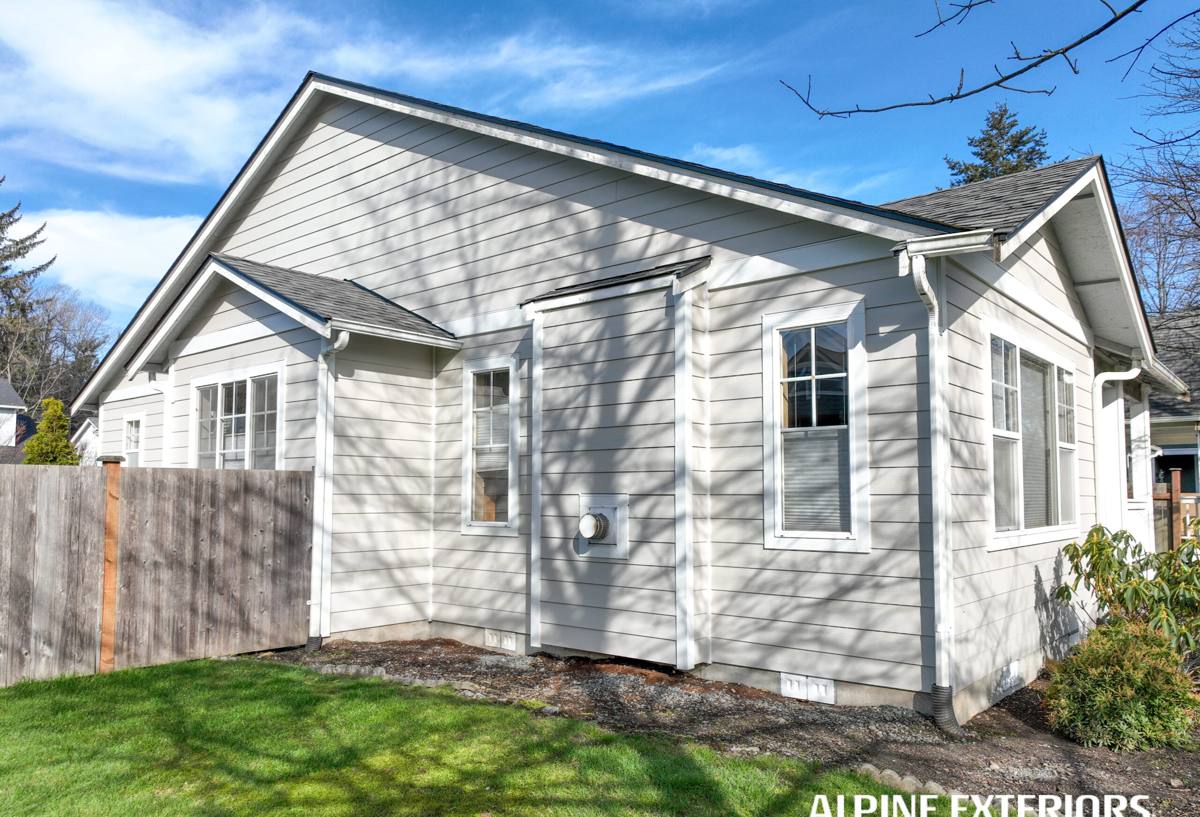
Why Maple Falls Roofs Take More Punishment
Salt Air and Metal Fatigue
Proximity to salt air accelerates corrosion on anything metal — flashing, fasteners, drip edge, vent caps. Cheaper galvanized components can start showing rust streaks and pinhole corrosion years before they should. We spec corrosion-resistant metals and coated fasteners specifically because we're not installing roofs in a dry climate; we're installing them somewhere the air itself is working against bare steel.
Driving Rain and Wind-Driven Water
Rain that falls straight down is a much easier problem to solve than rain that gets pushed sideways by wind. Driving rain finds every weak lap, every under-nailed shingle, and every place where flashing was caulked instead of properly integrated. It pushes water uphill under shingles and through nail holes that weren't sealed correctly. This is exactly the failure mode that separates a roof installed to code from a roof installed to actually perform in this climate.
Moss and Trapped Moisture
A long moss season means more than an ugly roof — moss holds moisture against the roofing material, keeps the deck damp longer after rain, and can lift shingle edges as it grows. On a shaded or tree-covered Maple Falls lot, moss isn't an occasional problem, it's an ongoing one, and the roof needs to be installed and detailed in a way that limits how much of a foothold it gets in the first place.
What a Correct New Roof Installation Actually Involves
A new roof is a system, not a single product. Each layer has a job, and skipping or shortcutting any one of them is where premature leaks and early failures usually start.
- Tear-off and deck inspection — full removal of old roofing so the deck underneath can actually be seen and evaluated, not covered over.
- Deck repair — any soft, delaminated, or water-damaged sheathing gets replaced before anything new goes down.
- Ice and water shield — self-adhering membrane at eaves, valleys, and other vulnerable areas where wind-driven rain is most likely to force its way under the roofing.
- Synthetic underlayment — a water-resistant barrier across the full deck as the roof's backup layer if any water gets past the top surface.
- Drip edge and flashing — corrosion-resistant metal at eaves, rakes, valleys, chimneys, and any wall or roof intersection.
- Proper ventilation — balanced intake and exhaust so the attic isn't trapping moisture that feeds rot and moss growth from underneath.
- Roofing material installation — installed to manufacturer nailing patterns and exposure, not just "close enough."
- Final detailing — pipe boots, ridge caps, and penetration seals finished cleanly, since these small details are disproportionately where leaks start.
Roofing Material Options for Maple Falls Homes
There isn't one "best" roofing material for every home — the right choice depends on your roof's pitch, your home's style, your budget, and how much long-term maintenance you're willing to take on. Here's how the common options stack up for this climate specifically.
| Material | Performance in Salt Air / Rain / Moss | Typical Lifespan | Maintenance Load |
|---|---|---|---|
| Asphalt composition shingle (standard) | Solid performer when properly ventilated and flashed; moss resistance depends on granule quality and algae-resistant options | 20-30 years | Periodic moss/debris removal |
| Architectural/dimensional shingle | Thicker profile handles wind-driven rain better; better moss and algae resistance in most product lines | 25-35 years | Periodic moss/debris removal |
| Metal roofing | Excellent water shedding in driving rain; needs coated, corrosion-rated fasteners and panels near salt air; sheds moss more easily due to a slick surface | 40-60+ years | Low, but requires correct fastener spec |
| Cedar shake | Traditional look but higher maintenance in a moss-prone, wet climate; requires diligent upkeep to avoid moisture retention | 20-30 years with upkeep | High |
We'll walk you through which of these fits your home and budget honestly — including the maintenance trade-offs — rather than steering you toward whatever's easiest to install.
Ventilation: The Step That Gets Skipped Too Often
Ventilation doesn't show up in a driveway walk-by, so it's the part of a roof job that's easiest for a contractor to shortcut and easiest for a homeowner to not notice until years later. Without balanced intake at the eaves and exhaust at the ridge, warm moist air gets trapped in the attic. In a moss-heavy, high-moisture area like Maple Falls, that trapped moisture doesn't just shorten shingle life from underneath — it also keeps the underside of the roof deck damp, which is exactly the environment rot and mold need to take hold. We calculate ventilation to the size of your attic and roof, not a generic one-size guess, and we check existing intake and exhaust as part of every new roof estimate.
Flashing and Edge Details: Where Leaks Actually Start
Almost every roof leak we're called out to diagnose traces back to a flashing detail, not the shingles themselves — a valley that wasn't lapped correctly, a chimney that was caulked instead of counter-flashed, a pipe boot that dried out and cracked. Driving rain punishes bad flashing work faster than calm weather does, because wind pushes water into gaps that would otherwise stay dry. We treat flashing, drip edge, and valley work as the part of the job that determines whether the roof actually performs in this weather, not as a step to rush through to get to the shingles.
Our Installation Process
- On-site inspection and estimate — we walk the roof, check the attic, and look at existing ventilation and any signs of past moisture or moss damage.
- Material and system recommendation — an honest rundown of options for your roof's pitch, exposure, and budget, including realistic maintenance expectations for each.
- Scheduling around weather — we plan tear-off and installation around dry weather windows, since a roof deck should not sit exposed to Whatcom County rain any longer than necessary.
- Tear-off and deck assessment — full removal and inspection, with any deck repairs discussed with you before we cover them up.
- Full system installation — ice and water shield, underlayment, flashing, ventilation, and roofing material installed as one connected system.
- Site cleanup — magnetic sweep for nails and full debris removal before we consider the job finished.
- Final walkthrough — we go over the completed roof with you so you know what was done and what to expect going forward.
Signs a Maple Falls Home Needs a New Roof, Not Another Repair
- Granule loss heavy enough that you're finding shingle grit in gutters or downspouts regularly
- Shingles that are curling, cracking, or lifting at the edges, especially on rain-exposed slopes
- Moss that keeps returning within a season or two of cleaning, even after treatment
- Daylight visible through the roof deck from inside the attic
- Interior ceiling stains that show up during or right after driving rain events
- A roof that's approaching or past the upper end of its expected lifespan, regardless of how it looks from the ground
- Multiple past repairs in different areas rather than one isolated issue
If you're only seeing one or two of these, a repair may still be the right call. If you're seeing several at once, or the roof is old enough that repairs are becoming a pattern, a full replacement is usually the more cost-effective decision over the next decade rather than continuing to patch.
Why Local Installation Experience Matters
A roofing crew that mostly works drier, less exposed areas can install a technically code-compliant roof that still underperforms once it's living through a Maple Falls winter. Knowing to prioritize ventilation sizing for a moss-prone, tree-covered lot, knowing which fastener and flashing metals hold up near salt air, and knowing how driving rain actually moves through weak laps — that's experience earned by working this specific area, not something you get from a manual. We work throughout Lynden and greater Whatcom County, and we bring what we've learned installing roofs in this exact kind of weather to every Maple Falls job.
What This Investment Protects
A roof is one of the few home systems where a shortcut on installation doesn't show up as a problem right away — it shows up two, five, or ten years later as a leak, rot, or a full redo. Getting the underlayment, ventilation, and flashing right the first time costs less over the life of the roof than dealing with the consequences of getting it wrong, especially in a climate that gives water and moss every opportunity to find a weak point. A correctly installed roof also protects everything underneath it: insulation, framing, drywall, and your home's overall value.
Get a Free Estimate for Your Maple Falls Roof
If you're weighing a repair against a full replacement, or you just want an honest read on where your current roof stands, we're glad to take a look. We offer free, no-pressure estimates for new roof installation in Maple Falls and the surrounding Lynden area — use the form below to get started.