 Lynden Exterior
 Asphalt Shingle Roofing Built for Nooksack's Climate
Nooksack sits in a part of Whatcom County where the weather doesn't do a roof any favors. Homes here deal with a long, wet fall and winter, driving rain that comes in sideways off passing fronts, damp air carrying salt influence up from the Sound, and shaded, moisture-trapping conditions that keep moss and algae active for most of the year. An asphalt shingle roof that would hold up fine in a drier climate can fail early here if it wasn't installed with these conditions in mind. This page covers what a correctly installed asphalt shingle roof looks like for a Nooksack home, what we actually do on the job, and what to watch for so you're not caught off guard by a leak during the next stretch of driving rain.
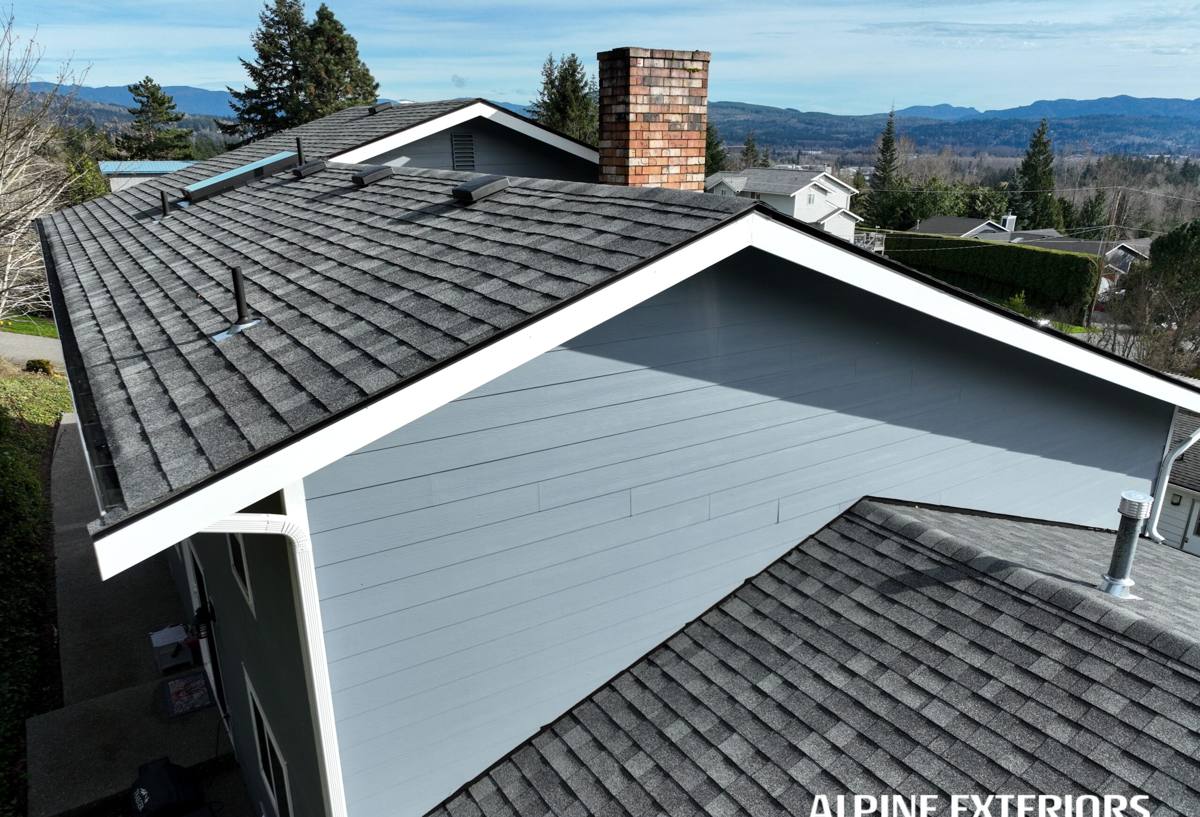
Why Nooksack Roofs Wear Differently Than Roofs Elsewhere
Asphalt shingles are rated and tested the same way no matter where they're sold, but how long they actually perform depends heavily on local exposure. A few things stack up against roofs in this area:
- Prolonged moss season. Cool, damp air and shaded roof planes (especially on the north side of a home or under tree cover) give moss and algae months of growing conditions rather than a few weeks.
- Driving rain. Wind-driven rain doesn't just fall straight down — it pushes up and under shingle tabs, flashing edges, and vent boots that were installed loose or under-lapped.
- Salt-influenced air. Metal flashing, nails, and vent components corrode faster when the air carries salt, which is one reason we're particular about fastener and flashing material out here.
- Freeze-thaw swings. Whatcom County doesn't get deep freezes often, but the occasional cold snap after a soaking rain is enough to stress a roof that's already holding moisture it shouldn't be.
None of this means a Nooksack roof needs exotic materials. It means the installation details — underlayment choice, fastening, flashing, and ventilation — have to be done right the first time, because this climate doesn't forgive shortcuts the way a drier one might.
What a Correct Asphalt Shingle Job Actually Involves
Starting With What's Under the Shingles
The shingles themselves get the attention, but most leaks trace back to what's underneath them. On every tear-off we inspect the roof deck for soft spots, delamination, or water staining and replace any damaged sheathing before anything new goes down. Skipping this step to save time is one of the most common corners cut in this trade, and it's the one that causes the most expensive failures later.
Underlayment and Water Protection
Given how much wind-driven rain this area sees, we don't treat underlayment as an afterthought. Self-adhered ice-and-water membrane goes at eaves, valleys, around penetrations, and anywhere water is likely to back up or run sideways under a shingle edge. The rest of the deck gets a synthetic underlayment that holds up to the extended exposure a Nooksack re-roof sometimes requires between tear-off and dry-in, since weather windows here aren't always cooperative.
Flashing Details
Flashing failures — not shingle failures — cause the majority of the roof leaks we get called out to look at. Step flashing at walls, counterflashing, chimney flashing, and valley metal all have to be layered correctly with the underlayment and shingles, not just caulked and hoped for. In an area with salt-influenced air, we also pay attention to flashing material so it isn't corroding out from under a shingle field that's otherwise in good shape.
Ventilation
A shingle roof needs balanced intake and exhaust ventilation to manage heat and moisture in the attic. In a climate this damp, poor ventilation shows up as condensation, premature shingle aging from the underside, and in some cases moisture damage to the deck itself — problems that have nothing to do with the shingle brand and everything to do with airflow.
Choosing the Right Shingle for This Climate
Not every asphalt shingle product is a good match for a wet, moss-prone area. Here's how the common options compare for a home in Nooksack conditions:
| Shingle Type | Typical Lifespan | Moss/Algae Resistance | Wind Rating | Best Fit |
|---|---|---|---|---|
| 3-tab (standard) | 15-20 years | Standard, no built-in resistance unless specified | Lower | Budget-conscious re-roofs, secondary structures |
| Architectural / laminate | 25-30 years | Often available with algae-resistant granules | Higher, better in driving rain and wind | Most Nooksack homes — the standard we recommend |
| Algae-resistant (AR) upgrade | Matches base shingle | Copper or zinc-infused granules resist streaking | Same as base product | North-facing or shaded roof planes with heavy moss history |
| Impact-resistant (Class 4) | 25-30+ years | Depends on granule package | High | Homes wanting added durability against debris and hail |
For most homes in this area, an architectural shingle with an algae-resistant granule package is the right balance of cost and durability. On roofs with heavy tree cover or a north-facing plane that stays shaded most of the day, the AR upgrade earns its cost back in reduced moss treatment and a longer-looking roof.
Our Nooksack Roofing Process
We keep the process straightforward and communicate at each stage, since a re-roof is disruptive enough without surprises added on top:
- On-site inspection and estimate. We walk the roof (not just look from the ground), check the attic for ventilation and moisture issues, and give you a written estimate with no pressure to sign on the spot.
- Material selection. We go over shingle options, colors, and any upgrades (AR granules, upgraded underlayment) based on your roof's exposure and your budget.
- Scheduling around the weather. Because this area doesn't always give you a clean dry week, we plan tear-off in sections when needed so your home is never left exposed longer than necessary.
- Tear-off and deck inspection. Old roofing comes off, the deck gets inspected, and any damaged sheathing is replaced before anything else happens.
- Underlayment, flashing, and shingle installation. Installed in the order and with the details described above — not shortcuts, just the correct sequence.
- Ventilation check. We confirm intake and exhaust venting is balanced for your attic size, adding or correcting vents where needed.
- Final walkthrough and cleanup. We walk the finished roof with you, answer questions, and make sure the property is cleared of debris and nails before we consider the job done.
Moss, Algae, and Keeping a Wet-Climate Roof Healthy
Even a well-installed shingle roof in Nooksack will develop some moss and algae over time — that's the reality of this climate, not a sign of a bad installation. What matters is staying ahead of it:
- Keep overhanging branches trimmed back so roof planes get more sun and airflow.
- Clear gutters and valleys of debris regularly — trapped organic matter holds moisture against the shingles and accelerates moss growth.
- Address moss while it's still a light growth; letting it mat and thicken can lift shingle edges and let water track underneath.
- Avoid pressure washing shingles — it strips granules and shortens the roof's life. Gentle, low-pressure treatment is the safer approach.
- Have the roof looked at every couple of years, especially after a rough winter, so small issues get caught before they become deck damage.
What Drives the Cost of a Shingle Roof Here
Every roof is different, but the same handful of factors move the price up or down on most Nooksack jobs:
| Factor | Why It Matters |
|---|---|
| Roof size and complexity | More valleys, dormers, and roof planes mean more flashing work and labor time |
| Deck condition | Rotted or soft sheathing found at tear-off needs replacement before shingles go on |
| Shingle tier | 3-tab, standard architectural, and AR or Class 4 upgrades each carry different material costs |
| Roof pitch and access | Steep or hard-to-access roofs take longer and require more safety setup |
| Ventilation upgrades | Adding or correcting intake/exhaust venting is often worth the modest added cost |
| Tear-off layers | Removing multiple existing layers of roofing takes more labor than a single-layer tear-off |
We don't quote a roof over the phone or from a satellite photo — accurate pricing means getting on the roof and in the attic first.
Signs Your Nooksack Roof May Need Attention
A shingle roof rarely fails all at once. It usually gives warning signs first. Watch for:
- Shingles that look cupped, curled, or are missing granules in patches
- Dark streaking or thick moss growth, especially on shaded or north-facing sections
- Daylight visible through the attic roof deck, or damp insulation after a rainstorm
- Granules collecting in gutters or at downspout outlets
- Soft or spongy spots when walking the roof (a sign we check for, not something to do yourself)
- Water stains on interior ceilings, especially near chimneys, skylights, or wall intersections
If you're seeing any of these, it's worth getting an inspection before the next round of driving rain finds the weak spot for you.
Why Hire a Crew That Already Works in Nooksack
A shingle roof installed by someone unfamiliar with this specific climate can look fine for the first year or two and then start showing problems that a crew with local experience would have designed around from the start — wrong underlayment choice for the exposure, ventilation that doesn't account for the moisture load, or flashing details that work in a drier climate but not here. Working regularly in Lynden and the surrounding Whatcom County communities means we're not guessing at how a roof will hold up against this area's rain and moss — we're building to it. It also means if you ever need a warranty check or a maintenance visit, you're calling a crew that's local and easy to reach, not a company that only shows up for the original sale.
Get a Straight Answer on Your Roof
If your Nooksack home needs a new asphalt shingle roof, a repair, or you're just not sure what condition your current roof is in, we're happy to take a look. The estimate is free, there's no pressure, and you'll get a straight answer about what your roof actually needs — not an upsell. Fill out the form below to get started.