 Lynden Exterior
 Deck Building for the Nooksack Area's Wet, Marine-Influenced Climate
Homes around Nooksack sit in a part of Whatcom County that gets more moisture exposure than most people realize until they own a deck out here. Marine air moving in off the Salish Sea combines with driving rain off the foothills, long stretches of overcast weather, and a moss season that can run from fall through spring. A deck built to a generic spec sheet, without accounting for that combination, will show problems within a few years — soft spots, green film on the boards, fasteners that bleed rust, or a ledger board that traps water against the house. A deck built for this specific area holds up because every material and detail is chosen with that climate in mind, not worked around after the fact.
This page covers what a correctly built deck for a Nooksack-area home actually requires, how we approach the build, and why local experience on projects like this one matters more than it does in drier parts of the state.
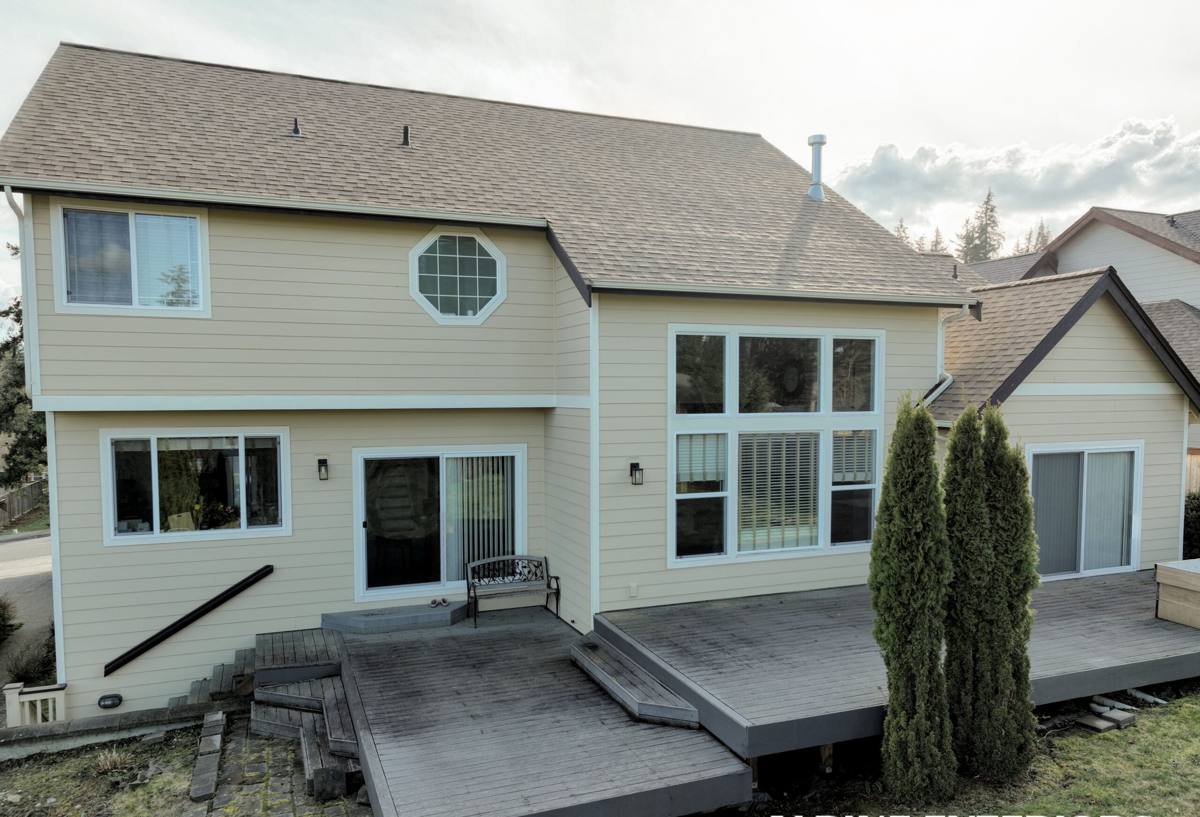
What Local Conditions Actually Demand From a Deck
It's not just "rain." A handful of specific conditions around Nooksack and the surrounding Lynden area shape how a deck should be designed and built:
- Prolonged dampness, not just rainfall totals — long stretches of low cloud and drizzle keep wood surfaces wet for days at a time, which is what actually drives rot and mold growth, more than any single storm.
- Moss and algae pressure — shaded areas near trees or the north side of a house stay damp long enough for moss to establish on decking, railings, and stair treads, creating a slip hazard as well as a maintenance headache.
- Marine air corrosion — airborne moisture carries salt influence far enough inland to accelerate corrosion on unprotected fasteners, hardware, and metal railing components over time.
- Freeze-thaw cycling — Whatcom County winters aren't extreme, but repeated freezing and thawing works water into any gap, crack, or poorly sealed joint in the structure.
- Soil moisture around footings — heavier, wetter ground near the Nooksack River drainage means footings and post bases need real attention to drainage and standing water, not just depth.
None of these are dealbreakers. They're just design inputs. A deck that ignores them will still look fine on installation day — the difference shows up in year three, five, and ten.
Choosing Decking Material for This Climate
There's no single "best" decking material — there's a best fit for your budget, your maintenance appetite, and how much sun or shade the deck actually gets. Here's how the common options perform under Nooksack-area conditions specifically:
| Material | Moisture Performance | Maintenance | Typical Lifespan Here |
|---|---|---|---|
| Pressure-treated lumber | Good if properly sealed and re-coated; absorbs water at cut ends and fastener holes if not sealed | Annual cleaning, re-sealing every 1-2 years | 15-20 years with upkeep |
| Cedar | Naturally rot-resistant but still needs finish protection in prolonged damp shade | Regular cleaning, periodic staining or sealing | 15-25 years with upkeep |
| Composite decking | Excellent — doesn't absorb water or rot, but shaded boards still need moss/algae cleaning | Occasional washing, no sealing or staining | 25-30+ years |
| PVC decking | Best moisture resistance of the group; fully impervious to rot and moisture absorption | Low — periodic washing only | 30+ years |
We're honest with clients about trade-offs rather than pushing one product. Composite and PVC cost more up front but remove the yearly maintenance cycle that wood requires — which matters a lot in a climate where skipping a year of sealing has real consequences. Wood costs less initially and can look great, but only if the homeowner is realistic about the upkeep it demands here, not in a drier climate where the same product ages more slowly.
A Note on Shaded, Low-Airflow Areas
If your lot has mature trees or the deck sits on the north side of the house, moss and algae pressure is going to be higher regardless of material choice. In those spots we lean harder toward composite or PVC, or at minimum widen board spacing slightly and adjust the framing layout to improve airflow underneath.
Framing and Structural Details That Matter Most
The decking surface is what you see, but the framing underneath is what determines how long the deck actually lasts. In a wet climate like this, a few details separate a deck that lasts decades from one that needs structural repair in under ten years:
- Ledger board flashing — the point where the deck attaches to the house is the single most common source of hidden water damage. Proper flashing, correctly lapped with the house's water-resistive barrier, keeps water from getting behind the siding.
- Joist protection — joist tape or an equivalent moisture barrier over the top of every joist keeps water from pooling in fastener holes and starting rot from the inside out.
- Post base hardware — posts should sit on elevated, moisture-isolating bases rather than directly on concrete, keeping end grain out of standing water.
- Fastener selection — stainless or high-grade coated fasteners resist the corrosion that marine-influenced air accelerates; cheap fasteners rust and stain the decking around them within a couple of seasons.
- Footing drainage — footings set below frost depth with proper drainage around them, especially important on lots with heavier or wetter soil.
Moss, Slip Safety, and Ongoing Maintenance
Moss on decking isn't just cosmetic — it's a genuine slip hazard on stairs and walking surfaces, and it holds moisture against whatever material is underneath it. We design decks to reduce moss pressure where we can (spacing, airflow, sun exposure considerations in the layout), but no deck in this climate is fully moss-proof. A basic annual or twice-yearly cleaning routine — soft wash, not pressure-washing that can damage the surface — keeps most decks looking good and safe underfoot through the moss season.
For wood decks, that maintenance routine also includes checking the seal or stain coat each year. Once a wood deck's finish starts to fail, water gets into the grain directly, and that's when rot sets in. Catching it early with a re-coat is far cheaper than replacing boards later.
Our Deck Building Process
- On-site assessment — we look at drainage patterns, sun/shade exposure, soil conditions, and how the deck will attach to the house before recommending anything.
- Design and material selection — we walk through the material comparison honestly, based on your budget and how much maintenance you want to take on.
- Permitting — we handle the Whatcom County permit process for the build, so you're not chasing paperwork.
- Footings and framing — built with the moisture-management details covered above: flashing, joist protection, proper fasteners, drained footings.
- Decking, railing, and finish work — installed to manufacturer spec (critical for composite and PVC warranties) with attention to board spacing for drainage and airflow.
- Final walkthrough — we go over basic maintenance expectations for whatever material you chose, so there are no surprises down the road.
Permits and Local Requirements
Most new decks and significant deck rebuilds in Whatcom County require a building permit, particularly once the deck is a certain height off grade or attached to the home's structure. Requirements can vary depending on whether your property falls under county jurisdiction or a specific local jurisdiction near Lynden, and whether the lot has any floodplain or setback considerations tied to the Nooksack River drainage. We pull the appropriate permits and build to the inspected code requirements rather than cutting corners that could cause problems at resale or insurance time.
Why a Crew That Already Works in Nooksack Makes a Difference
A deck built by a crew that hasn't worked much in this specific climate tends to make the same handful of mistakes: standard framing details that don't account for the moisture load, decking installed with tight spacing that doesn't drain well, or fastener choices that look fine on day one and rust within a couple of years. None of those mistakes show up on an installation-day walkthrough — they show up later, as repair calls.
Working regularly in and around Nooksack and the greater Lynden area means we've seen how decks in this specific climate age — what actually fails first, what holds up, and which details are worth the extra cost. That's the difference between a deck built to a generic standard and one built for this ground, this air, and this weather.
Quick Checklist Before You Hire
- Does the quote specify ledger flashing details, not just "deck attached to house"?
- Is joist protection tape or equivalent included over the framing?
- What fastener grade is being used, and is it rated for exterior/coastal-influenced conditions?
- Is the post base hardware specified, or are posts set directly on concrete?
- Does the contractor pull the required Whatcom County permit, or leave that to you?
- Were material trade-offs explained honestly, including realistic maintenance expectations?
If you're planning a new deck or replacing an aging one near Nooksack, we're glad to walk the site with you and put together a straightforward, no-pressure estimate. Use the form below to get started.