 Lynden Exterior
 Metal Roofing Built for Nooksack's Weather, Not Just Installed On It
Nooksack sits in the part of Whatcom County where the weather doesn't do anything halfway. Winters bring long stretches of driving rain off the Sound, low gray skies that keep roofs damp for days at a time, and just enough marine influence carried up the valley to put a faint edge of salt in the air. Add in shaded, north-facing slopes tucked against trees and outbuildings, and you get roofs that stay wet longer than they should and grow moss faster than most homeowners expect. Metal roofing handles that combination better than almost any other material available, but only when it's specified and installed correctly for this specific climate. A metal roof put on the way it would be in a dry inland town is not the same job as one built for a place that sees this much sustained moisture.
We work on homes throughout Nooksack and the surrounding Lynden area regularly, which means we're not guessing at how local roofs age — we're looking at them, repairing them, and replacing them.
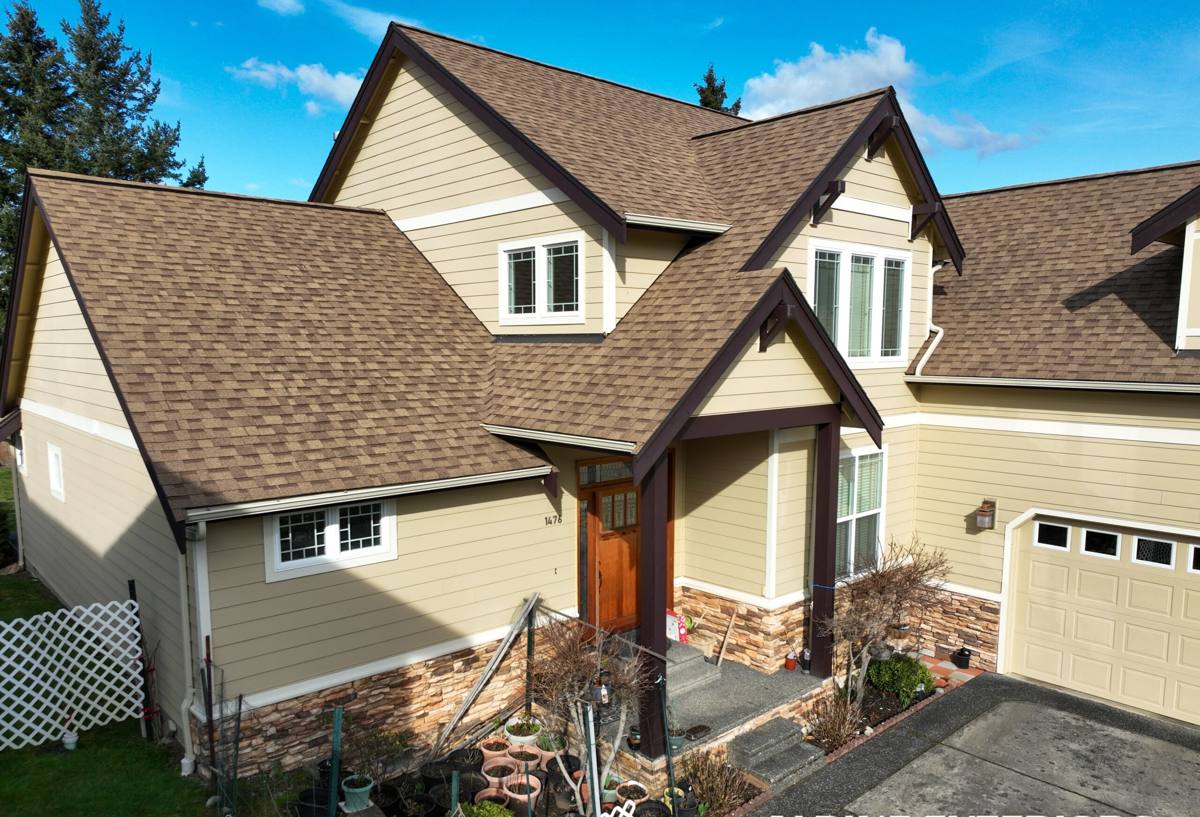
What This Climate Actually Does to a Roof
Moss and Organic Growth
Whatcom County's wet season runs long, and shaded roof sections — north slopes, areas under fir and cedar canopy, valleys that don't get direct sun — stay damp for weeks between dry spells. On asphalt shingles, that moisture sits in the granule surface and gives moss spores exactly what they need to take hold. Once moss establishes, it holds even more water against the roofing material and works its way under shingle edges, which is where the real damage starts. Metal sheds that moisture instead of holding it, and its smooth, non-porous surface gives moss far less to grip onto in the first place.
Driving Rain and Wind-Driven Water
Rain here rarely just falls straight down. Wind off open fields and river bottoms pushes it sideways, forcing water up under laps, around penetrations, and into any gap a roof system leaves open. This is a flashing and fastening problem more than a material problem — a roof can be made of the right metal and still leak if the details around chimneys, valleys, and wall transitions aren't built to handle water moving in more than one direction.
Salt Air and Corrosion
Nooksack isn't oceanfront, but the marine air that moves in off Bellingham Bay and Puget Sound carries enough salt content inland to matter over the life of a roof, especially on homes closer to open exposure or higher elevation where wind carries further. Bare or poorly coated steel, exposed cut edges, and mismatched fasteners are where corrosion starts. It's a slow process, which is exactly why it gets overlooked — by the time surface rust is visible, it's often been developing under the coating for years.
Choosing the Right Metal Roofing System
"Metal roofing" isn't one product — it's a category, and the right choice depends on the home, the roof pitch, the budget, and how much of a factor the moisture and salt exposure described above really are for that specific property.
| System | How It's Fastened | Best Fit | Trade-offs |
|---|---|---|---|
| Standing seam | Concealed clips, no exposed screws through the panel face | Homes with heavy moss/moisture exposure, long-term low-maintenance goals | Higher upfront cost, requires precise installation |
| Exposed-fastener panel | Screws driven through the panel face into the deck or purlins | Outbuildings, shops, budget-conscious re-roofs | Fasteners and their gaskets are the weak point and need periodic checking |
| Stone-coated steel shingle/shake profile | Interlocking panels, mostly concealed fastening | Homeowners who want a traditional shingle or shake look with metal's durability | More seams and profile detail than standing seam, more installer skill required |
For most Nooksack homes dealing with real moss pressure and sustained rain, we lean toward standing seam because it has the fewest places for water and debris to catch, and no exposed fasteners to fail over time. That's not a rule for every roof — a detached shop or a lower-slope section can be a perfectly good candidate for exposed-fastener panel — but it's the starting point of the conversation.
What a Correct Installation Actually Involves
Metal roofing is unforgiving of shortcuts in a way asphalt sometimes isn't. A shingle roof with a minor installation flaw might leak eventually; a metal roof with the same flaw often leaks the first hard rain. The parts that matter most, and that are easy for an unfamiliar crew to get wrong, are:
- Deck condition — any soft, rotted, or moisture-damaged sheathing gets replaced before a single panel goes down, not covered over
- Underlayment — a high-temperature, self-adhering or synthetic underlayment rated for use under metal, not standard felt, which can degrade against the heat and condensation metal panels create
- Ice and water protection at vulnerable points — valleys, eaves, and low-slope transitions get extra protection where wind-driven rain and any freeze events concentrate
- Fastener type and spacing — matched to the panel metal to avoid galvanic corrosion, and spaced to manufacturer specification, not "close enough"
- Flashing at every penetration and transition — chimneys, vents, walls, and valleys built with proper metal flashing and correct lap sequencing so water always moves down and out, never up and under
- Ventilation — intake and exhaust balanced so the attic and roof deck can dry out between rain events instead of trapping moisture underneath the panels
Every one of those items is invisible once the roof is finished. That's exactly why they matter — a roof that looks right from the ground can still be missing the details that determine whether it lasts fifteen years or fifty.
Our Process
1. On-Site Evaluation
We walk the roof, check the deck condition, look at existing ventilation, and note anything specific to the property — tree cover, shaded slopes, low-slope sections, existing moss or moisture damage.
2. Honest Recommendation
We'll tell you which system fits the roof and the budget, and just as importantly, where a lower-cost option is genuinely fine versus where cutting corners would just mean redoing the work sooner.
3. Written Estimate
Scope, materials, and price in writing before any work starts — no verbal-only agreements.
4. Tear-Off and Deck Repair
Old roofing comes off, the deck gets inspected, and any damaged sheathing is replaced before underlayment goes down.
5. Installation
Underlayment, flashing, and panels installed to manufacturer specification, with the flashing and fastening details above treated as non-negotiable, not optional upgrades.
6. Final Walkthrough and Cleanup
We walk the finished roof with you, and the site gets cleaned of debris, old material, and stray fasteners — a magnetic sweep for nails is standard practice, not an extra.
Keeping a Metal Roof Performing Long-Term
Metal roofing needs far less maintenance than shingles, but "far less" isn't "none" — especially in a climate that pushes moss and organic debris onto every roof surface, metal included.
- Clear gutters and valleys of needles, leaves, and debris at least twice a year — buildup here is what actually holds moisture against the roof edge, even on metal
- Trim back overhanging branches to reduce shade and debris drop on north-facing or tree-covered slopes
- Check sealant at penetrations (vents, flashing) every couple of years — sealant ages faster than the metal itself
- Rinse off heavy moss or algae buildup rather than letting it accumulate — a soft wash, not pressure washing, which can damage coatings
- After major windstorms, take a look (or have us take a look) for lifted flashing or displaced panels before the next heavy rain
What Drives the Cost
We won't quote a number without seeing the roof, but the honest cost factors are these:
| Factor | Why It Matters |
|---|---|
| Panel system chosen | Standing seam runs higher than exposed-fastener panel due to material and labor complexity |
| Roof complexity | Valleys, dormers, and multiple roof planes mean more flashing work and cut panels |
| Deck condition | Rot or moisture damage found during tear-off adds material and labor to fix properly |
| Roof pitch and access | Steep or hard-to-access roofs take longer and require more safety setup |
| Existing layers | Tear-off of old roofing versus a bare deck changes disposal and labor time |
Metal roofing costs more upfront than asphalt shingles almost every time. Where it earns that back is in the years of maintenance and re-roofing an asphalt roof would otherwise need in this climate, plus the moss resistance and durability against wind-driven rain that shingles simply don't offer.
Why Hiring a Crew That Already Works in Nooksack Matters
Roofing crews that mostly work drier, inland climates size ventilation, underlayment, and flashing details for conditions that don't match what a Nooksack roof actually faces year-round. A crew based in and around Lynden and Whatcom County has already seen how moss establishes on local roof lines, how far wind-driven rain travels up under laps in this area's storm patterns, and where salt-influenced corrosion tends to start on roofs with this kind of exposure. That's not a marketing point — it changes real decisions, like where extra ice-and-water protection goes, how ventilation gets balanced, and which fastener and coating combination holds up over time here versus somewhere drier.
We're licensed to work in Washington and we show up for the details that don't show on the surface — deck condition, flashing sequencing, fastener choice — because those are the things that determine whether a metal roof performs for decades or starts causing problems in five years.
Get a Straight Answer About Your Roof
If you're weighing metal roofing for a home in Nooksack, we're glad to come take a look, walk you through what your specific roof needs, and give you an honest, no-pressure estimate — no obligation, no pressure to decide on the spot. Use the form below to get started.