 Lynden Exterior
 Roof Repair Built for Nooksack's Weather, Not a Generic Checklist
Nooksack sits low in the Nooksack River valley, close enough to the water and the marine air pattern coming off the Salish Sea that roofs here take a different kind of beating than roofs forty miles inland. It's not one big storm that wrecks a roof out here — it's the accumulation. Salt-tinged air corrodes fasteners and flashing faster than dry inland air does. Driving rain, pushed sideways by wind off the valley, finds every gap in flashing and underlayment that a straight-down rain would never reach. And the long wet season, stretching from fall through spring, gives moss and moisture months to work into a roof rather than days.
A roof repair crew that only shows up in Whatcom County a few times a year tends to treat every job the same way: patch the visible problem, replace what's obviously failed, move on. A crew that works Nooksack and the surrounding Lynden area regularly sees the pattern repeat house after house — and repairs the roof knowing what's coming next season, not just what's wrong today.
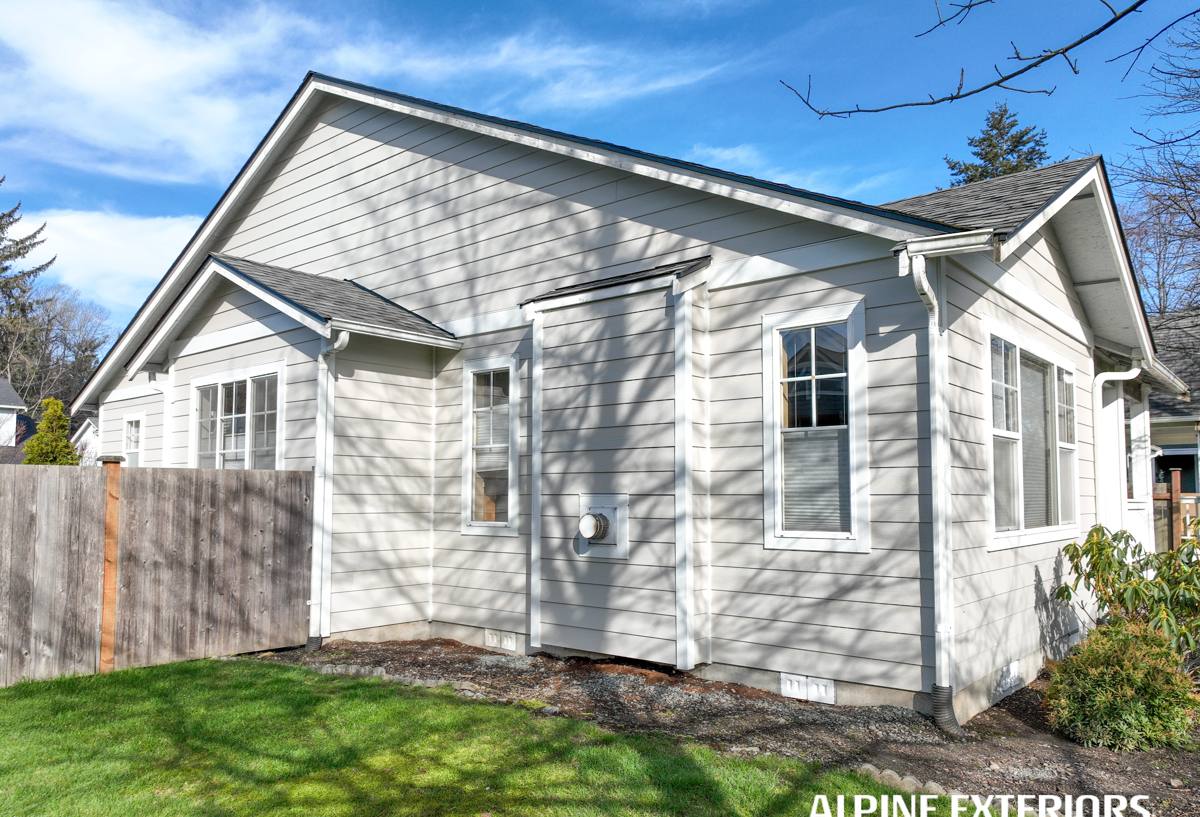
What Nooksack's Climate Actually Does to a Roof
Salt Air and Metal Fatigue
Being close to the water means airborne salt is a real, if slow, contributor to wear on exposed metal. Nails, flashing, drip edge, and any exposed fastener heads corrode faster than the manufacturer's spec sheet assumes. A roof that's "only" 12 years old in Nooksack can have flashing and fastener corrosion you'd expect on a 20-year-old roof somewhere drier. This matters most at the details — valleys, chimney flashing, vent boots — because that's where metal does the most work.
Driving Rain and Wind-Driven Water
Straight-down rain is easy for a roof to shed. Rain pushed sideways by valley wind is not. Driving rain gets up under shingle tabs, behind step flashing, and into any seam that was cut a little short. Most of the leaks we find in this area aren't from a hole in the field of the roof — they're from wind-driven water finding a weak transition point: where a roof meets a wall, where a vent penetrates, where two roof planes meet in a valley.
Moss and the Long Wet Season
Whatcom County's wet season isn't a few storms — it's months of low sun angle, shade, and moisture that never fully dries between rain events. That's exactly what moss needs. Moss on a roof does two things: it holds moisture directly against the roofing material, and its root structure works its way under shingle edges and granules, lifting them over time. Left alone through a full wet season, moss doesn't just look bad — it accelerates the exact wear patterns that lead to leaks.
Common Roof Repair Calls We See Around Nooksack
- Moss buildup at north-facing slopes and shaded valleys causing shingle lift and granule loss
- Corroded or lifted flashing around chimneys, skylights, and roof-to-wall transitions
- Wind-driven leaks at valleys where shingles weren't cut and lapped correctly the first time
- Deteriorated pipe boots and vent flashing — usually the rubber collar cracking before the roof around it fails
- Gutter and edge damage from moss and debris holding water against fascia and roof edge
- Soft or spongy decking discovered under a "small" leak that had been active longer than it looked
What a Correct Roof Repair Actually Involves
A quick patch and a full repair are not the same job, even when they look similar from the ground. A repair done right in this climate accounts for what's underneath the visible damage, not just the spot that's leaking.
Diagnose Before Touching Anything
The leak point and the water's actual entry point are often not the same spot — water travels along the underlayment or decking before it shows up as a stain inside. A proper repair traces the path back to the real entry, which usually means checking flashing, valleys, and penetrations near the stain, not just the ceiling directly below it.
Check the Decking, Not Just the Shingles
If water has been getting in for any length of time, the plywood or OSB decking underneath may be soft, delaminating, or rotted. Replacing shingles over damaged decking is a short-term fix that fails again quickly. Any repair worth doing checks the deck first.
Match Flashing to the Actual Failure Mode
Given how salt air and driving rain work here, flashing repairs need to be done with corrosion-resistant materials and proper laps and seals — not just a bead of roofing cement over the old, corroded piece. Cement-only patches are a common shortcut that fails within a season or two in this climate.
Clear and Treat Moss as Part of the Job
Repairing a leak without addressing nearby moss growth just invites the same problem back. A thorough repair includes clearing moss from the affected area and surrounding roof, and addressing the moisture and shade conditions that let it take hold, where that's practical.
Our Process for a Nooksack Roof Repair
- Free on-site inspection. We walk the roof (weather permitting) or inspect from a ladder and the attic side, looking at the reported problem area plus the details most likely to be the real cause — valleys, flashing, penetrations, and moss-prone slopes.
- Honest diagnosis. We tell you what's actually failing, what's cosmetic versus structural, and whether decking is involved. If it's a small, isolated repair, we say so — we don't upsell a full replacement when a repair will do the job.
- Written estimate. Scope, materials, and price in writing before any work starts.
- Repair work. Decking replaced where needed, flashing corrected rather than just resealed, shingles matched as closely as possible, and moss cleared from the work area.
- Walkthrough. We show you what was done and what to watch for going forward, including realistic guidance on moss and gutter maintenance given the local climate.
Repair vs. Replacement: How to Tell Which You Need
| Factor | Points Toward Repair | Points Toward Replacement |
|---|---|---|
| Age of roof | Under 12–15 years, especially if maintained | Near or past typical material lifespan |
| Extent of damage | Localized — one valley, one flashing area, isolated moss patch | Widespread granule loss, multiple leak points, moss across large areas |
| Decking condition | Solid, dry decking under the affected area | Soft, delaminated, or repeatedly wet decking in multiple spots |
| Shingle condition elsewhere | Rest of roof still flexible, granules intact | Brittle, curling, or bald shingles across the roof |
| History of repairs | First or second repair call | Recurring leaks in different spots each season |
Most roofs that come in for a "repair" genuinely are repairs — full replacement is only the right call when the damage and age point that direction. We'll tell you honestly which category yours falls into.
Why a Nooksack-Familiar Crew Matters
Roofing work in this area rewards local knowledge in a few specific ways. A crew that regularly works Lynden and Nooksack knows which slope orientations grow moss fastest in this valley, which flashing details tend to fail first given the wind and rain pattern here, and how long a given repair should realistically hold up before it needs revisiting. That's not something you get from a roofing crew based two counties away that happens to take a job out this way — it comes from doing the work here repeatedly and seeing how repairs actually hold up over a wet season, not just how they look the day they're finished.
It also matters for response time. Roof leaks found during a fall or winter storm don't wait well — water intrusion gets worse the longer it sits, especially with decking. A local crew can typically get a tarp on an active leak and schedule the real repair faster than a crew that has to travel in.
What to Check Before You Call Anyone for a Roof Repair
- Is the leak active right now, or is it a stain from a past event? This changes urgency.
- Can you see moss buildup from the ground on any slope, especially shaded or north-facing ones?
- Are there visible gaps, rust, or lifted edges at any flashing — chimney, skylight, vent pipes?
- Has the same area leaked before, even if it was "fixed" previously?
- Do gutters near the affected area drain freely, or are they holding standing water or debris?
- Is there any soft spot, sag, or give when the roof is walked (only check this safely, or let a professional check it)?
Having answers to these before an inspection helps us give you a faster, more accurate read on what you're dealing with.
Maintenance That Actually Extends a Roof's Life Here
Given how much of Nooksack's roof wear comes from moss and moisture rather than sudden damage, the maintenance that matters most isn't glamorous: keeping gutters clear so water doesn't back up under the roof edge, keeping moss knocked back before it establishes a root structure, and having flashing checked periodically rather than waiting for a leak to show up inside the house. None of that requires a full inspection every month — but given the length of the wet season here, a check before it starts and a check partway through catches most problems while they're still small repairs instead of emergency ones.
If you're dealing with a leak, visible moss damage, or just want an honest read on a roof's condition before the next wet season sets in, we're happy to take a look. The estimate is free, there's no pressure to book anything on the spot, and you'll get a straight answer about whether you need a repair, a bigger fix, or nothing at all right now — just use the form below to get started.